Mokoro Safaris in Botswana
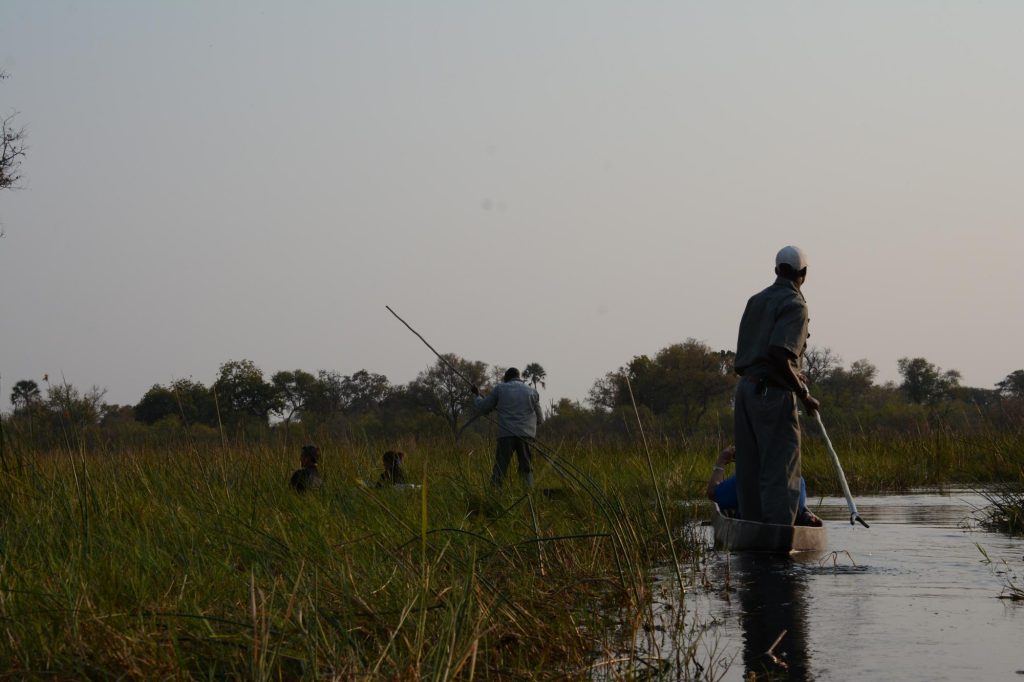
A mokoro is a shallow dugout canoe poled from standing at the stern, and gliding through the Okavango’s channels in one is the signature Botswana experience. Most are now fibreglass rather than carved, to stop large trees being felled. Trips run from an hour to multi-day expeditions, and availability depends entirely on water levels, which is the single thing to confirm before booking a camp.
What a Mokoro Is
The detail matters because it explains the whole experience.
A mokoro is a long, narrow, shallow-draught canoe, traditionally carved from a single trunk of sausage tree or jackalberry, which is why it is called a dugout. The plural in Setswana is mekoro.
A poler stands at the stern and propels the boat with a long pole called a ngashi, a skill that takes years to do well. Watching a good poler work is part of the appeal.
Passengers sit low in the hull on a cushion or small stool, typically two per mokoro with one poler.
Most operators now use fibreglass replicas, which last longer and remove the need to fell large trees. Purists miss the sound of water against carved wood; the Delta‘s jackalberries do not.
If a camp is still using hardwood mekoro, that is a fair thing to ask about.
The boat is older than tourism by a long way. Mekoro were the working transport of the Delta for centuries, used for fishing, moving between islands and carrying goods, and the tourism version is a direct continuation rather than a recreation. Polers frequently talk about the boat as though it were alive, and for many the mokoro is a marker of cultural identity rather than simply a means of getting about.
Fibreglass mekoro exist because carving a traditional one meant felling a mature jackalberry. Asking a camp what its boats are made of is a reasonable question, and the answer says something about the operator.
The Polers

The people are as much the point as the boats.
Most polers come from Bayei or Hambukushu communities and grew up on the water long before they entered tourism. The BaYei are credited with bringing the mokoro into the Delta.
They know the depths, the currents, the hippo paths and which channels are occupied, which is the entire safety system on a mokoro trip.
Mokoro safaris are traditionally organised through local community trusts, with polers guiding guests through the waterways and islands, which makes this one of the more direct routes for tourism spending to reach Delta communities.
Some operators add a professional guide alongside the polers, combining the traditional poling trip with the interpretation of a guided walking safari.
Tip polers directly at the end. They are frequently community members rather than camp staff and may not share in a general tip pool.
What a Trip Involves

The experience is gentle and slower than most people expect.
A standard excursion runs one to two hours, often in the late afternoon when the water is calm, gliding through reed-lined channels past papyrus, water lilies and jackalberry trees.
Half-day versions combine poling with a walk on an island and a picnic, and several camps pair the two deliberately, since the mokoro is the transport and the island is where you look for animals on foot.
Multi-day mokoro trails camp on remote islands in dome tents with bedrolls, with guided walks and meals cooked over a fire. These are the budget route into the Delta and a genuinely good trip.
What you see is the small stuff: reed frogs, jacanas, kingfishers, herons, dragonflies, sometimes red lechwe or elephant at a distance.
Physical demand is minimal, since you sit low and still, which suits most ages and fitness levels.
Water Levels and When to Go
This is the practical constraint and the commonest source of disappointment.
Mokoro trips need water, and the Okavango flood arrives from Angolan rain that fell roughly four months earlier, entering the Panhandle around April and peaking across the Delta around July.
June through August is the strongest window, with peak flood and fully navigable channels. September and October still work, with good levels and game concentrated.
Camps on permanent inner Delta water run mokoro year round. Camps on seasonal water at the eastern fringes switch to game drives when channels drop, typically from around November.
The failure mode is booking a seasonal camp for December expecting a mokoro. Ask directly whether the camp sits on permanent or seasonal water, and what runs in your specific month.
Flood volume also varies year to year, so ask your operator what this year is doing rather than relying on averages.
Short excursion. One to two hours from a camp, morning or late afternoon, as one activity among several. Included in rates at most Delta camps on permanent water.
Half-day with walk. Poling out to an island, walking for two to four hours to track game on foot, then poling back. The combination most Delta camps build their water days around.
Multi-day trail. Two or three nights camping on remote islands in dome tents with bedrolls, poled in from a station near Maun. The affordable way into the Delta.
Mokoro Compared With a Motorboat
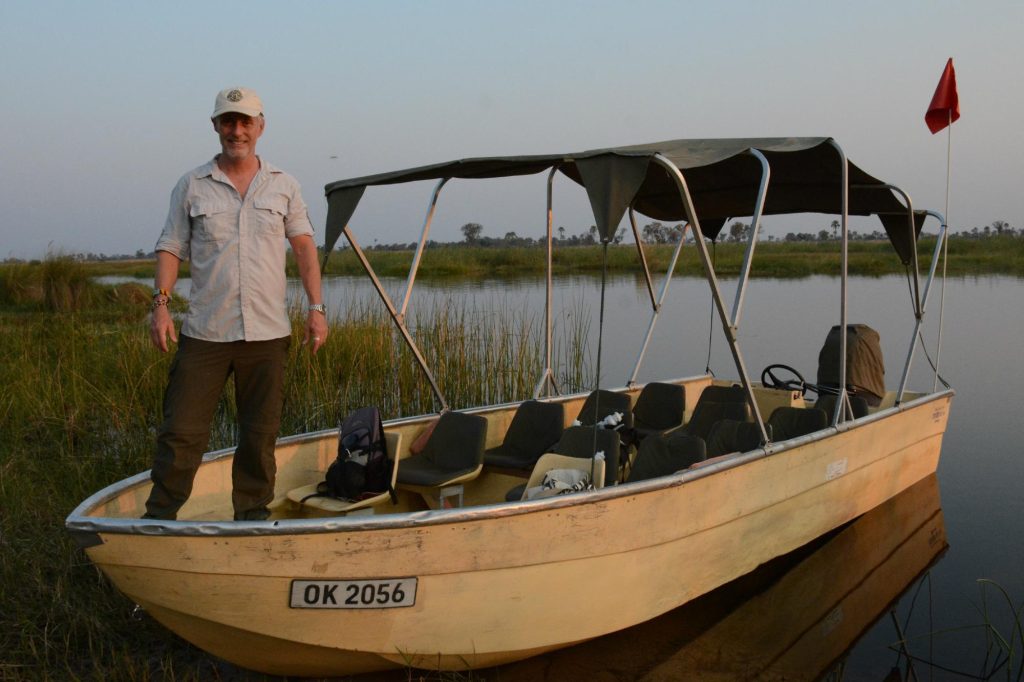
The two are frequently offered by the same camp and they are not versions of each other.
A mokoro moves at walking pace in near silence, reaches shallow channels no motorboat can enter, and lets you get close to birds and small wildlife because nothing flushes. It covers very little ground.
A motorboat covers distance, reaches lagoons and island fringes, works well for larger wildlife and photography at range, and is the practical way to move between points.
For birding the mokoro is decisively better. For seeing more of the Delta, the motorboat is.
Most camps on permanent water offer both, and taking one of each gives a fuller picture than doubling up on either.
Neither substitutes for a game drive, since big cats are found on land and a boat cannot follow them. A Delta itinerary that includes only water activities will produce a beautiful trip with very few predators, which is why the better camps pair water with drives and why splitting a stay between a water camp and a land camp is the standard recommendation.
Safety and Practicalities
The rules are few and they matter.
Hippos and crocodiles inhabit the Delta, and mokoro routes are chosen to avoid known danger areas. That routing knowledge sits with the poler, which is why local operators are the right choice and why you should never ask a poler to go somewhere they are reluctant to.
Stay seated and keep hands inside the hull. A mokoro is stable when passengers are still and considerably less so when they are not.
You will receive a briefing before setting off covering how to sit and what to do.
Bring sun protection, since there is no shade at all, along with a hat that stays on, sunglasses and long sleeves. A dry bag for cameras is worth having, since water sits inches away.
Minimum ages apply at many camps, so check when travelling with children.
Weather is the other variable. Trips are called off in high wind, which makes poling difficult and the water choppy, and in thunderstorms, which arrive quickly in the green season. Camps reschedule rather than cancel outright where they can, and a guide declining to go out is exercising judgement rather than being unhelpful.
Ask one question before booking a Delta camp: is it on permanent or seasonal water, and does mokoro run in my month? That single answer determines whether you get the activity you are picturing, and no amount of paying more solves a channel that has dried up.
Frequently Asked Questions About Mokoro Safaris
What is a mokoro?
A long, narrow, shallow-draught canoe traditionally carved from a single trunk of sausage tree or jackalberry, which is why it is called a dugout. A poler stands at the stern and propels it with a long pole called a ngashi. Passengers sit low in the hull, typically two per boat with one poler. Most operators now use fibreglass replicas, which last longer and remove the need to fell large Delta trees.
When can you do a mokoro trip in the Okavango?
June through August is strongest, with peak flood and fully navigable channels, and September to October still works well. Camps on permanent inner Delta water run mokoro year round, while camps on seasonal water at the eastern fringes switch to game drives when channels drop, typically from around November. Ask directly whether a camp sits on permanent or seasonal water before booking, since this is the commonest Delta disappointment.
How long is a mokoro trip?
Standard excursions run one to two hours, often in the late afternoon when the water is calm. Half-day versions combine poling with a two to four hour walk on an island and a picnic. Multi-day mokoro trails camp on remote islands in dome tents with bedrolls, with guided walks and meals over a fire, and these are the affordable route into the Delta for independent travellers.
Is a mokoro safe with hippos and crocodiles around?
Yes, with a competent poler, which is the entire safety system. Polers come mostly from Bayei or Hambukushu communities and grew up on the water, knowing the depths, currents, hippo paths and which channels are occupied, so routes are chosen to avoid known danger areas. Stay seated, keep hands inside the hull, and never ask a poler to go somewhere they are reluctant to. A briefing precedes every trip.
What is the difference between a mokoro and a motorboat trip?
A mokoro moves at walking pace in near silence, reaches shallow channels no motorboat can enter and lets you get close to birds and small wildlife, but covers very little ground. A motorboat covers distance, reaches lagoons and island fringes and suits larger wildlife and photography at range. For birding the mokoro is decisively better; for seeing more of the Delta the motorboat is. Most permanent water camps offer both.
Are mokoro trips suitable for children?
Physical demand is minimal, since you sit low and still, which suits most ages and fitness levels, and older children who can sit quietly enjoy the slow pace. That said, minimum ages apply at many camps and water activities frequently carry higher minimums than general camp policies, often twelve or above, for safety reasons around hippo and crocodile. Check each camp’s specific policy before planning around it.
Booking Your Botswana Trip
The safari companies and tour operators listed on this website put trips like this together for a living and know which camps, guides and routes actually deliver. We are an independent guide to Botswana; we do not book or sell tours ourselves.
When you are ready, arrange your safari, tour or holiday with one of the recognised operators listed here. Tell them your dates and what matters most, and a real person, not a form, will handle the itinerary, park bookings and logistics for you.