Botswana Safari Guide
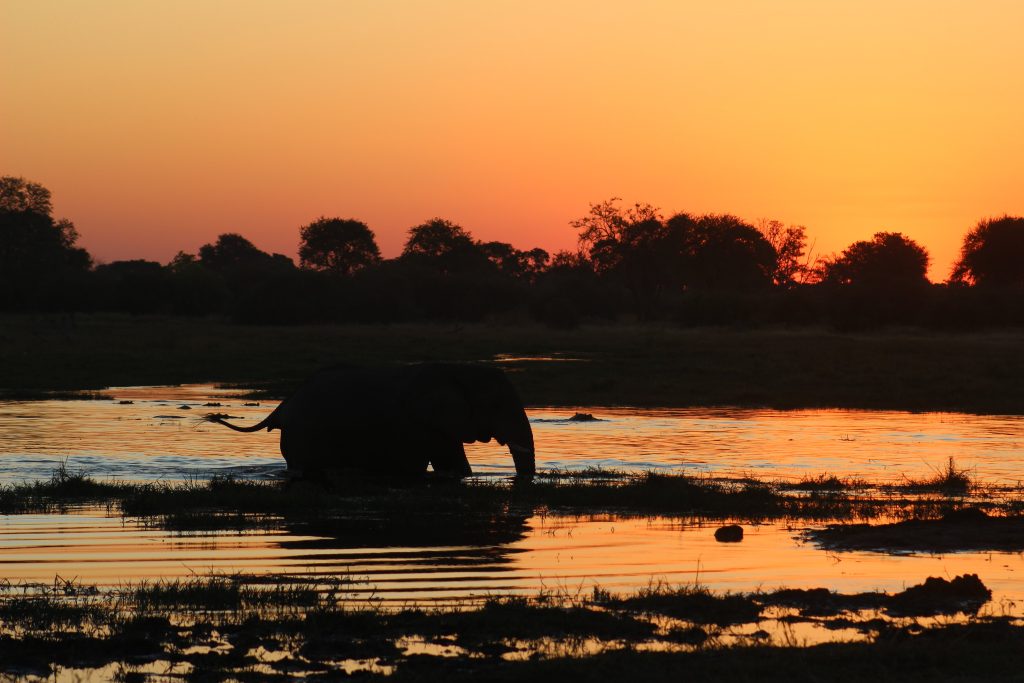
A Botswana safari splits across five wildlife areas, each delivering a different style of game viewing: mokoro and boat safaris in the Okavango Delta, predator game drives in Moremi, riverfront boat safaris in Chobe, remote big cat country in Linyanti and Savuti, and desert safaris across the Kalahari and Makgadikgadi. Nearly all camps sell activities inside one all-inclusive nightly rate. Botswana lies in southern Africa and caps bed numbers by policy, which keeps its parks quiet.
Okavango Delta Water Safaris by Mokoro and Boat
Water is what makes an Okavango Delta safari unlike anywhere else on the continent. The mokoro is a shallow dugout canoe, poled from standing at the stern, and it moves through papyrus channels at walking pace with almost no sound. You sit low. Reeds pass at eye level. Frogs, jacanas and the occasional startled lechwe make up most of the sightings, and the appeal is the quiet rather than the tally.
Motorboat safaris cover more ground and reach lagoons where hippo pods and crocodiles sit out the day. Both depend on water, which is where camp choice becomes the decision that shapes your whole trip.
Camps in the permanent inner Delta run water activities year round. Camps on drier eastern ground are seasonal on water and may offer mokoro trips for only part of the year, switching to game drives when channels drop. The flood peaks around July, four months after the rain that caused it fell in Angola. Ask the operator whether the camp is water-based, land-based, or both before anything is confirmed, because a Delta trip without a mokoro on it disappoints people in a way that is entirely avoidable.
Delta camps often pair a morning mokoro trip with a walking safari on one of the islands. If walking matters to you, ask by name. Guided walks need a licensed walking guide on site, and not every camp keeps one.
Moremi Game Reserve Game Drive Safaris for Wild Dog and Lion

Moremi holds the eastern third of the Delta and it is where Botswana’s predator viewing is most consistent. Mopane woodland gives way to floodplain and then to papyrus lagoon inside a fairly short drive, and that habitat mix supports large lion prides alongside one of Africa’s more secure populations of African wild dog.
Wild dogs are the species that brings people back. Packs range widely and denning season concentrates them, which is roughly June through August. Leopard viewing along the treelines is good. Sightings are never promised and any guide who promises them is selling rather than guiding.
September and October are the sharpest months for cats here. Surface water elsewhere has gone by then, the herbivores have pulled in tight around what remains, and the bush has thinned to the point where a leopard is visible at fifty metres rather than five. October is also punishingly hot, which is the honest trade.
Chobe Riverfront Boat Safaris and Elephant Viewing
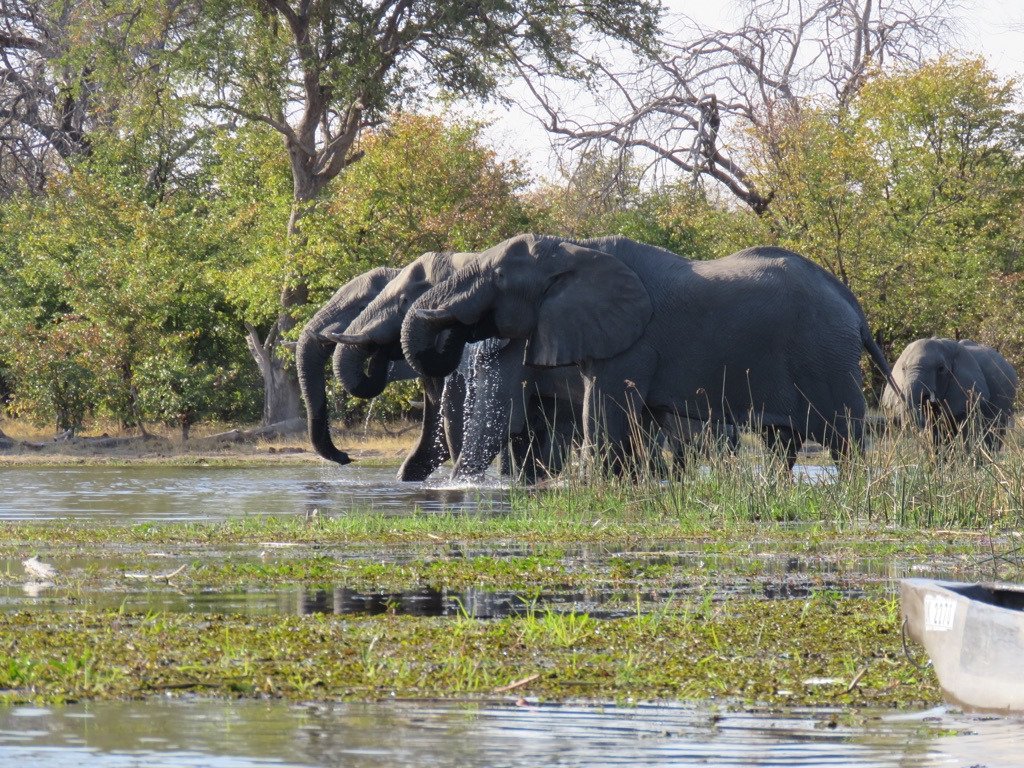
The Chobe safari is the most reliable wildlife viewing in Botswana and by some distance the most accessible. Chobe National Park covers around 11,700 square kilometres, and its riverfront carries the highest elephant density in Africa, drawn from a national population estimated near 130,000.
Boat safaris are the reason to come. From the water you are level with drinking elephants, with hippo pods surfacing a few metres off, with crocodiles hauled out on sandbanks and skimmers working the shallows. Herds cross to the islands and swim, which is a thing worth seeing once. Buffalo come down in the hundreds. Lion follow the buffalo.
Game drives along the riverfront cover the same ground from the bank and turn up different things, including the sable and roan that use the drier woodland behind. Kasane is minutes from the Sedudu Gate, and Victoria Falls sits roughly 80 kilometres away, which is why this corner works as a short add-on to a Zimbabwe or Zambia trip.
Linyanti, Savuti and Selinda Predator Safaris
North of the Delta and west of Chobe lies a band of country that experienced safari travellers rate above both. The Linyanti marshes, the Savuti Channel and the Selinda Spillway form a linked water system that fills and empties on its own unpredictable schedule, and the camps here sit on private concessions rather than inside national park boundaries.
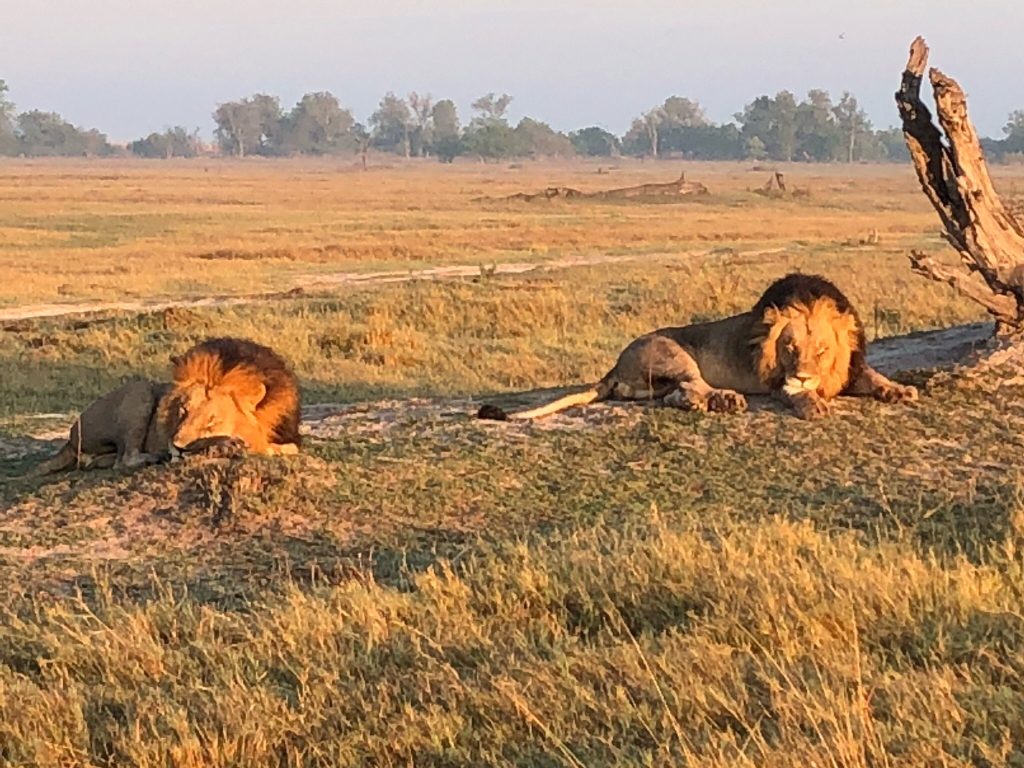
Savuti has a long reputation for lion, and above all for prides that hunt elephant, which is behaviour recorded in few other places. Linyanti draws enormous dry-season elephant concentrations along its waterways. Selinda runs walking and canoe safaris along the spillway when water allows.
What ties these areas together is restricted access rather than luxury. Vehicle numbers are limited by concession agreement, so a sighting here is usually yours alone.
Central Kalahari Desert Safaris and Black-Maned Lions

A Kalahari safari asks for a different frame of mind. The Central Kalahari Game Reserve runs to about 52,800 square kilometres of semi-arid sandveld, thorn scrub and fossil riverbed, and it is one of the largest protected areas on earth. Wildlife is thinner on the ground than in the north and correspondingly harder won.
Black-maned Kalahari lions are the headline. Gemsbok, springbok, eland and cheetah hold across the open country, brown hyena work the margins, and the smaller desert species that never make anybody’s list, meaning bat-eared fox, aardwolf and aardvark, are genuinely findable here.
Deception Valley greens up after rain and pulls in game that has been dispersed for months. This inverts the usual Botswana calendar: the Kalahari is at its best from December through April, exactly when the northern parks are at their weakest.
Makgadikgadi Pans Safaris, Meerkats and the Zebra Migration
The Makgadikgadi pans are the floor of a vanished super-lake, salt-white, flat and vast enough to be picked out from orbit. Safaris here trade wildlife density for atmosphere and for activities that exist nowhere else in the country.
Quad biking runs across the crust when it is firm and dry. San trackers lead walks that read the ground for you, pointing out what passed, how long ago and in which direction, from marks you would never have registered. Semi-habituated meerkat colonies allow close observation, and with no high ground to climb on the open pan they will sometimes use a seated visitor as a lookout post. Camps run sleep-outs on the open salt under skies dark enough that stargazing is a listed activity rather than an afterthought.
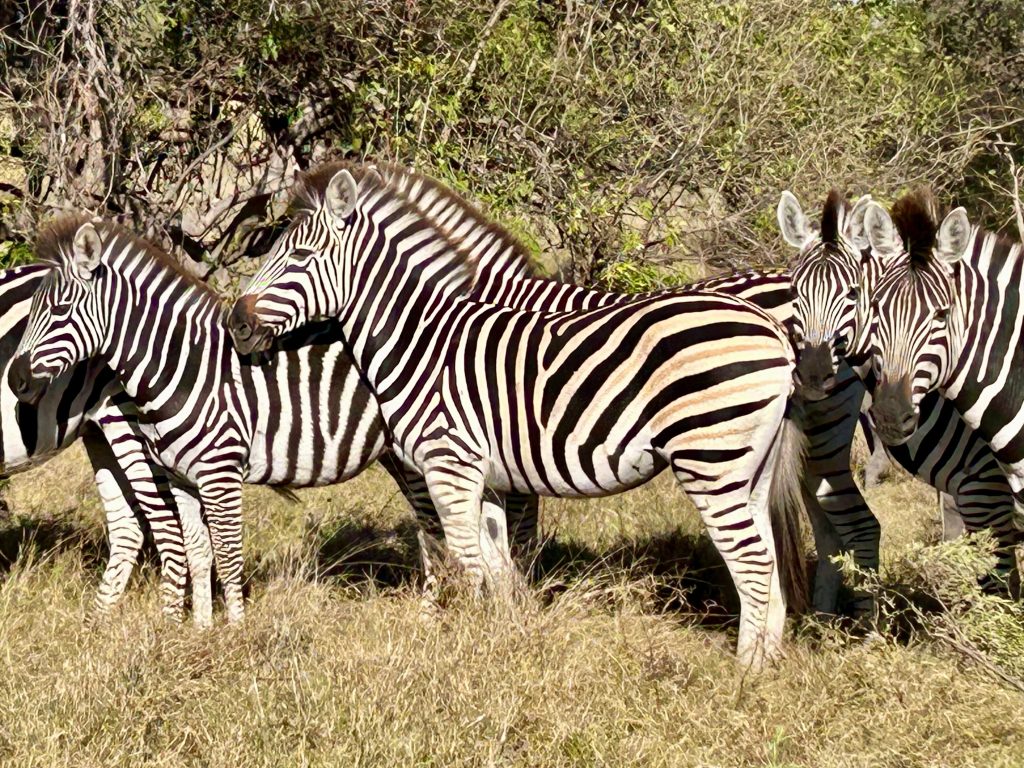
Then there is the migration nobody talks about. More than 20,000 zebra move between the Chobe River and Nxai Pan, arriving around December and staying until roughly February before turning north again, some covering over 800 kilometres. A second, smaller movement of about 15,000 animals runs a 500 kilometre loop between the Okavango and the Makgadikgadi. It is the longest terrestrial mammal migration in Africa and it happens in the low season, which is why so few people see it. Short answers to the questions that come up most often are collected on our Botswana travel FAQ.
Mokoro safaris. Poled dugout canoe through Delta channels. Quiet, slow, close to water level. Best when the flood is high, roughly June to September.
Boat safaris. Motorboat viewing in the Delta lagoons and along the Chobe riverfront. Strong for hippo, crocodile, drinking elephant and waterbirds.
Game drive safaris. Morning and afternoon runs in open vehicles. The core activity everywhere, and the only one available in some Kalahari and pans camps.
Walking safaris. Guided and armed, usually early morning. Offered on Delta islands, in Selinda and around the pans. Needs a licensed walking guide in camp.
Walking Safaris and Night Game Drives in Private Concessions
Here is a distinction that changes what your days look like and almost nobody explains before booking. Botswana’s national parks and game reserves, Chobe and Moremi among them, prohibit off-road driving and close their gates at set hours, which rules out night drives. Private concessions operate under different agreements and permit both.
That is the real argument for paying concession rates. Off-road access means a guide can follow a leopard into the treeline rather than watching it walk away from the track. Night drives with a spotlight open up a completely different cast: aardvark, porcupine, civet, genet, honey badger, and hunting cats moving in the dark.
Walking safaris follow the same rule. Guided walks are broadly restricted inside the parks and freely available on concessions, so if walking is high on your list, that decides where you sleep.
Off-road driving, night drives and guided walks are concession privileges, not national park ones. If those matter to you, book the concession and accept the rate.
Fly-in Safari Camps Compared With Mobile Camping Safaris
Almost every camp in Botswana is semi-permanent by law. Conservation rules require that a lodge can be taken down inside 24 hours and leave no trace behind, which explains the raised timber decks, the canvas, and the stilts that let a Delta camp cope with rising water. It also explains why the building standard is so high in structures that are, technically, temporary.
Fly-in camps are reached by light aircraft on hops of fifteen to forty-five minutes from Maun or Kasane. Rates cover accommodation, all meals, most drinks, and two activities a day. Baggage limits are tight and soft bags are usually mandatory.
Mobile camping safaris work differently. A crew moves ahead of you, pitching and striking camp while you travel overland by 4×4 between regions. You see the country in between instead of flying over it, the guiding tends to be excellent because one guide stays with you throughout, and the price sits well below the lodge equivalent. For a lot of people it is the better trip, not merely the cheaper one.
Fly-in camp safari. Fastest way to cover distant areas. Highest comfort. All-inclusive rates with two activities daily. Strict luggage limits and a fixed charter schedule that shapes arrival and departure days.
Mobile camping safari. Overland travel by 4×4 with a crew moving camp. One guide throughout. Considerably lower cost. Longer travel days and simpler facilities, though good mobile operators run proper beds and hot bucket showers.
What a Day on a Botswana Safari Actually Looks Like

Wake-up is early, usually somewhere between half five and six, and in June or July it is cold enough that camps hand out blankets and hot water bottles for the vehicle. Coffee and something light, then out by first light because that is when cats are still moving.
The morning activity runs three to four hours with a stop for coffee somewhere with a view. Back to camp mid-morning for a proper breakfast, then the middle of the day is yours. Most people sleep through it. In October, everybody sleeps through it. A representative packaged route covering all three regions is the 8 day Botswana highlights safari.
Afternoon tea around three thirty, then the second activity out until dark, ending with a sundowner drink somewhere open. Dinner is communal at most camps, though not all. Then bed, with hippo noise and, if you are lucky, lion.
Best Season for a Botswana Safari
May through October covers the dry months and the peak window for the northern parks. The Delta flood is high, vegetation thins, animals concentrate on permanent water and the sky stays clear. Mornings in June and July are genuinely cold, and Kalahari nights drop to freezing.
November through April brings the rain as afternoon storms, greens the country, and moves the best game viewing south to the Kalahari and the pans. Camp rates fall steeply. Birding is at its strongest with the migrants in, and antelope drop their young, which draws predators into the open.
Dry season, May to October. Peak for Delta, Moremi, Chobe, Linyanti and Savuti. High flood and full water activities from June. Cold early mornings, hot and dusty by October. Book the best camps a year ahead.
Green season, November to April. Peak for the Central Kalahari, Makgadikgadi and the zebra migration. Strong birding and newborn game. Much lower rates, far fewer vehicles, wildlife more widely spread.
Getting to Your Safari Camp From Maun or Kasane
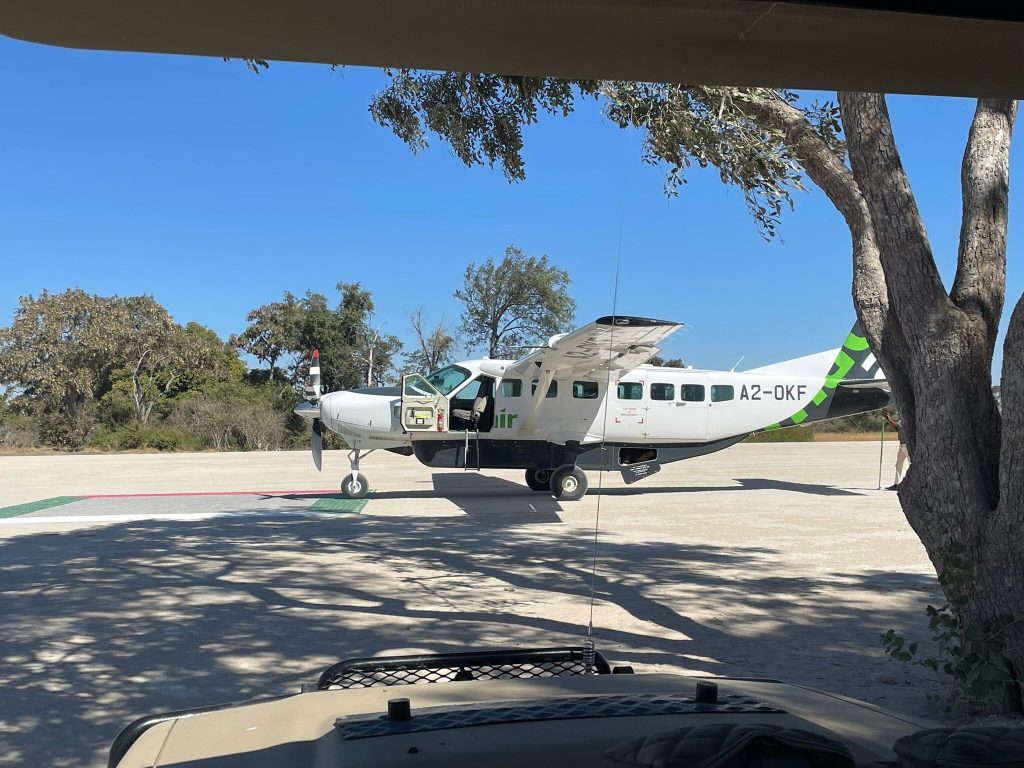
No long-haul flights arrive from outside Africa, so nearly everyone routes through Johannesburg on Airlink or Air Botswana. Ethiopian Airlines links Maun to Addis Ababa for travellers avoiding a South African connection.
Maun serves the Okavango and the Kalahari. Kasane serves Chobe, Linyanti and the Zimbabwe and Zambia borders. From either, scheduled light aircraft handle inter-camp transfers, run by operators including Mack Air and Wilderness Air. A useful routing many people miss is flying into Kasane and out of Maun rather than backtracking, which saves a day.
Frequently Asked Questions About Botswana Safaris
How much does a Botswana safari cost per night?
Mobile camping safaris commonly run 350 to 550 US dollars per person per day. Classic mid-range lodges fall roughly between 600 and 1,100 dollars per person per night. Private concession camps at the top end start near 1,500 dollars and reach beyond 4,000. Entry-level pricing sits higher than neighbouring countries because bed numbers are capped by policy: a semi-permanent tented camp here might cost 800 dollars per adult per night where a comparable Serengeti camp charges 400. Green season rates can drop as much as 40 percent.
Are park fees included in a Botswana safari rate?
At all-inclusive camps, usually yes, along with conservation and community levies that private concessions charge on top. On a self-drive or budget tour, usually not. The Department of Wildlife and National Parks charges non-residents 120 Pula per person per day, reduced to 70 Pula for clients of a licensed Botswana operator, with DWNP camping at 30 Pula per person per night. A Tourism Development Levy of 30 US dollars is payable by international visitors on arrival. Always ask an operator to confirm in writing what the rate covers.
Which is better for a safari, the Okavango Delta or Chobe?
They answer different questions. Chobe gives you volume and near-certainty, particularly elephant, and it is cheap to reach and easy to arrange from Kasane. The Delta gives you water activities, wild dog, leopard and a sense of remoteness that Chobe cannot match, at a considerably higher price and with a light aircraft transfer attached. Most well-built itineraries take both, usually three nights in each, because the contrast is the point.
Can you do a self-drive safari in Botswana?
Yes, and plenty of people do, though it demands more competence than most first-timers expect. Moremi, Chobe and the Central Kalahari need a properly equipped 4×4, campsites booked well in advance, and real experience driving deep sand. Fuel is not sold inside the parks, off-road driving is prohibited, the speed limit is 40 kph and gates close at fixed times. Recovery help can be hours away. If you have not driven sand before, a mobile camping safari gives you similar country with a guide who has.
What wildlife will I see on a Botswana safari?
Elephant in very large numbers, especially in Chobe and Linyanti. Lion throughout, including the black-maned Kalahari lions in the south. Leopard, mostly in Moremi and the Delta. African wild dog, which Botswana holds in better numbers than most of the continent. Buffalo, hippo, crocodile, giraffe, zebra and a wide antelope range including lechwe and sitatunga in the Delta and gemsbok in the desert. Rhino are present but limited and not a species to plan a trip around. Nothing is guaranteed on any given drive.
How many nights should I spend on a Botswana safari?
Three nights per camp is the sweet spot, since the first afternoon and the last morning are largely eaten by transfers. Six or seven nights across two areas works well for a first visit. Nine or ten nights across three lets you add the Kalahari or the pans, which is where the trip gains real variety. Two nights anywhere leaves you one full day, and in the Delta that is not enough to justify the charter flight.
Booking Your Botswana Trip
The safari companies and tour operators listed on this website put trips like this together for a living and know which camps, guides and routes actually deliver. We are an independent guide to Botswana; we do not book or sell tours ourselves.
When you are ready, arrange your safari, tour or holiday with one of the recognised operators listed here. Tell them your dates and what matters most, and a real person, not a form, will handle the itinerary, park bookings and logistics for you.