Overland Safaris in Botswana
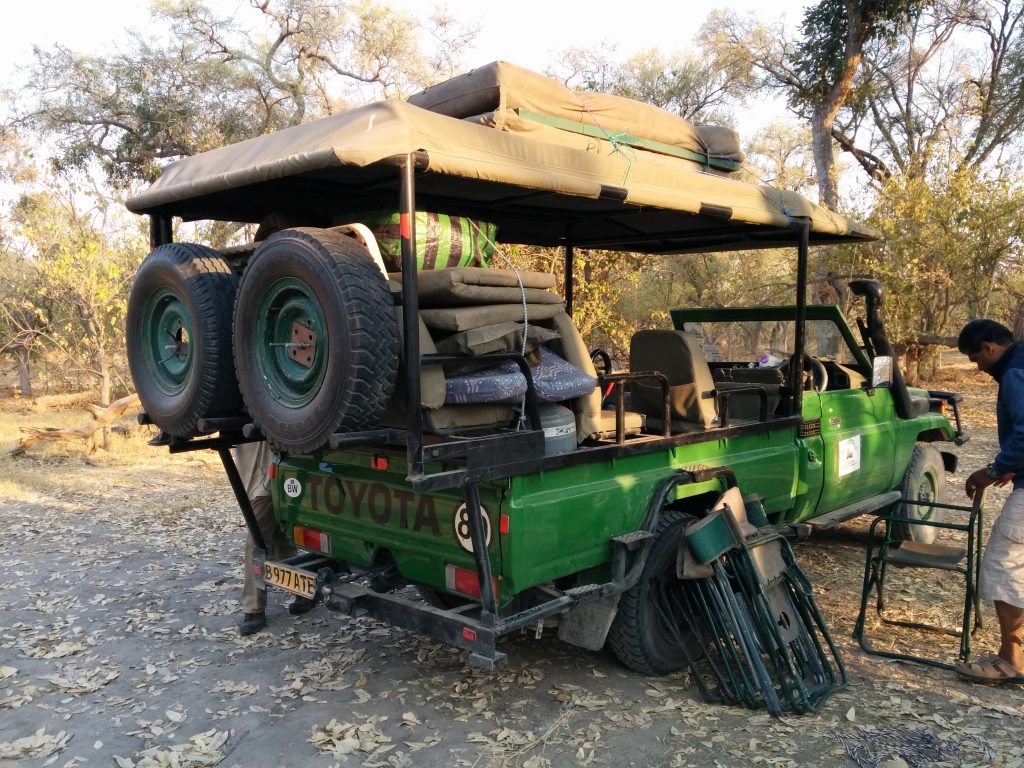
Overland safaris cross several countries by purpose-built truck, with Botswana usually forming one leg of a longer route between Cape Town or Johannesburg and Victoria Falls. Groups run considerably larger than on a Botswana mobile safari, commonly eighteen to twenty-eight travellers, and most trips are participation camping. They are the cheapest way to see southern Africa and a different proposition from a dedicated Botswana safari.
What an Overland Safari Is
The format is distinct and it is frequently confused with mobile camping, which it is not.
An overland trip travels in a custom-built truck carrying the group, the camping equipment, the kitchen and the luggage, moving between countries over anything from eight days to two months.
Botswana is typically one section of a longer route. The classic runs Cape Town to Victoria Falls over roughly twenty days, taking in South Africa, Namibia, Botswana and Zimbabwe, with the Botswana portion covering the Okavango, Khwai and Chobe.
Shorter trips exist. An eight-day Johannesburg to Victoria Falls route via Botswana takes in a rhino reserve, mokoro travel and bush walks in the Delta, then Kasane and the Falls.
Longer expeditions of fifty days and more cross seven countries and reach as far as Tanzania and Zanzibar.
The truck is the accommodation, transport and social structure all at once.
Trucks are purpose-built rather than converted buses, with forward-facing seats, large windows, lockers for personal kit, storage for tents and chairs, a kitchen area and water tanks. Some carry a small library and a sound system. They are designed for long days on rough roads and for a group living together for weeks, which is a different engineering problem from a safari vehicle designed for three-hour game drives.
An overland trip is a way of seeing southern Africa cheaply, with Botswana as one chapter. A mobile safari is a way of seeing Botswana properly. They are sold in similar language and they are not the same holiday.
Participation Camping
This is the part that most defines the experience and it should be understood before booking.
On participation trips the group shares the work. Travellers are usually divided into small teams with rotating duties: a kitchen group helping prepare meals and clean up, a packing group setting out tables and chairs, and a cleaning group emptying bins and sweeping the truck.
Crew leaders typically do the main meal preparation and ask travellers to help with washing up.
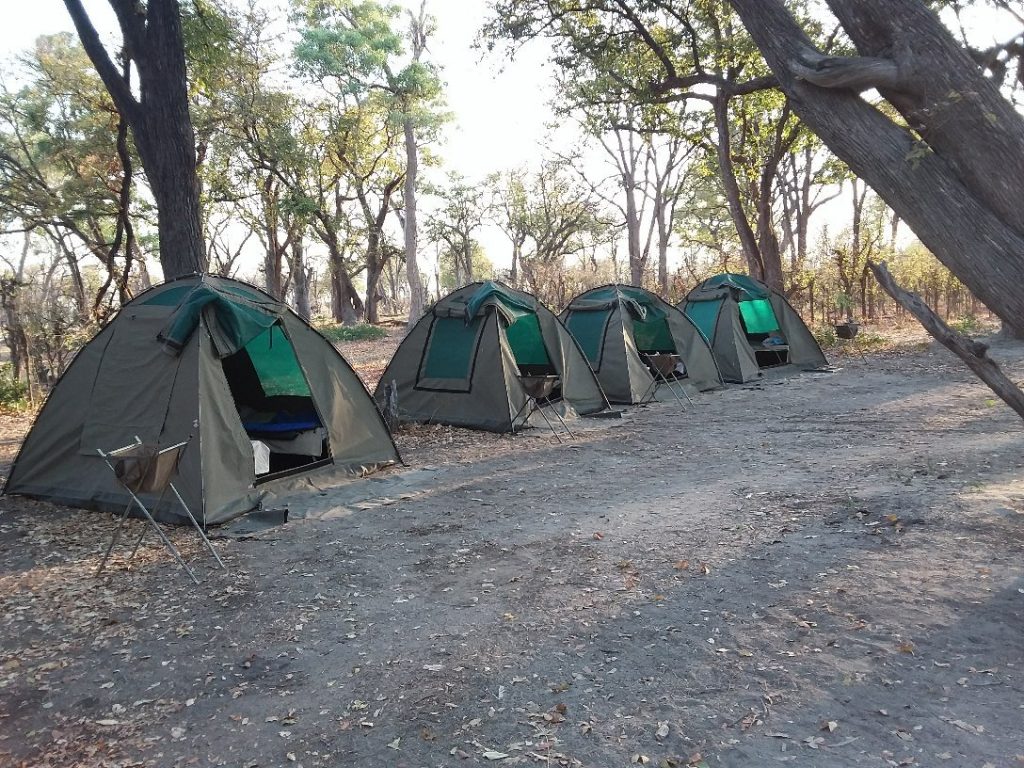
Camping equipment is supplied, with dome tents that assemble in a few minutes and built-in insect nets. Mattresses of around four centimetres are provided. Sleeping bags and pillows are usually not supplied and cannot be hired, so bring your own.
Accommodation varies across a single trip. A twenty-one day itinerary might include fourteen nights participation camping, a night in a permanent tented camp, two in backpacker guesthouses in multi-share rooms, two basic bush camping nights and one hostel night.
Team spirit is genuinely part of it, and travellers who resent shared chores tend not to enjoy these trips.
The Botswana Leg

What you actually get in Botswana on an overland trip is worth spelling out.
Most itineraries reach Maun and then leave the truck behind, transferring into smaller game-viewing vehicles for the Delta and Khwai portion. Luggage restrictions apply on that leg, so a smaller overnight bag is needed.
The Okavango portion is usually an overnight or two-night mokoro excursion to a basic bush camp, with guided walks and a campfire. This is the highlight of the Botswana section for most travellers.
Khwai and Moremi feature on longer routes, with game drives in the community area and reserve.
Chobe is reached via Kasane, with a river cruise commonly offered as an optional extra rather than included.
The Makgadikgadi appears on some routes as a stopover, and the western route through Ghanzi and D’Kar includes San cultural visits, sometimes staying at a community-owned lodge.
Group Size and Who Travels
Numbers are the biggest practical difference from a Botswana mobile safari.
Overland groups commonly run to a maximum of twenty-two with an average around eighteen, and some operators take up to twenty-eight. Against a mobile safari capped at seven, that is a different social experience entirely.
Some operators run age-banded departures, with trips aimed at eighteen to thirty-somethings, and others take all ages.
The crowd tends to be young, independent and budget-focused, and many are travelling southern Africa over several weeks rather than taking a fortnight’s holiday.
Small group versions exist. Some operators run the same routes with a maximum of twelve in a luxury 4×4 truck with lodge accommodation instead of camping, at correspondingly higher prices.
Travellers under eighteen must be accompanied by an adult on most operators.
Meals are included in large part but not entirely. A three-week itinerary might include eighteen breakfasts, seventeen lunches and twelve dinners, with the remainder bought yourself in towns, so a food budget of a few hundred dollars on top of the trip price is normal and worth planning for. The longest of the packaged routes, the 14 day Botswana and Victoria Falls safari, works the same corridor.
Overland truck. Eighteen to twenty-eight travellers, multi-country routes, participation camping, Botswana as one leg. Cheapest way to see southern Africa. Long drive days.
Mobile camping safari. Two to twelve travellers, Botswana only, crew handles everything, exclusive wilderness campsites inside the parks. Far more wildlife time per day.
Accommodated overland. The same routes in a smaller vehicle with lodge accommodation rather than tents, commonly capped around twelve. Costs more and removes the camping.
The Honest Trade-offs
Overland trips are excellent value and they involve real compromises.
Drive days are long. Covering four countries in three weeks means substantial time on the road, and the truck is where a lot of the trip happens.
Wildlife time per day is lower than on a dedicated safari. You are moving between countries rather than working one area.
Campsites are designated public sites with basic facilities rather than the exclusive wilderness sites a Botswana mobile operator uses.
Group size means less individual attention from guides and more compromise on timing.
Against that, you see an enormous amount of southern Africa for very little money, in company, with the logistics handled. For a traveller with more time than budget, that is a genuinely good trade.
A Note on Animal Interactions
Worth raising because overland routes pass through places where this arises.
Several operators warn travellers directly that they will meet optional activities encouraging close contact with wildlife, including walking with lions and riding elephants.
These operations put people in contact with animals that would normally live wild and separate from humans, and the responsible operators advise against participating.
The concern is well documented across the industry, particularly around the origin and eventual fate of habituated predators.
Botswana itself does not offer these activities in its wildlife areas, and they are encountered elsewhere on multi-country routes.
If an operator flags this in their trip notes, that is a good sign about the operator rather than a warning about the trip.
Community-run alternatives exist on the same routes and are worth choosing instead. The San-owned lodge and camp near D’Kar in the Ghanzi district is one, offering guided bush walks and cultural demonstrations led by residents with proceeds going to the community trust. Several overland operators use it deliberately, which is a reasonable indicator of how an operator thinks about the places it passes through.
If Botswana is the reason you are travelling, an overland trip is the wrong shape. Take a mobile camping safari instead. If southern Africa is the reason and Botswana is one thing you want to see, an overland trip does that job better than anything else at the price.
Frequently Asked Questions About Overland Safaris in Botswana
What is an overland safari?
A multi-country trip in a purpose-built truck carrying the group, camping equipment, kitchen and luggage, typically running between Cape Town or Johannesburg and Victoria Falls with Botswana as one leg. Routes range from eight days to two months, with a classic twenty to twenty-one day Cape Town to Victoria Falls itinerary covering South Africa, Namibia, Botswana and Zimbabwe. Most are participation camping, where travellers share the daily chores.
What does participation camping involve?
Sharing the work. Groups are usually divided into rotating teams handling kitchen duty, setting out tables and chairs, and cleaning the truck. Crew leaders do the main cooking and ask travellers to help wash up. Dome tents and mattresses of around four centimetres are supplied and assemble in minutes, but sleeping bags and pillows are usually not provided and cannot be hired, so bring your own.
How big are overland groups?
Commonly a maximum of twenty-two with an average around eighteen, and some operators taking up to twenty-eight. That is a very different social experience from a Botswana mobile safari capped at seven or twelve. Smaller accommodated versions exist, running the same routes with a maximum around twelve in a luxury 4×4 with lodge accommodation instead of tents, at correspondingly higher cost.
What do you see in Botswana on an overland trip?
Most itineraries reach Maun, leave the truck and transfer to smaller game-viewing vehicles for the Delta and Khwai portion, with luggage restrictions on that leg. The Okavango section is usually an overnight or two-night mokoro excursion to a basic bush camp with guided walks. Chobe is reached via Kasane with a river cruise often optional rather than included. Longer routes add Moremi, the Makgadikgadi and San cultural visits near Ghanzi.
Is an overland safari the same as a mobile camping safari?
No, and the distinction matters. An overland trip crosses several countries in a large truck with eighteen or more travellers doing their own chores, camping at designated public sites, with Botswana as one chapter. A mobile camping safari stays in Botswana with two to twelve travellers, a crew handling everything, and exclusive wilderness campsites inside the parks that the public cannot book. Wildlife time per day is far higher on the latter.
Should I avoid lion walking and elephant riding on these routes?
Several responsible operators warn travellers directly about these optional activities and advise against participating, on the basis that they put people in close contact with animals that would normally live wild and separate from humans. The concerns around habituated predators in particular are well documented. Botswana does not offer these activities in its wildlife areas, and they are encountered elsewhere on multi-country routes.
Booking Your Botswana Trip
The safari companies and tour operators listed on this website put trips like this together for a living and know which camps, guides and routes actually deliver. We are an independent guide to Botswana; we do not book or sell tours ourselves.
When you are ready, arrange your safari, tour or holiday with one of the recognised operators listed here. Tell them your dates and what matters most, and a real person, not a form, will handle the itinerary, park bookings and logistics for you.