Mobile and Tented Camps
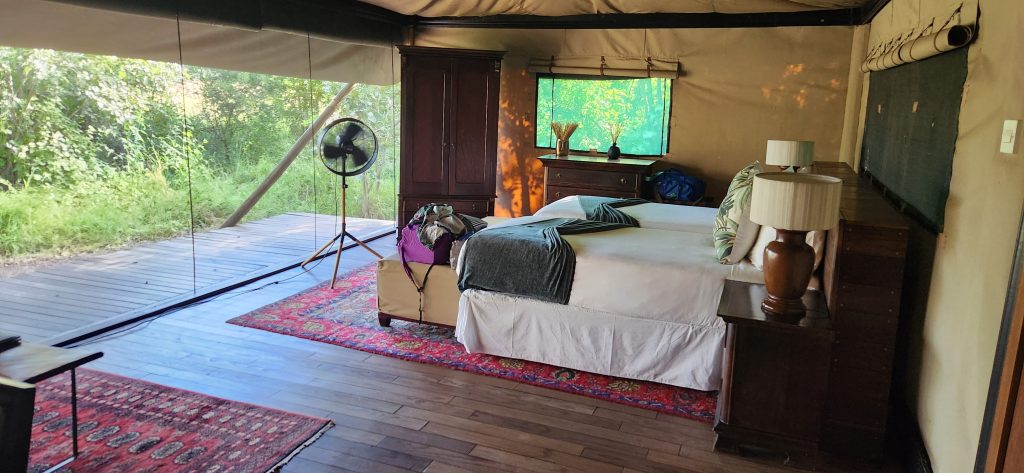
Mobile safaris in Botswana move a tented camp with you every few days, with a crew travelling ahead to pitch and strike while you are out on a game drive. They range from participation trips where guests put up their own dome tents to fully serviced camps with walk-in Meru tents, real beds and en-suite bush bathrooms. Botswana is a southern African safari country where mobile operators hold exclusive campsites inside the national parks that are not available to the general public.
What a Mobile Safari in Botswana Actually Is
The mobile safari is the original form of the thing, and it still works the way it always did.
You travel overland by 4×4 between wildlife areas, spending two or three nights in each before moving on. A support vehicle carries the camp and a crew who go ahead of you, so while you are on an afternoon game drive they are pitching tents at the next site, and when you arrive there is a fire, a cold drink and dinner cooking.
The same guide stays with you throughout, which is the part that people who have done both rate most highly. At a fly-in lodge you get a new guide at every camp. On a mobile you get one person who learns what you want to see over a week and adjusts accordingly.
Typical routes cover the Okavango Delta, Moremi, Khwai, Savuti, Chobe and sometimes the Central Kalahari, seeing the country between the parks rather than flying over it.
Levels of Mobile Camping Safari
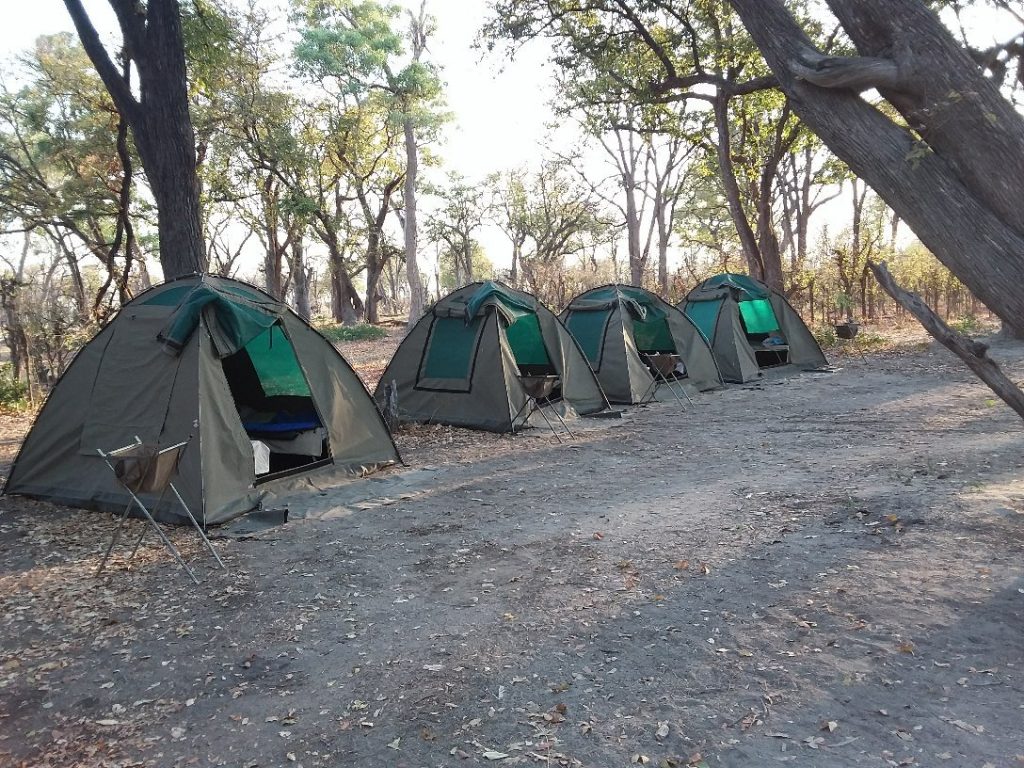
The word mobile covers a wide range of comfort and cost, and knowing which tier you are booking matters more than the operator’s name.
Participation and semi-participation trips are the budget end. Guests pitch their own dome tents and carry their own bags from the truck, with the crew handling everything else. Ablutions are shared. This is the cheapest way into northern Botswana with a properly qualified guide.
Fully serviced mobile safaris require nothing of you. The crew pitches and strikes the tents, the mess gazebo and the bathrooms, cooks over the fire and manages camp entirely. Tents are walk-in Meru style with free-standing beds, a small verandah and en-suite bush bathrooms with bucket showers running hot and cold, and a toilet.
Semi-luxury and luxury mobiles add larger tents, proper mattresses, smart linen, good lighting and an elegant mess tent, with silver service and fine dining at the top end.
The gap between a 3×3 metre dome tent and a walk-in Meru with an en-suite is enormous, and it is where most of the price difference sits.
Ask two questions before booking any mobile: do I put up my own tent, and does the bathroom attach to my tent or is it shared? The answers place the trip on the scale far more reliably than words like comfortable or authentic in a brochure.
Private and Scheduled Mobile Departures
Two ways to book, and the choice affects both cost and character.
Scheduled group departures run on fixed dates with other travellers, usually in groups of six to twelve, and some operators restrict scheduled trips to eight. Sharing spreads the cost of the vehicle, crew and camp across more people, which is what makes mobile safaris affordable. Many departures focus on a particular interest, birding being the most common.
Private mobile safaris take the whole camp for your own party, with a private guide, vehicle and crew. For a family or a group of four or more this frequently costs little more per head than a scheduled trip and gives you complete control over the route and pace. Having a small camp on a palm island in the Delta entirely to yourselves is a particular kind of experience that no lodge replicates.
Private departures also allow the itinerary to be built around your interests rather than a fixed programme.
Where Mobile Camps Are Allowed to Go
Here is the advantage that mobile operators hold and that nobody mentions in the brochures.
Mobile safaris use exclusive campsites inside the national parks and game reserves that are not available to the general public, alongside private sites in the concession areas. These are proper wilderness sites rather than the busy public campgrounds, often with nobody else within kilometres.
That means a mobile safari can put you deep inside Moremi or Savuti overnight, in country that day visitors leave at gate closing time, without the lodge rates that usually accompany that access.
The trade-off is that national park rules still apply, so no off-road driving and no night drives inside park boundaries. Where a mobile route includes concession land, both become possible.
Tented Camps Versus Mobile Camps
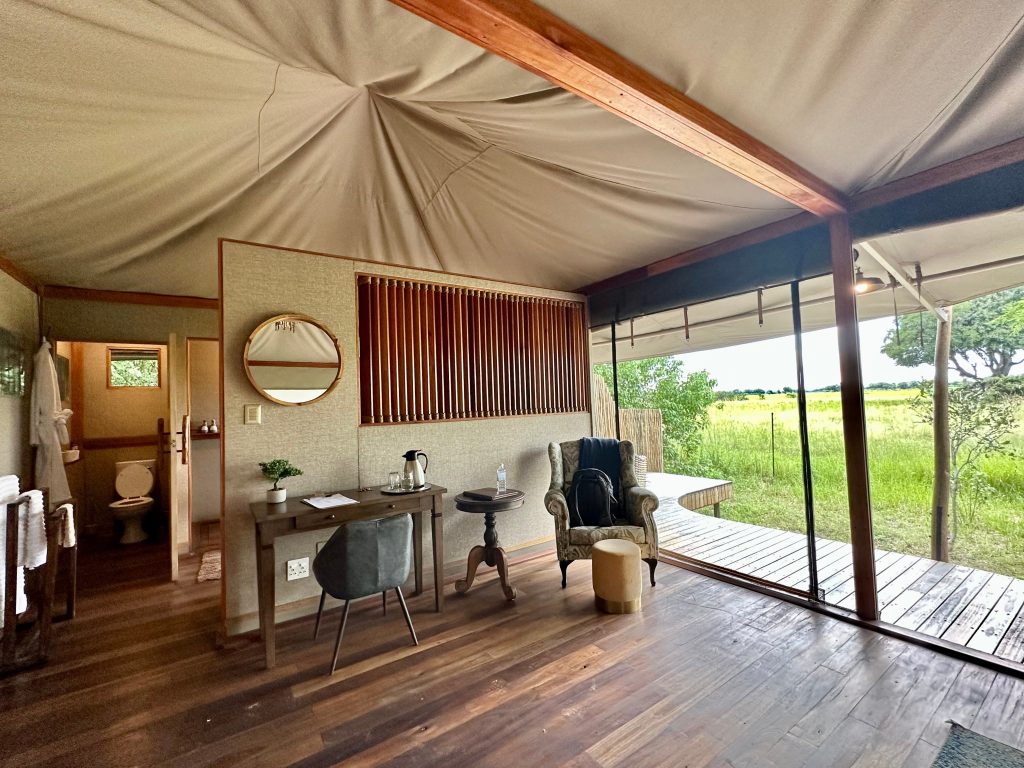
The vocabulary trips people up, so it is worth separating clearly.
A tented camp in Botswana is a fixed property that stays in one place, built in canvas and hardwood on raised decks because conservation rules require it to be removable within a day. It has plumbed bathrooms, electricity and often a plunge pool. You fly in and stay put.
A mobile camp genuinely moves. Tents come down every few days and go up somewhere else, water is carried in, bathrooms are bucket showers and short-drop toilets, and there is no permanent infrastructure at all.
A third variation exists that confuses matters further: some operators pitch a camp in one wilderness location for a few days without moving it, which is camping rather than mobile. Mokoro trails in the Delta commonly work this way, with simpler equipment, smaller tents and shared facilities.
Participation mobile. You pitch your own dome tent and carry your bag. Shared ablutions. Group departures of six to twelve. The cheapest guided access to northern Botswana.
Fully serviced mobile. Crew does everything. Walk-in Meru tents, free-standing beds, en-suite bush bathroom with hot bucket shower. One guide throughout. Scheduled or private departures.
Fixed tented camp. Permanent location, flown into, plumbed bathrooms, electricity, sometimes a plunge pool. New guide at each camp. Considerably higher nightly rate.
What Camp Life Is Like on a Mobile Safari
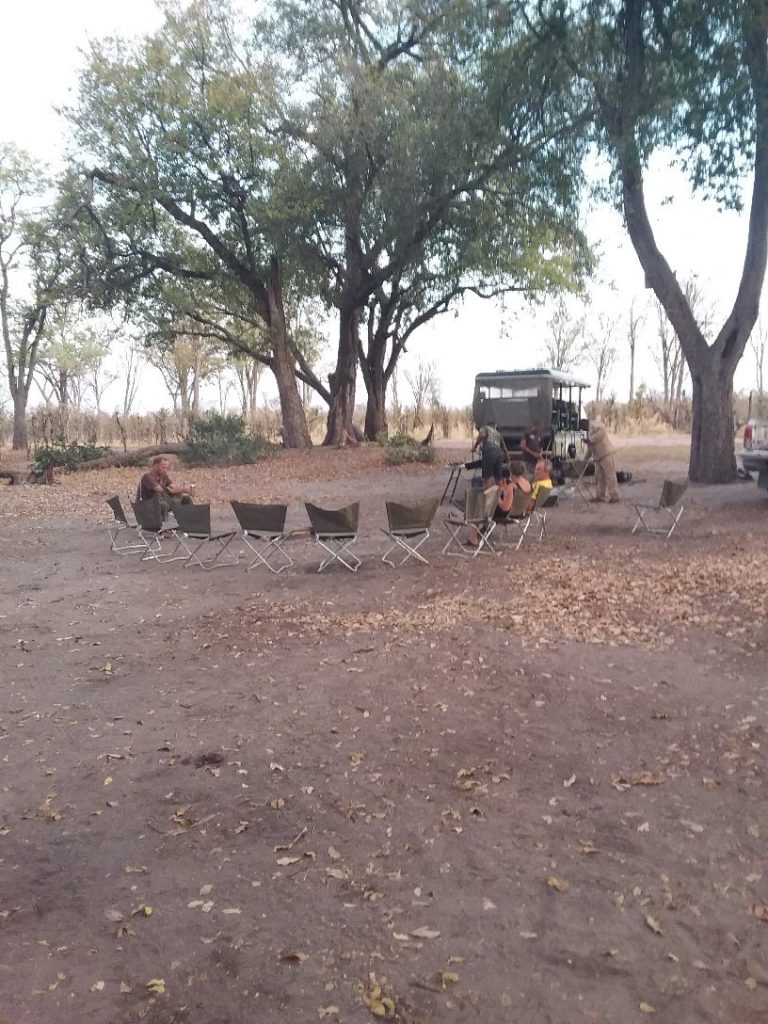
Days follow the same rhythm as a lodge safari, out at first light for three or four hours, back for brunch, out again in the afternoon until dark. What differs is everything around the edges.
You sleep closer to the ground and closer to the sound. Camps have no fences and no perimeter lighting, so hippos grazing at night and lions calling in the distance arrive without the buffer of a raised timber deck and a bar area. Most people find this is the point rather than a drawback.
Bucket showers are heated over the fire and filled when you ask for one. Cooking happens on the fire, and the standard from a good bush chef is genuinely high.
Bring a head torch. There is no path lighting and you will want both hands free.
One warning that experienced mobile travellers pass on: do not leave a toiletry bag outside your tent overnight, since hyenas are unaccountably fond of soap and toothpaste.
The continuity of a single guide across a whole week is what mobile safari travellers talk about afterwards. By day four they know what you have already seen and what you are still hoping for.
Who a Mobile Safari Suits
Mobile works well for travellers who want the wildlife without the lodge rate, and for people who would rather be in the bush than beside a plunge pool.
It suits families and groups of four or more particularly well on a private basis, since the cost per head drops and the flexibility helps enormously with children.
It suits birders and photographers on scheduled specialist departures, where the whole group shares an interest and the guide is chosen for it.
It suits people happy with simplicity. Nobody is pretending a bucket shower is a rain head, and if that matters to you, a fixed camp is the better trip.
It suits anyone who wants to see the country rather than fly over it, which is a real difference in how Botswana registers afterwards.
Frequently Asked Questions About Mobile Safaris in Botswana
How much does a mobile camping safari in Botswana cost?
Participation group camping safaris start from around 350 US dollars per person per day, with guided mobile camping often averaging near 300. Fully serviced mobile safaris commonly run 350 to 550 per person per day. That compares with roughly 600 to 1,100 per night for mid-range fixed lodges and 1,500 upward for luxury private concession camps. Group size drives the difference in price on scheduled departures, and private mobiles cost more per head unless your party is four or more.
What is the difference between participation and fully serviced mobile safaris?
On participation and semi-participation trips you pitch your own dome tent and carry your own bag from the vehicle, with the crew handling all other camp duties. Ablutions are shared. On fully serviced safaris the crew does everything, including erecting and dismantling tents, the mess gazebo and the bathrooms, and you stay in walk-in Meru-style tents with free-standing beds, a verandah and an en-suite bush bathroom with hot bucket shower and toilet.
Are mobile safari tents comfortable?
On fully serviced and semi-luxury trips, yes. Walk-in Meru-style tents take proper free-standing beds with real mattresses, smart linen and decent lighting, with an en-suite bush bathroom attached. The top mobile operators run elegant mess tents and serve fine dining. Participation trips use much smaller dome tents, commonly around three metres square, with shared facilities. Ask outright which type you are booking, since the gap between the two is where most of the price difference sits.
Can mobile safaris go where lodges cannot?
In a sense, yes. Mobile operators hold exclusive campsites inside the national parks and game reserves that are not available to the general public, plus private sites in the concessions. That puts you deep inside Moremi or Savuti overnight in country that day visitors must leave at gate closing. National park rules still apply, so no off-road driving or night drives within park boundaries, though both become possible where a route includes concession land.
How big are the groups on a mobile safari?
Scheduled departures usually run six to twelve guests, with some operators restricting group size to eight. Sharing across a group is what keeps mobile safaris affordable, since the vehicle, crew and camp costs are spread. Private mobile safaris take the whole camp for your own party with a private guide, vehicle and crew, which for families or groups of four or more often costs little more per head and allows the route to be built around your interests.
Is a mobile safari suitable for families?
A private mobile can be excellent for families, and is often recommended for children aged six and above. You control the pace entirely, can cut a drive short without inconveniencing other guests, and the crew and guide get to know your children over a week. Cost per head drops with four or more travellers. Fully serviced rather than participation is the sensible level with children, and the dry season from May to August reduces malaria risk.
Booking Your Botswana Trip
The safari companies and tour operators listed on this website put trips like this together for a living and know which camps, guides and routes actually deliver. We are an independent guide to Botswana; we do not book or sell tours ourselves.
When you are ready, arrange your safari, tour or holiday with one of the recognised operators listed here. Tell them your dates and what matters most, and a real person, not a form, will handle the itinerary, park bookings and logistics for you.