Mobile Camping Safaris in Botswana
A mobile camping safari travels overland between wilderness campsites while a crew dismantles and rebuilds your camp ahead of you, and it is the best value serious safari available in Botswana. Campsites are allocated to one operator at a time, so you see no other camp and share no sundowner spot. The same guide stays with you throughout, which after three days changes what you see.
How a Mobile Safari Works
The mechanics are simple and they explain why the format works so well here.
You travel by open 4×4 with your guide. A separate supply vehicle carries the camp and the crew, who go ahead, set everything up before you arrive and take it down after you leave.
On a moving day you pack your bags into the safari vehicle in the morning and go on a game drive. The crew strikes the camp behind you and rebuilds it at the next site, so you arrive to a tent that is already standing with your luggage inside.
Camps typically move every two or three nights rather than daily.
The crew usually includes a guide, a chef and one or two camp assistants, with housekeeping and a turn-down service that extends to hot water bottles in the beds.
When you leave a site, the only evidence of your stay is footprints.
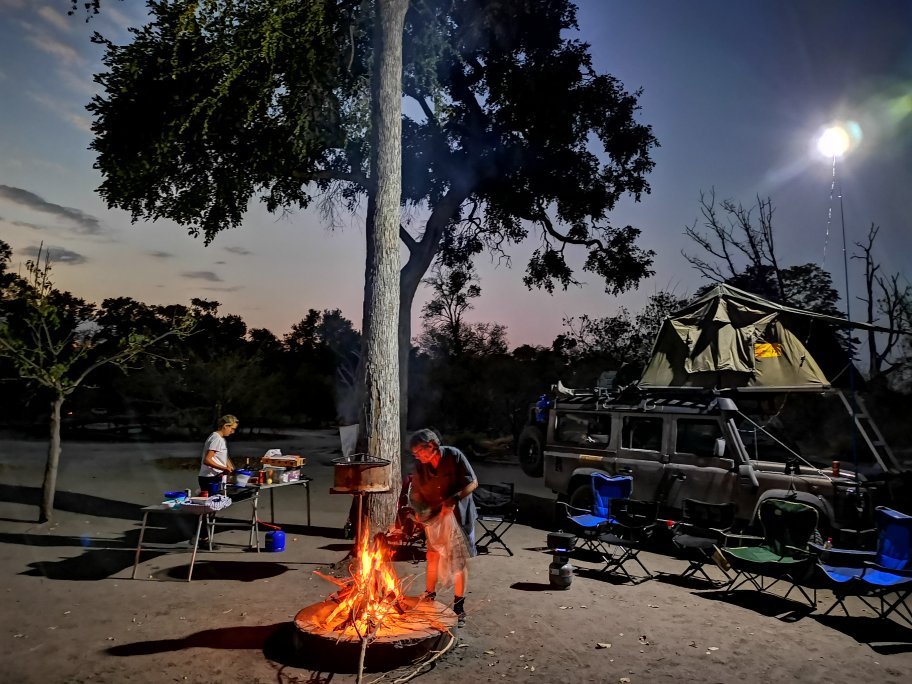
Meals are worth a mention because they surprise people. A dedicated chef cooks from scratch over an open fire in a bush kitchen, served in an open mess tent at a proper table with chairs, and the standard is consistently reported as far higher than the equipment suggests. Dietary requirements are handled with notice. Drinks including beer, wine and soft drinks are usually included on serviced trips.
Botswana allocates each wilderness campsite to one operator at a time. That is why a mobile safari feels private in a way a lodge in the same park cannot: you will not see another camp or hear another vehicle.
The Three Tiers

Mobile safaris are sold under one name at three quite different standards, and the difference is worth knowing before booking.
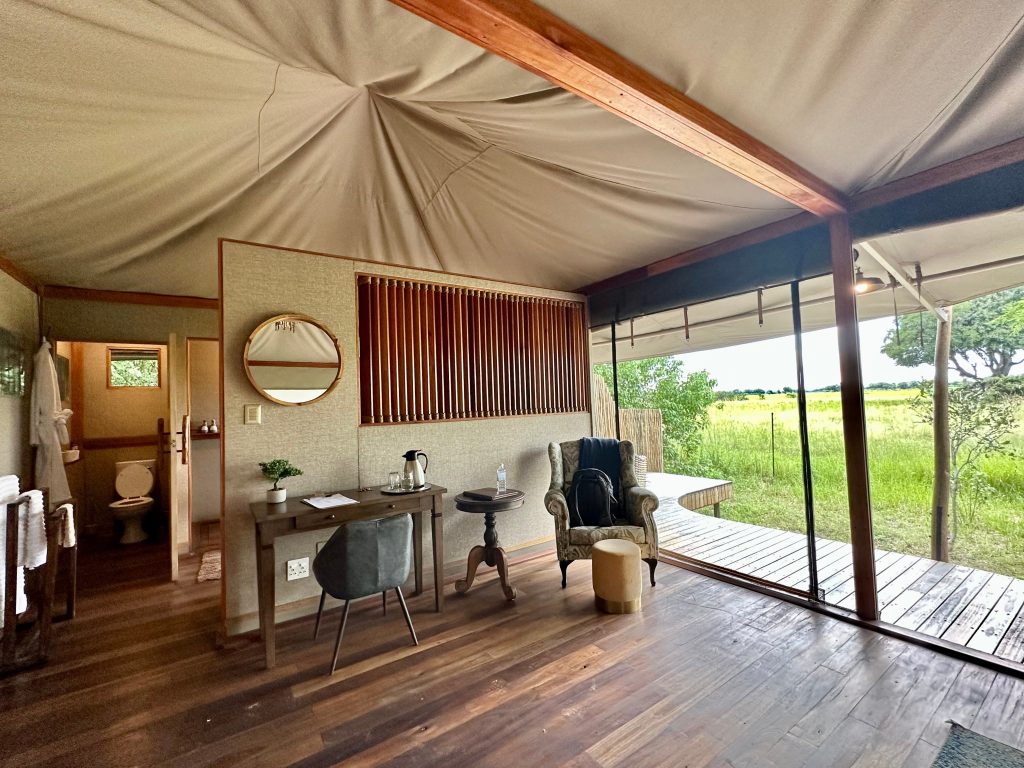
Luxury or fully serviced uses large walk-in Meru tents with built-in floors, proper beds with full linen, mosquito netting and an en-suite bush bathroom with a bucket shower and toilet. Camp staff handle everything and guests participate in nothing. Hot water is heated for showers on request.
Mid-range is still fully serviced, with the crew handling cooking and chores, but you sleep on a cot in a smaller dome tent of around three metres square rather than a walk-in. Bathrooms may be en-suite or shared depending on the itinerary.
Participation or adventure is the most affordable. Guests pitch their own tents, carry their own luggage from the vehicle and sleep on a mattress pad rather than a bed. The trade-off is entirely financial.
All three use the same campsites and the same wildlife areas. What changes is comfort and how much work you do.
Exclusive Campsites
This is the structural advantage and it is the reason mobile safaris deliver more than their price suggests.
Botswana operates one of the most tightly regulated mobile safari systems in Africa. Designated campsites across the prime wildlife areas, including Chobe, Moremi and the Central Kalahari, are managed through official bodies that allocate each site to a single operator at a time.
The result is genuine privacy. You will not see another camp, hear other vehicles or share a sundowner spot with strangers.
These sites are also unavailable to the general public, so a mobile safari puts you deep inside Moremi where a self-drive traveller could not book and a lodge guest is staying outside the boundary.
Campsites are unfenced and wildlife moves through them freely, which is the point rather than a drawback.
Access is the other gain. Because there are no permanent buildings to maintain, mobile operators reach remote parts of the parks that lodges simply do not exist in.
Group Size and Guiding
Two things separate a good mobile safari from an adequate one.
Group sizes are small, commonly a minimum of two and a maximum of seven or twelve. Operators capping at seven do so because that is what an open Land Cruiser seats with everyone getting a window seat. Run as a mobile trip, that same circuit becomes the 8 day Botswana highlights safari.
Private mobile safaris run for your own party alone, typically for up to twelve travellers in six Meru tents, two of which can usually be combined for a family.
The guiding is where the real value sits. Having the same guide throughout the trip, rather than a different camp guide at each stop, means somebody who by the third day knows what you have seen and what you are still hoping for.
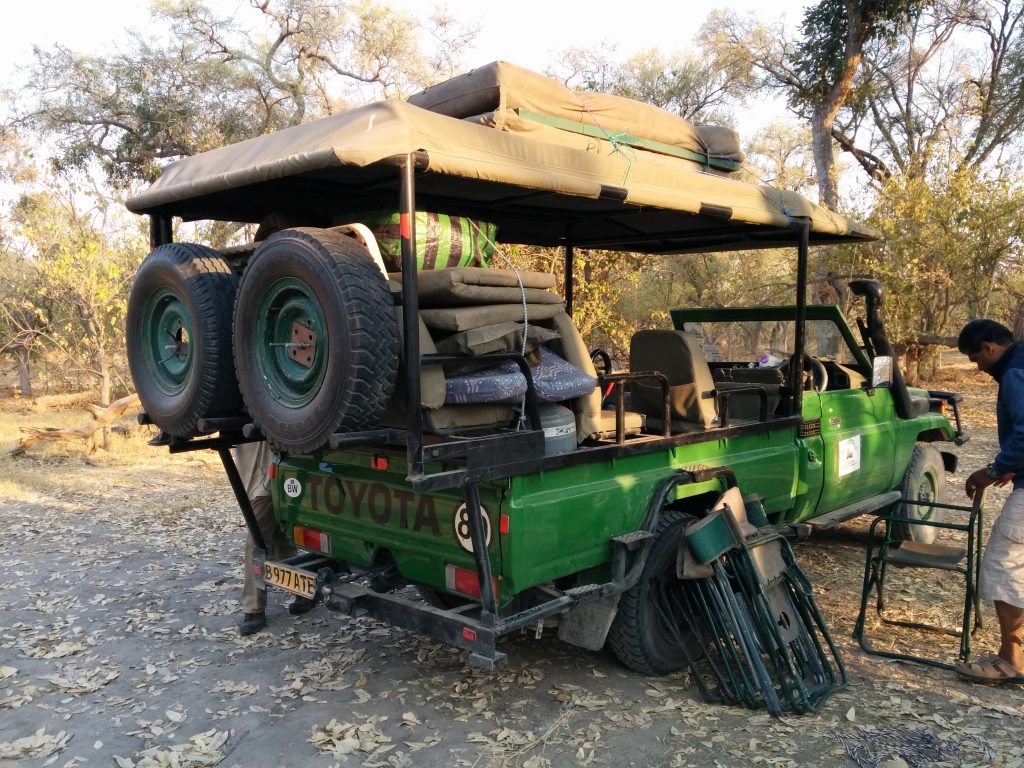
Vehicles are custom-built with open sides, shade roofs, raised game-viewing seats and long-range fuel tanks.
Ask the maximum group size and whether the guide changes. Those two answers tell you most of what matters.
Luxury serviced. Walk-in Meru tents with proper beds, en-suite bucket shower and bush toilet, crew handling everything. The most comfortable camping available and still well below lodge rates.
Mid-range serviced. Dome tents around three metres square with cots, crew still handling cooking and chores, bathrooms en-suite or shared. Usually scheduled group departures.
Participation. You pitch your own tent, carry your own bags and sleep on a mattress pad. Cheapest by a distance, same campsites and same wildlife.
A Typical Route
Most mobile itineraries follow one of two shapes.
The northern circuit runs Maun to Kasane, taking in the Xakanaxa and Khwai areas of Moremi, Savuti in the north and finishing on the Chobe riverfront. Eight nights is a common length, though shorter versions of five or six nights exist.
The desert circuit runs from Maun into the Central Kalahari, the Makgadikgadi and Nxai Pan, which suits the green season when the north is at its weakest and the desert at its best.
Longer trips of ten days and more can cover both, driving between them and watching the country change in a way no charter flight shows you.
Khwai is a frequent inclusion because it sits outside the national park boundary and permits night drives that Moremi does not.
Trips can be booked as scheduled departures on set dates or privately for your own group.
Mobile trips also combine well with a short fly-in leg. A common arrangement runs the mobile portion overland through Moremi and Chobe, then adds two or three nights at a Delta water camp reached by light aircraft from Maun or Kasane, which gives you the mokoro and lagoon country that no overland route reaches while keeping most of the trip at mobile prices.
Who It Suits
Mobile camping is not for everyone and the fit is worth checking.
It suits travellers who want depth over polish, who are comfortable in a tent with a bucket shower, and who value having one guide for a week over changing camps and faces.
It suits families and groups well, since a private mobile takes up to twelve and the format is naturally sociable.
It suits budget-conscious travellers who refuse to compromise on where they go, since mobile safaris reach the same country as camps costing three times as much.
It suits anybody wanting to combine the north and the desert, since the overland format makes that possible.
It suits less well those who need a swimming pool, air conditioning, reliable electricity or a solid wall between themselves and the wildlife.
If the camping is the only thing putting you off, look at the luxury serviced tier before dismissing the format. Walk-in tents with proper beds, linen, en-suite bush bathrooms and hot bucket showers are a long way from what most people picture, and it still costs well under lodge rates.
Frequently Asked Questions About Mobile Camping Safaris in Botswana
How much does a mobile camping safari cost?
Roughly 350 to 550 US dollars per person per day, with participation trips lower, some averages cited nearer 300, and fully serviced luxury versions around 600 to 700. That covers camping fees, meals, game drives, transfers and guiding, with tips usually separate. Against mid-range lodges at 600 to 1,100 per night and luxury camps from 1,500 upward, it is the best value serious safari in Botswana.
Do you have to help set up camp?
Only on participation trips, where guests pitch their own tents, carry their own luggage and sleep on a mattress pad. Fully serviced and luxury mobile safaris are non-participation: a crew travels in a separate supply vehicle, sets up before you arrive and dismantles after you leave, handling cooking, cleaning and camp chores throughout. On a moving day you simply load your bags and go on a game drive.
What are the tents like on a mobile safari?
On luxury trips, large walk-in Meru tents with built-in floors, proper beds with full linen, mosquito netting on windows and entrance, and an en-suite bush bathroom with a bucket shower and toilet, with hot water heated on request. Mid-range trips use smaller dome tents of around three metres square with cots, and bathrooms may be shared. Participation trips use dome tents and mattress pads.
Where do mobile safaris camp?
At designated wilderness campsites across the prime wildlife areas including Chobe, Moremi and the Central Kalahari, managed through official bodies that allocate each site to one operator at a time. That means you see no other camp and hear no other vehicles. These sites are unavailable to the general public, so a mobile safari puts you deep inside Moremi where self-drive travellers cannot book and lodge guests stay outside the boundary.
How big are the groups on a mobile safari?
Small. Scheduled departures commonly run from a minimum of two to a maximum of seven or twelve, with operators capping at seven so that everyone gets a window seat in an open Land Cruiser. Private mobile safaris typically take up to twelve travellers in six Meru tents, two of which can usually be combined to suit a family, which makes the format flexible for groups of friends.
Is mobile camping safe with wildlife around?
Campsites are unfenced and elephant, lion and hyena move through them, which is part of the experience rather than a fault. The rules are the same as at any unfenced camp: stay in your tent after dark, never keep food in the tent, use a torch and check before leaving it at night, and follow the guide’s instructions. Crews are experienced and camps are positioned with that in mind.
Booking Your Botswana Trip
The safari companies and tour operators listed on this website put trips like this together for a living and know which camps, guides and routes actually deliver. We are an independent guide to Botswana; we do not book or sell tours ourselves.
When you are ready, arrange your safari, tour or holiday with one of the recognised operators listed here. Tell them your dates and what matters most, and a real person, not a form, will handle the itinerary, park bookings and logistics for you.