Budget Botswana Safaris
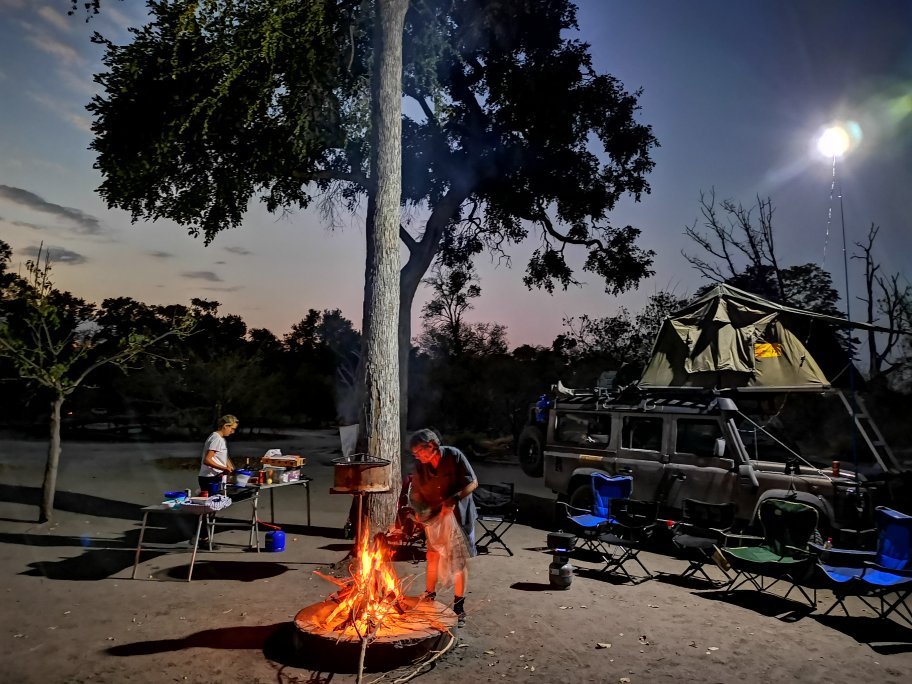
Botswana is Africa’s most expensive safari country and it can still be done affordably, principally through mobile camping safaris at roughly 350 to 550 US dollars per person per day, self-drive trips, and basing yourself at Chobe where no charter flight is needed. Green season rates fall by up to 40 percent. The wildlife is identical at every price point, and what you give up is solitude and comfort rather than animals.
Why Botswana Costs What It Does
Knowing how the pricing works is what makes it possible to work around it.
Botswana operates a deliberate low-volume, high-value tourism policy, capping visitor numbers rather than maximising them. Camps are small, concessions are enormous and access to much of the Okavango requires light aircraft.
Two costs drive everything. Accommodation in remote camps is expensive because there are so few beds. And internal charter flights, at roughly 250 to 500 US dollars per person per leg, add up fast across a multi-camp itinerary.
A budget trip attacks both. Camp somewhere cheaper, and avoid the charters entirely by travelling overland or by staying where the road reaches.
The national parks themselves are not the expensive part. Entry is 120 Pula per person per day for non-residents, dropping to 70 Pula through a licensed Botswana operator.
The two costs that make Botswana expensive are remote camp beds and charter flights. Remove both and the country becomes affordable, which is exactly what a mobile camping safari does.
Mobile Camping Safaris
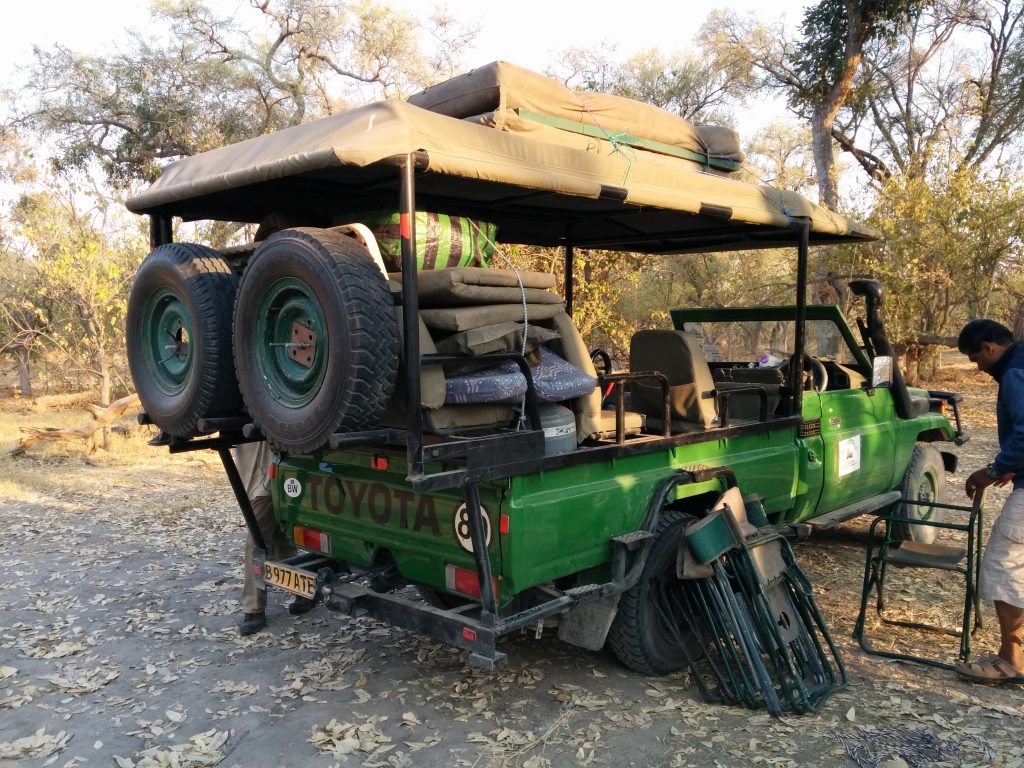
This is the single best answer for most budget travellers and it is a genuinely good trip rather than a compromise.
A mobile safari travels overland by 4×4 with a crew that pitches and strikes camp ahead of you, moving between areas as the itinerary progresses. One guide stays with you throughout.
Costs run roughly 350 to 550 US dollars per person per day, with some sources citing averages around 300 and fully serviced trips nearer 600 to 700. That covers camping fees, meals, game drives and transfers, with tips usually separate.
Because there are no permanent buildings to maintain, mobile operators reach remote parts of Moremi, Khwai, Savuti and Chobe that lodges cannot.
Mobile operators also hold exclusive campsites inside the national parks that the general public cannot book, so you overnight deep inside Moremi rather than outside the gate.
Service levels vary. Participation trips, where you pitch your own tent, cost least. Fully serviced trips with walk-in Meru tents, proper beds and en-suite bush bathrooms cost more and still sit far below lodge rates.
Self-Drive Safaris
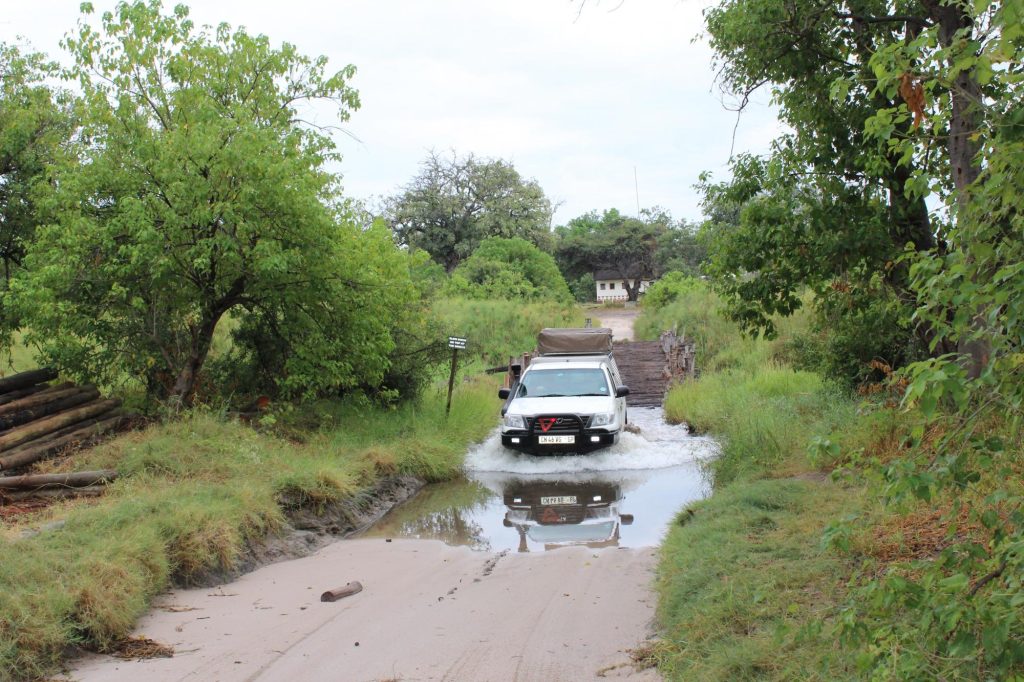
The cheapest way to see Botswana, and the most demanding.
A properly equipped 4×4 with rooftop tent, cooking gear and a fridge lets you travel independently through Moremi, Chobe, the Central Kalahari, Nxai Pan and the Makgadikgadi.
You pay park fees, campsite fees and fuel, and nothing else. Two or three people sharing a vehicle brings the daily cost down substantially.
What it demands is real competence. Tracks are deep sand throughout, sections become impassable after rain, fuel is not sold inside any park and recovery help can be hours away.
Campsites must be booked well ahead through the private operators that now run most public sites, with park fees settled separately with the Department afterwards. Entry has been refused at gates for paperwork errors.
Stock up in Maun, Kasane or Francistown, because there are no shops of any kind inside the parks.
Where to Base a Budget Trip
Location decides more of the cost than the accommodation does.
Chobe from Kasane is the cheapest safari area in the country, because the park gate sits minutes from the airport and no charter flight is required at all. Riverfront lodges are the most competitively priced in Botswana, boat safaris are inexpensive, and the elephant viewing is the best on the continent.
The Khwai community area delivers Moremi-standard wildlife with night drives and off-road driving, at rates well below the private concessions, and it takes self-drive visitors and mobile safaris. Community campsites are bookable by the public.
Maun works as a base for day trips and mokoro trails, with modest hotel prices and the option of a three-night mokoro trip camping on Delta islands.
The Makgadikgadi has affordable options near Gweta aimed at self-drivers, with activities bookable individually.
What to avoid on a budget is the fly-in Delta circuit, where the charters alone will exceed a week of mobile camping.
Backpackers have a narrower set of options than in most African countries, since Botswana has never built the hostel network that Namibia or South Africa has. What exists is concentrated in Maun and Kasane, alongside campsites at both, and the practical route for independent travellers on very little money is to base in Maun, take a mokoro trail into the Delta and a day trip into Moremi, then move on to Kasane by bus for Chobe boat trips.
Self-drive. The cheapest, at park fees, campsite fees and fuel only. Demands deep sand competence, advance campsite bookings and full self-sufficiency. Best for experienced overlanders.
Mobile camping. Roughly 350 to 550 per person per day. Crew moves camp, one guide throughout, exclusive park campsites, remote areas reached overland. The best value guided option.
Chobe from Kasane. No charter flight needed, competitive riverfront lodges, cheap boat safaris, Africa’s densest elephant population. The cheapest way to do a conventional lodge safari.
Travelling in Green Season
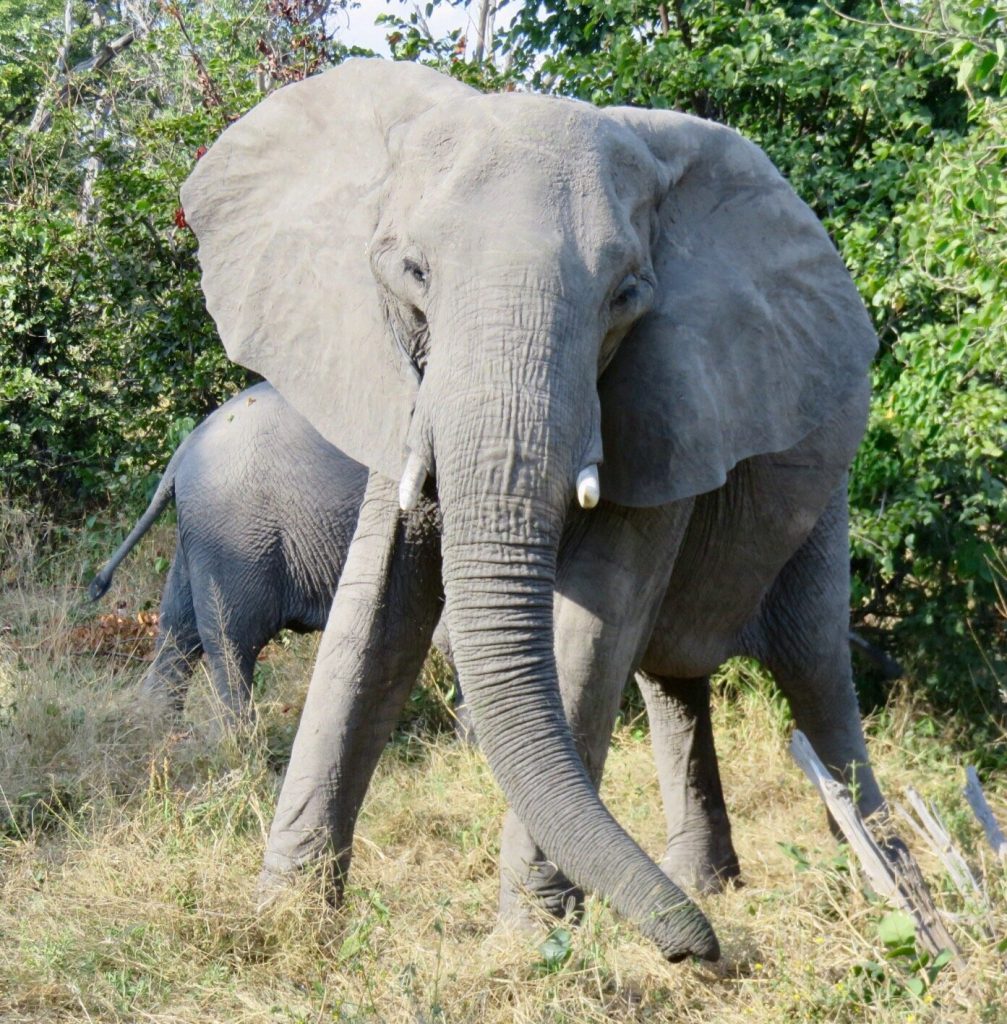
Timing is the single biggest lever on price and it is underused.
Peak season runs June to September and carries the highest rates. April, May, October and November are shoulder, with discounts commonly 15 to 25 percent. Green season from December to March brings discounts of 30 to 45 percent, and up to 60 percent at some camps. Our 5-day Botswana itinerary shows where the money goes on a short trip.
That puts properties within reach that would otherwise be impossible.
What you get in green season is exceptional birding, dramatic skies, newborn game and, in the desert, the zebra migration on the pans at its annual peak.
What you lose is northern game concentration, since animals disperse when inland pans fill, and some camps close entirely.
For the Kalahari and the Makgadikgadi the calculation reverses completely. Green season is peak wildlife there and low season on price, which is the best value combination available anywhere in Botswana. The shortest packaged option, a 3 day Okavango Delta safari, is also the cheapest way into the water country.
Other Ways to Save
Several smaller decisions add up.
Book through a licensed Botswana operator and park entry drops from 120 Pula to 70 Pula per person per day.
Fly into one airport and out of another where the routing allows, since backtracking wastes a day and Airlink permits multi-leg bookings on a single ticket.
Stay longer in fewer places. Each internal move costs a transfer and half a day, and three nights in one camp usually delivers more than two nights each in two.
Travel as a group of four or more, which spreads vehicle hire, private vehicle supplements and mobile safari costs considerably.
Consider Victoria Falls or Hwange as part of the itinerary, since both cost less than Botswana camps and reduce the average nightly rate.
Book mokoro trips and cultural tours through community trusts directly, which is cheaper and puts the money where it belongs.
One thing not to cut is travel insurance with medical evacuation cover. Botswana’s camps are remote, medical facilities outside the main towns are limited, and an evacuation flight from a bush airstrip is expensive enough to dwarf everything else on a budget trip. It is the one line item where saving money is a false economy, and several camps will not accept a booking without proof of cover.
The best value trip in Botswana is a green season desert safari. The Kalahari and the pans peak between December and April, exactly when rates across the country are at their lowest, so you get the best wildlife of the year at low season prices.
Frequently Asked Questions About Budget Botswana Safaris
What is the cheapest way to do a Botswana safari?
Self-drive is cheapest, costing only park fees at 120 Pula per person per day, campsite fees and fuel, though it demands real deep sand competence and full self-sufficiency. The best value guided option is a mobile camping safari at roughly 350 to 550 US dollars per person per day, with a crew moving camp ahead of you. Basing yourself at Chobe from Kasane avoids charter flights entirely and is the cheapest conventional lodge option.
How much does a budget Botswana safari cost?
Mobile camping runs roughly 350 to 550 US dollars per person per day, with some sources citing averages nearer 300 for participation trips and 600 to 700 for fully serviced ones. Basic group camping has been quoted from around 250 to 300 per day. A realistic eight to ten day lean green season trip has been estimated at 4,000 to 5,000 per person, against 16,000 to 20,000 for a peak season fly-in luxury equivalent.
Can you do a Botswana safari without flying between camps?
Yes, and avoiding charters is one of the two biggest savings available. Internal legs cost roughly 250 to 500 US dollars per person each and add up fast. Mobile camping safaris travel overland throughout, self-drive trips reach Moremi, Chobe, the Kalahari and the pans by road, and Chobe from Kasane needs no charter at all since the park gate sits minutes from the airport.
Is green season cheaper in Botswana?
Considerably. Green season from December to March brings discounts of 30 to 45 percent, with up to 60 percent reported at some camps, against peak season from June to September. April, May, October and November are shoulder with 15 to 25 percent off. In the north you trade game concentration for lower prices, but in the Kalahari and Makgadikgadi green season is peak wildlife, which makes it the best value combination in the country.
Where should I stay on a budget in Botswana?
Chobe from Kasane has the most competitively priced riverfront lodges and needs no charter flight. The Khwai community area delivers Moremi-standard wildlife with night drives at rates well below the private concessions, and takes self-drive visitors and mobile safaris. Maun works as a base for day trips and mokoro trails with modest hotel prices. The Makgadikgadi has affordable self-drive options near Gweta.
Do you see less wildlife on a budget safari?
Not materially. The animals are the same in the same country, and mobile camping reaches remote areas of Moremi, Khwai, Savuti and Chobe that lodges cannot, using exclusive park campsites the public cannot book. What you give up is comfort and solitude rather than wildlife, since national park camps share sightings while private concessions cap vehicle numbers. Khwai is the exception, offering concession-style activities at community prices.
Booking Your Botswana Trip
The safari companies and tour operators listed on this website put trips like this together for a living and know which camps, guides and routes actually deliver. We are an independent guide to Botswana; we do not book or sell tours ourselves.
When you are ready, arrange your safari, tour or holiday with one of the recognised operators listed here. Tell them your dates and what matters most, and a real person, not a form, will handle the itinerary, park bookings and logistics for you.