5-Day Botswana Itinerary
Five days in Botswana is enough for two regions, with the standard route pairing two nights on the Chobe riverfront with two nights in the Okavango Delta, linked by a single light aircraft flight from Kasane. That gives water and land safaris, elephants in bulk and a realistic shot at predators. Botswana is a southern African safari country where each internal transfer costs half a day, so five days supports one move and no more.
How Five Days Divides Across Botswana
The arithmetic decides the itinerary, so work through it before choosing camps.
Five days means four nights. Arrival day gives you an afternoon activity, departure day gives you a morning one, and the three days between are complete. Insert one internal flight and you lose roughly half a day to the airstrip, the wait and the repack.
That leaves two clean options. Two regions at two nights each with one flight between them, which is the classic route. Or one region for four nights, which delivers more depth and fewer logistics.
What five days will not support is three regions. Two flights consume a full day between them and you arrive home having seen airstrips.
Five days buys you one internal flight. Spend it moving between genuinely different habitats, not between two camps that offer the same activities.
The Classic Five-Day Route: Chobe and the Delta
Start at Chobe and finish in the Delta, rather than the reverse, and there is a practical reason for the order.
Kasane needs no charter flight from the airport, so you can land and be on an activity the same afternoon without waiting for a scheduled bush plane. Starting there means your first day is productive rather than spent in a departure lounge.
The Delta at the far end lets you fly out from Maun, which avoids doubling back and frequently saves a day. Airlink allows multi-leg bookings, so flying into Kasane and out of Maun can sit on a single ticket.
The habitats are also genuinely different, which is the whole justification for moving. Chobe gives you a river with enormous elephant concentrations and boat safaris. The Delta gives you channels, mokoro, islands and better predator odds. Doing both in five days is defensible in a way that two Delta camps is not.
Days One and Two: The Chobe Riverfront

Fly into Kasane, clear immigration and pay the Tourism Development Levy, then transfer by road to your lodge, usually within 45 minutes and often much less.
Take the afternoon boat safari on arrival. It needs no early start, works in the heat, and puts you among drinking elephants and surfacing hippos within twenty minutes of leaving the jetty.
Day two is your first full day. Morning game drive into the park along the riverfront and into the woodland behind, back for a late breakfast, then the middle of the day free. Afternoon brings a second activity, and the choice between another boat trip and a drive is worth thinking about, since the woodland holds sable and roan that the river does not.
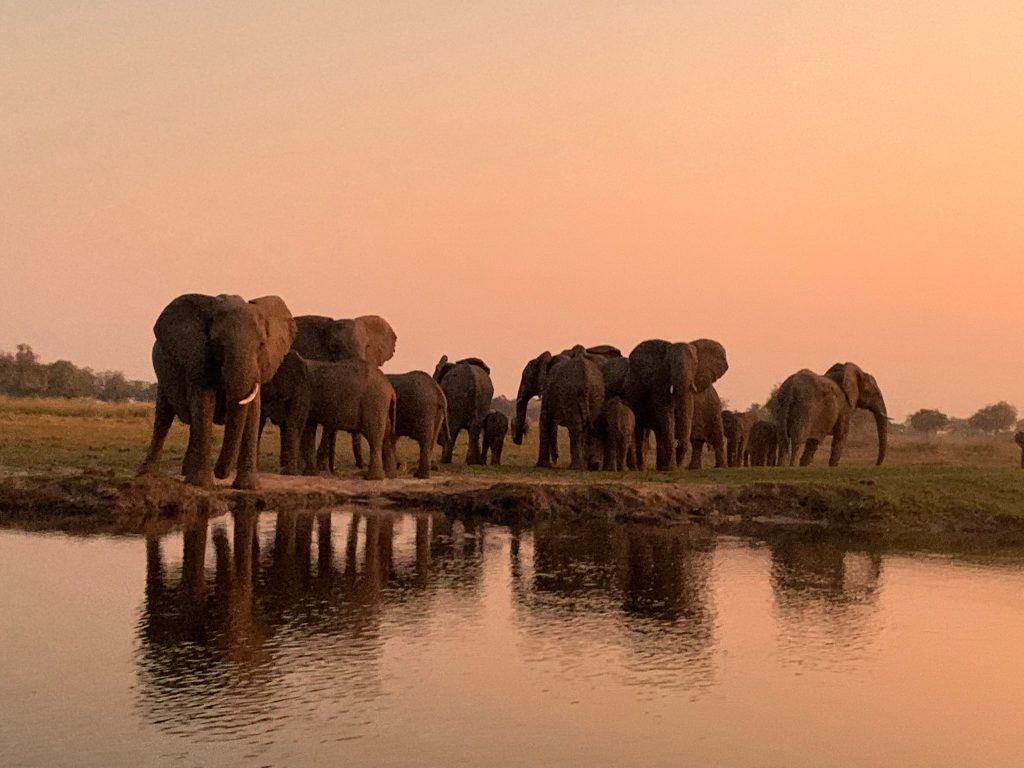
Chobe carries the densest elephant population in Africa, drawn from a national herd estimated near 130,000. Several hundred animals along one stretch of bank in an afternoon is ordinary here.
Day Three: Flying Into the Okavango Delta
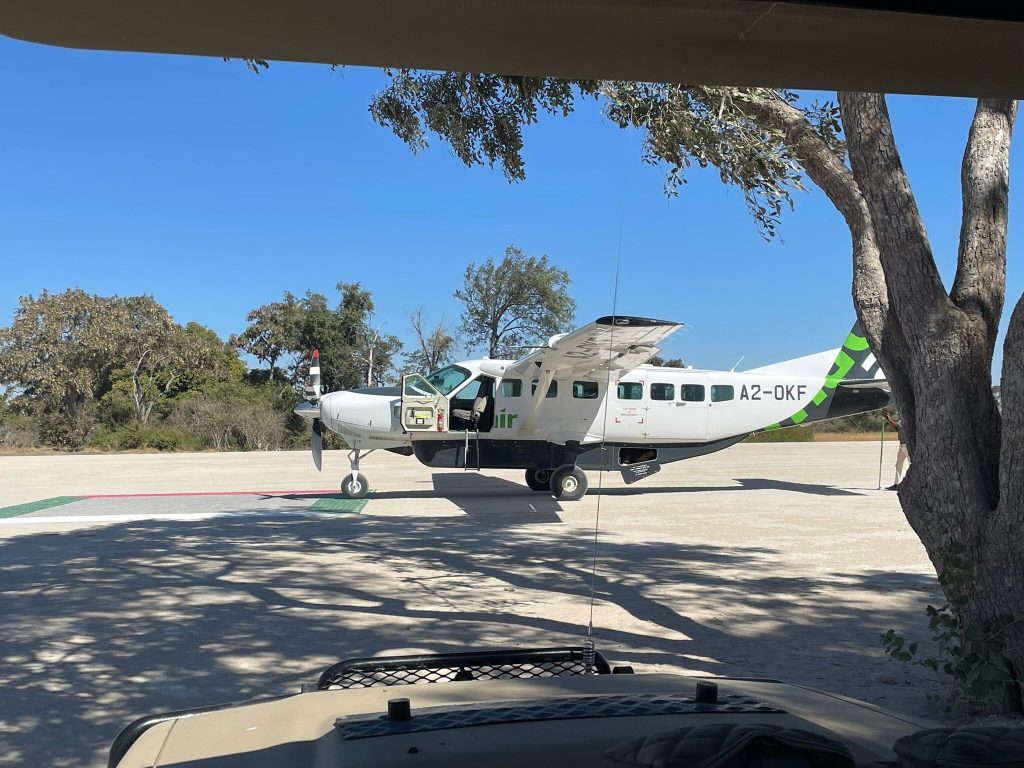
A morning game drive, breakfast, then the transfer to Kasane airport for the light aircraft leg.
Flight time to a Delta camp runs roughly an hour to an hour and a half depending on routing and stops, against about seven hours and 614 kilometres by road, which is why nobody drives it. Most charters are shared seat-on-plane, so you may drop other guests along the way.
Luggage is capped around 20kg per person including hand luggage and camera gear, in a soft bag with no wheels or rigid frame. Pack for this before you leave home rather than at the airstrip.
You arrive at a bush strip mid-afternoon, a camp vehicle meets the aircraft, and there is usually time for a short afternoon activity before dark.
Days Four and Five: Moremi and the Delta
Day four is your second full day and the one to use properly.
Morning activity, which in the Delta means a game drive, a mokoro trip or a guided walk depending on the camp and the water level. Afternoon brings another. If mokoro is why you came, confirm before booking that your camp sits on permanent inner Delta water, since seasonal camps on the eastern fringe switch to drives when channels drop. Operators sell a very similar shape as the 5 day Okavango and Moremi safari, already costed and routed.
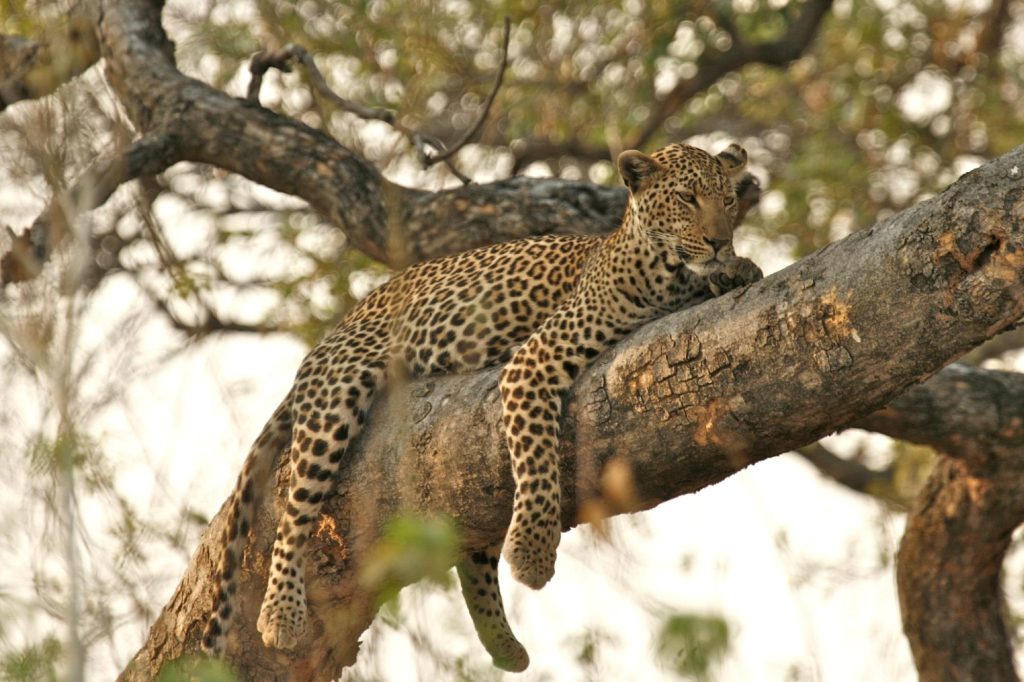
Moremi and the surrounding concessions hold the country’s most consistent predator viewing, with strong lion prides and one of Africa’s more secure wild dog populations. Nothing is guaranteed on any given drive.
Day five gives you a final morning activity before the flight to Maun and your onward connection. Book an afternoon international departure rather than a morning one, since a nine o’clock check-in costs you that last drive.
Two regions, one flight. Two nights Chobe, two nights Delta. Water and land, elephants and predators, boat and mokoro. The standard five-day route and the best use of the time for a first visit.
One region, four nights. Chobe alone from Kasane with no charter at all, or a single Delta camp. Fewer logistics, more depth, lower cost. Better for a second visit or a tight budget.
Mobile camping. Overland from Maun through Moremi and Khwai with a crew moving camp. One guide throughout, no luggage limit, considerably cheaper, longer travel days.
The Case for Staying in One Place
Splitting five days is the default, and it is not always the right call.
Four nights in one camp gives you eight activities with a guide who by day two knows what you have already seen and what you are still hoping for. That continuity produces better sightings than a change of scenery does.
Chobe alone works well for this and costs least, since no internal flight is required at all. You can add a Victoria Falls day trip, around 80 kilometres by road or twenty minutes by light aircraft, without disrupting anything.
A single Delta camp works too, particularly one on permanent water offering mokoro, boat, drive and walk in rotation, which is variety enough for four nights without moving.
This is the version experienced safari travellers often choose. First-timers usually want to see two things, which is a reasonable instinct rather than a mistake.
Five Days on a Mobile Camping Safari
The overland alternative, and considerably cheaper than the fly-in route.
A mobile safari from Maun typically covers Moremi and the Khwai community area in five days, travelling by 4×4 while a crew pitches and strikes camp ahead of you. The same guide stays throughout.
Khwai matters here because it sits outside the national park boundary, which means night drives are permitted where they are prohibited inside Moremi and Chobe. On a short trip that is a real addition rather than a technicality.
You see the country between the parks rather than flying over it, and there is no soft-bag weight limit. The trade is longer travel days and simpler facilities, though fully serviced operators run walk-in tents with proper beds and en-suite bush bathrooms.
Whichever version you choose, arrive into Maun or Kasane before mid-afternoon. Shared charters run to a fixed afternoon schedule and bush strips close at dark, so a late arrival costs you a night at camp that is rarely refundable.
Best Time for a Five-Day Botswana Safari
With only four nights, load the odds in your favour.
July through September is the strongest window for this route. The Okavango flood peaks around July, so mokoro and boat activities are at their best, and Chobe’s elephant concentrations build through the dry months. September brings the sharpest predator viewing as surface water elsewhere disappears.
October delivers the most concentrated game of the year and the most heat, with Maun averaging a maximum near 37°C.
June and July mornings are cold, around 6°C to 7°C on an open vehicle, so pack a fleece and a windproof layer.
Green season from November to April costs considerably less and suits returning visitors, though animals disperse and five days leaves little margin for patience.
Frequently Asked Questions About a 5-Day Botswana Itinerary
How much does a 5-day Botswana safari cost?
Mid-range lodges run roughly 600 to 1,100 US dollars per person per night all-inclusive, so four nights lands somewhere around 2,400 to 4,400 before flights. Luxury private concession camps start near 1,500 per night. Mobile camping safaris sit far lower at 350 to 550 per person per day. Add internal charter legs at roughly 250 to 500 dollars per person per leg where not bundled, park entry at 120 Pula per person per day, and a 30 US dollar arrival levy.
Is 5 days enough for Botswana?
Enough for two regions with one internal flight between them, which is the standard route pairing Chobe with the Okavango Delta. It is not enough for three regions, since two flights consume a full day. Five days gives you four nights, meaning one afternoon activity on arrival, three complete days and a final morning. Staying in one area for all four nights is the alternative and gives greater depth with fewer logistics.
Should I start in Chobe or the Okavango Delta?
Chobe first, for practical reasons. Kasane airport sits minutes from the park gate with no charter flight required, so your arrival afternoon becomes a productive activity rather than a wait for a bush plane. Finishing in the Delta lets you fly out from Maun instead of doubling back to Kasane, which often saves a day. Airlink permits multi-leg bookings, so flying into one airport and out of the other can sit on a single ticket.
How many nights should I spend at each camp?
Two nights per camp is the minimum that justifies a charter flight, and on a five-day trip that is what the arithmetic allows across two regions. Three nights is better wherever you can manage it, since arrival afternoons and departure mornings are partly consumed by transfers. If you would rather have depth than variety, four nights in a single camp gives you eight activities and a guide who learns what you want by the second drive.
Can I add Victoria Falls to a 5-day Botswana trip?
Comfortably, if you base yourself at Chobe. Kasane sits around 80 kilometres from Victoria Falls, with road transfers taking a couple of hours including the Kazungula border crossing, and a scheduled light aircraft covering it in about twenty minutes. A day trip fits into a Chobe-only itinerary without disrupting the safari. Adding it to a two-region five-day route is tighter and usually means sacrificing an activity.
What is the cheapest way to do 5 days in Botswana?
A mobile camping safari from Maun covering Moremi and Khwai, at roughly 350 to 550 US dollars per person per day with no internal flights. The Khwai community area also permits night drives, which national parks do not. The next cheapest is staying at Chobe alone from Kasane, since no charter flight is needed and lodge rates on the riverfront are the most competitive in the country. Green season rates fall by up to 40 percent.
Booking Your Botswana Trip
The safari companies and tour operators listed on this website put trips like this together for a living and know which camps, guides and routes actually deliver. We are an independent guide to Botswana; we do not book or sell tours ourselves.
When you are ready, arrange your safari, tour or holiday with one of the recognised operators listed here. Tell them your dates and what matters most, and a real person, not a form, will handle the itinerary, park bookings and logistics for you.