Hiking in Botswana
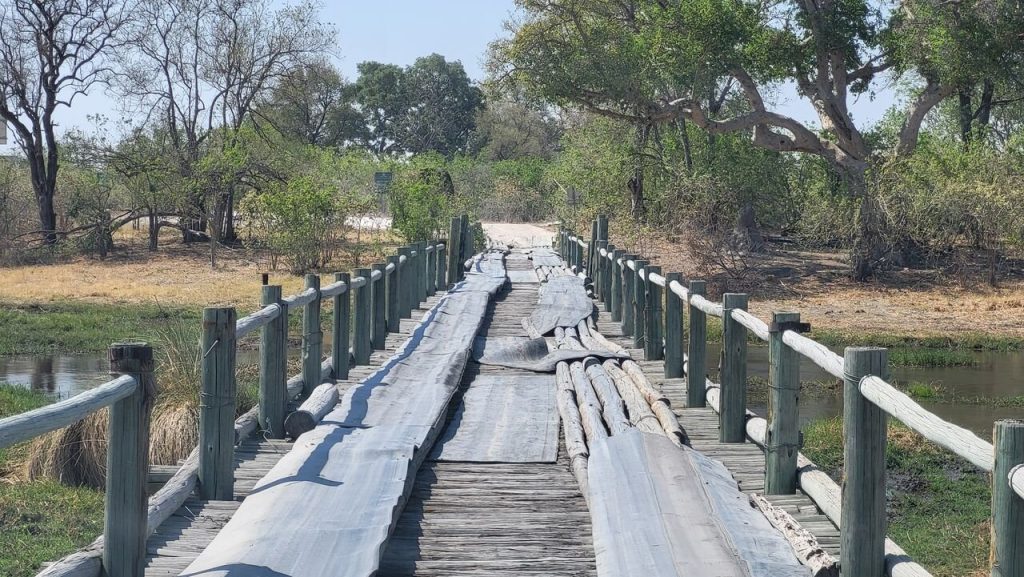
Botswana is overwhelmingly flat, so hiking here is concentrated in a handful of hill and gorge areas in the east and northwest rather than spread across the country. The best walking is at Moremi Gorge in the Tswapong Hills, on the Tsodilo Hills among the rock art, and up Kgale Hill on the edge of Gaborone. Almost all of it needs a guide, and none of it happens in the safari areas, where walking on foot is a guided activity rather than a trail.
Why Hiking Is Limited in Botswana
Two things constrain walking here and it helps to know both before planning around it.
The first is topography. Roughly 70 percent of the country is Kalahari sandveld, flat and gently undulating, sitting around a thousand metres above sea level throughout. There is very little relief to walk up.
The second is wildlife. In the parks and concessions where the interesting country is, you cannot simply set off on foot. Walking is a guided activity with a licensed armed guide, and it is broadly restricted inside national parks and permitted on private concessions.
What that leaves is the hills, which sit almost entirely outside the safari circuit in the east and the far northwest.
Anyone hoping to build a Botswana trip around hiking should adjust expectations. Anyone wanting a good walk on a day off from safari has better options than they expect.
The interesting country in Botswana is where you cannot walk unaccompanied, and the country where you can walk freely is mostly flat. That is the whole shape of hiking here.
Moremi Gorge and the Tswapong Hills
The best hiking in Botswana is in the east, and it is a genuine surprise to anyone expecting flat dust.
The Tswapong Hills rise abruptly from the plains a few hours east of Palapye, and Moremi Gorge sits deep within them. Note that this has nothing to do with Moremi Game Reserve in the Delta, which confuses people constantly.
The gorge is a narrow chasm carved by the Moremi River, with walls covered in vegetation and three permanent waterfalls. The first two fan out into large waterholes, and the uppermost drops around ten metres over rocky outcrops into a hidden lagoon.
The walk is short at roughly four kilometres round trip and considerably harder than the distance suggests, with steep rocky ascents, relentless sun and humidity in the gorge itself.
Two routes exist, one to three waterfalls and a longer one continuing to the fifth, which takes around an hour more and must be pre-booked because it passes near a vulture breeding area.
Over 350 bird species have been recorded here, including Cape vulture, black eagle, black stork and Meyer’s parrot.
Rules and Respect at Moremi Gorge
This site carries obligations and they are worth setting out.
Goo-Moremi Gorge is of great religious and spiritual importance to the local Batswapong community and is believed to be the home of ancestral spirits, known as badimo. It is a declared national monument under the Botswana National Museum.
Hiking can only be done with a guide, and there are rules to follow. No whistling. No littering. No making noise. No flash photography in certain areas.
These are not tourist-management measures but conditions attached to a sacred place, and travellers should treat them as such.
The site is run through a community trust, with a campsite and a restaurant overlooking the gorge, and access does not require a four-wheel drive vehicle.
Facilities have been developing, with plans including camping, ablutions, trail signage and elevated walkways, so check the current position when booking.
Tsodilo Hills
The other serious walking is in the far northwest, and here the hiking and the reason to come are the same thing.
Three hills can be climbed. The Male is the highest and steepest, with the hardest route to the top. The Female is the most accessible, holds the most rock art and has the best trail network. The Child is smaller.
Guides are compulsory on all routes, charged separately per hill, which is appropriate given the sacred status of the site and the fact that over 4,500 rock paintings are scattered across ground where they are easy to walk straight past.
Some scrambling is involved on the Male, though the elevation gained is modest at a few hundred metres, and reaching the top takes around an hour.
There is a long-running argument about whether the Male hill is Botswana’s highest point, with hills near Otse in the southeast carrying a rival claim at around 1,490 metres. The dispute is unresolved and both sides are asserted confidently.
Tsodilo is a UNESCO World Heritage Site and treating it as an active sacred place rather than a walking destination is the right posture.
Moremi Gorge. Tswapong Hills east of Palapye. Roughly four kilometres return, steep and rocky, three permanent waterfalls, exceptional birding. Guided only, with rules attached to a sacred site.
Tsodilo Hills. Far northwest near Shakawe. Three climbable hills with over 4,500 rock paintings, compulsory guides charged per hill, some scrambling on the Male. UNESCO World Heritage Site.
Kgale Hill. Gaborone’s edge. Roughly three kilometres up with around 200 metres of gain, 45 minutes to an hour and a half, granite scrambling in places. Free and unguided, though hiking in a group is advised.
Other Walking in Botswana
Beyond the three main options, a handful of others are worth knowing about.
Kgale Hill on the southwestern edge of Gaborone is the most accessible hike in the country, taking most people between 45 minutes and an hour and a half over roughly three kilometres, with chacma baboons, black eagles and a panoramic view over the capital.
Otse and the southeastern hills hold longer walks, with a six-hour route in the hills around Otse reported by local hikers, and this is where the rival claim to Botswana’s highest point sits.
Lobatse has the largest recorded elevation gain of any mapped trail in the country, at over 500 metres on a loop route.
Mokolodi Nature Reserve south of Gaborone runs walking trails within a fenced reserve, which makes it one of the few places you can walk near wildlife without an armed guide.
Lepokole Hills near Bobonong offer granite scrambling among rock art with no formal trail network, needing local permission and guidance.
Kubu Island has a short loop around the outcrop, and the Makgadikgadi has been crossed on foot as a multi-day expedition, which is a serious undertaking rather than a hike.
Walking Safaris Are a Different Thing
This distinction confuses people and is worth making clearly.
A walking safari in Botswana is a guided wildlife activity with a licensed armed guide, usually two to three hours in the early morning, focused on tracks, plants, insects and getting close to game on foot. It is not a hike and covers little ground.
Walking safaris are broadly restricted inside national parks and permitted on private concessions, which means the Okavango concessions, Linyanti, Selinda, Kwando and community areas such as Khwai.
Delta camps frequently pair a mokoro trip with a walk on one of the islands, and Selinda offers walking alongside its canoe trail.
If you want to be on foot in wildlife country, that is the activity to book, and it decides where you stay.
Hiking in the hills is for scenery, rock art and exercise rather than wildlife, and the two rarely overlap.
Do not underestimate Moremi Gorge because it is only four kilometres. The path is rough, the ascents are steep and the sun is unrelenting, and hikers regularly report calves burning before they reach the first waterfall. Start early and carry more water than the distance suggests.
When to Hike and What to Bring
Season matters more than in most countries because of the heat.
April to September are the cooler months and by far the most comfortable for walking. Summer temperatures across the east push into the high thirties, and the exposed granite and gorge humidity make midday hiking genuinely unpleasant.
Start early wherever you are walking, ideally before six in the hotter months.
Bring proper footwear with grip for granite and loose rock, more water than seems necessary, a wide-brimmed hat, high-factor sun cream and insect repellent.
Paths turn slippery after rain and loose scree on descents catches people out, particularly on Kgale.
Take a guide where one is required and consider one where it is not, since several sites have no marked trails and the interpretation is worth more than the navigation.
Frequently Asked Questions About Hiking in Botswana
Where is the best hiking in Botswana?
Moremi Gorge in the Tswapong Hills east of Palapye is the best walk in the country, roughly four kilometres return through steep rocky terrain to three permanent waterfalls, with over 350 bird species recorded. Tsodilo Hills in the far northwest offer guided climbs on three hills among more than 4,500 rock paintings. Kgale Hill on the edge of Gaborone is the most accessible, taking about an hour with panoramic views over the capital.
Can you hike in Botswana’s national parks?
Not independently. Walking in the parks and concessions is a guided activity with a licensed armed guide rather than a trail you can follow, and it is broadly restricted inside national parks while permitted on private concessions such as those in the Okavango, Linyanti, Selinda and Kwando, and in community areas like Khwai. A walking safari is a wildlife activity covering little ground, quite different from hiking in the hills.
Do you need a guide to hike in Botswana?
At most sites, yes. Moremi Gorge can only be hiked with a guide, since it is a sacred site under national monument protection with rules including no whistling, no noise and no flash photography in certain areas. Tsodilo requires guides on all three hills, charged separately per hill. Kgale Hill needs no guide, though hiking in a group is advised there for safety reasons rather than navigation.
What is Botswana’s highest point?
Disputed. Hills near Otse in the southeast are cited at around 1,490 metres, while the Male hill at Tsodilo is put at roughly 1,390 metres with what one account calls a controversial claim to the title. Both are asserted confidently by different sources and the matter appears unresolved. Either way, Botswana is a high but flat country sitting around a thousand metres above sea level throughout, so the relief is modest.
When is the best time to hike in Botswana?
April to September, the cooler months, and by a wide margin. Summer temperatures across the eastern hills push into the high thirties, and exposed granite combined with gorge humidity makes midday walking genuinely unpleasant. Start early in any season, ideally before six in the hotter months. Paths turn slippery after rain, and loose scree on descents catches people out, particularly on Kgale Hill.
Is Moremi Gorge the same as Moremi Game Reserve?
No, and the shared name confuses people constantly. Moremi Gorge sits in the Tswapong Hills in eastern Botswana, a few hours east of Palapye, and is a hiking and waterfall site of religious importance to the local Batswapong community. Moremi Game Reserve is in the Okavango Delta in the northwest and is a wildlife area. They are on opposite sides of the country and have nothing to do with each other.
Booking Your Botswana Trip
The safari companies and tour operators listed on this website put trips like this together for a living and know which camps, guides and routes actually deliver. We are an independent guide to Botswana; we do not book or sell tours ourselves.
When you are ready, arrange your safari, tour or holiday with one of the recognised operators listed here. Tell them your dates and what matters most, and a real person, not a form, will handle the itinerary, park bookings and logistics for you.