Restaurants in Botswana
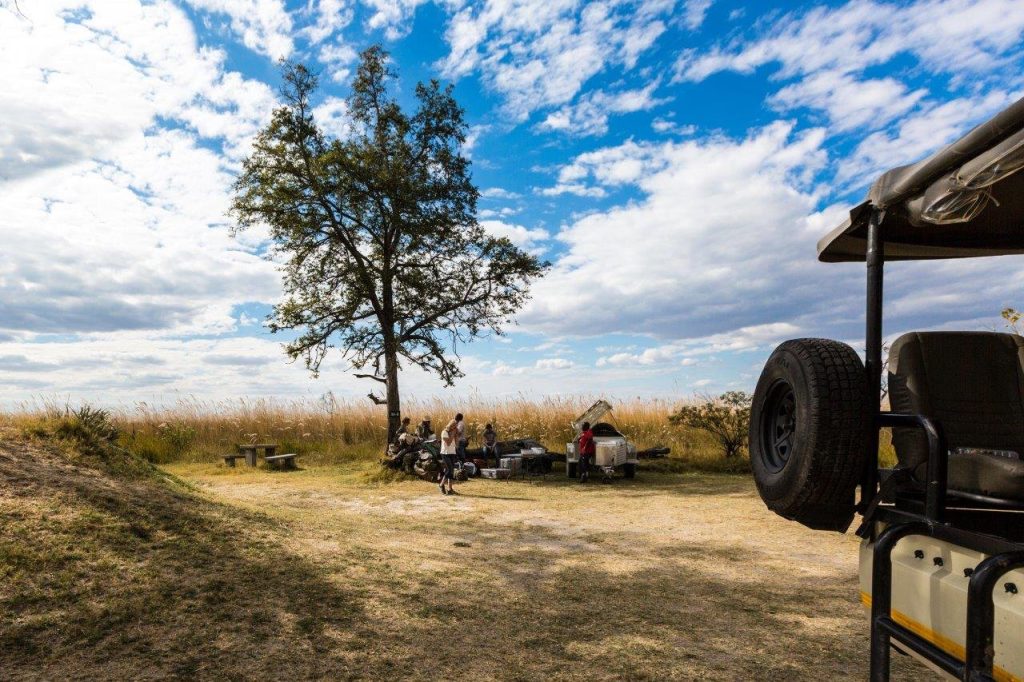
Restaurants in Botswana cluster in Gaborone, Maun and Kasane, with menus leaning international rather than local, since most safari visitors eat at camps where meals are included. Maun has the widest choice for travellers, Kasane offers riverfront dining beside Chobe, and Gaborone holds the country’s only real fine dining scene. Botswana is a southern African safari country where finding traditional Setswana food in a restaurant is harder than you might expect, and worth the effort when you do.
Where Restaurants Fit Into a Botswana Safari
Set expectations first, because most visitors eat in restaurants on only two or three days of a Botswana trip.
Safari camp rates are fully inclusive, covering all meals and most drinks, and camp kitchens operate to a high standard. Once you fly out to a Delta or Kalahari camp, restaurants stop being relevant entirely.
Where they matter is the town nights at either end. Almost every itinerary involves at least one night in Maun or Kasane because of charter flight timings, and often a Johannesburg or Gaborone night as well. Those are the meals worth planning.
Self-drive travellers are the exception, eating in towns throughout and self-catering in the parks, where there are no shops at all.
Restaurants in Maun for Safari Travellers
Maun is the busiest town for visitors and has the widest choice, though with an odd characteristic worth knowing: it is genuinely difficult to find a Setswana restaurant here. Most places serve international or Western food, catering to expats, pilots and tourists.
For coffee and breakfast, the Dusty Donkey is an international fusion café known for good coffee and freshly baked cake. The Wax Apple Café sits within walking distance of the airport, which makes it useful on a departure morning. The Motsana Centre and Arts Café on Shorobe Road is an unusual space of exposed metalwork housing workshops and studios around a relaxed eatery, serving a mix of local and international dishes.
For dinner, Marc’s Eatery has a strong local following. Il Pomodoro is Italian-owned and widely regarded as the best pizza in town. Hilary’s is the vegetarian option, with homemade bread, soups, salads and bean dishes. Kwagancinci on Sir Seretse Khama Road is one of the better places for genuinely African cooking.
The Bull and Bush is the expat pub, known for steaks and quiz nights. The Buck and Hunter near the airport is among the country’s oldest watering holes and popular with pilots and flight crews, which makes it a good place to hear how the flying day went.
Maun restaurants close earlier than visitors expect and several shut on Mondays. If you land late on a charter and want dinner, ask your lodge to hold something rather than assuming you will find a kitchen open at nine.
Dining in Kasane Beside Chobe
Kasane is smaller and the dining is simpler, with the riverfront being the draw rather than the cooking.
Thebe River Restaurant and Pizzeria offers river views alongside straightforward food. The Old Barn is a long-standing spot with a local following. The Coffee Buzz handles breakfast and caffeine.
For something closer to how Batswana actually eat, the shisanyama places are the answer. These are grill-and-braai spots where you choose your meat and it is cooked over coals, served with pap and salad, and they are informal, cheap and busy. Kwa Massho Shisanyama and Winnie’s Joint both trade on this.
Several lodges along the riverfront open their restaurants to non-residents, which gives you a sundowner over the Chobe without staying there. Worth booking ahead in peak season.
Kasane also has the usual regional fast food chains, which matter more than they should when you arrive at nine at night off a delayed flight.
Eating Out in Gaborone
The capital has the country’s only substantial restaurant scene, spread across the malls and the diplomatic district rather than a single centre.
For traditional Setswana food, the Courtyard Restaurant behind the Botswana Craft store is the reliable recommendation, letting you combine a plate of seswaa with curio shopping for genuine handmade crafts. This is one of the few places where visitors can eat local food comfortably.
For meat, Rodizio at Riverwalk is a Brazilian-style grill with live music at weekends. The Beef Baron at the Grand Palm serves steak, ribs and some traditional dishes with a fine-dining reputation.
International options run wider here than anywhere else in the country. Caravela serves Portuguese cooking near the airport. Chutney handles South Indian alongside Chinese dishes and is well regarded by locals and visitors alike. Basilico in the diplomatic district is among the better fine dining rooms.
Gaborone’s malls hold the familiar South African chains, which are competent and inexpensive.
Maun. Widest choice for travellers, mostly international and Western. Good cafés, Italian, vegetarian and expat pubs. Genuinely local restaurants are scarce. Useful for pre and post-safari nights.
Kasane. Simpler and smaller. Riverfront restaurants with Chobe views, shisanyama grills for local eating, lodge restaurants open to non-residents, regional fast food chains.
Gaborone. The country’s real restaurant scene. Fine dining, Portuguese, Indian, Brazilian grills, plus the most accessible traditional Setswana cooking at the craft centre restaurant.
Finding Traditional Setswana Food in a Restaurant
This is the frustration for anyone hoping to eat their way through a country, and it has a straightforward explanation.
Setswana food is home food. Seswaa, bogobe, morogo and dikgobe are cooked at family gatherings, weddings and funerals rather than sold in restaurants, and the restaurant sector grew up serving expats, business travellers and tourists who wanted something familiar.
Where you will find it: the craft centre restaurant in Gaborone, a handful of local kitchens in Maun, shisanyama grills anywhere, and roadside stalls and takeaways in the smaller towns, where a plate of pap with meat and morogo is inexpensive and good.
Safari camps often serve a traditional dinner one night of a stay, which for many visitors is the only seswaa they will meet. It is worth asking your camp whether they do this.
Cultural village tours frequently include a cooking demonstration and a meal, which is the most reliable way to eat properly traditional food as a visitor.
Practical Notes on Eating Out in Botswana
Vegetarians should plan a little. Traditional cooking is meat and starch heavy, and rural options thin out, though Gaborone and Maun both have places that cater properly and morogo dishes are naturally vegetarian.
Tipping runs around ten percent for good service, and it is worth checking whether a service charge has already been added for larger tables.
Cards work at established restaurants in the towns, though smaller places and roadside stalls are cash only. Carry Pula.
Tap water in Gaborone, Maun and Kasane is treated and broadly considered safe, and camps supply filtered or bottled water throughout.
Outside the three main towns, restaurant options collapse quickly. On a self-drive between Nata, Ghanzi or Shakawe, plan on lodge restaurants, roadside takeaways and whatever you carry in the vehicle.
Self-catering deserves a note of its own, since anyone driving into the parks has to do it. Maun and Kasane both have supermarkets adequate for provisioning a two-week trip, and Gaborone and Francistown are better still. Stock up before you leave town, because there are no shops inside the national parks, no fuel and nowhere to top up a forgotten item. Buy more water than the calculation suggests, particularly for the Kalahari, and note that veterinary control points on the roads may inspect the vehicle for meat and dairy, so keep it accessible rather than buried under camping gear.
Frequently Asked Questions About Restaurants in Botswana
Where can I eat traditional Botswana food?
It is harder than expected, since Setswana food is largely home cooking served at family and community gatherings rather than in restaurants. The Courtyard Restaurant behind the Botswana Craft store in Gaborone is the most reliable option and lets you combine a meal with craft shopping. Shisanyama grills in Kasane and elsewhere serve meat with pap informally. Cultural village tours usually include a cooking demonstration and meal, and many safari camps serve one traditional dinner per stay.
How much does a meal cost in Botswana?
Restaurant prices are moderate by international standards. A main course at a mid-range restaurant in Maun or Gaborone commonly runs somewhere in the range of 80 to 200 Pula, with fine dining higher and shisanyama grills and roadside takeaways considerably cheaper at around 30 to 60 Pula for a plate of meat, pap and salad. Note that safari camp rates are fully inclusive of meals, so restaurant spending applies mainly to town nights at either end of a trip.
Are there good restaurants in Maun?
Yes, and it has the widest choice for travellers in the country outside the capital, though menus are mostly international rather than local. The Dusty Donkey and the Motsana Arts Café handle coffee and light meals well, Il Pomodoro is Italian-owned and known for pizza, Marc’s Eatery has a strong following and Hilary’s caters to vegetarians. The Bull and Bush and the Buck and Hunter are the established pubs, the latter popular with pilots.
Do I need restaurants on a Botswana safari?
Only for the town nights. Safari camp rates are fully inclusive of all meals and most drinks, and camp kitchens operate to a high standard, so once you fly out to a Delta or Kalahari camp the question disappears. Almost every itinerary involves at least one night in Maun or Kasane because of charter flight schedules, and those are the meals worth planning. Self-drive travellers eat in towns throughout and must self-cater inside the parks.
Is it easy to eat vegetarian in Botswana?
Manageable in the towns, harder in rural areas. Traditional cooking centres on meat and starch, though morogo, the wild spinach dish, and bean dishes such as dikgobe are naturally vegetarian. Gaborone and Maun both have restaurants catering properly, with Hilary’s in Maun a dedicated vegetarian option. Safari camps handle dietary requirements well with advance notice, so tell your operator at booking rather than on arrival.
Can I eat at safari lodge restaurants without staying there?
Often yes, particularly along the Chobe riverfront at Kasane where several lodges open their restaurants to non-residents. It is a good way to get a sundowner over the river without paying lodge rates. Book ahead in peak season, since dining space is limited and resident guests come first. Remote Delta and Kalahari camps do not work this way, being reachable only by charter flight and catering solely to their own guests.
Booking Your Botswana Trip
The safari companies and tour operators listed on this website put trips like this together for a living and know which camps, guides and routes actually deliver. We are an independent guide to Botswana; we do not book or sell tours ourselves.
When you are ready, arrange your safari, tour or holiday with one of the recognised operators listed here. Tell them your dates and what matters most, and a real person, not a form, will handle the itinerary, park bookings and logistics for you.