Private Safaris in Botswana
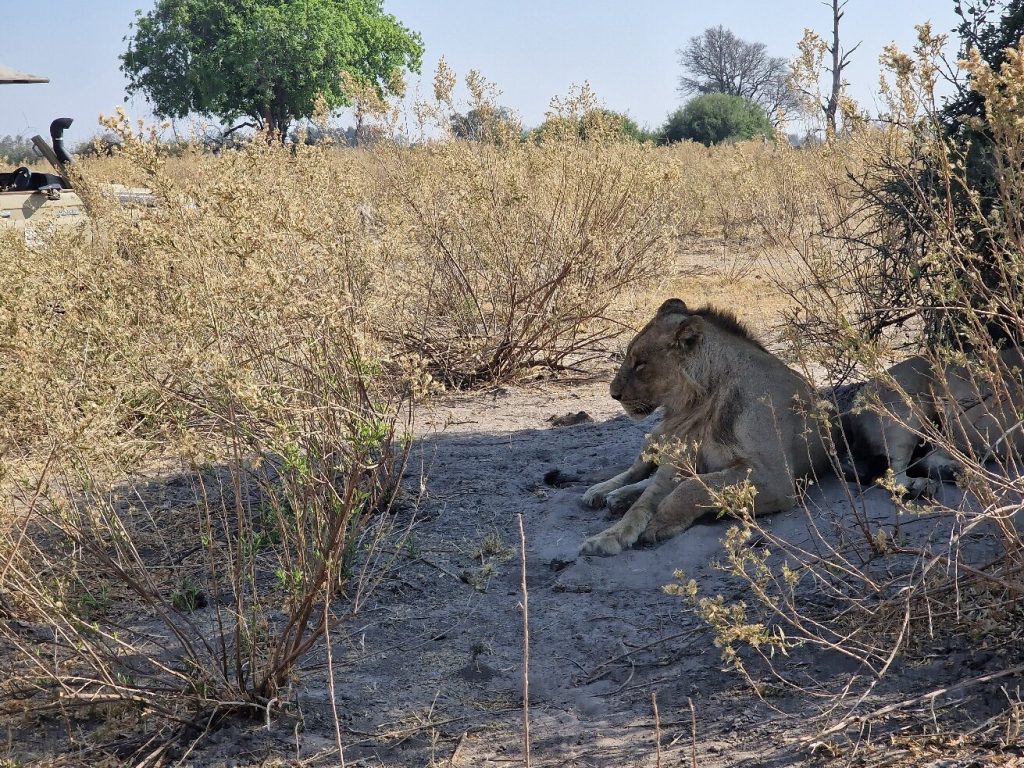
A private safari in Botswana means your own vehicle and guide rather than sharing with other guests, which changes how a day runs more than any camp upgrade does. It costs around 450 US dollars per person per day against 350 for a shared group trip, and the gap narrows sharply as group size grows. Botswana already feels private because of its low-volume model, and a private vehicle is what turns that into control over your own time.
What Private Actually Means
The word gets used loosely and it is worth separating the layers.
Private concession means the land itself is leased exclusively, with vehicle numbers at a sighting capped by agreement. That is a property of where you stay rather than what you book, and it is why Botswana feels exclusive before you add anything.
Private vehicle means you do not share a game drive. Your own vehicle and guide, running to your schedule.
Privately guided means a specialist guide travels with you throughout the trip, across multiple camps, rather than using each camp’s own guides.
Exclusive use means booking an entire camp, which some smaller properties offer.
These stack. A private vehicle on a private concession delivers something quite different from a private vehicle inside a national park, where off-road driving and night drives remain prohibited regardless of what you have paid.
A private vehicle does not change what the rules allow. Inside Moremi or Chobe you still cannot leave the track or drive after dark, no matter how exclusively you are travelling.
What a Private Vehicle Buys
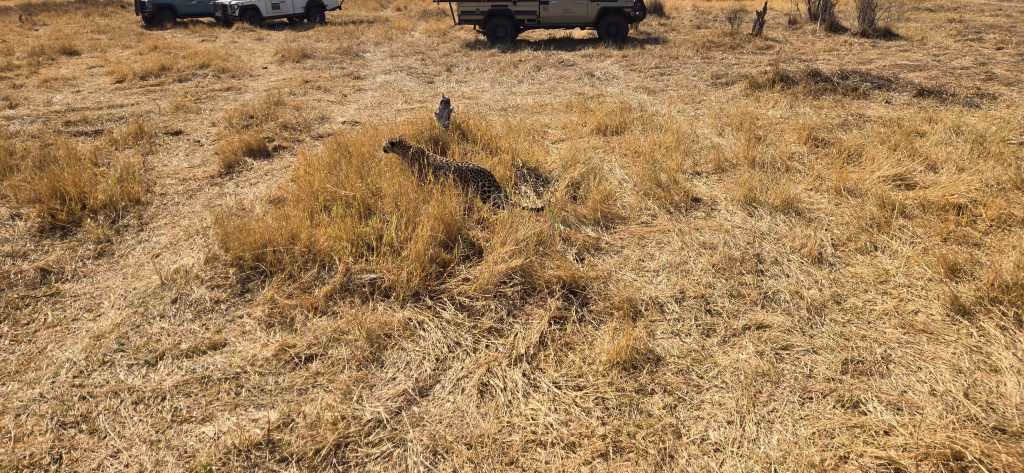
The benefits are practical rather than atmospheric.
Drives run on your schedule. You leave when you want, return when you want, and stay at a sighting for as long as it holds your interest rather than as long as the least patient person in the vehicle allows.
Direction is yours. If you want to spend three mornings looking for wild dogs and ignore everything else, you can, and a shared vehicle will not do that.
Pace is yours. Photographers can wait for light, birders can stop for every call, and families can turn back when a child has had enough.
The guide works to your interests. Told on day one that you care about birds or tracks or predators, a private guide will reshape every subsequent drive around it.
Seating is yours too, which matters more for photography than people expect, since the person in the good seat on a shared vehicle changes every drive.
Who It Suits
Private vehicles are worth the money for some travellers and not for others.
Photographers benefit most. Positioning for light, waiting at a sighting and choosing your own seat are the three things a shared vehicle makes impossible.
Families with children aged roughly six to twelve are usually required to take one anyway, and for good reason, since it lets you cut a drive short without inconveniencing anyone.
Honeymooners get the largest atmospheric gain, since a shared drive with four strangers is the thing most likely to make a honeymoon feel ordinary.
Specialists with a narrow interest, whether birds, wild dogs or a particular photograph, need the ability to direct the day.
Groups of four or more should simply book one, since the cost divided across the group approaches the shared rate anyway.
Who it suits least is a couple on a general first safari who would rather meet other people and do not mind the itinerary being decided for them.
The Arithmetic
Vehicle cost is fixed regardless of how many people are in it, which is what drives the pricing.
A private safari starts around 450 US dollars per person per day and a shared group safari around 350, both covering park fees, accommodation, full board, drinks, transport, guiding and activities.
The underlying vehicle and guide cost runs roughly 350 US dollars per day. A solo traveller carries all of it. Two people pay about 175 each. Four people pay under 90.
The biggest saving in safari pricing is going from one traveller to two, a difference of around 175 per day. After that the savings become marginal.
The practical consequence is that for a group of four or more, a private vehicle costs very little more than sharing, and the flexibility is free in all but name.
For two people it is a genuine decision. For one, it is expensive.
Private vehicle. Your own vehicle and guide at a camp, running to your schedule. Around 450 US dollars per person per day, or a supplement at lodge-based camps. Best value for four or more.
Privately guided. A specialist guide travelling with you across multiple camps for the whole trip, rather than a different camp guide at each stop. Considerably more expensive and genuinely different.
Exclusive use. Booking an entire camp, offered by several smaller properties. Suits families, groups of friends and small wedding parties, and removes every compromise at once.
Privately Guided Trips

A step beyond the private vehicle and a different proposition entirely.
On a privately guided safari a specialist guide travels with you throughout, moving between camps and regions with your group rather than handing you over at each new airstrip.
The gain is continuity. A guide who has been with you for a week knows what you have seen, what you are still hoping for and how you like to travel, which no sequence of camp guides can replicate.
It also smooths the logistics, since somebody who knows the country is managing transfers and timings rather than you.
The cost is substantial and this sits firmly at the top of the market.
Some camps run a guide and tracker system as standard, which delivers a good deal of the benefit at no extra cost, and is worth asking about before paying for private guiding.
Getting the Most From It
A private vehicle only pays off if you use it.
Tell the guide on the first morning what you actually want. Most guests never do, and a guide left to guess will default to the standard circuit and the Big Five.
Be specific. Wild dogs, a leopard in decent light, a particular bird, time at a waterhole rather than covering ground. All of that is actionable.
Ask to change the timings if it helps. Going out earlier, staying out through the middle of the day with a packed lunch, or returning late are all possible on a private vehicle and impossible on a shared one. On a private departure the shortest sensible pairing is the 5 day Okavango and Moremi safari.
Say when you want to stop. The most common regret is leaving a sighting because it felt polite to move on, which on a private vehicle is nobody’s decision but yours.
Tip the guide accordingly at the end, since a private guide has worked considerably harder for you than a shared one.
One thing not to do is treat the vehicle as a taxi. The guide’s judgement about where to go and when is worth more than yours, because they know what moved through the area yesterday and which pride has cubs. The best use of a private vehicle is a conversation each morning rather than a set of instructions, with you supplying the priorities and the guide supplying the route.
If you are four or more people travelling together, book the private vehicle without hesitating. The cost divided across the group is marginal against the shared rate, and you gain complete control of every day. The decision is only genuinely difficult for couples.
Frequently Asked Questions About Private Safaris in Botswana
How much does a private safari in Botswana cost?
Typically from around 450 US dollars per person per day against roughly 350 for a shared group safari, both including park fees, accommodation, full board, drinks, transport, guiding and activities but excluding international flights and tips. The underlying vehicle and guide cost is about 350 per day regardless of occupancy, so a solo traveller carries all of it, two people pay around 175 each and four pay under 90.
Is a private vehicle worth it on safari?
For photographers, families with younger children, honeymooners and anyone with a specific interest, yes. It gives you control of schedule, direction, pace and seating, and lets you stay at a sighting as long as it holds your interest rather than as long as the least patient person in the vehicle allows. For a couple on a general first safari who enjoy meeting people, it is a genuine decision rather than an obvious one.
What is the difference between a private vehicle and a private concession?
A private concession is the land, leased exclusively with vehicle numbers at a sighting capped by agreement, which is a property of where you stay. A private vehicle is your own car and guide, which is what you book. They stack, and the combination matters: a private vehicle inside a national park still cannot drive off-road or after dark, since those are legal restrictions that no amount of money removes.
What is a privately guided safari?
One where a specialist guide travels with you throughout the trip, across multiple camps and regions, rather than using each camp’s own guides. The gain is continuity, since a guide who has been with you for a week knows what you have seen and what you are still after. It also smooths logistics. The cost is substantial and sits at the top of the market, so ask first whether your camps run a guide and tracker system.
Do families need a private vehicle in Botswana?
Usually, for children roughly aged six to twelve, and most camps require rather than offer it. The reasoning is practical: it lets you cut a drive short, change plans or return to camp without inconveniencing other guests. There is a supplement, and parents who resent it beforehand usually consider it the best money spent on the trip. Age policies vary by camp and should be checked before shortlisting.
How do I get the most from a private vehicle?
Tell the guide on the first morning what you actually want, and be specific about it. Most guests never do, and a guide left to guess defaults to the standard circuit and the Big Five. Ask to change timings, whether that means going out earlier, staying out through the middle of the day with a packed lunch, or returning late. And say when you want to stay at a sighting, since on a private vehicle that is nobody’s decision but yours.
Booking Your Botswana Trip
The safari companies and tour operators listed on this website put trips like this together for a living and know which camps, guides and routes actually deliver. We are an independent guide to Botswana; we do not book or sell tours ourselves.
When you are ready, arrange your safari, tour or holiday with one of the recognised operators listed here. Tell them your dates and what matters most, and a real person, not a form, will handle the itinerary, park bookings and logistics for you.