Wild Dogs in Botswana

Botswana is one of the last strongholds of the African wild dog, with estimates commonly around 1,300 individuals across roughly 130 packs, ranging over more than 315,000 square kilometres. The Moremi and Khwai system, the Linyanti and Kwando concessions hold the most reliable populations. Denning season between roughly May and September is when packs anchor to one location, and it is the single best time to see them.
How Many Wild Dogs Are Left
The figures vary and the direction of travel is what matters.
Botswana’s population is commonly estimated at around 1,310 individuals in roughly 131 packs, covering a range of over 315,000 square kilometres. Other sources give figures closer to 700, and the country is variously described as holding around 30 percent of the world’s remaining wild dogs.
Globally the picture is bleak. Estimates run from around 3,000 to 6,600 adults and yearlings, with only some 660 packs left anywhere and a far smaller number of mature breeding individuals.
The species once occurred in around 39 African countries and is now found in roughly 14, with viable populations in only eight.
Wild dogs are Africa’s second most endangered large carnivore, and Botswana is among the very few places where the population is genuinely secure.
Because pack size varies enormously, conservationists count packs rather than individuals. Roughly 660 packs remain in the wild worldwide, and Botswana holds around 130 of them.
Why Botswana Suits Wild Dogs
Two things matter and both are about space.
Wild dogs have among the largest home ranges of any mammal, covering enormous distances in the course of ordinary living. One monitored individual was recorded moving between Hwange National Park in Zimbabwe and the Linyanti, which gives some sense of the scale involved.
Northern Botswana provides that space. The Okavango Delta, Moremi, Chobe and the concession areas of Kwando, Linyanti and Selinda form a connected block of wilderness with no fences to impede movement, alongside buffer zones and corridors.
Protected areas alone cannot hold a species that ranges this widely, which is why the unfenced, interlinked nature of northern Botswana matters more for wild dogs than the size of any individual reserve.
Prey density in the Delta and along the Linyanti waterways supports packs that would struggle in thinner country.
The absence of large-scale livestock farming across most of the north removes the conflict that has driven the species out elsewhere.
Where to See Wild Dogs
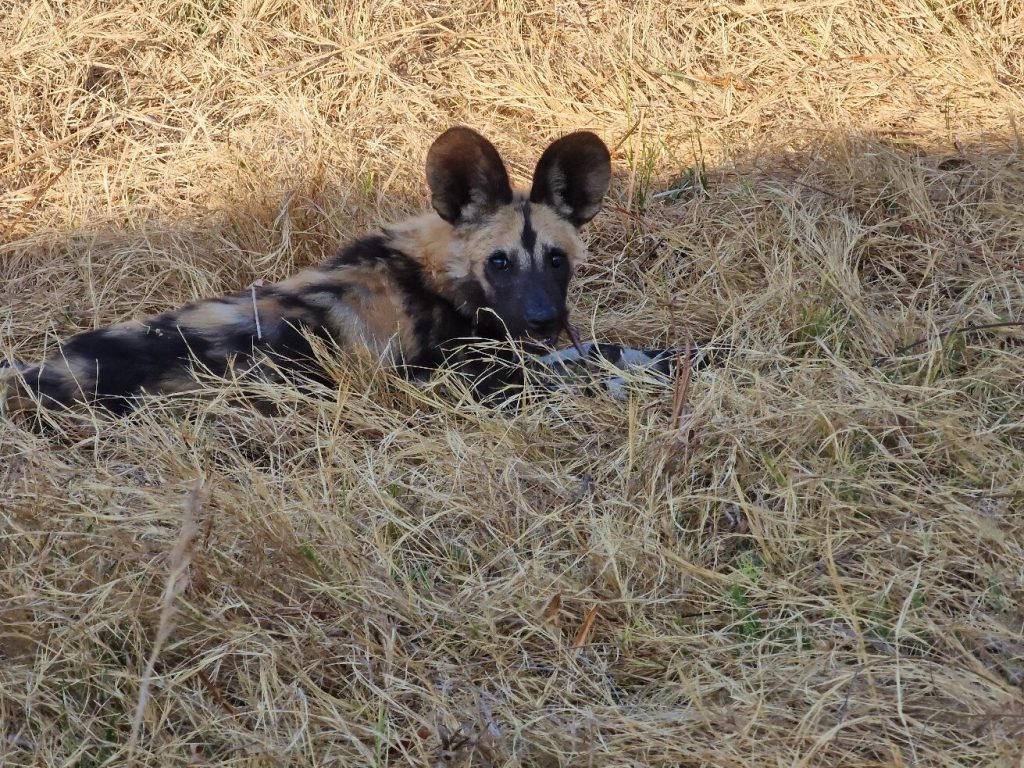
Three areas stand out and they overlap, since the same dogs move between them.
Moremi and Khwai together form what many consider the most consistently rewarding wild dog destination in Africa. The system supports multiple well-studied packs, and sightings tend to be sustained rather than fleeting, since the dogs are habituated to vehicles.
The Linyanti and Kwando concessions hold substantial populations, with several packs denning in the area. Kwando in particular has a decades-long record of dogs returning to den, and its guide and tracker system suits a species that hunts at speed over distance.
Savuti is a haven for them, particularly in early summer when impala lambing and the zebra migration bring abundant prey.
Chitabe in the southern Delta and the northern Okavango concessions round out the list, with dogs moving freely between Moremi, the Linyanti and beyond.
Off-road driving matters enormously here, since a hunting pack covers ground fast and a vehicle confined to a track loses them within minutes.
Denning Season
This is the key to seeing wild dogs and the reason timing matters more for this species than almost any other.
Wild dogs are obligate cooperative breeders, meaning usually only the alpha female produces a litter and the whole pack raises it. Litters average around seven to ten pups and can run from two to twenty-one.
Pups are born in a den, typically a burrow excavated by an aardvark, and first emerge at around three weeks. Denning lasts roughly three months, usually between late April and September in southern Africa, with May to July often given as the optimal viewing window.
What that means for a visitor is that the pack stops roaming. It anchors to a specific location and adult dogs return several times a day, which turns an unpredictable species into a reliable one.
The behaviour on show is the reason people come. The reunion ceremony when hunting dogs return, the regurgitation feeding of pups and the mother, and the pup play are among the most affecting things a safari can produce.
Guides in Khwai, Moremi and the concessions know den locations, which is what makes the sightings possible.
Moremi and Khwai. Multiple well-studied packs, dogs habituated to vehicles, sustained viewing rather than glimpses. Khwai adds off-road tracking and night drives that the reserve prohibits. Denning May to July.
Linyanti and Kwando. Substantial populations with several packs denning between June and August. Guide and tracker systems at Kwando camps, few vehicles, and off-road driving permitted throughout.
Savuti. Strong in early summer from December into mid-January, when impala lambing and the zebra migration provide abundant prey. Inside the national park, so no off-road driving or night drives.
Watching a Hunt
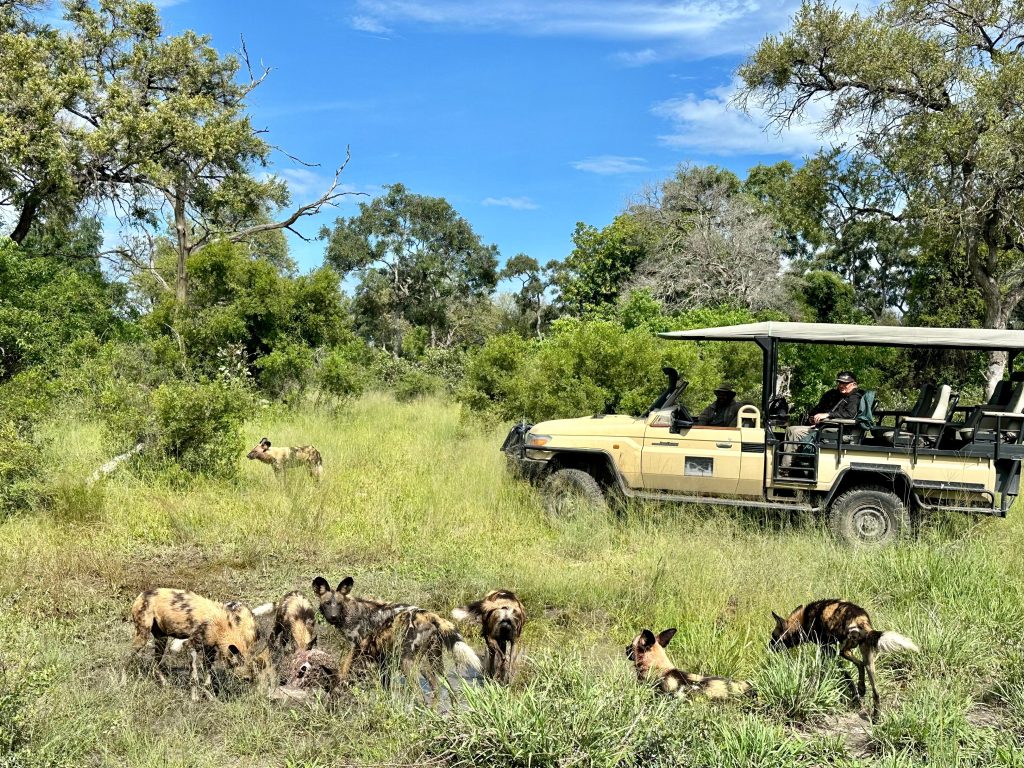
Wild dogs hunt differently from every other African predator and it is worth knowing what you are watching.
They are the most successful large predators in Africa by kill rate, considerably ahead of lion and leopard. The method is endurance rather than ambush, running prey down over distance until it tires.
Packs normally hunt once a day, more often if the group is large or if there are pups to feed. Prey size influences frequency, since a wildebeest satisfies more dogs than an impala.
Hunts happen at dawn and dusk, which is when a morning or afternoon drive can catch one.
The social behaviour is what people remember. Dogs share food with and assist weak or ill pack members, and the greeting rituals before a hunt are elaborate and noisy.
Pack sizes usually run five or six adults with pups, though far larger packs form. One that reached 46 dogs in Moremi was reportedly formidable enough to displace other predators from the area.
Threats and Conservation
The species has been hated for longer than it has been protected, and the legacy is visible in the numbers.
Twentieth century extermination campaigns led by ranchers who feared livestock losses caused the initial collapse. Attitudes among hunters and even conservationists were openly hostile, with published accounts describing deliberate efforts to wipe them out.
Today disease is the more serious threat. Rabies, canine distemper and parvovirus spread from domestic dogs have devastated populations, and a single outbreak can take an entire pack.
Habitat fragmentation matters for a species with such enormous ranges, since a pack that cannot move between areas becomes isolated and inbred.
Human-wildlife conflict on the edges of protected areas remains a problem, alongside cheetah, in the Kalahari especially.
Botswana’s contribution is space and connectivity rather than intensive management, and for this species that is the thing that works.
Book May to July in Khwai or the Linyanti if wild dogs are the priority. A denning pack stays put and returns to the same location several times daily, which turns the least predictable large predator in Africa into one you can reasonably plan a trip around.
Wild Dogs and Hyenas
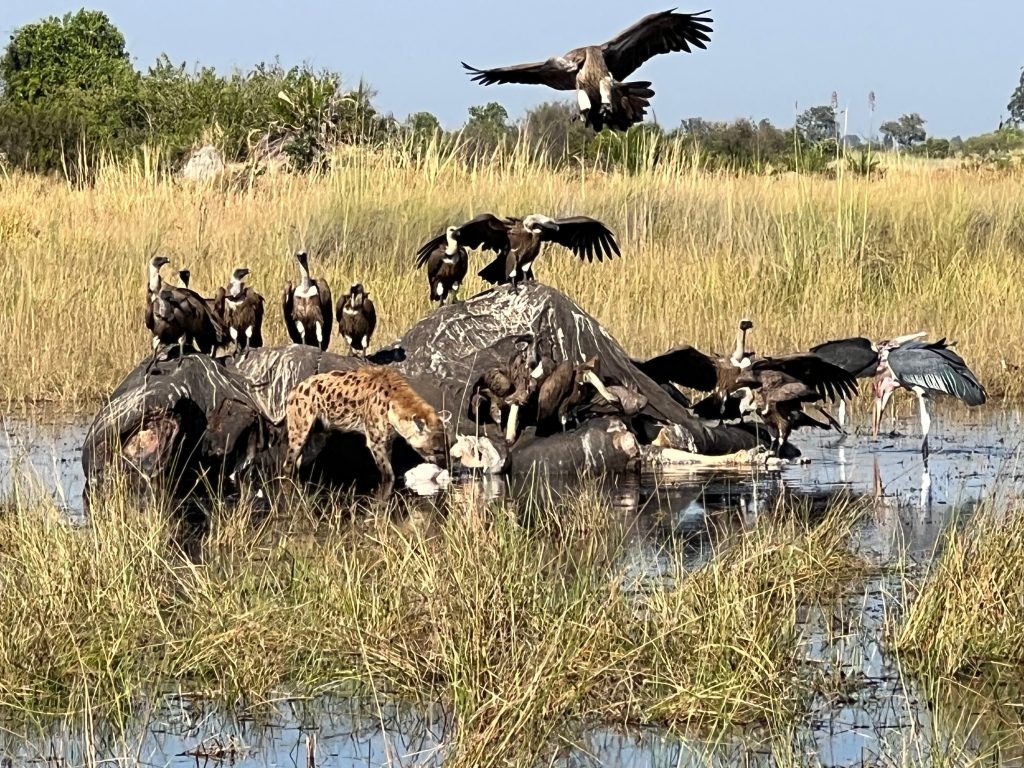
These two are confused constantly and the differences are worth knowing.
Wild dogs weigh 20 to 30 kilograms, are slender and long-legged with large rounded ears, and carry a mottled black, white and tan coat with a white-tipped tail. Every individual’s pattern is unique.
Spotted hyenas are heavier, with sloping backs, powerful jaws and a spotted rather than mottled coat.
They are not closely related. The wild dog is a true canid, a member of the dog family alongside wolves and jackals. Hyenas belong to their own family, more closely related to mongooses and civets than to dogs.
Both occur throughout northern Botswana. Hyenas are reliably seen on evening and night drives in Khwai, which permits them, and wild dogs need more space and more luck.
Combining Moremi with Khwai gives access to daytime wild dog sightings and nocturnal hyena activity in one trip.
Frequently Asked Questions About Wild Dogs in Botswana
How many wild dogs are in Botswana?
Estimates commonly give around 1,310 individuals in roughly 131 packs, ranging over more than 315,000 square kilometres, though other sources cite figures closer to 700. Botswana is variously described as holding around 30 percent of the world’s remaining wild dogs. Globally only some 660 packs are thought to remain, with total numbers estimated between roughly 3,000 and 6,600 adults and yearlings across a range that has shrunk from 39 countries to about 14.
Where is the best place to see wild dogs in Botswana?
The Moremi and Khwai system is considered among the most consistently rewarding wild dog destinations in Africa, with multiple well-studied packs habituated to vehicles. The Linyanti and Kwando concessions hold substantial populations with several packs denning there, and Kwando’s guide and tracker system suits a species that hunts at speed. Savuti is strong in early summer when impala lambing and the zebra migration provide abundant prey.
When is denning season for wild dogs?
Roughly late April to September in southern Africa, lasting about three months, with May to July often given as the optimal viewing window and June to August cited for the Linyanti. Only the alpha female usually breeds, producing an average of seven to ten pups in a burrow typically excavated by an aardvark. Pups emerge at around three weeks. During denning the pack anchors to one location and adults return several times daily.
Why are wild dog sightings better during denning?
Because the pack stops roaming. Wild dogs have among the largest home ranges of any mammal, with one monitored individual recorded moving between Hwange in Zimbabwe and the Linyanti, which makes them unpredictable most of the year. During denning they anchor to a specific site and adults return repeatedly, turning brief chance meetings into sustained observation. The reunion ceremonies, regurgitation feeding and pup play are among the most affecting wildlife behaviour in Africa.
What is the difference between a wild dog and a hyena?
They are not closely related at all. The wild dog is a true canid, in the dog family alongside wolves and jackals, weighing 20 to 30 kilograms with a slender long-legged build, large rounded ears and a mottled black, white and tan coat with a white-tipped tail. Spotted hyenas are heavier with sloping backs, powerful jaws and spotted coats, and belong to their own family more closely related to mongooses than dogs.
What threatens African wild dogs?
Historically, deliberate extermination campaigns by ranchers, with hostility openly expressed by hunters and even some conservationists. Today disease is the greater threat, with rabies, canine distemper and parvovirus spread from domestic dogs capable of taking an entire pack in one outbreak. Habitat fragmentation matters enormously for a species with such large ranges, since isolated packs become inbred, and human-wildlife conflict persists on the edges of protected areas.
Booking Your Botswana Trip
The safari companies and tour operators listed on this website put trips like this together for a living and know which camps, guides and routes actually deliver. We are an independent guide to Botswana; we do not book or sell tours ourselves.
When you are ready, arrange your safari, tour or holiday with one of the recognised operators listed here. Tell them your dates and what matters most, and a real person, not a form, will handle the itinerary, park bookings and logistics for you.