Zebra in Botswana
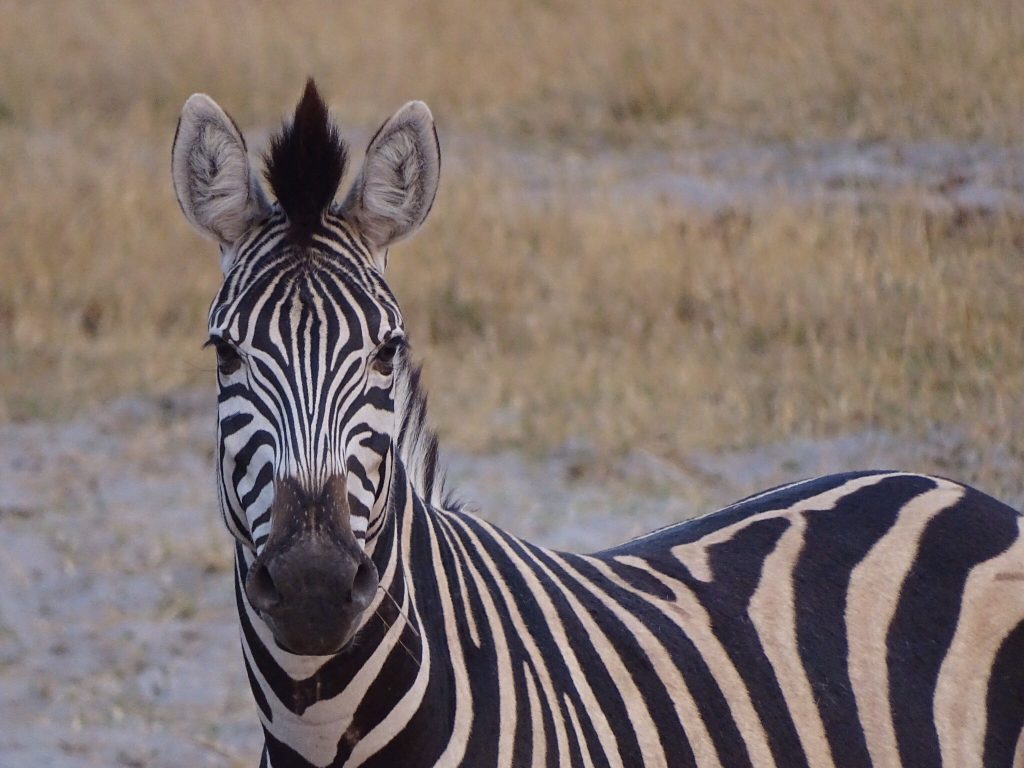
The zebra is Botswana’s national animal, appearing on the coat of arms as two supporters flanking the shield, chosen at independence as a symbol of black and white living together in equality. The country holds only one species, the plains or Burchell’s zebra, in numbers estimated somewhere between 80,000 and 90,000. Botswana also has the longest terrestrial mammal migration in Africa, and almost nobody outside the country knows about it.
The National Animal
The choice was deliberate and political, and it says something about how Botswana understood itself at independence.
Under Sir Seretse Khama, himself in an interracial marriage that had caused international controversy, the zebra’s black and white stripes were presented as a symbol that all races could live together in equality.
Two zebras support the shield on the coat of arms, which carries three cogwheels for industry, three wavy lines for water, and a bull’s head for cattle farming. The national motto beneath is Pula, meaning rain, which is also the name of the currency.
That places the zebra on government buildings, banknotes and official documents throughout the country.
The national football teams carry the name too, with the men’s side known as the Zebras, the junior team as Dipetsana, meaning foals, and the women’s side as the Mares.
For a country whose currency is named after rain and whose national animal stands for racial harmony, the symbolism is unusually coherent.
The zebra was chosen at independence as a symbol of black and white living together in equality, under a president whose own marriage had made that question an international controversy.
Botswana’s Zebra
Only one of Africa’s three zebra species occurs here, and it carries a local distinction worth knowing.
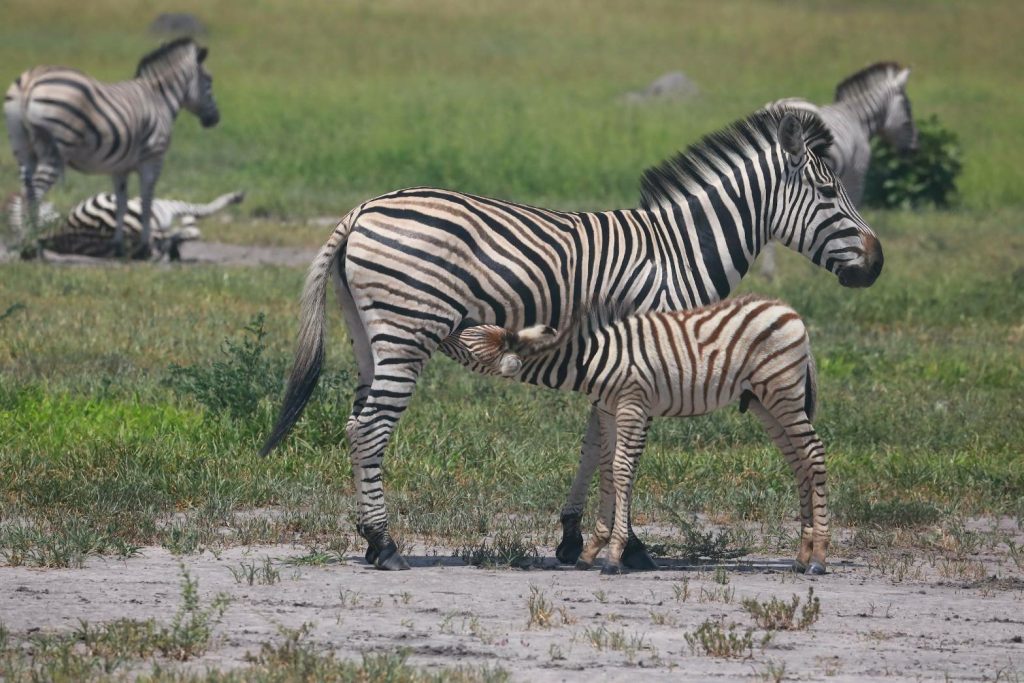
The plains zebra, also called Burchell’s zebra, is the species throughout Botswana. Grevy’s zebra of East Africa and the mountain zebras of Namibia and South Africa do not occur.
What sets the southern animals apart is the shadow stripe, a faint brown band within each white stripe, which East African zebra do not have. Once you know to look, it is obvious.
Every zebra’s pattern is unique, functioning much as a fingerprint does. When a foal is born the mother keeps it away from other zebra until her own pattern has imprinted on it, which is why you sometimes see a mare standing apart with a very young foal.
Zebra live in family groups led by a stallion, and those groups combine into larger herds when conditions favour it.
They have excellent eyesight and are among the more alert animals on the plain, which other species take advantage of.
The Longest Migration in Africa
This is Botswana’s best-kept wildlife secret and it deserves far more attention than it gets.
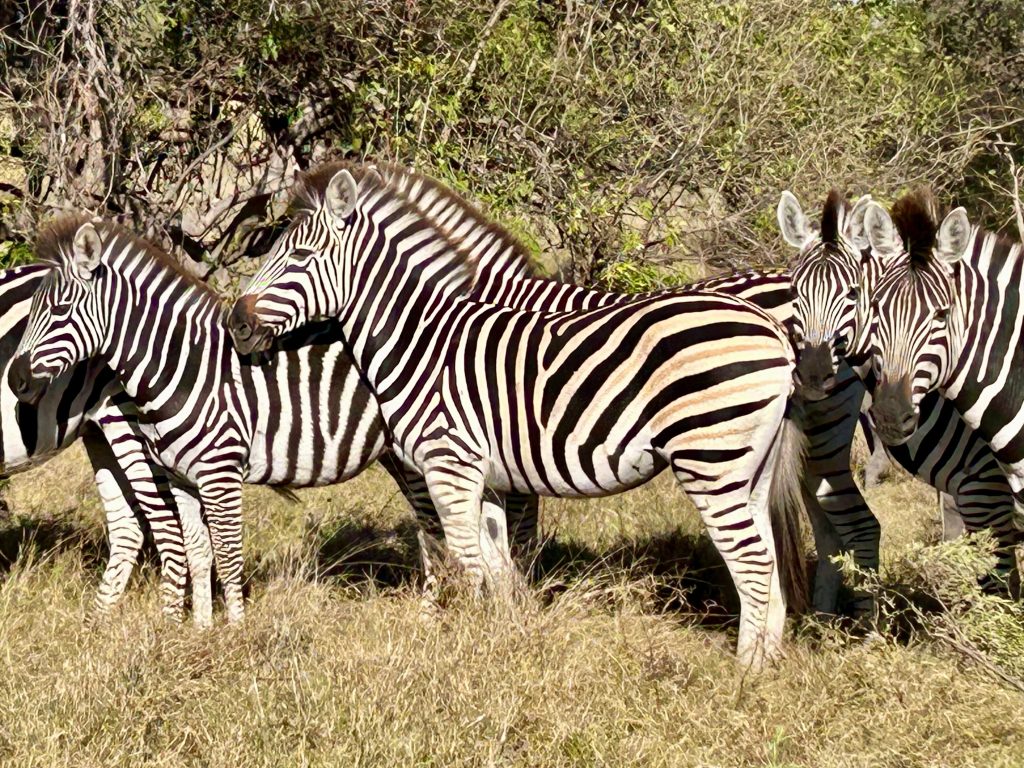
Around 25,000 to 30,000 zebra move between the floodplains of the Chobe River and the Okavango in the north and the grasslands of Nxai Pan and the Makgadikgadi in the south. In a straight line the route runs just over 500 kilometres, and the annual round trip covers roughly 1,000.
That is the longest recorded terrestrial mammal migration in Africa, longer than the Serengeti wildebeest movement, and it was only confirmed relatively recently using tracking collars because the country it crosses is largely inaccessible and nobody expected zebra to travel that far.
A second, separate migration of roughly 15,000 animals loops around 500 kilometres between the Okavango and the Makgadikgadi.
Curiously, the route is close to linear, with the animals bypassing perfectly good alternative grazing along the way, which suggests something more than opportunism is at work.
Not all zebra migrate. Only certain populations make the trip, with others remaining in areas of reliable water year round.
How Fences Stopped It and Removal Restarted It
The migration’s recent history is a conservation story worth knowing.
Veterinary cordon fences erected across Botswana from the middle of the twentieth century to separate livestock from wildlife cut directly across the ancient migratory routes. The movement stopped.
When fences were realigned and removed, researchers and conservationists were astonished to see portions of the zebra herds resume two ancient migratory patterns, the Chobe to Nxai Pan route and the Okavango to Makgadikgadi loop.
Nothing had taught these animals the route. The behaviour reappeared once the obstacle was gone, across generations that had never made the trip.
That has become one of the more cited examples of what reconnecting fragmented ecosystems can achieve, and it is the argument behind ongoing work to keep corridors open across the wider region.
Camps in the Makgadikgadi fund conservation programmes aimed at exactly that.
November to March. Herds move south with the first rains from the Chobe and Okavango to Nxai Pan and the Makgadikgadi, arriving around December and dispersing across the pans. Foaling follows.
March to July. The return north, with herds reaching the Okavango and Chobe by the start of the dry season, some individuals covering over 800 kilometres on the way.
Dry season, June to October. Zebra concentrate on permanent water, principally the Chobe riverfront, the Delta and the Boteti River, where tens of thousands gather.
Where to See Zebra
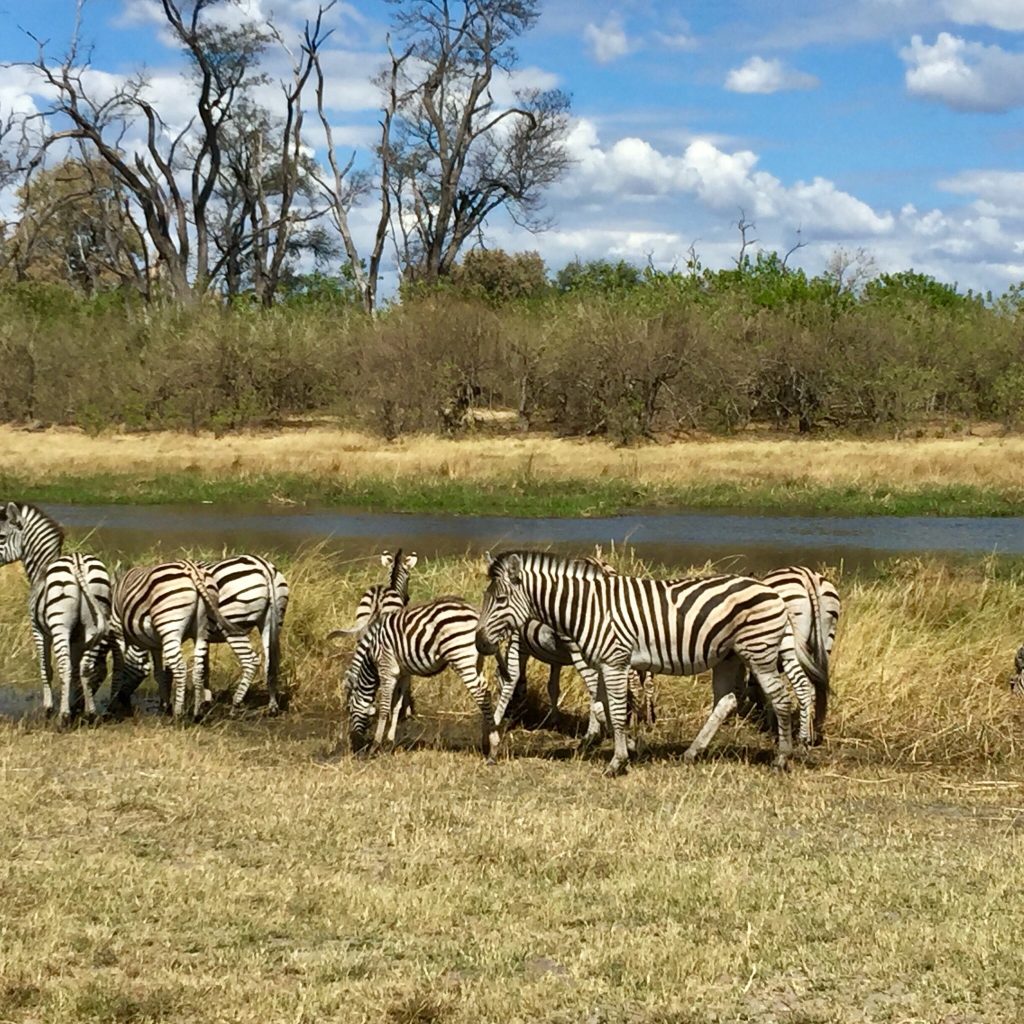
Zebra are among the most widespread large mammals in Botswana and the question is more about season than place.
The Okavango Delta holds them on the drier floodplain margins year round and is one of the best places to see them.
The Chobe riverfront gathers them in the dry season along with everything else.
The Boteti River is the dry season refuge for the Makgadikgadi herds, with tens of thousands concentrating on the only permanent water in that region between roughly June and October.
Nxai Pan and the Makgadikgadi hold the migration between December and March, with foals on the ground and predators working the open country.
Savuti and the Mababe sit on the migration route and see the herds passing through.
The Central Kalahari has them too, though in lower numbers.
Timing matters more than location for anyone hoping to see zebra in quantity. A visitor arriving in the Delta in September will see zebra, in family groups and small herds, scattered across the floodplain margins. A visitor standing on the Boteti in the same month, or on the pans in February, will see them in their thousands. Those are different experiences of the same animal, and only one of them explains why this species is on the coat of arms.
Zebra and the Ecosystem
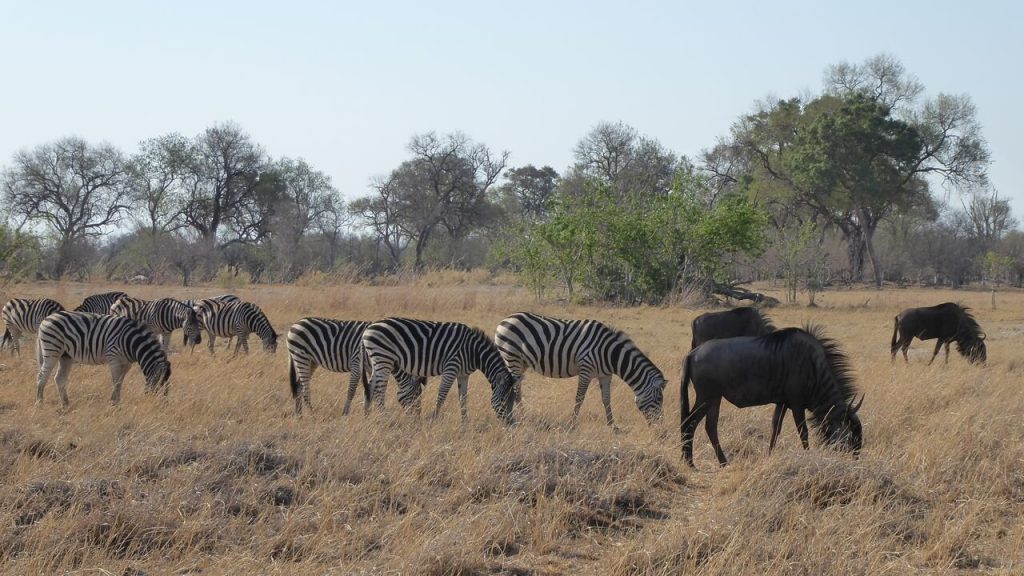
Zebra do something for other grazers that is easy to overlook.
They are bulk grazers, taking the longer and coarser strands of grass that other species cannot digest efficiently. That cropping exposes the shorter, more nutritious growth beneath, which wildebeest and other selective grazers then feed on.
Without zebra clearing the top layer, wildebeest would struggle to graze at all in much of this country, which is why the two species so often move together.
Their constant movement in search of fresh grass is what makes them migratory in a way buffalo, which can eat lower-quality material, are not.
Predators follow the herds. The zebra migration draws lion, cheetah, hyena and wild dog onto the pans in the green season, and foaling around January and February provides a concentrated food supply.
That whole chain, from grass through zebra to predator, is what makes the green season worth travelling for in the desert parks.
If you want the migration, travel between December and March and base yourself on the pans rather than in the Delta. It is Africa’s longest land migration and it happens in Botswana’s low season, which means fewer vehicles and considerably lower rates than the celebrated dry months.
Frequently Asked Questions About Zebra in Botswana
Why is the zebra Botswana’s national animal?
It was chosen at independence as a symbol of racial harmony, with the black and white stripes presented under Sir Seretse Khama as a sign that all races could live together in equality. Two zebras support the shield on the coat of arms, which carries cogwheels for industry, wavy lines for water and a bull’s head for cattle farming, with the motto Pula, meaning rain, beneath. The national football teams carry the name too.
What species of zebra live in Botswana?
Only the plains zebra, also called Burchell’s zebra. Grevy’s zebra of East Africa and the mountain zebras of Namibia and South Africa do not occur here. Southern plains zebra carry a shadow stripe, a faint brown band within each white stripe, which East African animals lack. Every zebra’s pattern is unique, functioning much as a fingerprint does, and a mare keeps a newborn foal apart until her pattern has imprinted on it.
How long is Botswana’s zebra migration?
The main route runs just over 500 kilometres in a straight line between the Chobe River and Nxai Pan, with the annual round trip covering roughly 1,000 kilometres. That makes it the longest recorded terrestrial mammal migration in Africa, longer than the Serengeti wildebeest movement. A second separate migration of around 15,000 animals loops roughly 500 kilometres between the Okavango and the Makgadikgadi.
When can you see the zebra migration?
Herds move south with the first rains from around November, arriving at Nxai Pan and the Makgadikgadi in December and dispersing across the pans through January and February, with foaling following. They turn north again from March, reaching the Okavango and Chobe by the start of the dry season. December to March is the window, and it falls in Botswana’s low season with fewer vehicles and lower rates.
Why did the zebra migration stop and restart?
Veterinary cordon fences erected from the middle of the twentieth century to separate livestock from wildlife cut across the ancient routes and the movement stopped entirely. When fences were realigned and removed, researchers were astonished to see portions of the herds resume two ancient migratory patterns, across generations of animals that had never made the trip. It is one of the more cited examples of what reconnecting fragmented ecosystems can achieve.
Where is the best place to see zebra in Botswana?
It depends on season. The Boteti River is the dry season refuge for the Makgadikgadi herds, with tens of thousands concentrating on the only permanent water in the region between roughly June and October. Nxai Pan and the Makgadikgadi hold the migration between December and March. The Okavango Delta holds zebra on drier floodplain margins year round, and the Chobe riverfront gathers them through the dry months.
Booking Your Botswana Trip
The safari companies and tour operators listed on this website put trips like this together for a living and know which camps, guides and routes actually deliver. We are an independent guide to Botswana; we do not book or sell tours ourselves.
When you are ready, arrange your safari, tour or holiday with one of the recognised operators listed here. Tell them your dates and what matters most, and a real person, not a form, will handle the itinerary, park bookings and logistics for you.