Buffalo in Botswana
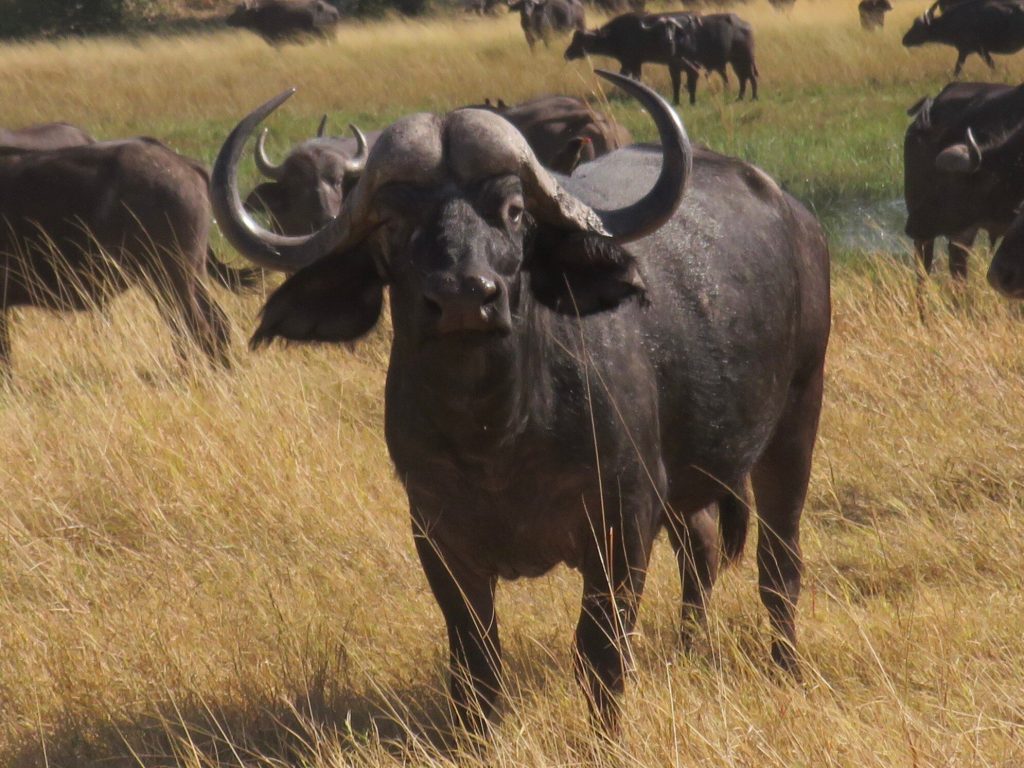
Cape buffalo gather in some of Africa’s largest herds in Botswana, with mega-herds exceeding 2,000 animals recorded in the Mababe Depression and herds of a thousand or more along the Chobe floodplains and at Duba. They are the Big Five member that has adapted least to people, and the animal most guides say they respect above all others. The dry season from May to October concentrates them at water, which is when the great herds form.
Where the Big Herds Gather
Buffalo must drink daily, which means they are never far from permanent water and gather wherever it persists.
The Mababe Depression holds the largest herds in the country, with mega-herds exceeding 2,000 individuals during the dry season. Nutrient-rich grasses sustained by the Mababe River and by Okavango water draining into the wetland support the concentration.
The Chobe floodplains regularly hold up to a thousand animals together in the dry months, before the herds disperse into the interior once the rains break, returning when the natural pans dry.
The Duba Plains in the northern Delta hold a fairly permanent herd of around a thousand buffalo, sustained by nutritious grasses and permanent water, and they largely stay put year round.
The Linyanti and Okavango support substantial populations, with large mixed herds moving between Chobe and the Delta.
Lions get the glory, and ask a guide which animal they respect most and the answer is often the buffalo. It is a tonne of muscle under a helmet of solid horn, and it stands its ground rather than running.
Dagga Boys
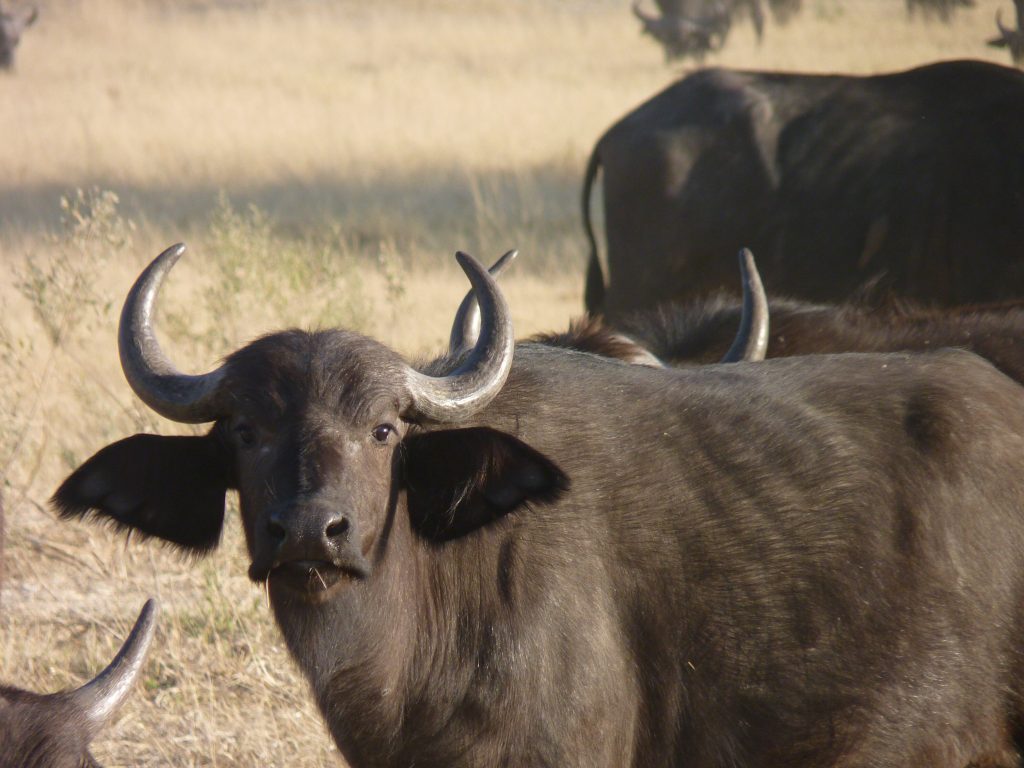
The old bulls are the sighting people remember, and they are worth knowing about.
Older males are eventually forced out of the breeding herd and either live alone or form small bachelor groups. Guides call them dagga boys, from the Zulu word for mud, because of their habit of wallowing.
Unlike the large herds, which move between Chobe and the Delta with the seasons, dagga boys tend to stay in the same area year round, which makes them a reliable sighting where the big herds are not.
Many lodges have their own resident old bulls that hang around near camp, partly for the protection from predators that human activity provides.
They are also the most dangerous. Solitary old bulls are unpredictable, frequently in poor condition and short-tempered, and they will stand and stare at a vehicle in a way that is genuinely unsettling.
Caked in dried mud with worn horns and a level gaze, a dagga boy at close range is among the more charged sightings on safari.
Buffalo and Lions

The relationship between these two species has produced some of the most-watched wildlife footage ever shot, and it happened in Botswana.
The Duba Plains prides preyed almost exclusively on the resident buffalo herd, hunting during the day rather than at night because the herd’s movements set the timing, and often through water.
That interaction was documented over years by the filmmakers Dereck and Beverly Joubert, whose National Geographic film followed prides hunting a herd of roughly a thousand buffalo.
It is worth being straight about the present. The prides have since split and broadened their diet, and the daily daytime buffalo battles of that era are now considerably rarer. Plenty of buffalo remain, and fewer lions has meant more leopard and wild dog in the area.
Elsewhere the same relationship holds without the fame. Large buffalo herds support large lion prides, and the guide saying that where there are buffalo there are lions is broadly reliable.
The Mababe is where this plays out most visibly, with open country and large herds producing predator activity through the dry season.
Buffalo Behaviour
Knowing what you are looking at makes a herd sighting considerably better than a headcount.
Buffalo are exceptionally gregarious. Mixed herds contain cows, calves and young bulls, moving in coordinated fashion with calves tucked into the middle for protection.
They are grazers taking the longer, coarser grass, which allows other grazers access to the shorter growth beneath. That capacity to eat less nutritious material means they do not migrate as far as zebra do in the Delta.
Adults weigh 700 kilograms and more, with some sources putting large bulls above 800.
Oxpeckers ride their backs constantly, feeding on ticks, and a herd approaching is usually heard before it is seen.
Herd structure is worth watching for. Dominant bulls move on the flanks and at the rear, cows and calves occupy the centre, and the whole group grazes forward at a steady pace with individuals lifting their heads in rotation to watch. That coordination is what makes a large herd so difficult for predators, and why lions concentrate on the edges rather than attempting the middle.
Buffalo defend themselves and their herd rather than fleeing, and they are said to remember a threat and occasionally to ambush it. Whether that is literally true is debated, and every guide in Africa believes it.
Mababe Depression. The largest herds in Botswana, exceeding 2,000 animals in the dry season, on open country that makes predator activity highly visible. Between Moremi and Chobe.
Chobe floodplains. Up to a thousand together in the dry months, best seen from a boat. Herds disperse inland when the rains break and return as the pans dry.
Duba Plains. A resident herd of around a thousand that largely stays year round, famous for its long-documented relationship with the local lion prides.
When to See Buffalo
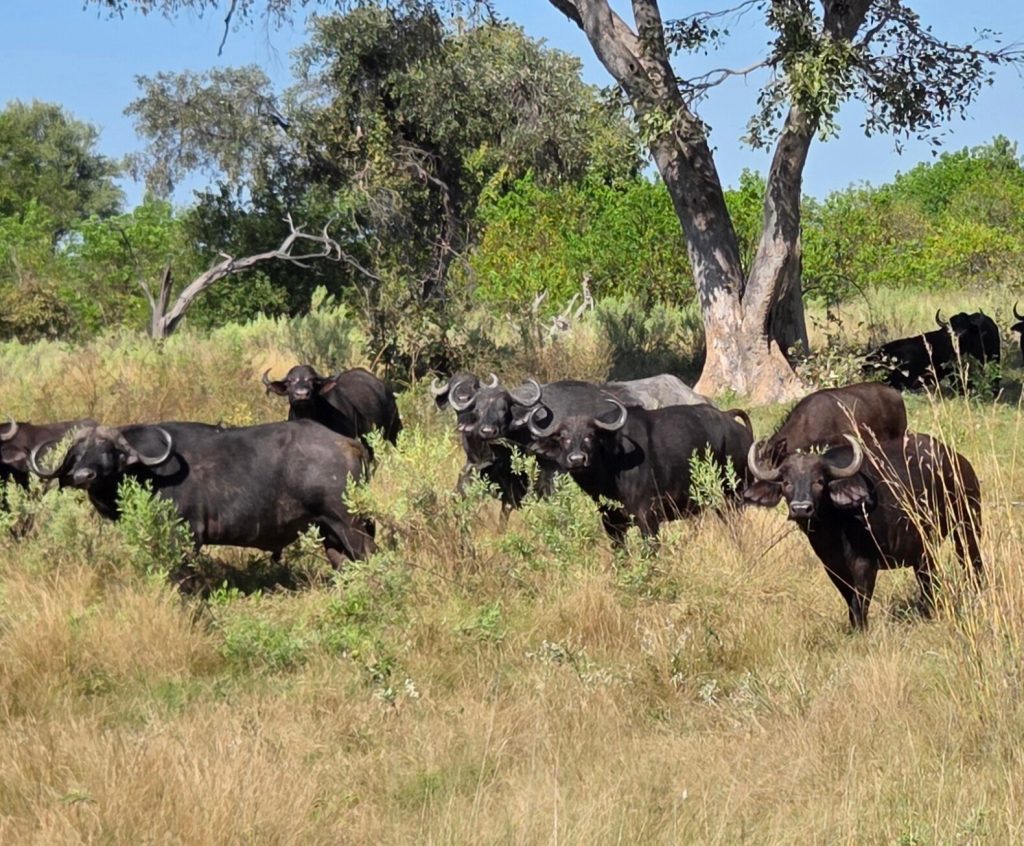
The seasonality is straightforward and follows water.
The dry season from May to October is when the great herds form. Because buffalo must drink daily, the dry months concentrate them at rivers, pans and waterholes, and thinner vegetation makes them easier to see.
June to October is the specific window for mega-herds, with the concentration building as the season progresses.
Dust is part of the picture. A large herd moving in dry conditions raises a cloud visible from a considerable distance, which is what produces the dramatic images the Chobe is known for.
The green season disperses the herds into the interior as inland pans fill, so numbers along the rivers drop considerably. Buffalo are still present, just spread out and harder to find in thicker vegetation.
Dagga boys hold their areas year round, which means an old bull sighting does not depend on season.
Watching Buffalo Safely
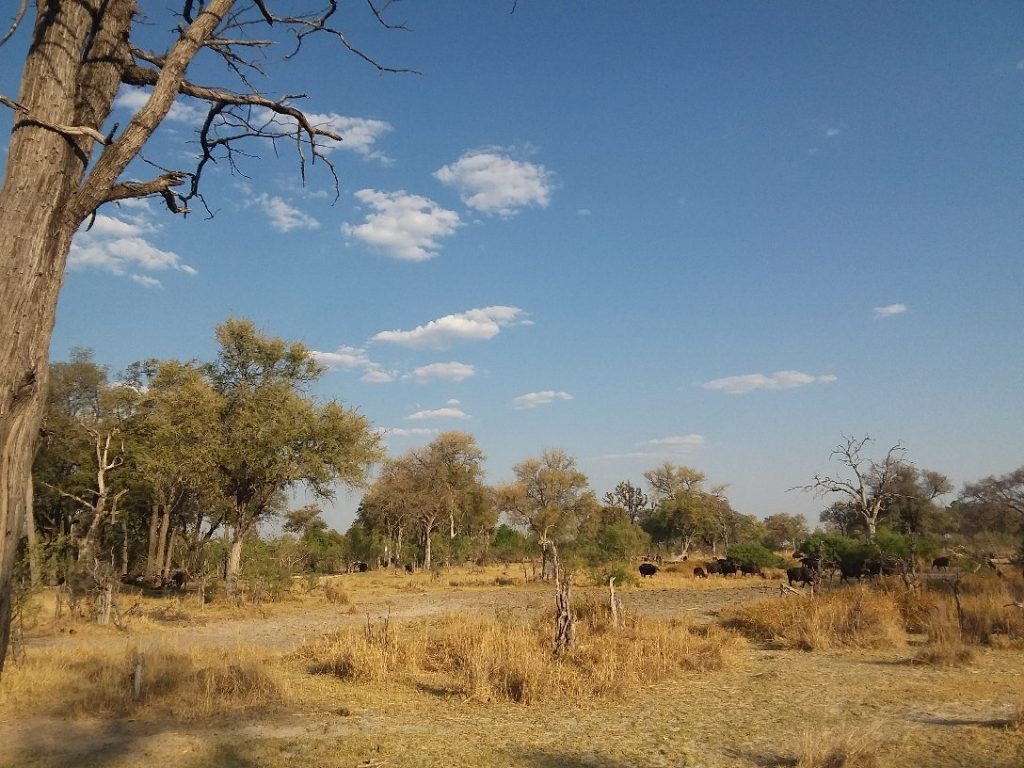
Buffalo deserve more caution than most visitors give them.
They are the Big Five member that has changed the fewest habits for people, and they will actively defend themselves rather than flee. A charging buffalo is a serious matter.
Solitary old bulls are the particular risk, being unpredictable and often in poor condition. Give them substantially more room than a herd.
In a vehicle, stay seated and inside the outline as always. Buffalo tolerate vehicles well as a rule, and the tolerance ends abruptly if somebody stands up.
Walking safaris require particular care around buffalo, and a licensed armed guide will read a herd’s behaviour and change route rather than push through. That judgement is the reason walking is guided.
Never walk between a buffalo and water or between an animal and the herd.
Self-drivers should be particularly careful. A large herd crossing a track will not hurry, and trying to push through the middle of it separates animals from the group, which is exactly the situation that produces a charge. The correct response is to stop, switch off and wait for as long as it takes. A thousand buffalo crossing in front of a stationary vehicle is a better sighting than anything you would have reached by driving on.
Take a boat on the Chobe if buffalo are on your list. From the water you can watch a herd of several hundred come down to drink without the dust and without pushing a vehicle into them, and the scale reads better from the river than from the bank.
Frequently Asked Questions About Buffalo in Botswana
Where are the biggest buffalo herds in Botswana?
The Mababe Depression holds the largest, with mega-herds exceeding 2,000 individuals during the dry season, sustained by nutrient-rich grasses fed by the Mababe River and Okavango water. The Chobe floodplains regularly hold up to a thousand together in the dry months. The Duba Plains in the northern Delta support a fairly permanent herd of around a thousand that largely stays put year round.
What is a dagga boy?
An old bull buffalo forced out of the breeding herd, living alone or in a small bachelor group. The name comes from the Zulu word for mud, referring to their habit of wallowing. Unlike the large herds that move seasonally between Chobe and the Delta, dagga boys tend to hold the same area year round, which makes them a reliable sighting. They are also the most dangerous buffalo, being unpredictable and often in poor condition.
When is the best time to see buffalo in Botswana?
The dry season from May to October, with June to October the specific window for mega-herds. Because buffalo must drink daily, the dry months concentrate them at rivers, pans and waterholes while thinner vegetation makes them easier to see. The green season disperses herds into the interior as inland pans fill, so numbers along the rivers drop considerably, though dagga boys hold their areas year round.
Are buffalo dangerous?
Yes, and they deserve more caution than most visitors give them. Buffalo are the Big Five member that has adapted least to people, actively defending themselves and their herd rather than fleeing, and they are said to remember a threat. Solitary old bulls are the particular risk, being unpredictable and often in poor condition. They tolerate vehicles well provided everyone stays seated, and walking safaris require a licensed armed guide.
Do lions really hunt buffalo at Duba Plains?
They did, and to a lesser extent still do. The Duba prides preyed almost exclusively on the resident buffalo herd, hunting in daylight because the herd’s movements set the timing, and often through water. Filmmakers Dereck and Beverly Joubert documented it over years for National Geographic. The prides have since split and broadened their diet, so the daily daytime battles of that era are now considerably rarer, though plenty of buffalo remain.
How big are Cape buffalo?
Adults commonly weigh 700 kilograms and more, with some sources putting large bulls above 800. They are grazers taking the longer, coarser grass, which opens up shorter growth for other grazers and means they do not need to migrate as far as zebra do. Oxpeckers ride their backs feeding on ticks, and a large herd is usually heard before it is seen.
Booking Your Botswana Trip
The safari companies and tour operators listed on this website put trips like this together for a living and know which camps, guides and routes actually deliver. We are an independent guide to Botswana; we do not book or sell tours ourselves.
When you are ready, arrange your safari, tour or holiday with one of the recognised operators listed here. Tell them your dates and what matters most, and a real person, not a form, will handle the itinerary, park bookings and logistics for you.