Electricity and Plug Types
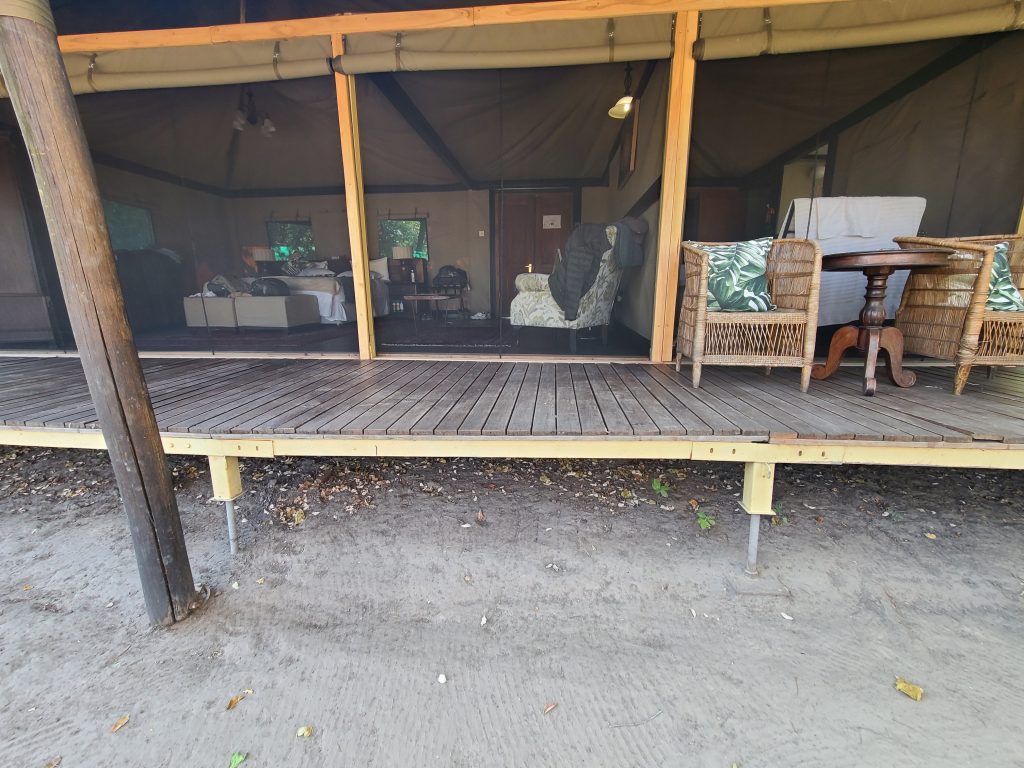
Botswana runs on 230 volts at 50 hertz, with the large round-pin Type M socket as the national standard, though Type D and the British Type G both turn up in hotels and lodges. A universal travel adapter is the practical answer rather than picking one type. Botswana is a southern African country where most safari camps generate their own electricity from solar, which affects when and where you can charge more than the plug shape does.
Voltage and Frequency for a Botswana Safari
The supply is 230 volts at 50 hertz, matching the United Kingdom, Europe, Australia and most of Africa and Asia.
For travellers from those regions, nothing needs converting. Your devices run on this voltage at home.
For travellers from North America, where the standard is 120 volts, this matters and is the part people get wrong. A plug adapter changes the shape of the pins. It does not change the voltage. Plugging a 120-volt-only appliance into a 230-volt Botswana socket through an adapter will destroy it, sometimes spectacularly.
Check the label on each charger or device. If it reads “Input: 100 to 240V” it is dual voltage and safe with only a plug adapter, which covers virtually every modern phone charger, laptop charger, camera charger and tablet. If it states a single voltage such as 120V, it needs a converter or it stays at home.
The devices that catch North American travellers out are hair dryers, straighteners, curling irons and electric shavers, which are frequently single voltage. Most Botswana camps supply hair dryers anyway, so the simplest answer is to leave yours behind rather than carry a heavy converter against a 20kg luggage limit.
Plug Types Used in Botswana
This is where published sources disagree, so it is worth being precise.
Botswana inherited the pre-1950s British standard as a former protectorate, originally covering several plug versions. Type D, the 5-amp three round pin plug, and Type M, the larger 15-amp version, were both standardised, and in the end Type M became the national standard. That is the socket you will most often meet.
Type M has three large round pins in a triangular arrangement and is the same plug used across South Africa, which is why South African appliances and adapters work here.
Type D looks similar but has noticeably smaller pins. A Type D plug will not fit a Type M socket, though older Type D sockets still exist in some buildings.
Type G, the rectangular-pin British plug, appears in newer hotels and some lodges, particularly properties built or refurbished recently. Various sources list Botswana as using D, G and M together, which reflects what travellers actually meet rather than what the official standard says.
You may also come across South African double sockets carrying both Type M and the newer Type N, and Europlug Type C pins are commonly used with adapters.
Choosing a Travel Adapter for a Botswana Trip
With three plug types circulating, buying a single-type adapter is a gamble you do not need to take.
A universal travel adapter covering M, D, G and C solves the whole question for one item weighing very little. Buy it before you travel, since finding one in Maun is not a plan.
Two practical points. First, many cheap universal adapters do not have pins large enough for a proper Type M socket, so check that it lists Type M by name or the BS 546 15-amp standard rather than assuming “Africa” is covered. Second, bring two if you are travelling with a camera, since charging a phone and a camera battery simultaneously from one socket otherwise becomes a queue.
A multi-socket extension lead from home, plugged into a single adapter, is the trick photographers use. One adapter, four devices charging.
Most safari lodges keep adapters to lend, though supply runs out when the camp is full, so treat that as a fallback rather than the plan.
Type M. The national standard. Three large round pins in a triangle, 15 amp, identical to the South African plug. What you will meet most often, especially in older buildings and established camps.
Type D. Three round pins like Type M but distinctly smaller, rated at 5 or 6 amps. Historic standard still found in some older sockets. Not interchangeable with Type M.
Type G. The rectangular-pin British plug with a built-in fuse. Appears in newer hotels and recently refurbished lodges. UK travellers occasionally find they need no adapter at all, though it would be unwise to count on it.
Charging Devices at Safari Camps
The plug shape turns out to be the easy part. When and where you can charge is the real question on a Botswana safari.
Most remote camps run entirely on solar, which conservation rules encourage and remoteness demands, since a camp reachable only by light aircraft cannot rely on a grid connection. That has consequences worth knowing before you arrive.
Charging is often slower than at home. Some camps restrict it to daytime hours when the panels are producing, or run generators only at set times. A number of properties have no socket in the tent at all, offering a central charging station in the main area where you leave devices with staff.
Ask about this at booking if it matters to you, particularly if you are carrying camera batteries that need overnight charging between drives.
Mobile camping safaris are more limited again. Vehicle charging and a battery pack are usually your options, so bring one.
Lighting works differently too, and it is worth knowing before your first night. Tents in solar camps are lit by low-wattage bulbs or lanterns that dim as the evening goes on, and paths between tents are marked by paraffin lamps rather than floodlights, deliberately, so the sky stays dark. A head torch is genuinely useful rather than a packing-list formality, since you will want both hands free walking back from dinner with a staff escort, and finding something in a bag at five in the morning by phone light gets old quickly.
Batteries and Cold Mornings in Botswana
Cold drains batteries faster than most visitors expect, and Botswana winter mornings are cold.
June and July drives leave at around 6°C to 7°C, with Kalahari nights dropping below freezing. Camera batteries lose capacity noticeably at those temperatures, and a battery that lasted a full day at home will not.
Carry two or three spares per camera body rather than one, and keep them in an inside pocket where body heat helps. The same applies to a phone used for photographs on a dawn drive.
A battery pack is worth its weight for the same reason, particularly on self-drive trips and mobile camping safaris where sockets are scarce and the day between charges is long.
Electricity Supply Reliability in Botswana
Botswana’s grid supply has historically depended in part on imports from South Africa, and interruptions do happen in towns.
Hotels in Gaborone, Maun and Kasane usually have backup generators, and larger properties switch over without much drama. A short outage is more an inconvenience than a problem for a traveller.
Safari camps are unaffected by this entirely, since they were never on the grid to begin with. Solar and battery storage make a remote Delta camp more reliable than a town hotel in this specific respect, which is one of the pleasing ironies of travelling here.
What this means practically: charge everything fully whenever you have a working socket, particularly the night before a transfer day. Do not leave a camera battery at 20 percent assuming you will top it up tomorrow.
Frequently Asked Questions About Electricity in Botswana
What plug adapter do I need for Botswana?
A universal adapter covering Type M, D, G and C is the safe answer, since all three of the first types circulate in Botswana. Type M, the large three round pin plug also used in South Africa, is the national standard and what you will meet most often. Check carefully that any adapter you buy lists Type M or BS 546 15-amp, as many cheap universal adapters have pins too small for a proper Type M socket even where they claim African coverage.
What voltage is used in Botswana?
230 volts at 50 hertz, the same as the United Kingdom, Europe, Australia and most of Africa and Asia. Travellers from those regions need only a plug adapter. North American travellers, coming from a 120-volt standard, need to check each device: anything labelled “Input: 100 to 240V” is dual voltage and safe with an adapter alone, which covers nearly all modern phone, laptop and camera chargers. Single-voltage 120V appliances need a converter or should stay home.
Can I use my hair dryer in Botswana?
If it is dual voltage, yes with an adapter. If it is a 120-volt-only North American model, it will be destroyed by the 230-volt supply even through an adapter, and a converter capable of handling a hair dryer’s draw is heavy against a roughly 20kg luggage allowance. Most Botswana camps and hotels supply hair dryers, so the practical answer is to leave yours at home and check with your camps at booking.
Do safari camps in Botswana have electricity in the rooms?
Many do, though not all, and it varies more than travellers expect. Most remote camps run on solar, so charging can be slower than at home and sometimes limited to daylight hours or to periods when a generator runs. A number of properties provide no socket in the tent, offering a central charging station in the main area where staff look after your devices. Ask at booking if you have camera batteries needing an overnight charge.
Should I bring a multi-plug or extension lead to Botswana?
It is one of the better small items to pack. A multi-socket extension lead from home plugged into a single travel adapter lets you charge a phone, a laptop and two camera batteries at once from one socket, which matters at camps where sockets are few or shared. It weighs little and removes the queue that otherwise builds around the one adapter you brought. Bring a second adapter as backup regardless.
Is the electricity supply reliable in Botswana?
In towns, mostly, though the grid has historically depended partly on imports from South Africa and interruptions do occur. Hotels in Gaborone, Maun and Kasane usually have backup generators and switch over without much disruption. Safari camps are unaffected because they were never grid-connected, running instead on solar with battery storage. The practical habit is to charge everything fully whenever you have a working socket, particularly before a transfer day.
Booking Your Botswana Trip
The safari companies and tour operators listed on this website put trips like this together for a living and know which camps, guides and routes actually deliver. We are an independent guide to Botswana; we do not book or sell tours ourselves.
When you are ready, arrange your safari, tour or holiday with one of the recognised operators listed here. Tell them your dates and what matters most, and a real person, not a form, will handle the itinerary, park bookings and logistics for you.