Botswana Safari Packing List
Packing for a Botswana safari is governed by one rule above all others: light aircraft between camps limit you to a soft-sided bag of around 20kg including hand luggage, with no hard-shell suitcases permitted. Neutral clothing, warm layers for winter mornings and your own binoculars matter more than volume. Botswana is a southern African safari country where nearly all remote Okavango, Chobe and Kalahari camps are reached by charter flight from Maun or Kasane, which is why the luggage rules are enforced rather than suggested.
Luggage Limits for Fly-in Safaris in Botswana
Start here, because everything else on the list follows from it.
Charter operators cap luggage at roughly 20kg per person including hand luggage and camera gear, and some enforce 15kg. A few express it as 15kg main bag plus 5kg hand luggage. Confirm the exact figure with your operator, since it varies between charter companies and nobody wants to repack on the tarmac at Maun.
The bag must be soft-sided. Duffel or holdall style with no rigid frame, no wheels and no retractable handle, because it has to be squeezed into a cargo pod under the aircraft. Maximum dimensions are commonly given as around 70 by 35 by 30 centimetres. Hard suitcases are refused outright by most operators.
Everything counts toward the weight. Camera body, lenses, binoculars, day bag, the lot. A serious photographic kit can eat a quarter of your allowance before any clothing goes in.
Where you exceed the limit, options exist: leave excess luggage in storage at Maun or Kasane airport until you return, or book an additional seat on the charter, which carries a substantial extra weight allowance at extra cost. Arrange either at booking rather than on the day.
Buy the duffel before you travel and practise packing it at home with everything in, then weigh it. Discovering at the airstrip that your camera bag pushes you 4kg over is a bad moment, and some camps supply branded duffels but you cannot count on it.
Clothing to Pack for a Botswana Safari
Neutral colours, layers, and far less than you think. Most camps include laundry in the rate, which means three or four days of clothing covers a two-week trip.
Soft khaki, olive, brown, stone and grey are the standard. White and bright colours stand out badly in the bush. Dark blue and black attract tsetse fly, which is a practical reason rather than a fashion one. Camouflage patterns are best avoided across much of Africa for legal reasons.
Pack long-sleeved shirts and long trousers for game drives, which handle sun, thorns and mosquitoes at dusk in one item. Add shorts and T-shirts for daytime around camp, and a swimming costume if your camp has a pool.
Winter demands more than people expect. June and July morning drives start around 6°C to 7°C with wind chill on an open vehicle, and Kalahari nights drop below freezing with frost. A fleece, a windproof outer layer, gloves and a beanie make the difference between enjoying a dawn drive and enduring one. Camps supply blankets and hot water bottles, and those supplement your clothing rather than replacing it.
Camp dress is relaxed everywhere. Nothing formal is needed, even at the most expensive properties.
Footwear for Game Drives and Walking Safaris
Two pairs cover almost every itinerary.
Closed walking shoes or light bush boots for drives and walks, broken in before you arrive, protecting your feet from thorns and rough ground. Anyone doing a guided walking safari should treat proper footwear as non-negotiable, since acacia thorns go through soft soles.
Sandals or flip-flops for around camp and the pool. Nothing else is required, and a third pair is weight you cannot spare.
Pack more socks than seems reasonable. They weigh nothing and they are what you will want after a dusty drive.
Camera Gear and Binoculars for a Botswana Safari

Bring your own binoculars. Some lodges provide them, most do not guarantee it, and sharing a pair across a vehicle means missing things. This is the single item most often regretted.
For cameras, a telephoto lens transforms what you come home with, and 300mm upward is where wildlife photography starts. Bring spare batteries, since cold mornings drain them and charging in a solar-powered camp is slower than at home. Bring more memory cards than you expect to fill.
Dust is the enemy. A dry bag or waterproof pouch protects gear on mokoro trips and from the dust on drives, and a beanbag steadies a long lens on a vehicle door far better than a tripod, which is useless in a moving open vehicle.
All of this counts toward your 20kg. Photographers routinely make the trade by wearing their heaviest clothing on the charter and packing fewer changes.
Clothing. Long-sleeved shirts and long trousers in neutral colours, shorts and T-shirts, fleece, windproof jacket, gloves and beanie for winter, swimming costume, sun hat with a brim, plenty of socks and underwear.
Footwear. Closed walking shoes or light bush boots already broken in, plus sandals or flip-flops for camp.
Optics and electronics. Your own binoculars, camera body and telephoto lens, spare batteries, memory cards, universal plug adapter for Type D and M sockets, battery pack, head torch.
Health and toiletries. Prescription medication in original packaging, high-factor sun cream, lip balm, DEET insect repellent, rehydration salts, painkillers, antihistamine, antiseptic, plasters, tweezers for thorns, hand sanitiser.
Documents. Passport with six months validity and two blank pages, printed visa where needed, unabridged birth certificates for any minors, insurance certificate with policy number and emergency line, copies stored separately.
Useful extras. Dry bag for mokoro trips, beanbag for the camera, small day bag, refillable water bottle, sunglasses with a strap, a book for the middle of the day, small notes for tipping.
What Botswana Safari Camps Already Provide
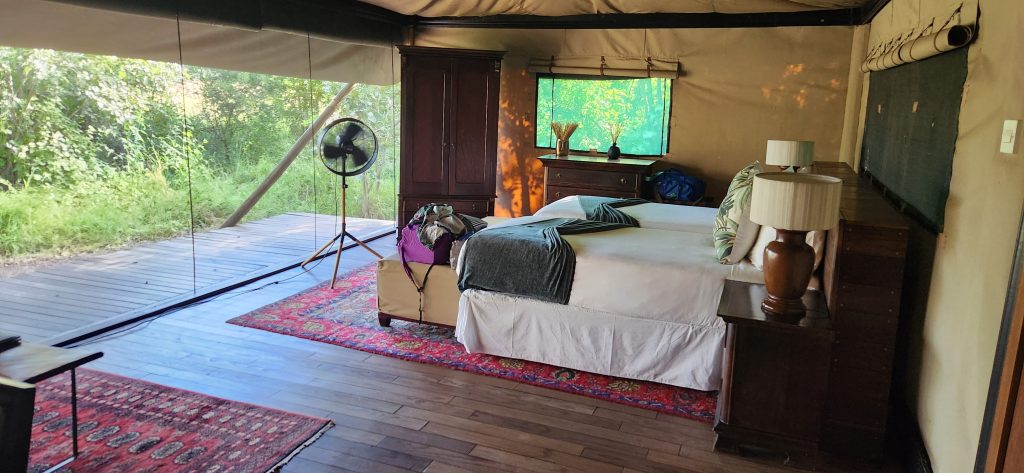
A surprising amount, and knowing this is how you get under the weight limit.
Laundry is included at most camps and usually turned around same day, which is the single biggest saving on clothing volume. Shower gel, soap and shampoo are supplied almost everywhere, often conditioner and body lotion too, so leave full-size bottles at home.
Blankets, ponchos and hot water bottles appear on winter morning drives. Mosquito nets are standard in northern camps and many spray tents during the evening turndown. Drinking water is provided, frequently with a refillable bottle you keep.
Some camps supply binoculars and some supply duffel bags. Neither is reliable enough to plan around.
Seasonal Additions to Your Safari Packing List
The core list holds year round, with two seasonal adjustments worth making.
For a dry season trip between May and October, weight everything toward warmth for mornings. The temperature swing across a single winter day is the most misjudged part of packing for Botswana, running from near freezing at dawn to the mid twenties by afternoon. Lip balm matters more than you would think in humidity of 20 to 40 percent, and a scarf keeps dust out on windy September drives.
For a green season trip between November and April, add a light rain shell for afternoon thunderstorms, and expect heat and humidity rather than cold. Insect repellent moves up the priority list, since mosquito numbers peak in the rains and March is particularly bad. Quick-drying fabrics earn their place.
What to Leave at Home
Hard-shell suitcases, which charter operators refuse. Camouflage clothing. Anything white or brightly coloured that you plan to wear on a drive. Full-size toiletries. Formal clothing, which no camp requires. A tripod, useless in a moving vehicle. Drones, which need advance permits and cannot be flown over parks, reserves or wildlife anyway.
Also leave the impulse to pack for every eventuality. Laundry is included, the dress code is relaxed, and the weight you save is weight available for a longer lens.
Frequently Asked Questions About Packing for Botswana
What is the luggage weight limit for Botswana safari flights?
Around 20kg per person including hand luggage and camera gear is the most common figure, though some charter operators enforce 15kg and others express it as 15kg checked plus 5kg hand luggage. Bags must be soft-sided duffels with no rigid frame or wheels, commonly capped at around 70 by 35 by 30 centimetres so they fit the aircraft cargo pod. Confirm the exact limit with your operator at booking, since it varies between charter companies.
What happens if my luggage is over the limit?
You will be asked to repack at the airport, which is a poor way to start a safari. The workable options are arranging storage for excess luggage at Maun or Kasane airport until you return, or pre-booking an additional seat on the charter, which allows a substantially larger allowance at extra cost. Both need arranging when you book rather than on the day. If the aircraft is already full, overweight bags travel on the next available flight at additional charge.
What colours should I wear on safari in Botswana?
Soft neutrals: khaki, olive, brown, stone and grey. White and bright colours stand out badly against the bush and show dust immediately. Dark blue and black attract tsetse fly, which is a genuine practical concern in parts of northern Botswana rather than a superstition. Camouflage patterns should be avoided across much of Africa for legal reasons. Camp dress is relaxed everywhere, so nothing formal is needed even at expensive properties.
Do I need to bring my own binoculars?
Yes, and this is the item travellers most often regret leaving behind. Some lodges provide binoculars but many do not, and provision is never guaranteed, so sharing a single pair across a vehicle means missing sightings. A mid-range pair around 8×42 suits most safari use, balancing magnification against the shake you get in a vehicle. They count toward your luggage weight, and they are worth the grams.
How cold does it get on morning game drives in Botswana?
Colder than most visitors plan for. June and July morning averages run around 6°C to 7°C, with Kalahari nights dropping to freezing or below and frost on the ground at dawn. Add wind chill on an open vehicle at speed. Afternoons the same day reach 25°C or 26°C. Pack a fleece, a windproof layer, gloves and a warm hat. Camps supply blankets and hot water bottles for the vehicle, which supplement your own layers rather than replacing them.
Do safari camps in Botswana do laundry?
Most include it in the rate and turn it around the same day, which is the main reason you can pack for three or four days rather than a fortnight. Camps also supply shower gel, soap and shampoo almost universally, often conditioner and body lotion, so leave full-size toiletries at home. A small number of camps do not launder underwear for cultural reasons, providing washing powder instead, which is worth knowing before you pack accordingly.
Booking Your Botswana Trip
The safari companies and tour operators listed on this website put trips like this together for a living and know which camps, guides and routes actually deliver. We are an independent guide to Botswana; we do not book or sell tours ourselves.
When you are ready, arrange your safari, tour or holiday with one of the recognised operators listed here. Tell them your dates and what matters most, and a real person, not a form, will handle the itinerary, park bookings and logistics for you.