Botswana Safari Lodges

Botswana safari lodges are small by design, typically holding between five and twenty rooms, and almost all are legally required to be non-permanent structures that could be dismantled within a day leaving no trace. Rates are fully inclusive of meals, drinks and two guided activities daily. Botswana is a southern African country that caps bed numbers by policy, which is why camps here are quieter and more expensive than equivalents elsewhere on the continent.
Why Botswana Safari Camps Are Built the Way They Are
The first thing to know explains almost every other feature of accommodation in this country.
Conservation rules require that lodges in the wildlife areas be non-permanent, capable of being taken down inside a day and leaving nothing behind. That is why you sleep under canvas on a raised timber deck rather than in a brick building, and why so many Delta camps stand on stilts.
Operators have not let that requirement limit quality. What you get instead is canvas and hardwood construction to a standard that would embarrass many hotels, with plumbed bathrooms, proper beds and full electricity, all of it technically temporary.
The second structural fact is bed capacity. Concession agreements cap how many camps operate in an area and how many vehicles may attend a sighting. A camp with eight tents in a concession the size of a small county is normal here, and it is what you are actually paying for.
Botswana Tourism grades accommodation, which gives a rough basis for comparing standards between properties.
Types of Safari Accommodation in Botswana
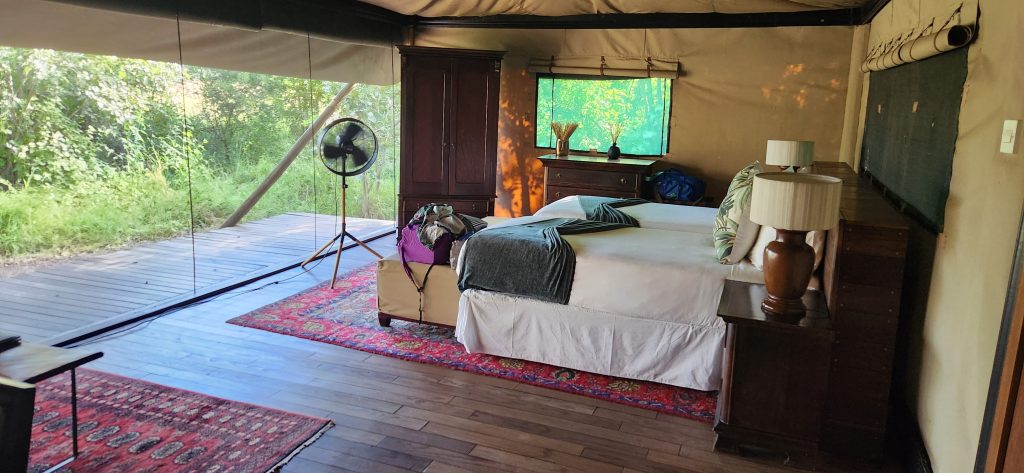
The vocabulary confuses people, since camp and lodge are used loosely and a tent here is not a tent anywhere else.
Tented camps are the standard. Canvas walls on a timber platform, en-suite bathroom with flush toilet and hot shower, proper bed, private deck. Meru-style tents in the explorer tradition remain common. Guests regularly describe them as rooms rather than tents, which is fair.
Lodges tend to mean more solid construction, thatched chalets or timber and glass buildings, more often found outside the strictest concession areas, at Chobe riverfront and around the pans.
Mobile camps move with you on a guided camping safari, pitched and struck by a crew travelling ahead. Good operators run walk-in tents, real beds and hot bucket showers.
Public campsites inside the national parks serve self-drive travellers, with basic ablutions and no fences.
Ignore the word tent when comparing camps. A Botswana safari tent has a flush toilet, hot water, a proper bed and often a plunge pool. The word survives because of the non-permanent building rule, not because of what the accommodation is like.
Choosing Between Water and Land Camps in the Delta
This is the single decision that most affects what your days look like in the Okavango, and it is the one most often got wrong.
Camps sitting in the permanent inner Delta run water activities year round: mokoro trips through papyrus channels, motorboat safaris to lagoons, walks on islands. Camps on drier ground at the eastern and outer edges depend on seasonal flood levels, and when channels drop they switch to game drives.
Neither is better. Land-based camps often deliver stronger big cat viewing because game drives cover more ground, while water camps give you the Delta experience people picture when they book.
The mistake is booking a camp on seasonal water for November and expecting a mokoro. Ask the operator directly whether the camp is water-based, land-based or both, and what runs in your specific month.
The best answer for a week in the Delta is usually one of each, which is also why itineraries here move between camps rather than settling in one.
What Is Included at a Botswana Safari Lodge
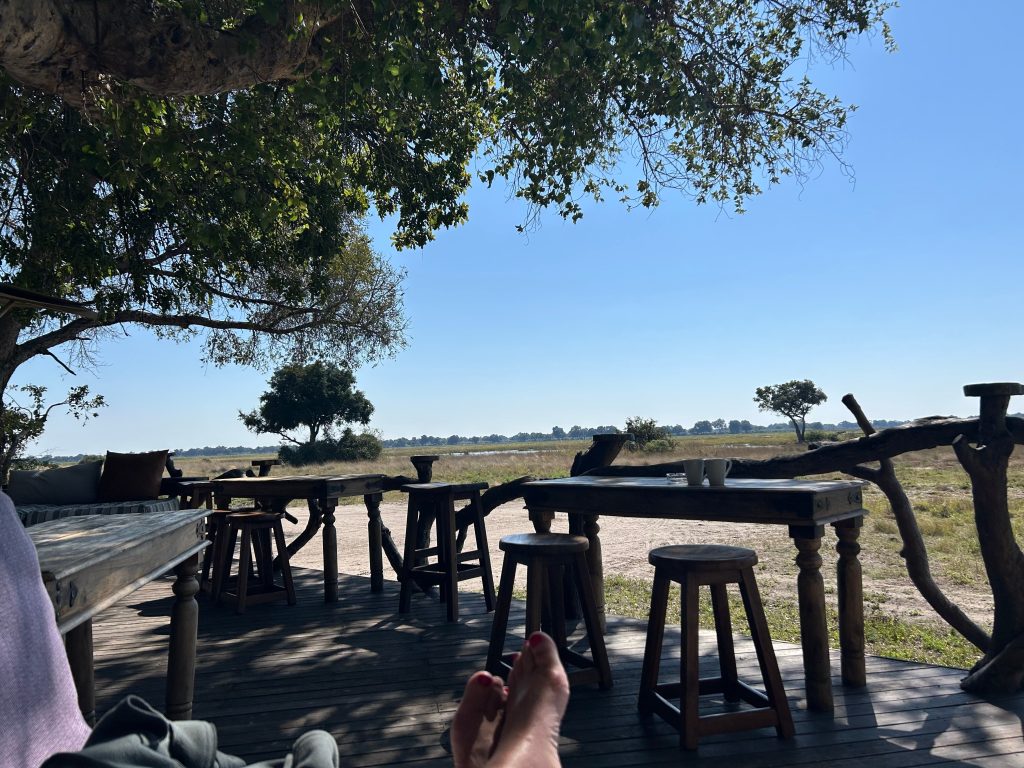
All-inclusive means genuinely inclusive here, which makes nightly rates look worse and total trip costs look better than they first appear.
A standard rate covers accommodation, all meals, most drinks including local-brand spirits, wines and beers, laundry, and two guided activities daily. Park or concession fees are usually built in, along with conservation and community levies on private concessions.
Outside the rate sit international flights, internal charter legs unless bundled, travel insurance, premium and imported wines at some properties, tips, and specialist activities. Scenic helicopter flights are the main extra and carry a substantial per-person charge.
Ask for written confirmation of what a quoted rate covers. The phrase all-inclusive is used loosely and differences between operators are real.
Camp Life and Daily Routine at a Botswana Lodge
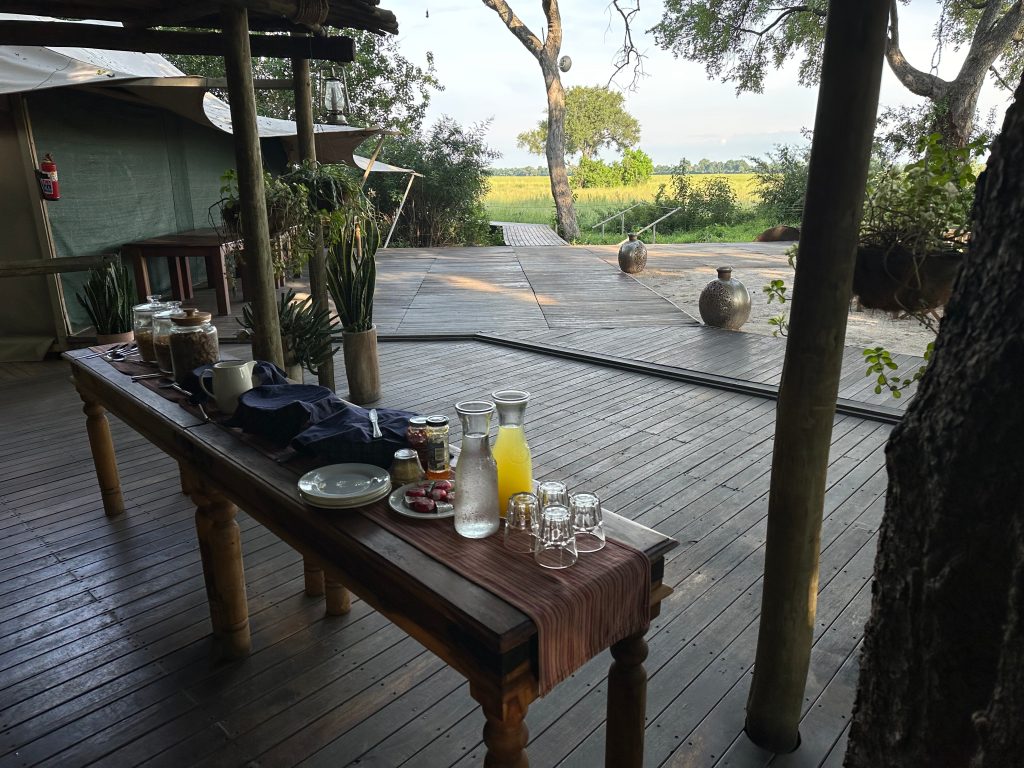
The rhythm is consistent across price points, which surprises people who expect the expensive camps to run differently.
Wake-up between half five and six, light breakfast, out by first light for a three to four hour morning activity with a coffee stop. Back mid-morning for a proper breakfast or brunch. The middle of the day is free, and in October everybody sleeps through it. Afternoon tea around half three, second activity until dark ending with a sundowner, then dinner.
Meals are frequently communal at long tables, though many camps now offer private dining. Dress is relaxed everywhere, including at the most expensive properties.
Camps are unfenced, so elephants walk through and hippos graze the lawns at night. Staff escort guests between tents after dark and that rule is not a formality.
Most camps run on solar, so charging can be slower than at home and some have a central charging station rather than sockets in rooms.
Water-based Delta camps. Permanent channels, mokoro and boat safaris year round, island walks. Strong for lechwe, sitatunga, birdlife and the classic Okavango picture.
Land-based camps. Game drives across floodplain and woodland, often better for lion, leopard and wild dog. Found in Moremi, Khwai, the drier Delta margins and the Kalahari.
Riverfront lodges. Chobe and the Boteti. More solid construction, boat safaris, reachable by road, no charter flight needed. The most accessible and often the best value.
National Park Camps Versus Private Concession Camps
Where a camp sits determines what it is allowed to offer, and this affects your days more than the thread count does.
National parks and game reserves, meaning Chobe and Moremi, prohibit off-road driving and close gates at set hours, which rules out night drives. Guided walking is broadly restricted.
Private concessions operate under separate agreements and permit off-road driving, night drives with a spotlight and guided walking safaris. Vehicle numbers at a sighting are limited by contract, so a leopard is often yours alone.
That is the real argument for concession rates. Off-road access means a guide can follow a cat into the treeline rather than watching it leave the track, and night drives open up aardvark, porcupine, civet, genet and hunting cats.
If walking or night drives matter to you, the concession decides where you sleep.
Choosing a Botswana Safari Lodge

A few questions cut through the marketing faster than any amount of browsing.
How many rooms? Under ten means a small, quiet camp and a communal atmosphere. Twenty means more anonymity and usually a lower rate.
Is the vehicle shared or private, and how many guests per vehicle? Photographers should ask outright, since a row to yourself changes what you can shoot.
Is it in a concession or a park, and does it offer night drives and walks?
Is it on permanent or seasonal water, and what activities run in my month?
Does it take children, and from what age? Many camps set a minimum, commonly six or twelve, and family units are limited.
Finally, ask about the guiding rather than the rooms. The guide determines what you see, and Botswana’s licensing standard is high across the board, which is a genuine reason to spend less on the tent.
Frequently Asked Questions About Botswana Safari Lodges
How much do Botswana safari lodges cost per night?
Mid-range classic camps commonly run between roughly 600 and 1,100 US dollars per person per night. Luxury private concession camps start near 1,500 and reach beyond 4,000 at the top. Guided mobile camping sits far lower at around 350 to 550 per person per day. Green season rates can fall by up to 40 percent and single supplements are often waived. Botswana runs above neighbouring countries because bed numbers are capped by policy rather than demand.
What is the difference between a camp and a lodge in Botswana?
Loosely, camps are canvas on raised timber decks and lodges are more solid construction such as thatched chalets, though the terms are used interchangeably by operators. The distinction matters less than it sounds because conservation rules require accommodation in the wildlife areas to be non-permanent and removable within a day. A Botswana safari tent typically has a flush toilet, hot shower, proper bed, private deck and sometimes a plunge pool.
Are Botswana safari lodges all-inclusive?
Almost always. Rates normally cover accommodation, all meals, most drinks including local spirits, wines and beers, laundry, and two guided activities daily such as game drives, mokoro trips, boat safaris and walks. Park and concession fees are usually built in. Outside the rate sit international flights, internal charter legs unless bundled, insurance, premium imported wines at some camps, tips, and extras such as scenic helicopter flights. Ask for written confirmation of inclusions.
Are safari camps in Botswana fenced?
No, and that is deliberate. Camps sit inside unfenced wildlife areas, so elephants walk through, hippos graze the lawns at night and predators pass by. The safety record is good because procedure is taken seriously: staff escort guests between tents after dark, guests are briefed on arrival, camp layouts are planned to reduce risk and movement is controlled at night. Follow the escort rule without exception no matter how short the walk looks.
How many nights should I stay at each camp?
Three is the sweet spot, since the arrival afternoon and departure morning are largely consumed by charter transfers. Two nights leaves you one full day, which in the Delta rarely justifies the flight. Six or seven nights across two camps suits a first visit, and nine or ten across three lets you add the Kalahari or the pans for real variety. Moving camps also means changing habitat, which is much of the point.
Do Botswana safari lodges accept children?
Many do, though minimum ages are common, frequently six or twelve, and some camps set higher limits for water activities or walking. Family units and interconnecting rooms are limited in number and book out early, and some properties offer dedicated family villas. A private vehicle is worth considering with young children, since it lets you cut a drive short. Ask about age limits before falling for a camp, since this is where family bookings most often come unstuck.
Booking Your Botswana Trip
The safari companies and tour operators listed on this website put trips like this together for a living and know which camps, guides and routes actually deliver. We are an independent guide to Botswana; we do not book or sell tours ourselves.
When you are ready, arrange your safari, tour or holiday with one of the recognised operators listed here. Tell them your dates and what matters most, and a real person, not a form, will handle the itinerary, park bookings and logistics for you.