Luxury Safari Lodges

Luxury safari lodges in Botswana are defined less by thread count than by access, with the top camps holding four to eight suites inside private concessions of tens or hundreds of thousands of hectares, where off-road driving, night drives and guided walking are all permitted. Private plunge pools, sole-use villas and helicopter arrivals are common at this tier. Botswana is a southern African country whose low-volume tourism policy makes genuine solitude the product these camps are actually selling.
What Makes a Botswana Safari Lodge Luxury
Ask what you are buying at the top of the Botswana market and the honest answer is space rather than furnishings.
A luxury camp here typically holds between four and eight suites. Abu Camp has six. Duba Plains has five. Little DumaTau has four. Those numbers sit inside concessions that can run to 180,000 hectares, which produces a ratio of guests to wilderness that almost nowhere else can match.
The rooms are exceptional, certainly. Suites at the newest properties run close to 1,800 square feet, with canopied beds, indoor and outdoor showers, private decks, plunge pools and fireplaces. Interiors range from restrained canvas to sculptural steel, wood and glass.
All of it still has to be dismantlable within a day and leave no trace, which is why even the most expensive camp in the country is technically a tent.
What separates luxury from mid-range in practice, though, is what your guide is allowed to do once you leave camp.
Private Concessions and Why They Cost More
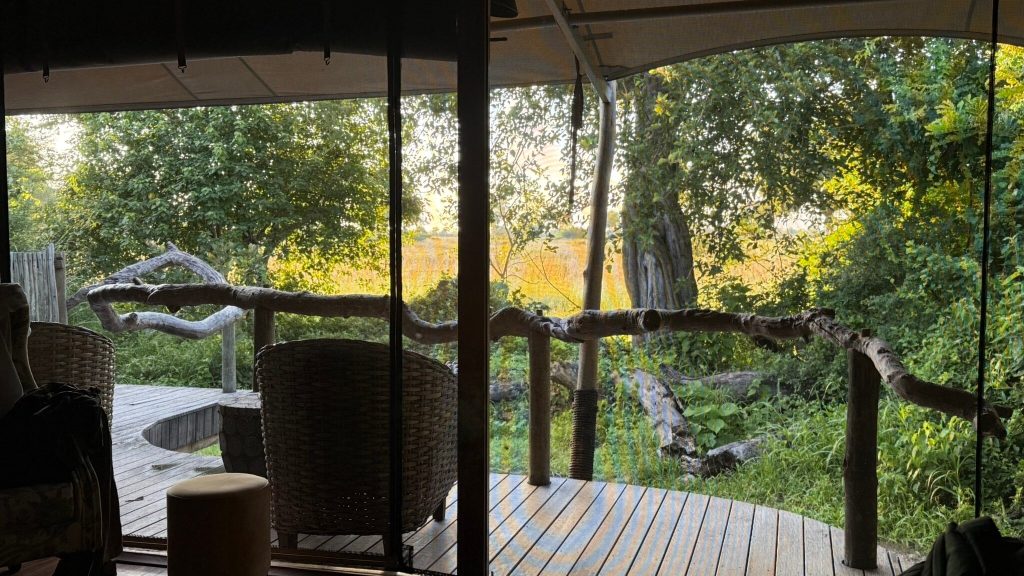
This is the substance behind the price and the part worth paying for.
National parks including Chobe and Moremi prohibit off-road driving, close their gates at set hours and largely restrict guided walking. Private concessions operate under different agreements and permit all three.
Off-road access means a guide can follow a leopard into the treeline rather than watching it walk away from the track. Night drives open a completely different cast, with aardvark, porcupine, civet, genet, honey badger and hunting cats. Walking safaris put you on the ground with a licensed armed guide.
Concession agreements also cap vehicle numbers at a sighting. In practice that means a lion pride is frequently yours alone rather than shared with a queue of vehicles, which is the difference people remember years later.
Several of the leading camps sit in concessions with no public access at all.
At this level you are not paying for a better tent. You are paying for permission to leave the road, to drive after dark, and to be the only vehicle at the sighting.
Luxury Camps in the Okavango Delta
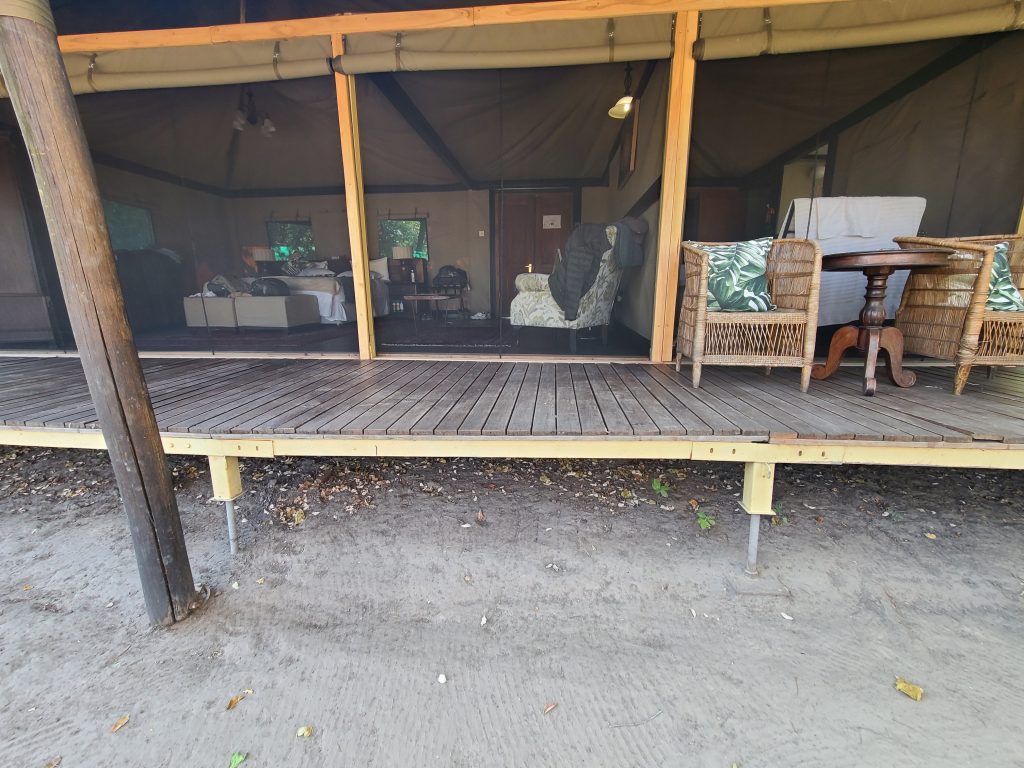
The Delta holds the largest concentration of top-tier camps in the country, and they divide by where they sit on the water.
Jao Camp occupies its own island in a 60,000-hectare reserve bordering Moremi, rebuilt in recent years as a striking construction of steel, wood and glass elevated into the tree canopy. Jacana Camp in the same concession runs five Meru-style tents on decks over the floodplains, with a copper tub on the private deck and a roofless outdoor bathroom for showering under stars.
Mombo, on Chief’s Island inside Moremi, is probably the most famous safari camp in Botswana, known for exceptional predator density and sitting at the very top of the country’s price band.
Sandibe is the design-led choice, an organic structure melting into a canopy of wild palms and fig trees, with suites raised above papyrus-lined banks. Abu Camp holds six suites in a vast private concession known for its resident elephant herd. Duba Plains keeps five tented suites and a conservation-first identity, favoured by photographers.
Vumbura Plains works unusually well for families and groups through a division into two wings.
Luxury Lodges in Linyanti, Selinda and Chobe
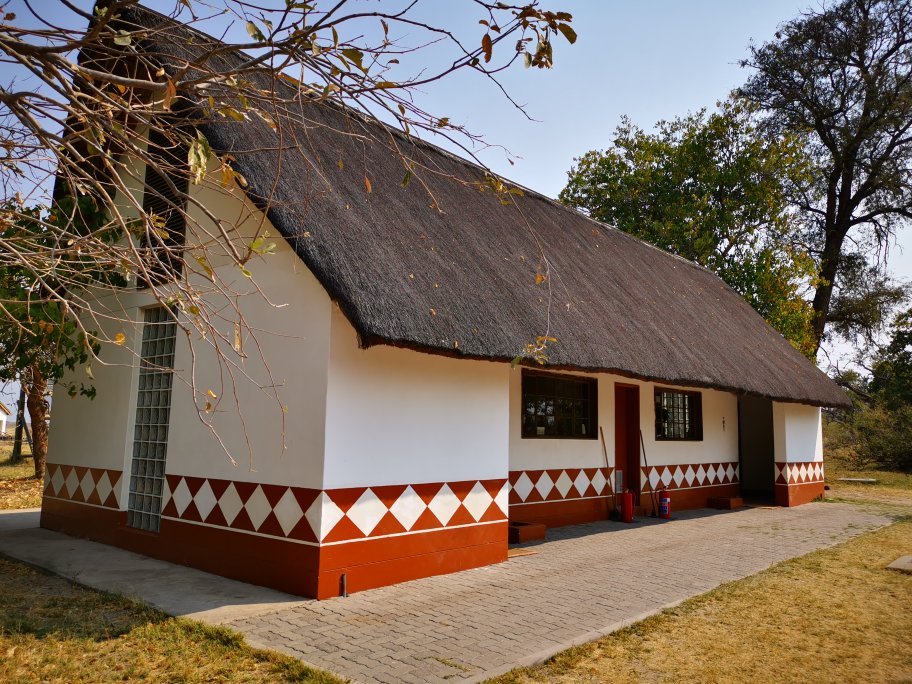
North of the Delta, the concessions along the Linyanti and Selinda systems hold camps that experienced safari travellers frequently rate above the Delta names.
DumaTau sits on the Linyanti with eight tented suites on wooden walkways, private plunge pools, interiors of hand-crafted mosaic and acacia wood, and its own spa. Elephants move through the camp regularly. Little DumaTau offers four suites for a more intimate version of the same.
Kings Pool holds a position on the Linyanti River with game drives and boat trips, in one of the remotest reserves in the country.
Zarafa in the Selinda Concession was sited by wildlife filmmakers who chose it for its lagoon views, and its two-bedroom sole-use villa is among the most expensive accommodation in Botswana.
On the Chobe riverfront, lodges tend toward more solid construction and are reachable by road from Kasane, which makes this the one part of the luxury circuit that needs no charter flight.
Luxury Camps in the Kalahari and Makgadikgadi
The desert camps offer something the Delta cannot, and they peak in the opposite months.
Jack’s Camp on the Makgadikgadi pans is the best known, furnished with Persian rugs, hand-carved beds and cabinets of curiosities, with a mess tent housing a natural history museum, a library and an antique pool table. Suites have private plunge pools and views across the salt. A full circuit of the best of them is the 12 day ultimate Botswana safari.
The activities here exist nowhere else in Botswana: quad biking on the crust, tracking walks with San guides, semi-habituated meerkat colonies, and sleep-outs on the open pan under skies dark enough that stargazing is a listed activity.
Camps in the Central Kalahari deliver black-maned lions across open country. Leroo La Tau overlooks the seasonal Boteti River from a clifftop in Makgadikgadi Pans National Park with thatched chalets and a pool.
Timing matters more here than anywhere. The Kalahari and the pans are at their best between December and April, exactly when the northern camps are weakest.
Okavango Delta. The largest concentration of top-tier camps, water and land activities, exceptional predator viewing at Mombo and Duba. Reached by light aircraft or helicopter from Maun. Peak May to October.
Linyanti and Selinda. Remote private concessions, huge dry-season elephant concentrations, strong predator country, very few vehicles. Sole-use villas at the top end. Peak May to October.
Kalahari and Makgadikgadi. Quad biking, meerkats, San tracking, sleep-outs and stargazing. Design-led camps with a very different character. Peak December to April, when the north is at its weakest.
Sole-Use Villas and Private Safari Options

Above the standard suite sits a tier that suits families, groups of friends and anyone wanting the camp to themselves.
Sole-use villas are separate two-bedroom or four-suite structures with their own staff, vehicle, guide and often their own chef and pool. Because a Botswana camp might hold only six suites in total, taking a villa is closer to renting a small private camp than booking a large room.
Private vehicles and private guiding can be booked at most luxury camps for a supplement. For photographers this is frequently the best money spent on the whole trip, since it removes the compromise of sharing a sighting with guests who want to move on. These are also the lodges behind most honeymoon safaris in Botswana.
Helicopter transfers replace fixed-wing arrivals at some camps, with the flight from Maun becoming part of the experience rather than a means of getting there. Doors-off configurations are available for photography.
Sleep-outs, spa treatments, private dining and elephant experiences are offered at various properties, some included and some charged.
Booking a Luxury Botswana Safari
Two practical realities shape how this tier is booked.
First, availability rather than price is usually the binding constraint. With four to eight suites per camp and bed numbers capped by policy, the leading properties take reservations twelve to eighteen months ahead for July, August and September. If a specific camp matters, book it first and build the routing around whatever dates it offers.
Second, the green season changes the arithmetic completely. Rates can fall by up to 40 percent between November and April, single supplements are frequently waived, and the Kalahari and pans camps are at their annual best in exactly those months. A luxury Botswana safari that is out of reach in August is sometimes affordable in February.
Ask what is included before comparing. At this tier premium spirits and most wines are usually covered, though ultra-premium wines and helicopter flights typically are not.
Frequently Asked Questions About Luxury Botswana Lodges
How much does a luxury safari lodge in Botswana cost?
Luxury private concession camps typically start around 1,500 US dollars per person per night and climb beyond 4,000 at the very top, with some guidance placing the luxury tier from around 800 dollars upward. Sole-use villas and the most exclusive properties run higher again. Rates include accommodation, all meals, premium drinks, twice-daily activities and usually concession levies. Green season rates between November and April can fall by up to 40 percent, with single supplements often waived.
What makes a Botswana safari camp luxury rather than mid-range?
Access more than furnishings. Luxury camps hold four to eight suites inside private concessions where off-road driving, night drives and guided walking are permitted, none of which is allowed inside Chobe or Moremi as national parks. Vehicle numbers at a sighting are capped by concession agreement, so wildlife is frequently yours alone. Rooms are superb, with suites at newer camps approaching 1,800 square feet and private plunge pools, but the access is what you are paying for.
Which is the most luxurious safari camp in Botswana?
Opinions vary and several properties have a claim. Mombo on Chief’s Island is the most famous, sitting at the top of the country’s price band with exceptional predator density. Zarafa in the Selinda Concession, particularly its two-bedroom sole-use Dhow Suite, is regularly described as the most luxurious accommodation in the country. Jao Camp, Sandibe, Abu Camp, DumaTau and Jack’s Camp all appear consistently on best-of lists for quite different reasons.
Are luxury Botswana camps still tents?
Technically yes, and the reason is regulatory rather than budgetary. Conservation rules require accommodation in the wildlife areas to be non-permanent and removable within a day leaving no trace, so even the most expensive camps are built in canvas and hardwood on raised decks. Guests routinely describe them as rooms rather than tents. Expect a flush toilet, indoor and outdoor showers, air cooling, a private deck and frequently a plunge pool.
Can I book a whole safari camp in Botswana?
Yes, and it is more achievable than it sounds. Because many luxury camps hold only four to eight suites, a family or group can take an entire property, and several camps market sole-use villas of two bedrooms or four suites with their own staff, guide, vehicle, chef and pool. Private vehicles and private guiding are available at most camps for a supplement, which is worth considering for photographers regardless of whether you take the whole camp.
When should I book a luxury Botswana lodge?
Twelve to eighteen months ahead for July, August and September. This is not sales pressure: bed numbers are capped by conservation policy, top camps hold four to eight suites, and the supply genuinely runs out. Six to nine months usually works for shoulder months of May and November. Green season between November and April can often be arranged a few months out and costs substantially less. Book the camp that matters first and build the routing around it.
Booking Your Botswana Trip
The safari companies and tour operators listed on this website put trips like this together for a living and know which camps, guides and routes actually deliver. We are an independent guide to Botswana; we do not book or sell tours ourselves.
When you are ready, arrange your safari, tour or holiday with one of the recognised operators listed here. Tell them your dates and what matters most, and a real person, not a form, will handle the itinerary, park bookings and logistics for you.