Honeymoon Safaris in Botswana
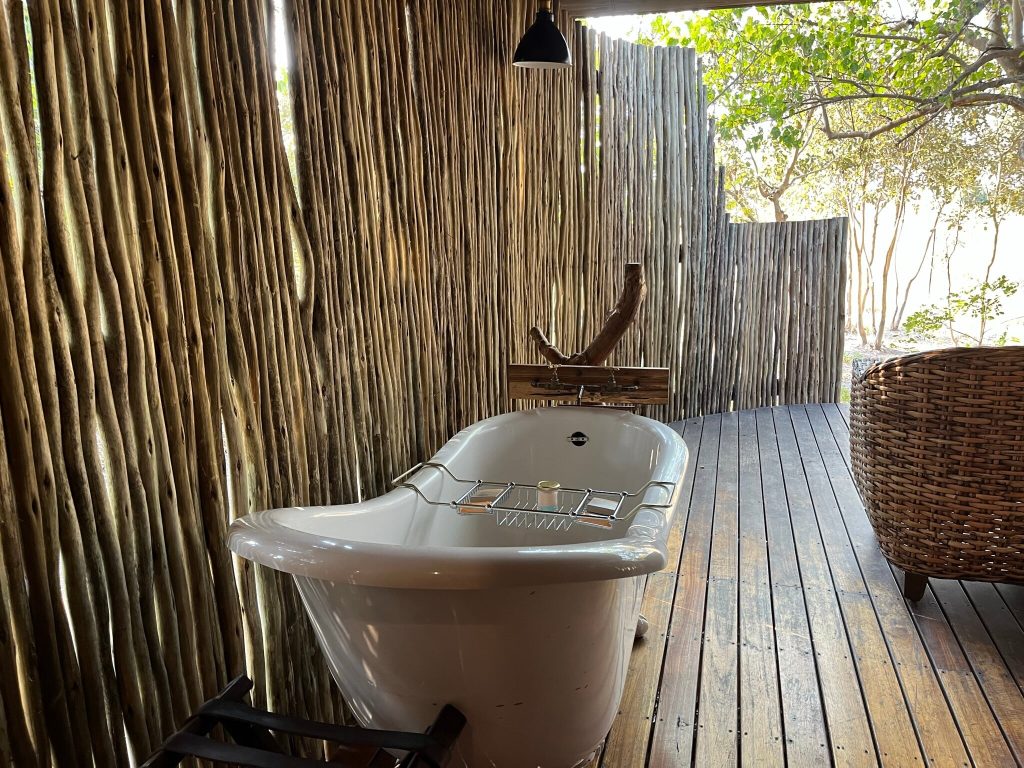
Botswana suits honeymoons better than most safari destinations because its low-volume tourism model delivers genuine seclusion rather than the appearance of it, with camps holding a handful of guests across concessions the size of small counties. Private plunge pools, outdoor baths, sleep-outs under the stars and bush dinners for two are standard at the upper tiers. Many camps offer honeymoon rates, and some waive a proportion of one partner’s accommodation.
Why Botswana Works for a Honeymoon
The case rests on something structural rather than on romantic styling.
Botswana caps visitor numbers by policy, leasing enormous private concessions to operators who run very few camps across them. The result is that seclusion is built into the country rather than staged for couples.
On a private concession you can go an entire game drive without passing another vehicle. At a camp of three or four suites you may be one of six guests in an area of tens of thousands of hectares.
That matters on a honeymoon in a way it does not on an ordinary safari. Space and quiet are the actual product.
The second argument is variety. A morning game drive, an afternoon gliding through channels by mokoro and a boat cruise at sunset is a rhythm few destinations can offer, and it prevents the sameness that a week of drives alone can produce.
In a country where camps hold six guests across concessions of tens of thousands of hectares, privacy is not an upgrade you pay for. It is what the whole tourism model was built to sell.
What Romantic Camps Actually Offer
The features worth looking for are reasonably consistent across the top properties.
Private plunge pools on a deck overlooking water or a waterhole, which turn the dead middle of the day into the best part of it.
Outdoor baths and showers, with freestanding tubs positioned for a view and star baths under open sky.
Sleep-outs on a raised deck or star bed, spending a night under the sky away from the main camp. These are usually weather-dependent and offered in the dry months.
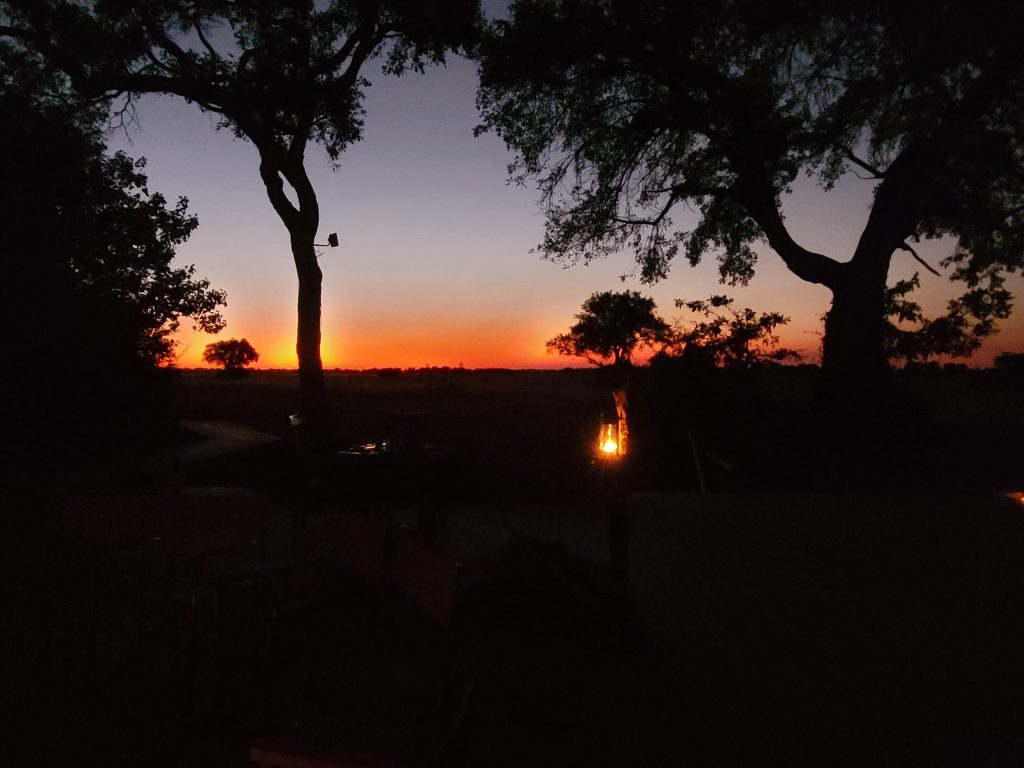
Private bush dinners, with a lantern-lit table set for two somewhere away from the camp, and in-room dining on a private deck.
Suites set far apart, which matters more than the fittings. A camp where tents are widely spaced feels private in a way a well-appointed but tightly packed one never will.
Spa treatments, couples’ massages and wellness areas appear at several properties.
Private Activities
This is the single upgrade most worth paying for on a honeymoon.
A private vehicle means game drives run entirely on your schedule, with no other guests, no compromise on pace and no pressure to move on from a sighting because somebody else is bored.
Most camps offer it for a supplement, and on a honeymoon it converts a shared activity into a genuinely private one.
Private mokoro trips and boat cruises work the same way and cost considerably less than a private vehicle.
Some camps offer exclusive-use booking, where you take the entire property, which suits a small wedding party or a couple wanting complete solitude.
Helicopter flights over the Delta, flown doors-off, are the other extravagance worth considering, and a private charter puts the two of you alone over the channels.
Where to Go

Three regions carry most honeymoon traffic and they combine well.
The Okavango Delta is the obvious choice, with the most celebrated camps, permanent water, mokoro and the strongest predator viewing. Camps on private concessions with widely spaced suites are what to look for.
The Linyanti and Selinda offer enormous dry-season elephant concentrations with very few vehicles, and some of the most architecturally polished camps in the country. Zarafa in Selinda has four tented suites across a reserve of roughly 130,000 hectares.
Chobe from Kasane is the accessible option, with river-facing suites, plunge pools and boat safaris, and no charter flight required. It pairs naturally with Victoria Falls.
The Makgadikgadi adds something different: sleep-outs on open salt under exceptionally dark skies, and country unlike anywhere else.
A common shape is three or four nights in the Delta plus two or three in the Linyanti or on the Chobe.
Victoria Falls is the other frequent addition, sitting around 80 kilometres from Kasane and reachable in roughly twenty minutes by light aircraft. Two or three nights there gives a change of pace at one end of the trip, with the waterfall itself, a Zambezi sunset cruise and rather more in the way of restaurants and shops than any safari camp offers. Couples who want a few days of not being in the bush usually put it at the end.
Okavango Delta. The celebrated camps, permanent water, mokoro at sunset, strongest predator viewing. Look for private concessions with widely spaced suites and plunge pools.
Linyanti and Selinda. Fewest vehicles anywhere, huge dry-season elephant numbers, some of the most polished camps in Botswana. Rarely a standalone trip, best paired with the Delta.
Chobe and the Makgadikgadi. Chobe for river-facing suites and easy access with no charter. The Makgadikgadi for sleep-outs on salt under dark skies and country unlike anywhere else.
When to Go
Timing involves a genuine trade and it is worth making deliberately.
June to October is peak, with the best game viewing, the Okavango flood at its highest and sleep-outs and outdoor activities running reliably. It is also the most expensive and the hardest to book.
May and November are shoulder, with discounts commonly 15 to 25 percent, good conditions and considerably better availability.
December to March is green season, with discounts of 30 to 45 percent, dramatic skies, newborn game and exceptional birding, against dispersed game in the north and some camps closed.
For a honeymoon, the shoulder months are frequently the best answer. You get near-peak conditions, meaningfully lower rates and quieter camps, and quiet is the thing you came for.
Book twelve to eighteen months ahead for peak season, since bed numbers are capped and the celebrated camps genuinely run out.
Practical Planning
A few details are worth settling early.
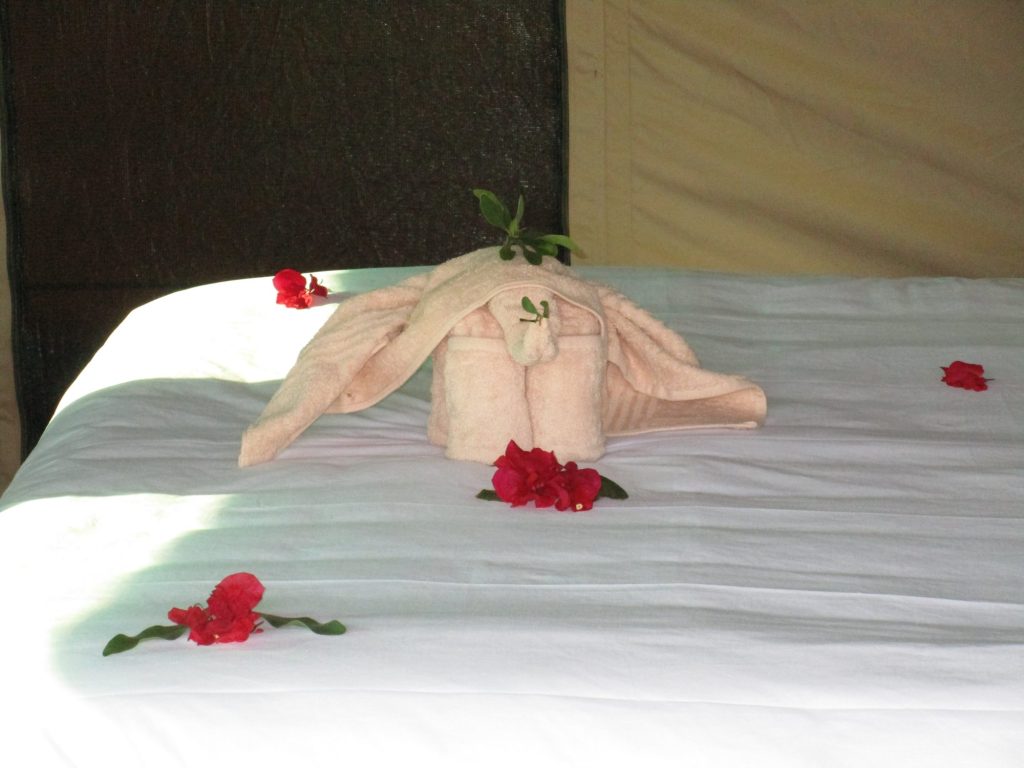
Tell every camp it is a honeymoon at the time of booking rather than on arrival. Many offer honeymoon packages, private dinners, room upgrades or rate reductions for one partner, and none of that is applied retrospectively.
Charter luggage is capped at roughly 20kg per person in soft bags including camera gear, which catches out couples travelling with wedding clothes. Store the excess in Maun.
Bring something smart for dinner, since camps dress casually but not scruffily in the evening.
Names on documents must match. If a passport is in a maiden name and a flight booking in a married one, that is a problem at check-in, so travel in the passport name and change it afterwards.
Consider a night in Maun or Kasane at either end, which absorbs a delayed international connection without costing a camp night.
One further thought about pacing. Couples arriving straight from a wedding are usually more tired than they expect, and a fortnight of half past five wake-ups is a demanding way to start a marriage. Building in a slower first camp, or a property with a pool and a decent library, lets you sleep through a morning drive without feeling you have wasted money. The camps that suit honeymoons best tend to be the ones where doing nothing is a genuine option.
Book a private vehicle for at least part of the trip rather than upgrading the tent. A shared drive with four strangers is the thing most likely to make a honeymoon feel like an ordinary holiday, and the supplement costs considerably less than moving up a camp tier.
Frequently Asked Questions About Honeymoon Safaris in Botswana
Is Botswana good for a honeymoon?
Unusually so, because seclusion is built into the country rather than staged. Botswana caps visitor numbers by policy and leases enormous private concessions to operators running very few camps, so a camp of three or four suites may hold six guests across tens of thousands of hectares, and a game drive can pass no other vehicle. Add mokoro, boat cruises and drives in one itinerary and it avoids the sameness a week of game drives alone can produce.
How much does a Botswana honeymoon safari cost?
Premium camps suited to honeymoons run roughly 850 to 1,200 US dollars per person per night, with ultra-luxury properties from 1,200 to 2,500 and the most celebrated names reported considerably higher. A private vehicle carries a supplement on top. Green season discounts run 30 to 45 percent and shoulder season 15 to 25 percent. Many camps offer honeymoon rates, with some operators discounting a proportion of one partner’s accommodation.
What romantic features should I look for in a camp?
Private plunge pools on a deck, outdoor baths and showers, and suites set far apart, which matters more than the fittings since a widely spaced camp feels private in a way a well-appointed but tightly packed one never will. Beyond that, sleep-outs on a star bed under open sky, private bush dinners at a lantern-lit table for two, in-room dining on your deck, and spa or couples’ treatments at several properties.
Should we book a private vehicle for a honeymoon?
It is the single upgrade most worth paying for. A private vehicle means drives run entirely on your schedule with no other guests, no compromise on pace and no pressure to leave a sighting because someone else has lost interest. Most camps offer it for a supplement, which costs considerably less than moving up a camp tier. Private mokoro trips and boat cruises work the same way at lower cost again.
When is the best time for a honeymoon in Botswana?
June to October gives the best game viewing, peak Okavango flood and reliable sleep-outs, at the highest rates and tightest availability. For a honeymoon the shoulder months of May and November are frequently the better answer, delivering near-peak conditions with discounts around 15 to 25 percent and quieter camps, and quiet is largely the point. Book twelve to eighteen months ahead for peak season.
Do camps offer honeymoon packages?
Many do, including private dinners, room upgrades, couples’ treatments and rate reductions, with some operators discounting a proportion of one partner’s accommodation. The important thing is to say it is a honeymoon at the time of booking rather than on arrival, since none of it is applied retrospectively. Mention it to your operator and to each camp, and expect small touches on arrival that were arranged in advance.
Booking Your Botswana Trip
The safari companies and tour operators listed on this website put trips like this together for a living and know which camps, guides and routes actually deliver. We are an independent guide to Botswana; we do not book or sell tours ourselves.
When you are ready, arrange your safari, tour or holiday with one of the recognised operators listed here. Tell them your dates and what matters most, and a real person, not a form, will handle the itinerary, park bookings and logistics for you.