Boat Safaris in Botswana
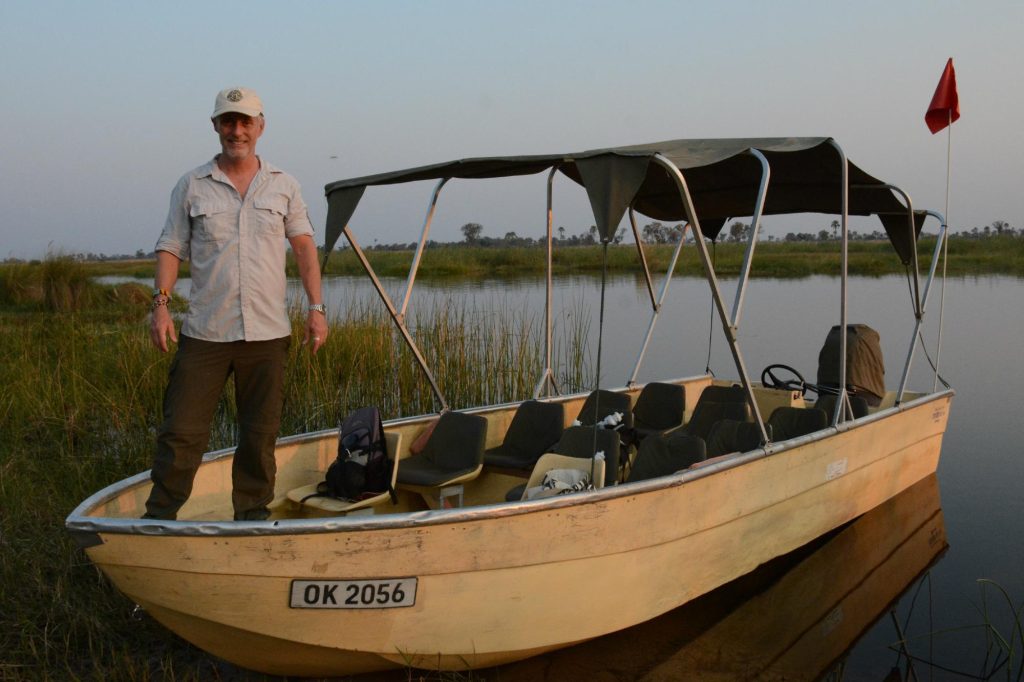
Boat safaris put you at water level with drinking elephants, surfacing hippos and crocodiles on the sandbanks, and they are what most sets Botswana apart from drier safari destinations. The Chobe River supports them year round, while the Okavango Delta peaks between roughly May and September when the flood is high. Boats also reach places no vehicle can, working channels and island edges where much of the activity happens.
Why a Boat Changes What You See
The difference is not simply scenery, and photographers understand it better than most visitors.
From a vehicle you look down at wildlife. From a boat you are at eye level or below it, which produces a completely different sense of the animal and a completely different photograph.
The practical consequences are real. Lower angles, cleaner backgrounds without bush clutter, reflected light off the water, and a closer position than a vehicle usually manages because animals at a riverbank are relaxed about boats.
Boats also reach country roads do not. Channels, lagoons, island fringes and papyrus edges are inaccessible to a vehicle, and in parts of the Delta they are the only way to move at all.
The pace is different too. A boat drifts, and the whole activity is calmer than a drive.
A vehicle looks down at wildlife and a boat sits level with it. That single change of angle is why photographers who have worked the Chobe rate the river above the riverfront tracks.
Boat Safaris on the Chobe River
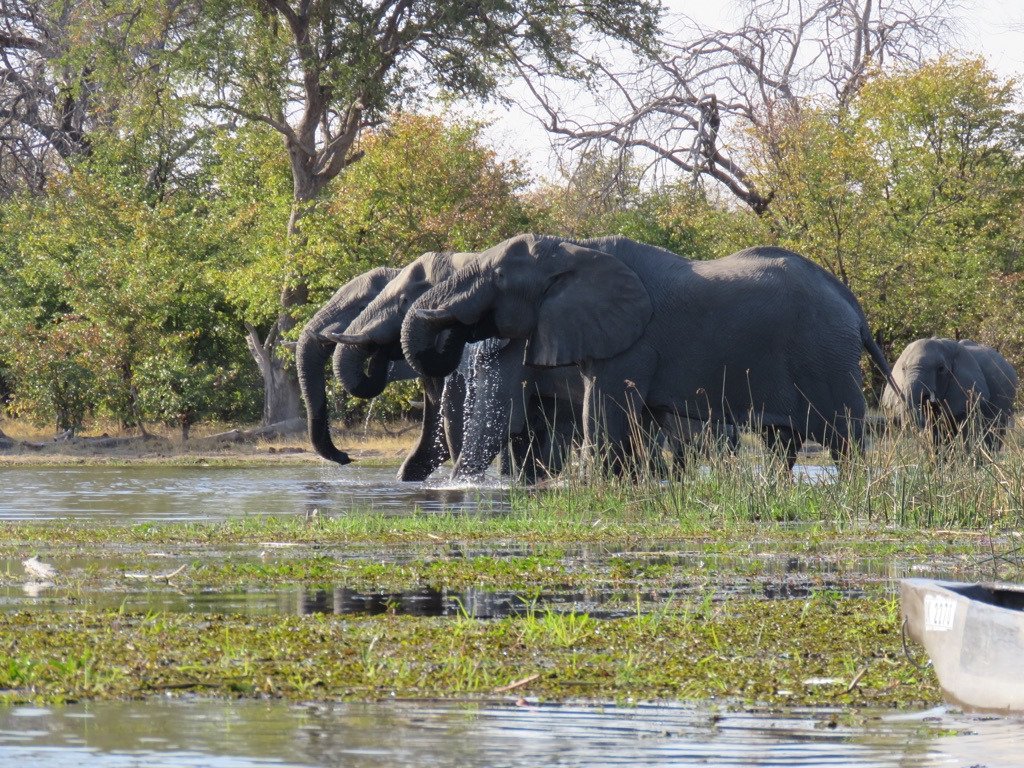
The Chobe is where Botswana boating is at its best and it operates year round because the river is permanent.
Through the dry months from roughly May to October, surface water inland disappears entirely and the herds come to the river. Several hundred elephants along one stretch of bank in an afternoon is an ordinary day. Elephants cross to the islands and swim, which is worth seeing once.
Buffalo arrive in herds of hundreds and lion follow them. Hippo pods hold in the deeper water and crocodiles haul out on the sandbanks.
Birdlife is exceptional, with African skimmers working the shallows, fish eagles throughout, darters, kingfishers and waders, and carmine bee-eater colonies nesting in the banks around September.
Afternoon cruises ending with a sundowner are the standard offering. Mornings are quieter and often better for birds, and they avoid the day visitors who come across from Victoria Falls in the middle of the day.
Boat Safaris in the Okavango Delta
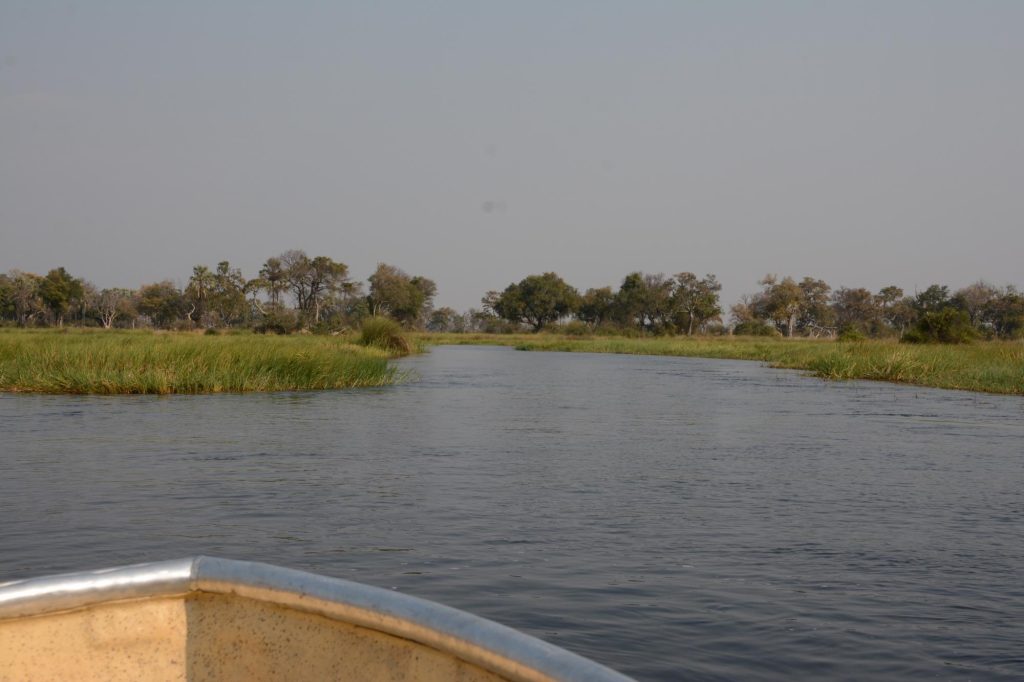
Delta boating is a different experience from the Chobe and it depends on water levels.
Motorboats work the permanent channels and lagoons of the inner Delta, moving between narrow papyrus-lined waterways, larger rivers and open lagoons. The scenery changes constantly, with jackalberry and other large trees on some banks and savannah on others.
May to September is the strongest window, when the flood is at its highest and the network of channels is at its most navigable, with some sources giving May to August as the peak.
Wildlife leans toward the water-adapted species. Red lechwe on the floodplains, sitatunga in the reed beds, hippo, crocodile and exceptional birding. Elephant swim between islands. Big cats are less likely simply because a boat cannot follow them.
At some camps the boat is not an activity at all but the transfer, since the property is inaccessible by vehicle and you arrive from the airstrip by water.
Mokoro trips are the other Delta water activity and are covered separately, being a quite different thing from motorboating.
Linyanti, Selinda and the Panhandle
Three further stretches of water are worth knowing about.
The Linyanti system between Chobe and the Delta is marsh, river and lagoon, and camps here run boating when water levels allow. It is quieter than either the Chobe or the Delta, with vehicle and boat numbers capped by concession agreement.
Selinda offers canoeing along its spillway when the channel flows, including a multi-day canoe trail between roughly June and October that has no equivalent anywhere else in Botswana.
The Okavango Panhandle in the far northwest is where the river is still a proper river, deep and permanent between fault lines. Boating here is oriented toward fishing and birding rather than big game, with tiger fish and bream the target species and Pel’s fishing owl among the birds the area is known for.
The Panhandle is reachable by road from Maun, which makes it the most accessible water in Botswana for independent travellers.
Chobe River. Year round, peaking May to October. Enormous elephant and buffalo concentrations, hippo, crocodile and outstanding birding. Reached from Kasane with no charter flight required.
Okavango Delta. Peaks May to September with the flood. Channels, lagoons and papyrus, with lechwe, sitatunga, hippo and exceptional birds. Reached by light aircraft from Maun.
Panhandle and Linyanti. Fishing and birding on the Panhandle, quiet concession boating on the Linyanti, and canoeing on the Selinda spillway when it flows. Fewer boats than anywhere else.
Types of Boat and Which to Choose

The vessel makes more difference than most people expect, and it is worth asking before booking.
Small motorboats taking a handful of guests are the standard at Delta camps and at the better Chobe operations. They manoeuvre into position, get closer to the bank and can hold still where you want them.
Large multi-deck cruisers operate on the Chobe from Kasane, taking many passengers with drinks and snacks on deck. They suit a relaxed sundowner outing and are considerably less good for photography, since you cannot choose the angle.
Photographic boats are purpose-built with swivel seats at water level and camera mounts, sometimes with a professional photographer aboard. For anyone serious about images on the Chobe these are worth asking for by name.
Houseboats cruise the Chobe and the Panhandle over several days, with cabins, decks and meals aboard, and function as floating accommodation rather than an activity.
Ask how many people will be on the boat. That number tells you more than the description does.
What to Bring on a Boat Safari
The requirements differ from a game drive in a few useful ways.
A jacket, even on a warm afternoon. Moving water is cooler than the bank and the wind picks up, and a Chobe cruise that starts warm frequently ends cold.
Sun protection matters more than on a drive, since there is often no shade and light reflects off the water. A wide-brimmed hat with a chin strap and polarised sunglasses both earn their place, the sunglasses genuinely useful for cutting glare.
A dry bag for camera equipment. Spray happens, and on mokoro trips water sits inches away.
Binoculars, as always, and a telephoto lens for photography with a higher shutter speed than you would use on land to counter boat movement.
Neutral clothing, and note that dark blue and black attract tsetse fly in parts of the north.
Take a morning boat rather than the standard afternoon cruise where you can. On the Chobe the afternoon carries day trippers from Victoria Falls, while mornings are quieter, better for birds and give you the riverbank largely to yourself.
Timing a Boat Safari
The two main areas peak at slightly different times, which matters when building an itinerary.
The Chobe operates year round and peaks between May and October as inland water vanishes and the herds concentrate. August through October delivers the highest concentrations.
The Delta peaks between May and September, when the flood arriving from Angolan rain four months earlier is at its highest and the channels reach furthest. Outside that window, camps on seasonal water may have no boating at all.
The green season from November to April reduces large mammal viewing on both but improves birding considerably, and rates fall.
Within a day, early morning and late afternoon give the best light and the most activity. The middle of the day is hot, harsh and quiet.
Frequently Asked Questions About Boat Safaris in Botswana
Where are the best boat safaris in Botswana?
The Chobe River is the strongest, operating year round and peaking between May and October when enormous elephant and buffalo concentrations come to the water, with outstanding birding throughout. The Okavango Delta offers a quite different experience through permanent channels and lagoons, peaking between May and September with the flood. The Linyanti, Selinda spillway and the Okavango Panhandle all offer quieter boating with far fewer vessels.
When is the best time for a boat safari?
On the Chobe, May to October, with August through October giving the highest game concentrations as inland water disappears. In the Okavango Delta, May to September when the flood is highest and channels are most navigable, with some sources giving May to August as the peak. Within a day, early morning and late afternoon offer the best light and most activity, and mornings on the Chobe avoid the day visitors arriving from Victoria Falls.
How much does a boat safari cost?
At safari camps boating is normally included in the all-inclusive nightly rate, which runs roughly 600 to 1,100 US dollars per person per night at mid-range properties and from 1,500 upward at private concession camps. From Kasane, independently booked Chobe cruises are among the cheapest safari activities in Botswana, with short sunset cruises widely available and full-day options costing more. Specialist photographic boats carry a premium.
What is the difference between a boat safari and a mokoro trip?
A boat safari uses a motorboat, covers real distance, reaches lagoons and island fringes, and works well for photography and birding. A mokoro is a traditional dugout canoe poled from standing at the stern, moving at walking pace through papyrus channels with almost no sound, and the appeal is the quiet rather than the ground covered. Many Delta camps offer both, and they are genuinely different activities rather than versions of each other.
Are boat safaris good for photography?
Exceptionally, and better than vehicles for certain subjects. A boat puts you at or below eye level with wildlife rather than looking down, which produces lower angles, cleaner backgrounds without bush clutter and reflected light off the water. That suits elephant, hippo, crocodile and birds particularly well. Choose a small boat over a large multi-deck cruiser, since you need the vessel to hold a position, and consider a purpose-built photographic boat on the Chobe.
What should I take on a boat safari?
A jacket even on a warm afternoon, since moving water is cooler than the bank and wind picks up. Sun protection matters more than on a drive because there is often no shade and light reflects off the water, so bring a wide-brimmed hat with a chin strap and polarised sunglasses. A dry bag for camera gear, binoculars, and a telephoto lens used at a higher shutter speed than on land to counter boat movement.
Booking Your Botswana Trip
The safari companies and tour operators listed on this website put trips like this together for a living and know which camps, guides and routes actually deliver. We are an independent guide to Botswana; we do not book or sell tours ourselves.
When you are ready, arrange your safari, tour or holiday with one of the recognised operators listed here. Tell them your dates and what matters most, and a real person, not a form, will handle the itinerary, park bookings and logistics for you.