Crocodiles in Botswana
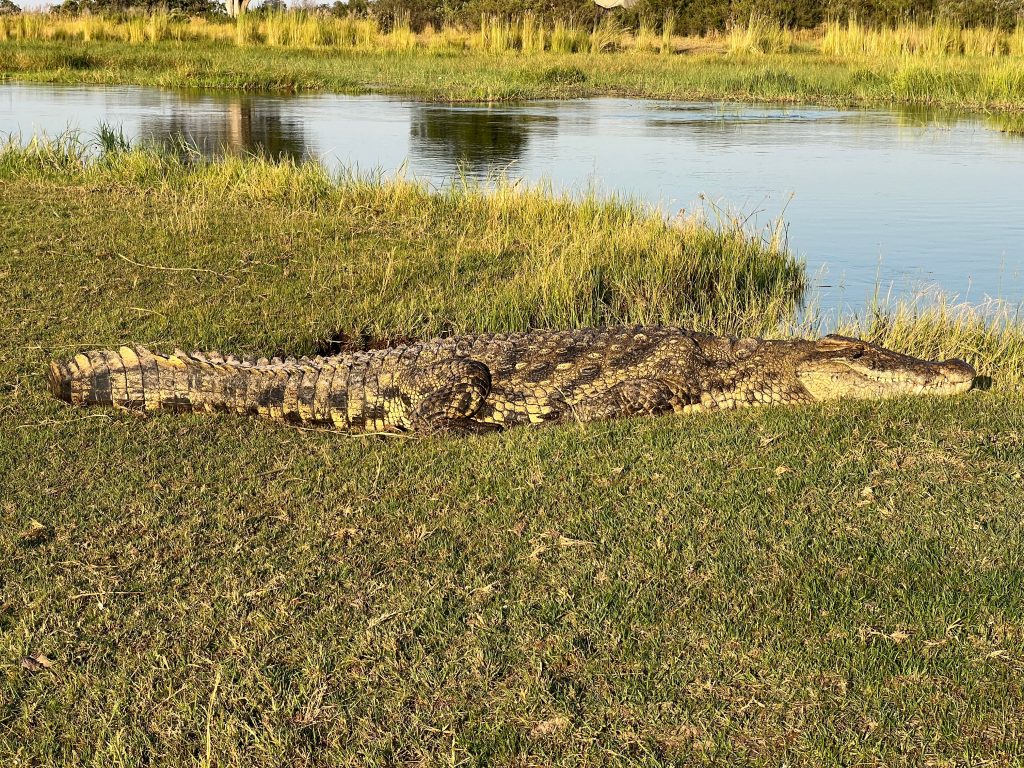
The Nile crocodile is the apex predator of the Okavango Delta and a keystone species in the system, and Botswana’s population has declined substantially over the past century through hide hunting and human disturbance. Almost all breeding happens in the Panhandle, the narrow corridor where the Okavango enters the country. Crocodiles are easily seen from a boat on the Chobe and in the Delta, hauled out on sandbanks in the middle of the day.
A Keystone Species
Crocodiles do more for the Delta than eat things, and the ecological argument is worth knowing.
As apex predator in the Okavango, the Nile crocodile performs several functions that hold the system together. It selectively predates various fish species, which shapes the fish community rather than simply reducing it.
It recycles nutrients through the system, moving material between water and land.
And it maintains wet refugia in times of drought, since crocodiles dig and keep pools open that other species then depend on when water is scarce.
Remove crocodiles and the Delta does not simply lose a predator, it loses a piece of its machinery. That is what keystone means and it is used accurately here.
They are also long-lived, reaching 50 to 80 years and more, and not sexually mature until 12 to 15, which makes any population slow to recover from losses.
Up to 48,000 adult crocodiles were removed from the Okavango in barely a decade of hide hunting. A species that does not breed until it is twelve to fifteen years old does not recover quickly from that.
The Panhandle and Where They Breed
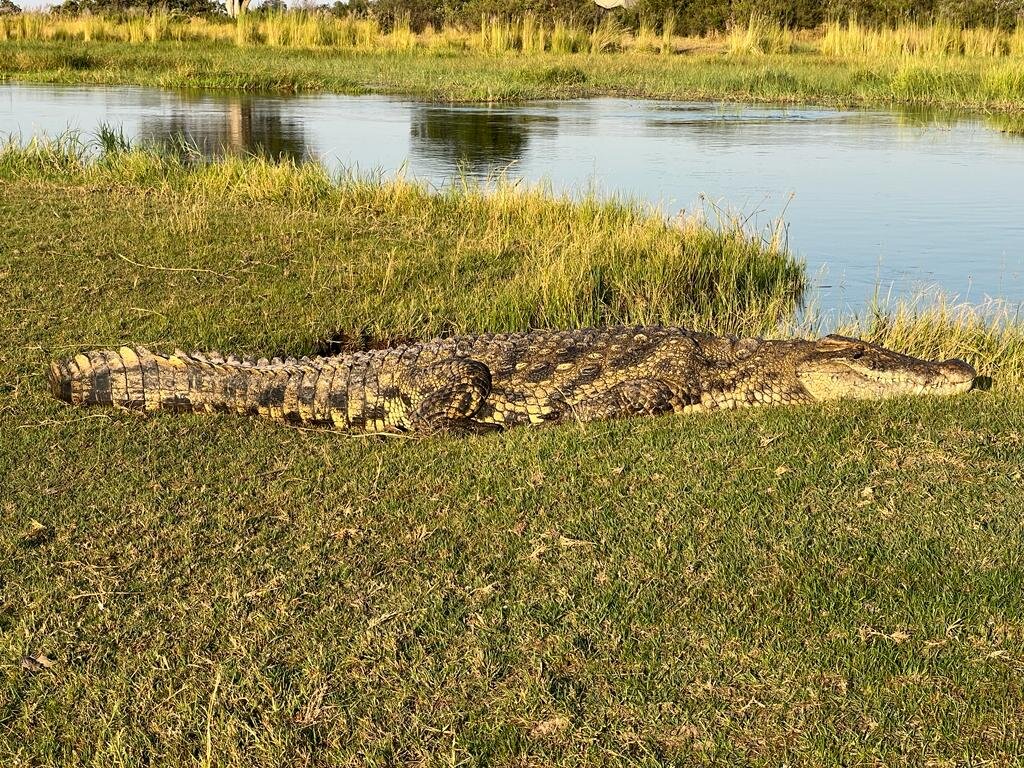
Botswana’s crocodiles are unevenly distributed and one stretch of river matters more than everywhere else combined.
The Panhandle is the roughly 120 kilometre corridor where the Okavango River enters Botswana confined between fault lines, deep and permanent before the water fans out into the Delta.
Over 90 percent of crocodile breeding areas in the Delta are found only there, with one study putting the figure at 99 percent of all nests.
The seasonal pattern explains it. During the wet season crocodiles disperse throughout the floodplains and the wider Delta. In the dry season they retreat to the deep perennial water of the main channel in the Panhandle, which is also where they nest.
Research in the Panhandle estimated a total population there of around 2,570 individuals, with roughly 649 adults and some 364 breeding females.
That concentration is the population’s greatest vulnerability, since anything affecting the Panhandle affects almost all reproduction.
Decline and Recovery
The history here is stark and it explains the current numbers.
From the middle of the twentieth century, hide hunters targeted adult crocodiles in the Okavango, and records estimate that up to 48,000 adults were removed from the Delta between the late nineteen fifties and the late sixties alone. That caused repeated cycles of population collapse.
An international trade ban on wild crocodile products in the early nineteen seventies, followed by a decade-long moratorium on exploitation, halted the hunting. Commercial ranching was introduced in the eighties as a way of meeting demand for hides without taking wild adults.
Recovery has been slow. Research indicates the Okavango population declined by 50 to 60 percent over a twenty-year period, and the Panhandle population is described as threatened as a result of past over-exploitation and present human disturbance.
Nesting is the pressure point now. Studies report that 50 to 80 percent of previously used nesting sites have been abandoned, with site selection shifting toward areas of less human disturbance.
Only 14 to 23 percent of breeding females were found to be actively nesting during one study period.
Crocodiles and People
The conflict in the Panhandle is real and it is worth setting out honestly.
Large village communities live along the Okavango in the Panhandle and depend on the river for subsistence and commerce, through fishing, reed harvesting and increasingly tourism.
Those activities are governed by water levels, with access difficult when the water is high and easy when it is low. Low water periods coincide with the breeding season of the crocodile and of many other species in the system.
The result is that the habitat crocodiles need for nesting is exactly the habitat people use most intensively at exactly the wrong time of year.
Human-crocodile conflict is identified as a substantial barrier to population recovery, worsened by agricultural development in neighbouring areas.
Researchers have proposed establishing a protected nesting area in the Panhandle, promoted for regulated tourism outside the breeding season, as one way to reconcile the two.
Chobe River. The easiest viewing in Botswana, with crocodiles hauled out on sandbanks visible from any boat safari, often at close range and through the middle of the day.
Okavango Delta. Present throughout the permanent channels and lagoons, seen from motorboat and mokoro, dispersing across floodplains in the wet season and concentrating in dry.
The Panhandle. Where over 90 percent of breeding occurs, in deep permanent water between fault lines. Also the centre of fishing tourism, and where human pressure on the population is greatest.
Watching Crocodiles
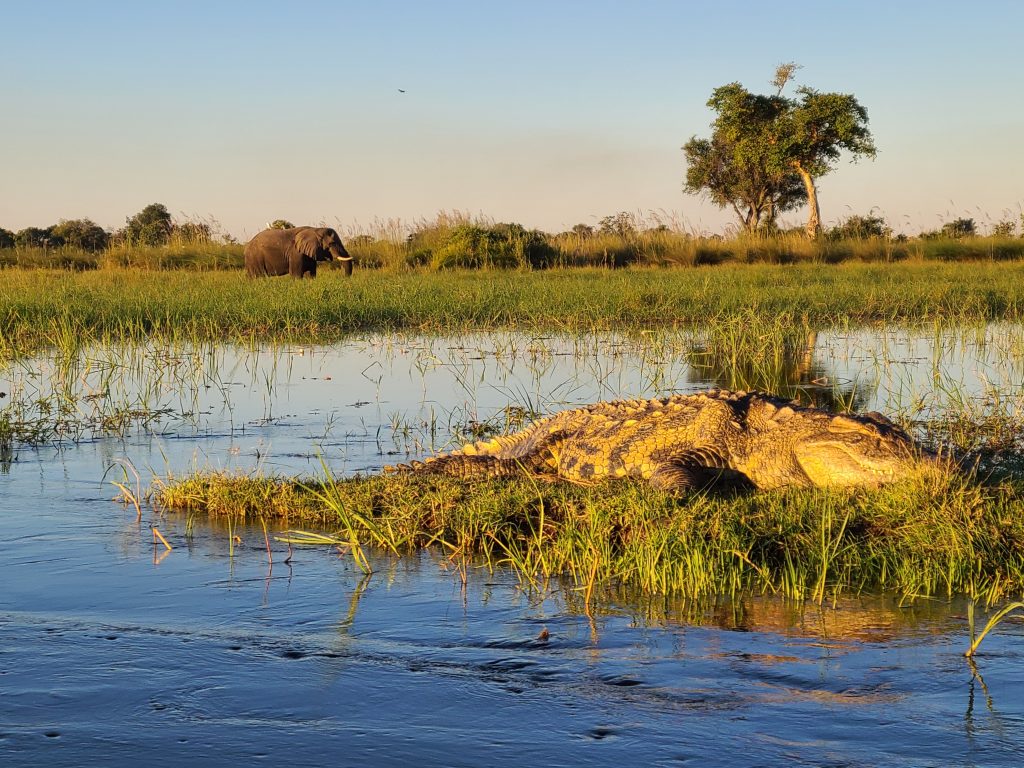
They are among the easier animals to see and among the harder to watch well.
The classic sighting is a crocodile hauled out on a sandbank through the middle of the day, thermoregulating with its mouth open, which is not aggression but heat loss.
Boat safaris on the Chobe give the best access, since you can sit at water level and hold position. Delta motorboats do the same on the channels.
Look for them at the water’s edge near where game comes to drink, particularly in the dry season when a single crossing point concentrates prey.
At night their eyes reflect red in a spotlight, which is how researchers find them at night, and how a guide will pick them out on a night boat trip where those operate.
Size varies enormously, and the very large old animals in the Panhandle are far bigger than the ones most visitors see.
Nesting behaviour is worth knowing about, although visitors will not see it. Females dig a hole in a sandy bank, lay and cover the eggs, then guard the nest for the whole incubation, which is unusual attentiveness for a reptile. When the young call from inside the shell she opens the nest and carries hatchlings to the water in her mouth. That is the behaviour that makes disturbance at nesting sites so damaging, since a female driven off a nest by human activity loses the entire clutch.
Staying Safe Around Crocodiles
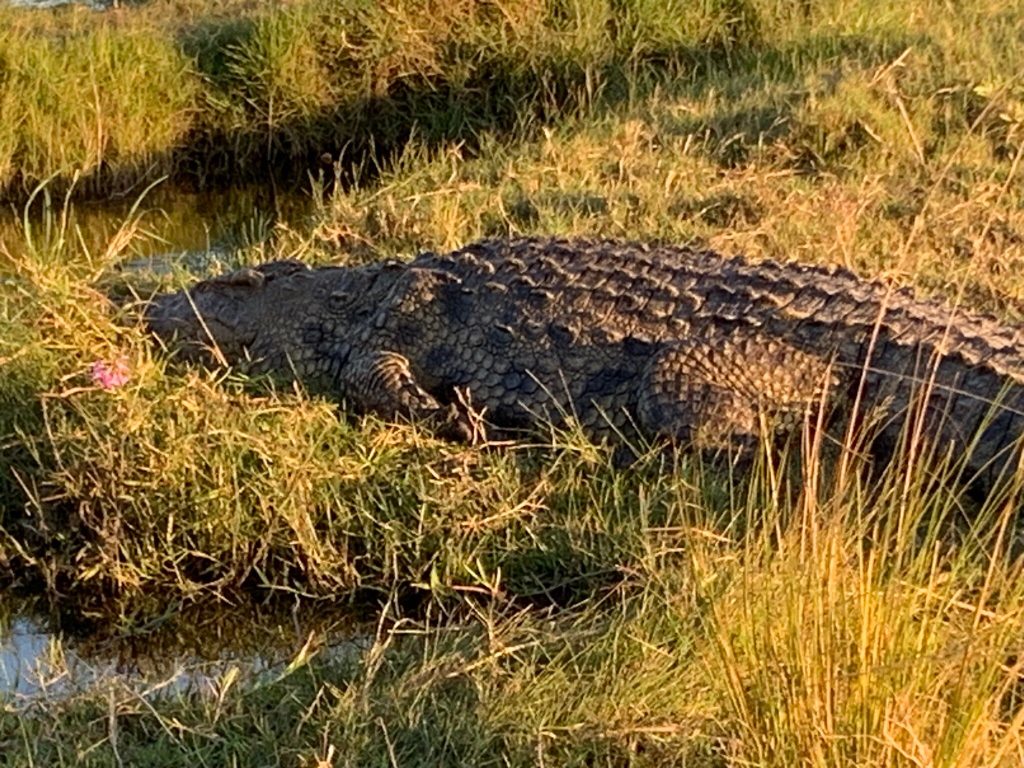
The rules are few, absolute and worth stating plainly.
Never go near the water’s edge anywhere in the Delta, the Chobe or the Panhandle, at any time. That includes what looks like a shallow beach and what looks like a safe distance.
Do not wash, swim, or dangle limbs from a boat or mokoro. Crocodiles ambush from below and give no warning.
Be particularly careful at fishing camps and jetties, where regular activity concentrates crocodiles that have learned to associate the place with food.
On a mokoro, stay seated and keep hands inside. Polers know which stretches to avoid.
Camps near water brief guests on this at arrival, and that briefing exists because people have been taken. Take it seriously rather than treating it as formality.
The best crocodile viewing in Botswana is from a boat on the Chobe in the middle of the day, when everything else is asleep. Sandbanks at low water hold animals at close range, and it turns the least productive hours of a safari day into something worth being out for.
Frequently Asked Questions About Crocodiles in Botswana
Where do crocodiles live in Botswana?
Throughout the permanent water of the Okavango Delta and along the Chobe River, with the Panhandle in the far northwest holding the breeding population. During the wet season crocodiles disperse across the floodplains and wider Delta; in the dry season they retreat to the deep perennial water of the main channel in the Panhandle. Over 90 percent of breeding areas are found there, with one study putting it at 99 percent of nests.
How many crocodiles are in the Okavango?
Research in the Panhandle estimated a total population of around 2,570 individuals there, with roughly 649 adults and some 364 breeding females. The wider Delta population has declined by 50 to 60 percent over a twenty-year period, and the Panhandle population is described as threatened by past over-exploitation and present human disturbance. Only 14 to 23 percent of breeding females were found actively nesting during one study period.
Why did Botswana’s crocodile population decline?
Hide hunting, principally. From the middle of the twentieth century hunters explicitly targeted adults, and records estimate up to 48,000 adult crocodiles were removed from the Okavango between the late nineteen fifties and late sixties alone, causing repeated cycles of collapse. An international trade ban in the early seventies and a decade-long moratorium halted it, with commercial ranching introduced later to meet hide demand without taking wild adults.
Are crocodiles dangerous in Botswana?
Yes, and the rules are absolute. Never go near the water’s edge anywhere in the Delta, Chobe or Panhandle, including what looks like a shallow beach or a safe distance. Do not wash, swim or dangle limbs from a boat or mokoro, since crocodiles ambush from below without warning. Be particularly careful at fishing camps and jetties where regular activity concentrates animals that associate the place with food.
Why is the Nile crocodile called a keystone species?
Because it holds parts of the Delta system together beyond simply being a predator. It selectively predates various fish species, which shapes the fish community rather than just reducing it, recycles nutrients between water and land, and maintains wet refugia in times of drought by keeping pools open that other species depend on. Removing crocodiles would cost the Delta a piece of its machinery rather than one predator.
Why do crocodiles lie with their mouths open?
To lose heat, not to threaten. A crocodile hauled out on a sandbank through the middle of the day is thermoregulating, and the open mouth allows evaporative cooling much as panting does for a mammal. It is the classic sighting on a Chobe boat safari and looks considerably more menacing than it is. At night their eyes reflect red in a spotlight, which is how researchers and guides locate them after dark.
Booking Your Botswana Trip
The safari companies and tour operators listed on this website put trips like this together for a living and know which camps, guides and routes actually deliver. We are an independent guide to Botswana; we do not book or sell tours ourselves.
When you are ready, arrange your safari, tour or holiday with one of the recognised operators listed here. Tell them your dates and what matters most, and a real person, not a form, will handle the itinerary, park bookings and logistics for you.