Nxai Pan National Park

Nxai Pan National Park covers roughly 2,578 square kilometres north of the Maun to Nata road, protecting a series of fossil lake beds that were once part of the ancient Makgadikgadi super-lake. It is the most accessible of Botswana’s desert parks, holds Baines’ Baobabs, and peaks in the green season when the zebra migration arrives. Nxai Pan carries a larger permanent animal population than the Makgadikgadi Pans to its south.
What and Where Nxai Pan Is
The park sits in northern Botswana, separated from Makgadikgadi Pans National Park only by the tar road between Maun and Nata, and the two are increasingly managed as a single ecological unit.
It comprises a series of pans that were once ancient salt lakes: Nxai Pan itself, a fossil lake bed roughly 15 kilometres across and around 40 square kilometres in extent, Kgama-Kgama Pan to the northeast, and Kudiakam Pan to the south.
Unlike the salt flats further south, these larger pans are now grassed over. Nxai Pan escaped the salt encrustation that formed Sua and Ntwetwe because it sits at a slightly higher elevation. They are scattered with islands of acacia, and smaller pans among them fill with water in the rains.
Habitat beyond the pans runs to mopane and savanna woodland with large areas of open grassland, which is why the park supports resident game that the salt flats cannot.
The name comes from a curved digging stick the San used to extract springhares, called an nxa, which the shape of the park is said to resemble.
Nxai Pan inverts the usual Botswana calendar. The Okavango and Chobe peak in the dry months. Nxai Pan comes alive in the green season, when the pans turn to grazing and the herds arrive.
Baines’ Baobabs and Kudiakam Pan
The park’s most photographed feature stands on the edge of Kudiakam Pan, on what functions as an island in the salt.
Baines’ Baobabs are a cluster of seven enormous trees, estimated at over a thousand years old and standing above twenty metres. They are named after Thomas Baines, the Victorian explorer and artist who travelled through here with John Chapman by ox wagon on a route from Namibia toward Victoria Falls, stopped at the trees and painted them.
What makes the site genuinely unusual is that the painting still matches what stands there. Baobabs grow so slowly, with stem circumference increasing by around a millimetre a year, that a photograph taken today shows much what Baines saw.
The baobabs sit roughly 45 minutes to an hour from the main gate and are usually visited as a day trip with a picnic. Informal camping is permitted there, though with no facilities at all and the nearest water back near the entrance.
The trees were added to the park when its boundaries were extended and it gained national park status.
Wildlife and the Waterholes of Nxai Pan
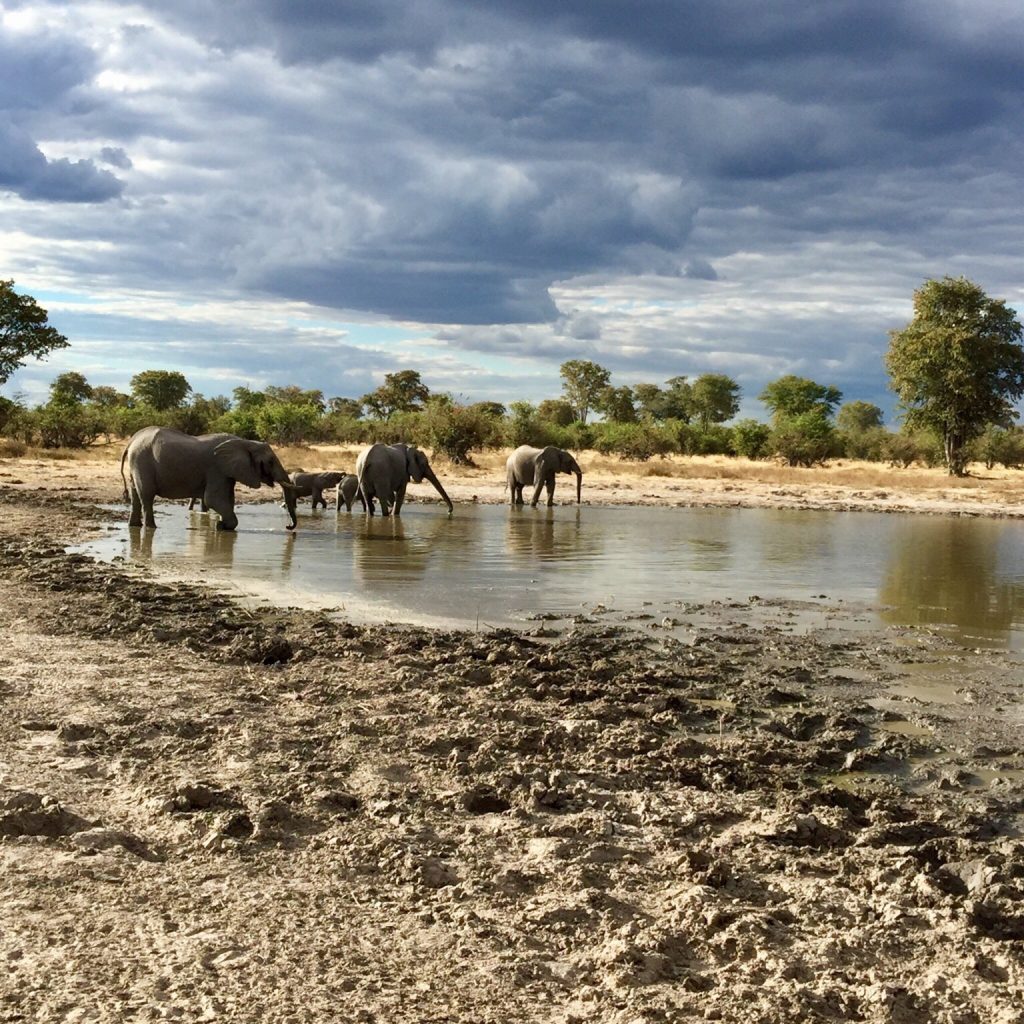
Nxai Pan is unusual among desert parks in having reliable year-round viewing, and the reason is artificial.
Only two pumped waterholes exist in the whole park, one near the campsite and one near the lodge. In the dry season those become the entire focus of animal movement, which makes game viewing straightforward in a way the Central Kalahari never is. Sitting quietly at the main waterhole, a couple of kilometres from the main entrance, is the single best thing to do here.
Permanent residents include lion, giraffe, kudu, impala, springbok in large numbers, ostrich, a substantial jackal population and bat-eared fox. Elephant come in too, and the Nxai elephants are worth a mention: desert-adapted animals often coated in pale clay, which has earned them the nickname the ghosts of Nxai Pan and which produces dramatic dust when they move.
In the rains, from around November through April, the park transforms. Large herds of zebra, wildebeest, gemsbok, springbok and eland converge, with buffalo and more elephant arriving, and lion, cheetah, wild dog and both brown and spotted hyena following them.
Springbok drop their young around December and zebra in March or April, so calves are everywhere.
The Zebra Migration at Nxai Pan
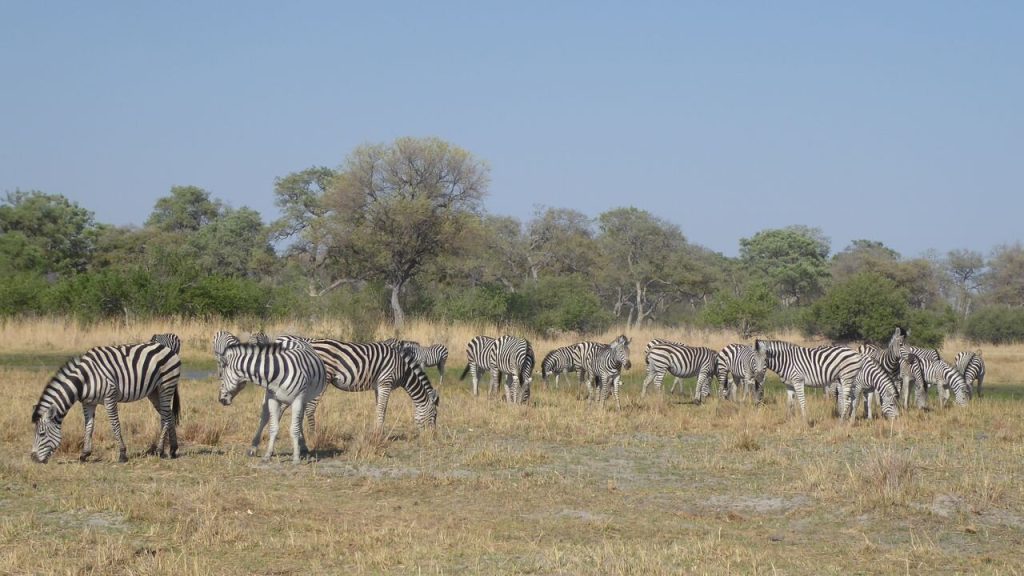
Nxai Pan is one end of Africa’s longest terrestrial mammal migration, and it happens largely unwatched.
More than 20,000 zebra move south from the Chobe River when the first rains fall, arriving at Nxai Pan around December and dispersing across the pans through January and February. They turn north again from March, with some individuals covering over 800 kilometres on the return.
The draw is the grass. Rain on these fossil lake beds produces short, mineral-rich grazing that exists nowhere else in the region, which is why the herds make the crossing at all.
January through March is the window. Predators follow the herds, and the open country makes the interaction easy to watch.
This is the second largest terrestrial migration in Africa after the Serengeti and remains almost unknown outside safari circles, largely because it happens in the low season when few visitors are in the country. The park sits neatly in the middle of a route like the 10 day Delta, Pans and Chobe safari.
Green season, November to April. The park’s peak. Zebra migration arrives, herds of wildebeest, gemsbok and eland converge, predators follow, springbok and zebra calve. Dramatic skies and green pans.
Dry season, May to October. Thinner but easier. Only two pumped waterholes concentrate everything that remains, making sightings straightforward. Elephant, lion, giraffe and springbok around the water.
Year round. Baines’ Baobabs as a day trip with a picnic, the Baobab Loop drive for scenery, and sunrise and sunset over open plains that suit photography particularly well.
Visiting Nxai Pan National Park
Access is straightforward by Botswana desert standards, which is much of the park’s appeal.
The turn north off the Maun to Nata road sits roughly 179 kilometres west of Nata, from where a sand road of around 35 kilometres runs to the gate. A 4×4 is required for that stretch.
Park entry for non-residents runs at 120 Pula per person per day, dropping to 70 Pula through a licensed Botswana operator, with camping charged separately.
Two public campsites operate: South Camp on the edge of the plain less than two kilometres from the gate, and North Camp eight kilometres in within mopane woodland. Both have ablution facilities and water. Informal camping is allowed at Baines’ Baobabs with no facilities.
Nxai Pan Camp sits on the edge of the park and is the main lodge option, with a waterhole that draws game to the property.
Activities are game drives only, since national park rules prohibit off-road driving, night drives and walking.
Photographing Nxai Pan
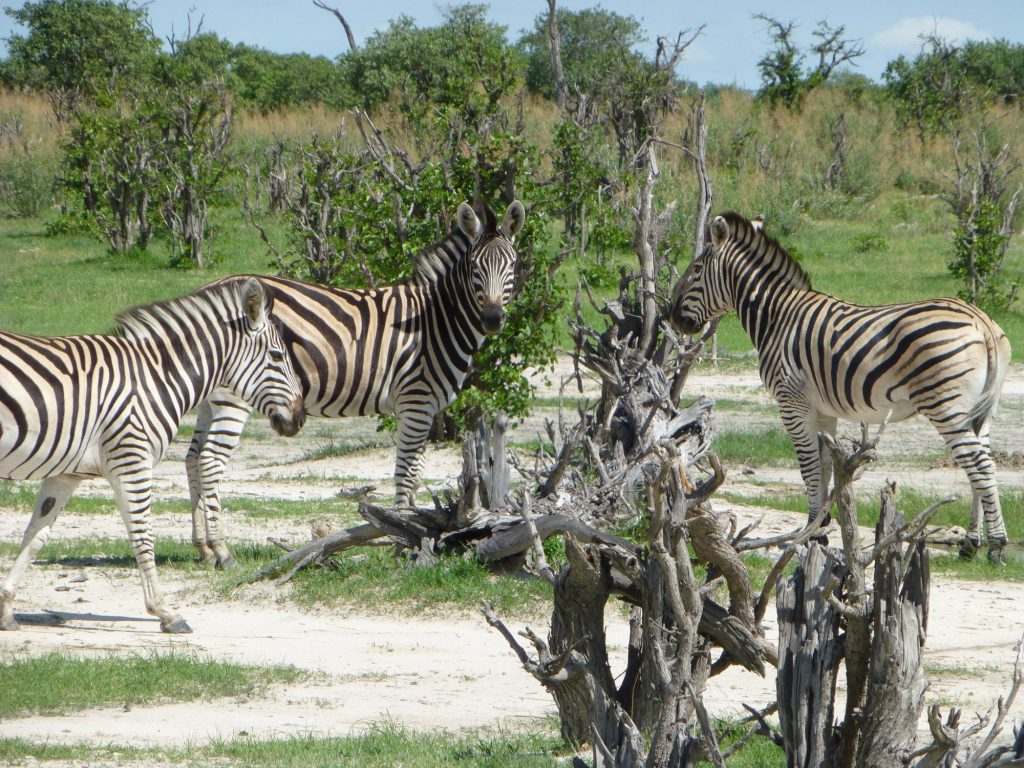
The park has a reputation among photographers that exceeds its reputation among general safari visitors, and the reasons are specific.
Open plains mean subjects are visible at distance and easy to line up against the horizon, which produces the silhouetted sunrise and sunset frames the park is known for. The absence of clutter creates clean backgrounds and smooth bokeh that closed bush never allows.
The two waterholes give predictable, repeatable subject matter, with jackals, lion, bat-eared fox and wild dog all working them, and giraffe and elephant silhouetted against the sky at last light.
The clay-covered elephants throw pale dust that catches low sun in a way that is genuinely distinctive.
Birdlife is stronger than the open country suggests, with raptors, waterbirds in the wet months and migratory species.
Drive the Baobab Loop for scenery and then spend real time simply sitting at the main waterhole rather than covering ground. In a park with only two pumped waterholes, patience at one of them out-performs a long drive almost every time.
Combining Nxai Pan With Other Parks
Nxai Pan is rarely visited alone and works best as one leg of a wider desert or northern route.
Makgadikgadi Pans National Park lies immediately south across the tar road, and the two are commonly done together over four or five nights, with Makgadikgadi supplying quad biking, meerkats and San walks that Nxai Pan does not offer.
The Central Kalahari sits further southwest and adds black-maned lions and genuine remoteness, making a full desert itinerary of six to eight nights.
Because the park sits on the Maun to Nata road, it slots naturally into an overland route between the Okavango and Chobe, or as a stop on the way to Victoria Falls.
For a green season trip, pairing Nxai Pan with the Chobe riverfront gives you the migration plus a permanent river, which is a strong combination in months when the Delta is at its weakest.
Frequently Asked Questions About Nxai Pan National Park
How big is Nxai Pan National Park?
Around 2,578 square kilometres, with some sources giving 2,590. It was first declared a conservation area in the nineteen seventies covering about 1,676 square kilometres, then extended and granted national park status, with the boundary change bringing Baines’ Baobabs inside the park. It sits immediately north of Makgadikgadi Pans National Park, separated only by the Maun to Nata road, and the two are increasingly treated as a single ecological unit.
When is the best time to visit Nxai Pan?
The green season from November through April, which inverts the usual Botswana calendar. Rain brings short, mineral-rich grazing to the fossil pans, drawing the zebra migration and large herds of wildebeest, gemsbok, springbok and eland, with predators following. January through March is the peak. The dry season from May to October offers thinner but easier viewing, since only two pumped waterholes concentrate whatever game remains.
What are Baines’ Baobabs?
A cluster of seven enormous baobab trees on the edge of Kudiakam Pan, estimated at over a thousand years old and standing above twenty metres. They are named after Thomas Baines, the Victorian explorer and artist who painted them while travelling by ox wagon from Namibia toward Victoria Falls. Because baobab stem circumference grows by roughly a millimetre a year, the trees today look much as they do in his painting. They sit around 45 minutes to an hour from the main gate.
Can you see the zebra migration at Nxai Pan?
Yes, and it is one end of Africa’s longest terrestrial mammal migration. More than 20,000 zebra move south from the Chobe River when the first rains fall, arriving around December and dispersing across the pans through January and February before turning north from March, some covering over 800 kilometres. It is the second largest terrestrial migration in Africa after the Serengeti and remains little known, largely because it happens in the low season.
Where can you stay in Nxai Pan National Park?
Two public campsites operate inside the park, both with ablution facilities and water: South Camp on the edge of the plain less than two kilometres from the gate, and North Camp eight kilometres in within mopane woodland. Informal camping is permitted at Baines’ Baobabs with no facilities and no water. Nxai Pan Camp on the edge of the park is the main lodge option, with its own waterhole drawing game to the property.
How do you get to Nxai Pan National Park?
Turn north off the Maun to Nata road roughly 179 kilometres west of Nata, then follow a sand road of around 35 kilometres to the gate, which requires a 4×4. The park’s position on that main road makes it one of the easiest desert parks to include in an overland route between the Okavango and Chobe. Light aircraft also serve the area for fly-in visitors staying at the lodge.
Booking Your Botswana Trip
The safari companies and tour operators listed on this website put trips like this together for a living and know which camps, guides and routes actually deliver. We are an independent guide to Botswana; we do not book or sell tours ourselves.
When you are ready, arrange your safari, tour or holiday with one of the recognised operators listed here. Tell them your dates and what matters most, and a real person, not a form, will handle the itinerary, park bookings and logistics for you.