Baines’ Baobabs
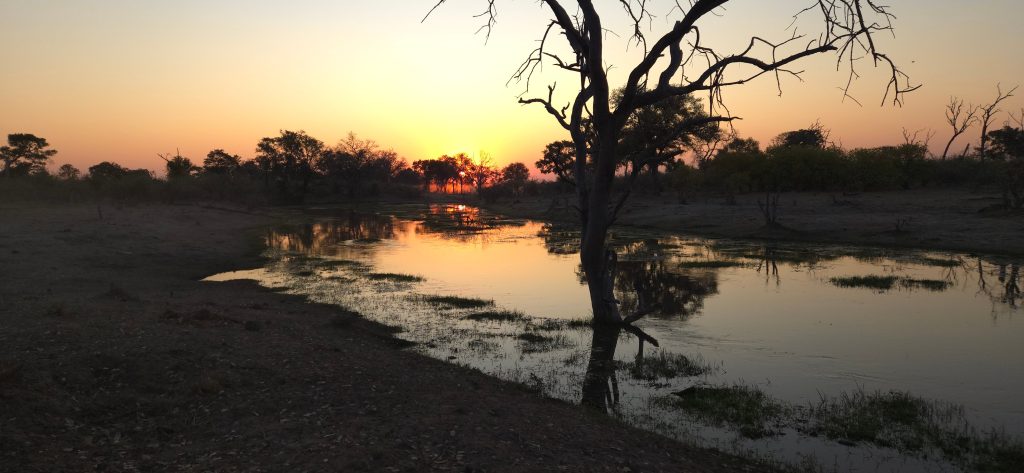
Baines’ Baobabs are a cluster of seven ancient baobab trees standing on the edge of Kudiakam Pan in the southern section of Nxai Pan National Park, Botswana. They are named after Thomas Baines, the English artist and explorer who painted them in 1862, and the trees look almost exactly as they do in his painting because baobabs grow so slowly. The trees and the site are protected as a national monument.
The Painting That Made Them Famous
The reason these particular trees are known worldwide comes down to one artist stopping for a rest.
Thomas Baines was an English painter and adventurer travelling with James Chapman, a South African trader and photographer, on an expedition that set out to determine whether the Zambezi was navigable to the ocean. The route ran from Namibia toward Victoria Falls and took around two years.
It was not a comfortable undertaking. Members of the party fell ill or died from illness and from dehydration, and Baines covered part of the distance on foot. Local people they met along the way helped them find routes through country they did not know.
Crossing the salt country, the party stopped at a cluster of baobabs on the edge of a pan, and Baines sat down and painted them on 22 May 1862.
What makes the painting valuable now is not its quality but its accuracy as a record. Compare it with the trees today and they have barely changed.
Baobab stem circumference increases by around a millimetre a year. A painting made over 160 years ago shows the same seven trees standing in the same arrangement, which is why the site is a monument rather than merely a landmark.
The Trees Themselves
Seven baobabs growing in a cluster is unusual. These trees normally stand alone across open country, and a group this tight is rare enough to be worth the drive on its own.
They are Adansonia digitata, the African baobab, estimated at between 800 and well over a thousand years old, with some suggestions they could be considerably older still. Several stand over twenty metres high.
They are known locally as the Sleeping Sisters or the Seven Sisters, and they sit on what functions as a small island at the eastern margin of Kudiakam Pan.
One of the seven has fallen, which is visible in photographs and adds to the arrangement rather than detracting from it.
The extreme slowness of baobab growth is the point of the site. A century passes as a blink for these trees, which is why the comparison with the Victorian painting works and why they are protected as a national monument.
Kudiakam Pan and the Setting
The trees would be interesting anywhere. What makes them memorable is what surrounds them.
Kudiakam Pan, sometimes spelled Kaudiakam, is a fossil lake bed that was once part of the same ancient system as Sua and Ntwetwe. For most of the year it is a dry, cracked white expanse running to the horizon, and the baobabs rise from it with nothing else in view.
Between roughly December and March the rains transform it. The pan fills into a wide shallow sheet of water, water lilies rise to the surface, and flamingos and other waterbirds arrive.
Seeing the trees reflected in standing water is a completely different picture from seeing them on cracked salt, and both are worth having.
Islands of acacia dot the surrounding pans, used by animals for shade through the middle of the day.
Visiting Baines’ Baobabs
The site sits within Nxai Pan National Park, having been brought inside the boundary when the park was enlarged and upgraded from conservation area status.
It lies around 45 minutes to an hour of sandy driving from the park’s main entrance gate near the Maun to Nata road, and most visitors treat it as a full-day outing with a picnic rather than a quick stop.
From Maun the drive takes roughly two and a half to three hours by 4×4. Gweta is the other access point.
A 4×4 is required, particularly in the wet season when the tracks become considerably harder.
Park entry fees apply, payable at the gate or through an operator, at 120 Pula per person per day for non-residents or 70 Pula through a licensed Botswana tour operator.
Take water, food and fuel. There is nothing at the site.
Dry season, May to October. The classic view, with the trees standing on cracked white salt running to the horizon. Firm tracks, easy access and the strongest contrast between pale pan and dark trees.
Wet season, December to March. The pan fills into a shallow lake with water lilies, flamingos and waterbirds arriving. The trees reflected in water is the rarer picture. Tracks become considerably harder.
Camping nearby. Three basic private campsites spaced a couple of kilometres apart around Kudiakam Pan, each with its own baobabs, a pit toilet and a shower rig. No water and no other facilities.
Camping at Baines’ Baobabs
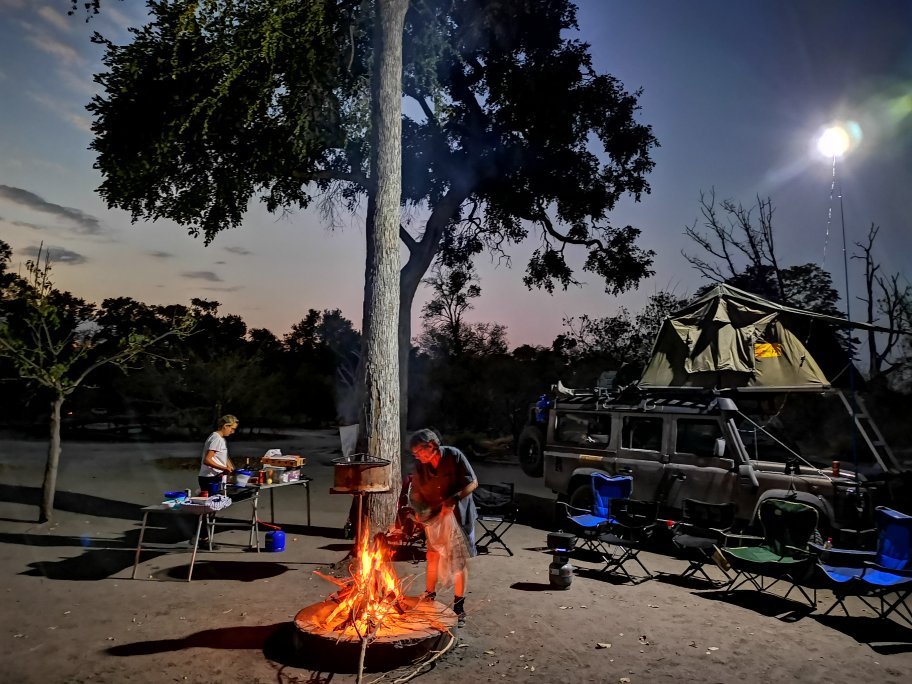
Camping at the trees themselves is not permitted, which protects the site, but three campsites nearby give you the next best thing.
The sites sit spaced a couple of kilometres apart around Kudiakam Pan, unfenced and private, each with baobabs of its own providing shade and a certain amount of grandeur.
Facilities amount to a pit toilet and a rig for a bucket shower. There is no water supply and nothing else at all, so you carry everything in and take everything out.
A permit is required for camping, booked through the operator managing the sites or the Department, and the nearest water is back at the park’s main entrance.
Waking up under baobabs on the edge of a salt pan, with the trees catching first light, is among the better reasons to make the effort of getting here.
Photographing Baines’ Baobabs
This is one of the most photographed sites in Botswana and it rewards some thought about timing.
The trees face broadly across the pan, so both sunrise and sunset work, giving warm light on pale bark against a white or blue background.
Midday is the weakest time, with harsh overhead light flattening the trunks and glare coming off the salt.
In the dry season, the cracked pan surface makes a strong foreground pattern leading toward the trees. In the wet season, still water gives reflections that are worth waiting for.
The scale is difficult to convey without a person or vehicle in frame, and including one is usually the difference between a picture that works and one that does not.
Night photography is exceptional here, with no light pollution and the trees silhouetting against the stars.
Baines’ Baobabs are not the only celebrated trees in this part of Botswana, and knowing the others helps place them. Chapman’s Baobab, named for Baines’ travelling companion, stood on the Ntwetwe side as one of the largest trees in Africa and a landmark for generations of travellers before it collapsed. Green’s Baobab nearby carries carved inscriptions left by nineteenth century hunters and traders. The baobabs on Kubu Island grow straight out of granite. Together they make a loose circuit of ancient trees across the salt country, and several operators build a route around exactly that.
One practical warning about the walk to the trees. The ground between the parking area and the baobabs is salt crust, and after rain it will not carry a vehicle at all, so leave the car on firm ground and walk the last stretch rather than testing it. People have sunk vehicles within sight of the trees, and recovering one out on a pan is a very long afternoon.
Combine Baines’ Baobabs with the Nxai Pan waterhole rather than treating it as a separate trip. The baobabs occupy a full day with the drive, and the waterhole near the main gate delivers the park’s game viewing, so two nights in the park covers both properly.
Frequently Asked Questions About Baines’ Baobabs
Who was Thomas Baines?
An English artist and explorer who travelled through southern Africa in the Victorian era. He journeyed with James Chapman, a South African trader and photographer, on an expedition from Namibia toward Victoria Falls attempting to establish whether the Zambezi was navigable to the ocean. The trip took around two years and was difficult, with members falling ill or dying. Baines painted the cluster of baobabs on 22 May 1862 and the trees were later named after him.
How old are Baines’ Baobabs?
Estimates run from around 800 years to well over a thousand, with some suggestions they may be considerably older. Baobabs are notoriously difficult to age precisely because they do not form conventional growth rings. What is certain is that they grow extremely slowly, with stem circumference increasing by roughly a millimetre a year, which is why Baines’ painting from over 160 years ago shows the same trees standing today.
Where are Baines’ Baobabs?
On the eastern edge of Kudiakam Pan in the southern section of Nxai Pan National Park in northeastern Botswana. They sit around 45 minutes to an hour of sandy driving from the park’s main entrance gate off the Maun to Nata road, and roughly two and a half to three hours from Maun by 4×4. Gweta is the other access point. The trees were brought inside the park boundary when it was enlarged and given national park status.
Can you camp at Baines’ Baobabs?
Not at the trees themselves, which protects the site, but three basic campsites sit nearby around Kudiakam Pan, spaced a couple of kilometres apart. Each is unfenced and private with baobabs of its own for shade, a pit toilet and a rig for a bucket shower. There is no water supply and no other facilities, so carry everything in and out. A permit is required and the nearest water is at the park’s main entrance.
When is the best time to see Baines’ Baobabs?
Both seasons offer something different. From May to October the pan is dry, cracked and white, giving the classic view with firm tracks and easy access. Between December and March the rains fill Kudiakam Pan into a shallow lake with water lilies, flamingos and waterbirds, and the trees reflected in still water is the rarer picture. Tracks become considerably harder in the wet months.
Why are they called the Sleeping Sisters?
The cluster of seven trees is known locally as the Sleeping Sisters or the Seven Sisters, a reference to the group standing together on the pan edge. Seeing seven baobabs growing this close together is genuinely unusual, since the species normally stands alone across open country, and that rarity is part of why the site drew Baines’ attention and why it is protected as a national monument today.
Booking Your Botswana Trip
The safari companies and tour operators listed on this website put trips like this together for a living and know which camps, guides and routes actually deliver. We are an independent guide to Botswana; we do not book or sell tours ourselves.
When you are ready, arrange your safari, tour or holiday with one of the recognised operators listed here. Tell them your dates and what matters most, and a real person, not a form, will handle the itinerary, park bookings and logistics for you.