Eco Lodges in Botswana
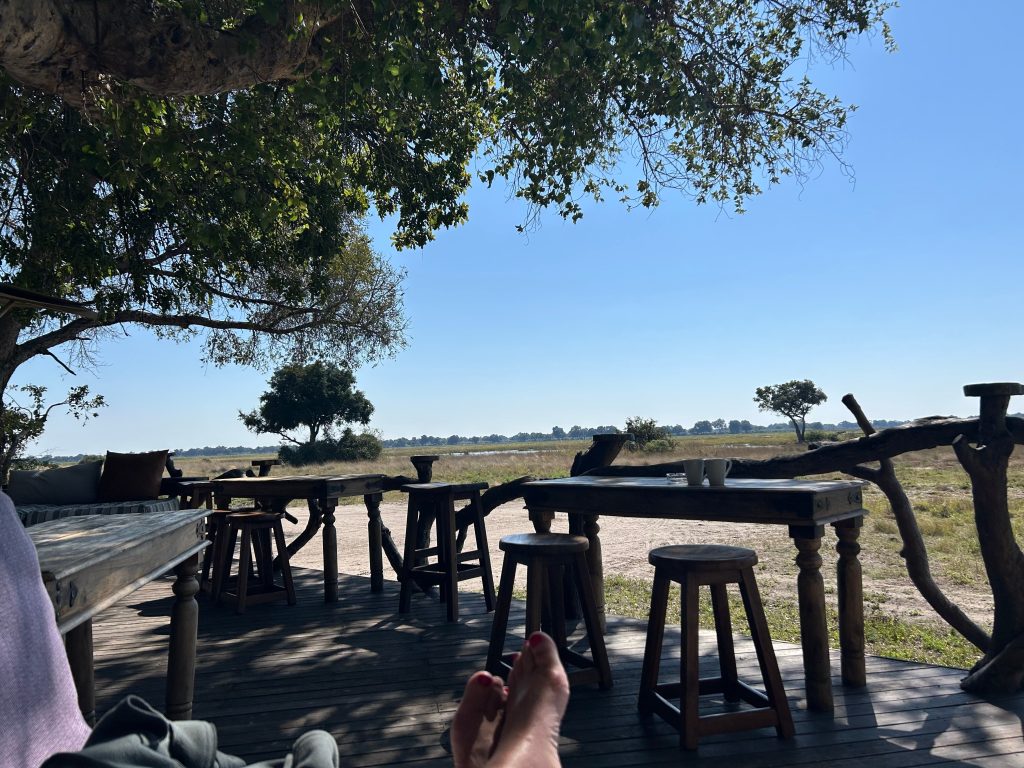
Botswana runs a national ecotourism certification system administered by Botswana Tourism, with the top grade awarded to camps meeting the highest standards for conservation, environmental management and community involvement. Most safari camps here run on solar, treat and recycle their own water, and are legally required to be removable within a day. Botswana is a southern African country whose low-volume tourism policy makes its whole safari industry structurally lighter on the land than most.
The Botswana Ecotourism Certification System
Botswana is unusual in having a formal, government-backed standard rather than leaving the word eco to marketing departments.
Botswana Tourism operates the certification system through a Quality Services Committee, grading accommodation on its commitment to local communities, nature conservation, environmental management and how well it interprets the surrounding environment for guests. The highest grade is the Ecotourism level itself, and only a limited number of camps hold it.
Alongside that sits a governmental code of conduct requiring environmentally sound practice from all safari operating companies, with officials carrying out checks to confirm it is being followed.
This matters practically. Anywhere else, asking whether a lodge is genuinely eco means interrogating a brochure. Here you can ask whether it holds the certification, and the answer is verifiable.
Ask the camp or your operator two direct questions: does the property hold Botswana Tourism ecotourism certification, and what has it actually done in the past year for conservation or the local community. A camp doing real work will answer immediately with specifics.
Why Botswana Safari Camps Are Inherently Low Impact

Before any individual camp’s efforts, the country’s basic policy does most of the work.
Botswana chose low-volume, high-value tourism decades ago, capping bed numbers in the wildlife areas rather than maximising visitors. Every property in a protected area, whether national park or private concession, is allocated a large amount of space for very few guests. A camp of eight tents inside a concession of tens of thousands of hectares is normal.
Conservation rules also require accommodation in the wildlife areas to be non-permanent, capable of being dismantled inside a day and leaving no trace. That single regulation rules out concrete foundations and permanent infrastructure across the entire safari industry.
Put together, those two policies mean the baseline in Botswana sits where other destinations describe their best properties.
Solar Energy and Off-Grid Safari Camps
Remoteness forces the issue. A camp reachable only by light aircraft cannot connect to a grid, so solar is the practical answer as much as the ethical one.
Most Okavango Delta camps run on solar, with panels supplying electricity and hot water through inverters and battery storage. Some properties are entirely solar powered. Others run a majority of their needs from a solar plant with a generator held in reserve.
What this means for you as a guest is worth knowing before arrival. Charging can be slower than at home, some camps restrict it to daylight hours, and a number provide a central charging station in the main area rather than sockets in the tents.
Electric game vehicles have started appearing, and one Chobe lodge runs its entire fleet on electric drive. The environmental case is obvious. The unexpected benefit is silence, since a quiet vehicle changes how close you can get and how much you hear at a sighting.
Water, Waste and Building Materials
Beyond electricity, the better camps deal with three problems that remoteness makes acute.
Water is drawn from boreholes and purified on site for drinking. Wastewater, both sewage and grey water, is treated before it re-enters the environment, with some camps running above-ground treatment plants. Grey water frequently gets reused on gardens. At least one Delta lodge treats and recycles all the water supplying the camp.
Waste is harder, since everything has to be flown or driven out. The leading properties report sending only a small fraction of their waste to landfill, with the rest separated, composted or recycled. One Chobe lodge cites five percent reaching a local landfill site.
Building materials favour recycled and locally sourced timber, canvas and thatch, partly by choice and partly because the non-permanent rule forbids the alternative. Some camps use handcrafted local textiles, soaps, blankets and furnishings supplied by nearby communities, which puts money into the surrounding area rather than an import chain.
Certified eco camps. Hold Botswana Tourism ecotourism grading. Solar, on-site water treatment, waste separation, active community and conservation programmes. Found across the Delta, Linyanti, Chobe and the pans.
Low-technology eco camps. Small, simply built properties with minimal energy use, walking and mokoro activities, and close community ties. Lighter footprint through doing less rather than through better equipment.
Mobile safaris. Inherently light footprint since camps move and leave nothing behind. At least one mobile operator now holds the same ecotourism certification as the fixed camps.
Community-Owned and Community-Linked Camps
The environmental side gets the attention, though the community side is where Botswana’s model does something more interesting.
Community concessions exist where local trusts hold the tourism rights to an area and lease them to operators, with revenue flowing back to the community. The Khwai area is the best-known example, sitting between Moremi and Chobe.
Private concession camps pay conservation and community levies on top of park fees, and these fund anti-poaching work and local development. On some itineraries these levies are folded into your rate without being itemised.
Camps also employ locally, and in remote areas a single camp can be the main employer for a village. Guiding in Botswana is a licensed profession with a proper career path, which is a different proposition from seasonal work.
Ask where staff come from. The answer tells you a lot about how a property actually operates.
Walking, Mokoro and Low-Impact Safari Activities
The activity you choose has its own footprint, and Botswana offers unusually good low-impact options.
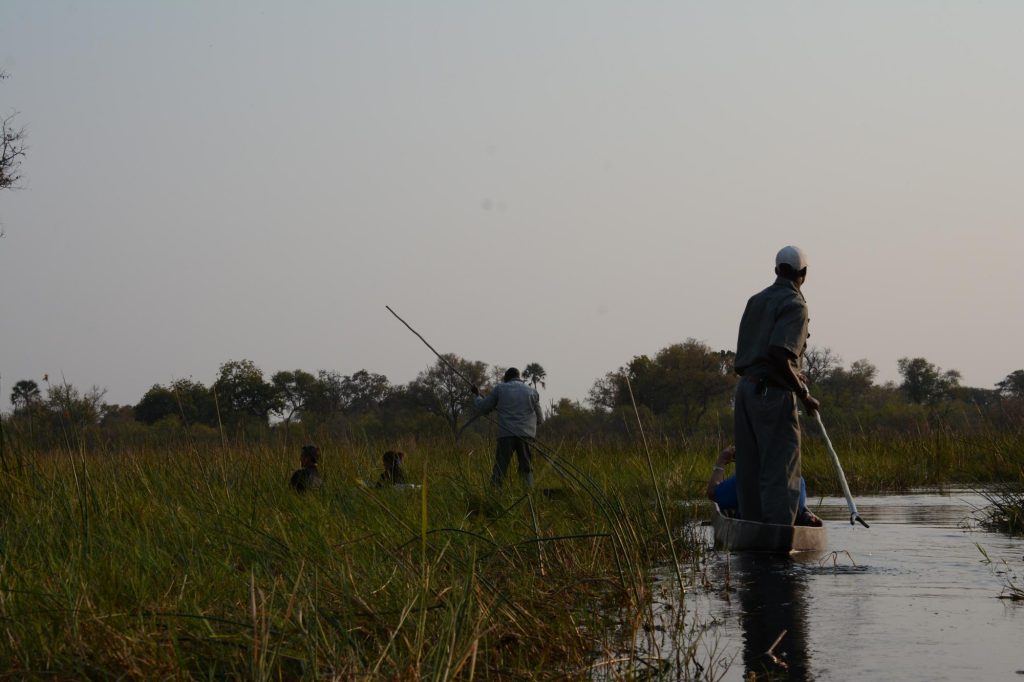
Walking safaris consume no fuel, disturb far less, and take place in areas without roads. They also change what you notice, since tracks, insects, birds and plants become visible in a way they never are from a vehicle.
Mokoro trips are poled by hand through channels, silent and entirely non-motorised. Camps offering mokoro and walking rather than fleets of vehicles are running a genuinely lighter operation, and some of the smaller Delta camps are built around exactly that.
Electric boats and vehicles are appearing at a handful of properties.
None of this means avoiding game drives. It means a camp whose activity mix leans toward walking and water is doing something real rather than describing it.
The most reliable signal of a genuine eco camp in Botswana is not solar panels, since almost everyone has those. It is whether the property can tell you in detail what it did last year for the community and the wildlife around it.
Choosing an Eco Lodge in Botswana
Because the baseline here is high, distinguishing between camps takes slightly sharper questions than usual.
Does it hold Botswana Tourism ecotourism certification, and at what level? Is it fully solar or solar with generator backup? What happens to waste, and what proportion reaches landfill? Is water treated and recycled on site? Where do staff come from, and does the camp sit on a community concession?
Then a question people forget: how many guests, and how many vehicles? A small camp with limited vehicles has a lighter footprint than a large one with an excellent recycling policy.
Consider your internal flights too, since a Botswana safari involves several charter legs and those carry real emissions. Reducing the number of camps you move between cuts both your cost and your footprint.
Booking directly with small independent properties, where you can, puts more of your money into the community or conservation project on the ground.
Frequently Asked Questions About Eco Lodges in Botswana
Is there an official eco certification for Botswana lodges?
Yes. Botswana Tourism operates a national ecotourism certification system through a Quality Services Committee, grading properties on conservation commitment, environmental management, community involvement and environmental interpretation for guests. The top grade is the Ecotourism level, held by a limited number of camps across the Delta, Linyanti, Chobe and the pans. A separate government code of conduct requires sound environmental practice from all safari operators, with officials carrying out checks.
Are all Botswana safari camps solar powered?
Most remote camps are, largely because remoteness leaves no alternative: a property reachable only by light aircraft cannot connect to a grid. Some run entirely on solar, others draw the majority of their needs from a solar plant with generator backup. For guests this means charging can be slower, may be limited to daylight hours, and some camps offer a central charging station in the main area rather than sockets in the tents. Ask at booking if it matters.
What makes Botswana good for eco tourism?
Two national policies rather than individual camp efforts. Bed numbers in the wildlife areas are capped by a deliberate low-volume, high-value tourism model, so every property in a protected area is allocated a large amount of space for very few guests. Separately, conservation rules require accommodation to be non-permanent and removable within a day leaving no trace, which rules out permanent infrastructure across the entire industry. The baseline here is where other destinations describe their best properties.
Do eco lodges in Botswana cost more?
Not systematically, because sustainability is close to standard rather than a premium feature. Rates track location, camp size and concession access instead. Mid-range camps run roughly 600 to 1,100 US dollars per person per night and luxury private concession camps from 1,500 upward, and certified eco properties appear at both levels. Smaller low-technology camps that keep a light footprint by doing less can be among the more affordable options in the Delta.
Can a luxury safari camp genuinely be eco friendly?
Several of Botswana’s most expensive camps hold the top ecotourism grade, so the two are not in conflict here. They run on solar, purify drinking water on site, treat wastewater before it returns to the environment and fund conservation and anti-poaching directly through guest levies. The counter-argument is that a luxury camp consumes more per guest than a simple one. Small low-technology camps with minimal energy use remain the lightest option available.
Are mobile safaris more eco friendly than lodges?
They carry an inherently light footprint, since the camp moves every few days and leaves nothing behind, with no permanent structures, plumbing or foundations at all. At least one mobile operator now holds the same Botswana Tourism ecotourism certification previously confined to premier fixed camps. Mobile safaris also travel overland rather than by charter aircraft between areas, which cuts the emissions attached to internal flights on a typical fly-in itinerary.
Booking Your Botswana Trip
The safari companies and tour operators listed on this website put trips like this together for a living and know which camps, guides and routes actually deliver. We are an independent guide to Botswana; we do not book or sell tours ourselves.
When you are ready, arrange your safari, tour or holiday with one of the recognised operators listed here. Tell them your dates and what matters most, and a real person, not a form, will handle the itinerary, park bookings and logistics for you.