Leopards in Botswana

Leopards reach high densities in Botswana’s riverine forests, with the Khwai River area, eastern Moremi and the Linyanti waterfront the most reliable places to find them. Tall trees, dense cover and abundant prey combine to make this ideal leopard country. The dry season from May to October is the strongest window, and concessions that permit off-road driving and night drives improve your chances considerably over national park camps.
Why Botswana Suits Leopards
Leopards need particular things and northern Botswana happens to supply all of them.
What a leopard needs is cover to stalk from, trees to hoist a kill into away from lions and hyenas, and enough prey to sustain a solitary hunter. Riverine forest along permanent water provides all three within a short distance.
The Okavango’s edges are the classic example. Tall grasses, dense large trees and high prey numbers give leopards places to hide, hunt and rest, which is why densities here are as high as they are.
Counterintuitively, the deep Delta is not the place to look. You are more likely to find leopards on the fringes, where the water runs out and lagoons, floodplain, tall forest and thick bush sit together on drier ground.
Antelope, birds, monkeys and rodents fill that habitat, which is a leopard’s entire menu.
Resist the instinct to go as deep into the Delta as possible if leopards are the priority. The eastern fringes, where the water peters out into forest and floodplain, hold them in far better numbers.
Where to Find Leopards
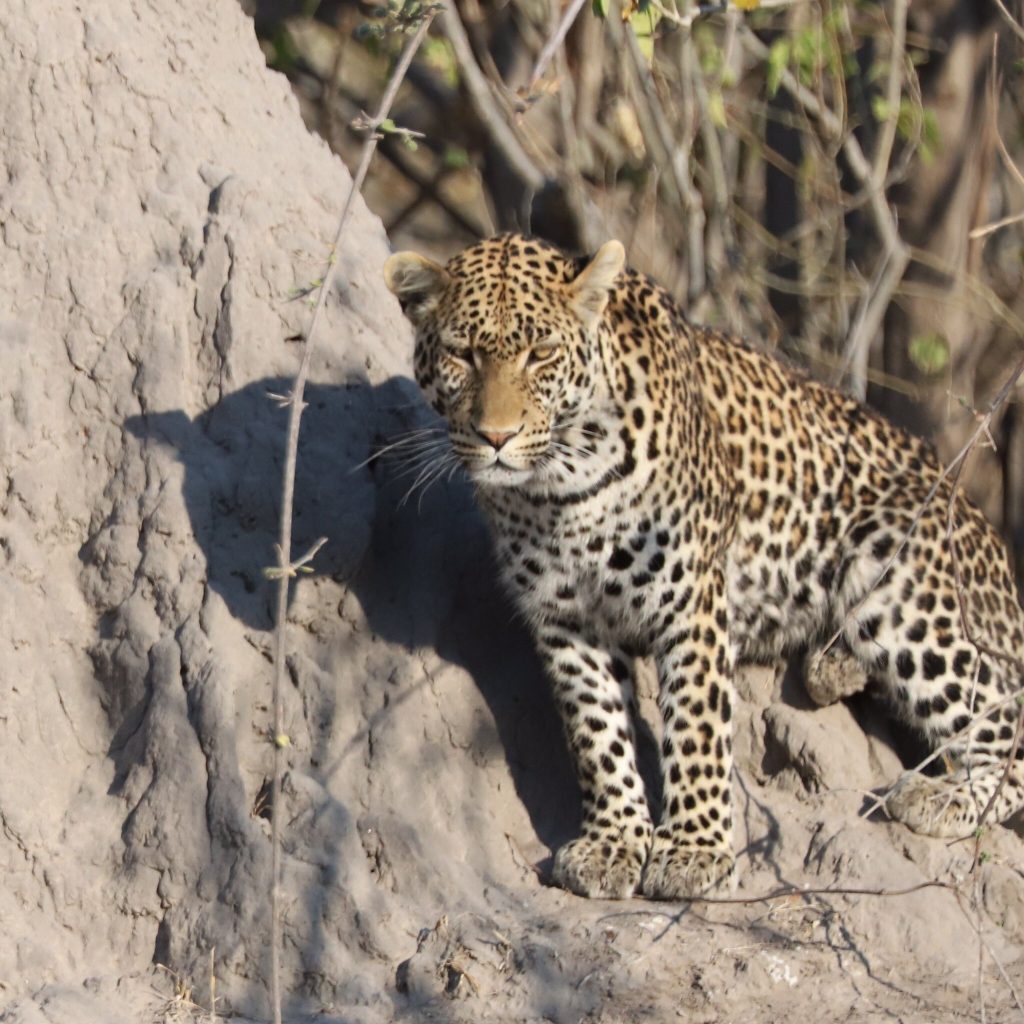
Four areas stand out and each has a slightly different character.
The Khwai River area has a fair claim to being the most reliable in the country. Permanent water, nutritious floodplains and sheltering woodlands keep resident leopards well fed year round, and they are found in the branches of the huge trees lining the river or prowling the forest margins.
Eastern Moremi around Xakanaxa is famous for leopards, sitting where the Delta runs out of steam into lagoons, floodplain and thick bush.
Chief’s Island and the Mombo area, known locally as predator central, holds excellent populations of all the big cats.
The Linyanti is the off-radar option, remote and largely unvisited, with dense riverine forests holding leopards in numbers and sightings coming mostly on night drives.
The Kwara concession and Savuti round out the list.
Why Concessions Beat Parks for Leopards
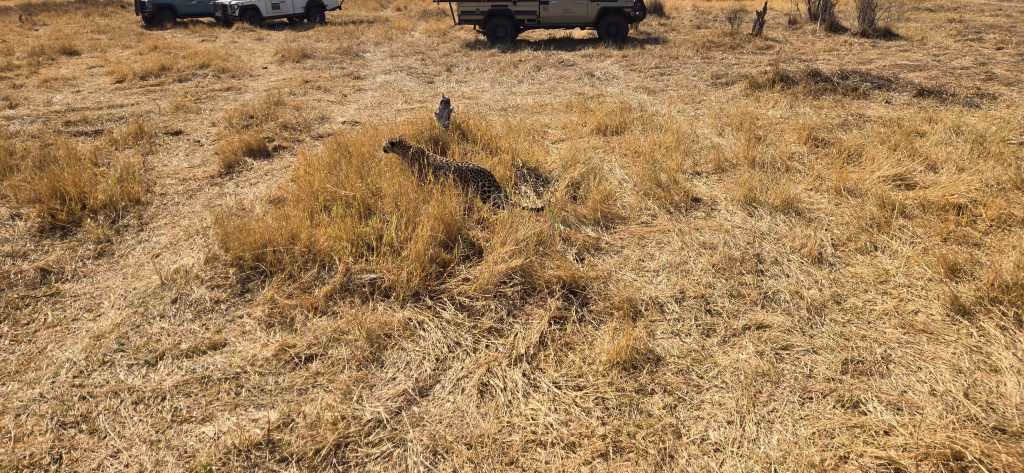
This matters more for leopards than for any other species and it is worth being precise about why.
National parks and reserves prohibit off-road driving, so when a leopard leaves the track a guide can only watch it go. Concessions permit it, which means following the animal into the treeline and staying with the sighting.
Night drives matter as much. Leopards are largely nocturnal and are often at their most active after dark, so a spotlit drive shows them hunting rather than resting. Night drives run only on private concessions and community areas such as Khwai, never inside Moremi or Chobe.
Some camps run a guide and tracker system, with a tracker seated on the front of the vehicle reading spoor. Kwando Safaris camps in the Kwara concession work this way and it materially improves the odds.
Khwai adds a further advantage that has nothing to do with rules: it is open to many camps and to self-drive vehicles, so there are simply more eyes looking. That volume also makes the leopards more relaxed around vehicles.
Choosing a camp that focuses on game drives rather than boat activities is the other obvious step.
Leopard Behaviour and What to Watch For

Knowing what a leopard is doing makes a sighting considerably better than simply seeing one.
Leopards are solitary and secretive, hunting by stealth and ambush rather than pursuit, which is why they need cover rather than open ground.
The tree behaviour is the signature. A leopard hauls a kill into the branches to keep it from lions and hyenas, which is why a carcass draped over a limb is a reliable sign that the cat is nearby and will return.
Dawn and dusk are the most active periods, and a leopard resting in shade through the middle of the day is the commonest sighting rather than the best one.
Guides find them through tracks and through alarm calls. Impala snorting, baboons barking, squirrels chattering and francolin calling all signal a predator, and a good guide will stop the vehicle and listen rather than keep driving.
Learning to hear those alarm calls yourself changes how you experience a drive.
Khwai community area. Perhaps the most reliable in Botswana. Off-road driving and night drives permitted, many camps and self-drivers, relaxed leopards, riverine forest along permanent water.
Eastern Moremi and Xakanaxa. Where the Delta runs out into lagoon, floodplain and thick bush. Famous for leopards, though national park rules mean no off-road driving or night drives.
Linyanti and Kwando. Remote, largely unvisited, dense riverine forest with high leopard densities. Sightings mostly on night drives. Guide and tracker systems at some camps.
When to See Leopards
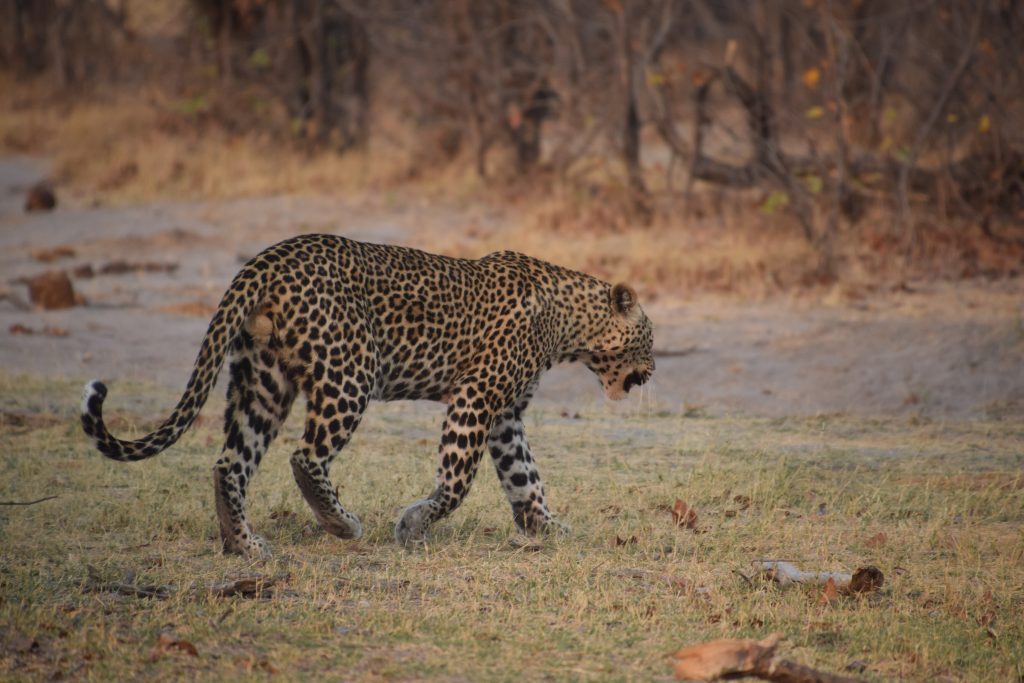
The general advice about Botswana seasonality holds particularly well for leopards.
May to October is the window. As surface water disappears, prey concentrates near permanent water and leopards follow, while the bush thins to the point where a cat is visible at distance rather than only at a few metres.
September and October are the sharpest months, with the most concentrated game and the least cover.
Time of day matters as much as season. Early morning and dusk are when leopards are actively hunting, and a night drive extends that window considerably.
The green season is not hopeless, since the Delta produces good wildlife year round, but where leopards are concerned the dry months are genuinely better and most guides will say so.
Nothing is guaranteed on any drive. A leopard sighting is the one most experienced safari travellers still describe as luck rather than expectation.
Photographing Leopards

Leopards present particular difficulties and a few things help.
Light is usually poor, since the cat is either in dappled shade under a tree or out at dusk. High ISO capability matters more here than for almost any other subject, and a fast lens more so.
Dappled light through branches is the specific problem, producing bright patches and deep shadow across the same animal. Exposing for the face rather than the average usually works better.
A telephoto in the 400 to 600mm range covers most sightings, and off-road access on a concession will get you closer than a park camp can.
Night drives are difficult without specialist equipment, and flash should not be used since it disturbs the animal far more than a filtered spotlight.
Patience beats reach. A leopard that settles will often move eventually, and staying with a sighting rather than moving on is what produces the images people remember.
One further point about leopards and cubs. A female with young is the most rewarding sighting available and also the most sensitive, since disturbance around a den can push a mother into moving her cubs, which carries real risk for them. Guides on concessions manage this carefully, keeping distance and limiting how long vehicles stay. If a guide declines to move closer or leaves a sighting early, that judgement is worth respecting rather than pressing against.
If leopards are the priority, book Khwai over a Moremi park camp. Same country, same cats, and the concession permits off-road tracking and night drives that the reserve cannot legally offer, which is the difference between watching a leopard leave and following it.
Frequently Asked Questions About Leopards in Botswana
Where is the best place to see leopards in Botswana?
The Khwai River area has a fair claim to being the most reliable, with permanent water, floodplains and sheltering woodlands keeping resident leopards well fed, plus off-road driving and night drives that the neighbouring reserve prohibits. Eastern Moremi around Xakanaxa is famous for them, as is the Mombo area on Chief’s Island. The Linyanti is the off-radar option, remote and largely unvisited with high densities in dense riverine forest.
When is the best time to see leopards in Botswana?
The dry season from May to October, with September and October sharpest. As surface water disappears, prey concentrates near permanent water and leopards follow, while the bush thins enough to see a cat at distance rather than only close up. Within a day, early morning and dusk are when leopards actively hunt, and a night drive on a concession extends that window considerably since leopards are largely nocturnal.
Why are concessions better than parks for leopard viewing?
Two rules. National parks prohibit off-road driving, so when a leopard leaves the track a guide can only watch it go, while concessions permit following it into the treeline. Night drives, which show leopards hunting rather than resting, run only on private concessions and community areas such as Khwai, never inside Moremi or Chobe. Some concession camps also use a guide and tracker system that materially improves the odds.
Should I go deep into the Okavango Delta for leopards?
Counterintuitively, no. You are more likely to find leopards on the Delta’s fringes, where the water runs out and lagoons, floodplain, tall forest and thick bush sit together on drier ground. That combination of cover, trees for hoisting kills and abundant prey is what leopards need. Choose a camp focused on game drives rather than boat activities, since leopard viewing happens from a vehicle.
How do guides find leopards?
Through tracks and through alarm calls. Impala snorting, baboons barking, squirrels chattering and francolin calling all signal a predator nearby, and a good guide will stop and listen rather than keep driving. Guides also know individual leopards and their preferred areas. A kill draped over a tree limb is a reliable sign the cat is nearby and will return, since leopards hoist kills to keep them from lions and hyenas.
Are leopard sightings guaranteed in Botswana?
No, and a leopard is the sighting most experienced safari travellers still describe as luck rather than expectation. Densities in Khwai, eastern Moremi and the Linyanti are genuinely high and repeat visitors report multiple sightings within a few hours in the right conditions, but leopards are solitary and secretive by nature. Staying three nights rather than two, choosing a concession and going out at dawn and dusk all improve the odds considerably.
Booking Your Botswana Trip
The safari companies and tour operators listed on this website put trips like this together for a living and know which camps, guides and routes actually deliver. We are an independent guide to Botswana; we do not book or sell tours ourselves.
When you are ready, arrange your safari, tour or holiday with one of the recognised operators listed here. Tell them your dates and what matters most, and a real person, not a form, will handle the itinerary, park bookings and logistics for you.