Serowe
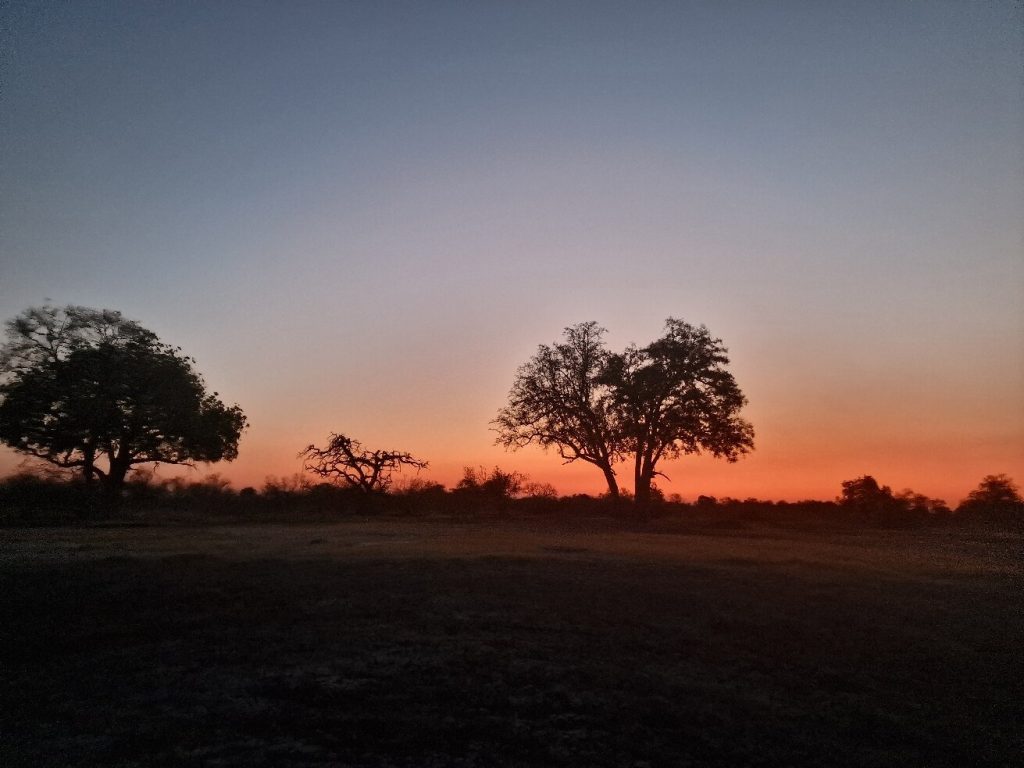
Serowe is among the largest villages in southern Africa and the traditional centre of the Bangwato people, founded by Kgosi Khama III as their new capital after water ran short at Old Palapye. It is the birthplace of Sir Seretse Khama, Botswana’s first president, and of two of his successors. The royal cemetery on the hill above the village holds the graves of both Khama III and Seretse Khama, and a rhino reserve sits a short drive north.
The Village That Became a Capital
Serowe’s founding completes a story that begins two settlements earlier.
The Bangwato had been based at Shoshong, then moved to Phalatswe, now known as Old Palapye, and moved again when water there proved insufficient. Khama III established Serowe as the new capital in 1903 and it has remained the Bangwato centre since.
The name came from serowa, a bulb plant found growing here, which the Bangwato took as an indication of water. British settlers misspelled it as Serowe, and the people agreed to keep the misspelling, which is why the word does not exist in Setswana.
Serowe now serves as the capital of the Central District and is a trade and commercial centre, sitting in fertile, well-watered country by Botswana standards.
It is variously described as Botswana’s largest village and its third largest, which reflects both genuine growth and disagreement about what counts as a village rather than a town.
Shoshong, then Phalatswe, then Serowe. The Bangwato moved their capital twice within a few generations because the springs ran short, and the third choice was named after a plant that indicated water.
The Khama Family and Botswana’s Independence
Serowe matters to Botswana in a way no other village does, because so much of the country’s leadership came from here.
Khama III founded the village and is one of the three chiefs who travelled to Britain to petition against their territories being handed to Cecil Rhodes’s British South Africa Company, an intervention that kept Bechuanaland under Crown administration and made an independent Botswana possible.
His grandson Sir Seretse Khama was born here and became the country’s first president at independence. Festus Mogae, the third president, was also born in Serowe, as was Ian Khama, Seretse’s son and the fourth president.
Seretse Khama’s marriage to Ruth Williams, an Englishwoman he met while studying law in London, caused enormous upheaval, and much of it played out in Serowe. He was barred from the chieftainship over it and spent years in exile before returning to lead the country to independence.
That history is why a village in the Central District carries more political weight than most capital cities.
The Khama III Memorial Museum
The museum is the main reason visitors come and it is genuinely good.
It occupies a restored red Victorian building, a house dating from around 1910, donated for the purpose and opened as a museum to promote cultural pride in Serowe.
The collection chronicles the Khama family and the history of Serowe through furniture, uniforms, correspondence and photographs, alongside traditional Bangwato artefacts. It covers the political history of the region and Botswana’s route to independence rather than only the family.
One room is dedicated to Bessie Head, the South African-born writer who made Serowe her adopted home and wrote about the village. Her book on Serowe drew on interviews with residents and remains among the best-known works of Botswana literature.
The museum publishes an occasional journal distributed across the country.
Allow an hour or two. For anyone who has visited Old Palapye or the Three Dikgosi Monument in Gaborone, this is where the pieces fit together.
The Royal Cemetery on Thathaganyana Hill
The graves are on the hill above the village, and visiting them needs arranging.
The Bangwato royal cemetery holds the graves of Khama III and of Sir Seretse Khama and Ruth Khama, alongside other leaders of the Bangwato.
Khama III’s grave is marked by a bronze duiker, the small antelope that is the Bangwato totem, known as phuti in Setswana.
Permission is required to visit. Accounts differ on where to obtain it, with some directing visitors to the chief’s office at the foot of the hill and others to the police station in the barracks near the kgotla. Either way, this is treated as a sensitive area and turning up to walk the hill unannounced is not appropriate.
A guide may be required or offered, and taking one is sensible.
The climb gives views over the village, which sprawls considerably further than most visitors expect.
In the village. Khama III Memorial Museum in its restored Victorian house, the kgotla below Serowe Hill with its statue of Seretse Khama, and the royal cemetery on Thathaganyana Hill with permission.
Just outside. Khama Rhino Sanctuary north of the village, a community wildlife project holding both black and white rhino across roughly 4,300 hectares of Kalahari sandveld.
Within reach. Old Palapye and its mission church ruins at the foot of the Tswapong Hills, completing the story of the Bangwato capitals along the eastern corridor.
Khama Rhino Sanctuary
The rhino reserve north of Serowe is the area’s main wildlife attraction and one of Botswana’s better conservation stories.
With rhino numbers having collapsed across the country, Serowe residents established the reserve as a charitable community project, founded by local families alongside Ian Khama, who later became president.
It covers around 4,300 hectares of Kalahari sandveld, roughly 43 square kilometres, and was set up as a haven for black and white rhino. Some sources give a considerably larger area, which may reflect later expansion.
Beyond rhino it holds zebra, wildebeest, giraffe and a range of antelope, with good birding.
Sightings are unusually reliable by rhino standards, and for travellers whose Botswana itinerary is otherwise northern and rhino-free, this is the most dependable place in the country to see them.
Distances given from Serowe vary between about 25 and 40 kilometres north depending on the source and the route.
Visiting Serowe
Serowe sits on the eastern corridor and is straightforward to reach by road.
It lies roughly 250 kilometres from Gaborone, west of the main Gaborone to Francistown road. The A14 runs past Serowe from Palapye in the east toward Orapa in the northwest, and the road is tarred.
The village airport has closed, so road access is the only option, and it is comfortable in an ordinary vehicle.
Accommodation is available in the village and is geared to domestic travellers rather than tourists, which usually means good value and simple facilities.
Serowe works well as a stop on an overland route between Gaborone and Maun or Francistown, and pairs naturally with Old Palapye nearby.
Swaneng Hill School on the edge of the village was the first of the Brigades Movement schools founded by the educationalist Patrick van Rensburg, and is a footnote of interest to anyone following the country’s development history. The Domboshaba Ruins north of Francistown are the other stone-walled site worth the detour.
The kgotla is worth seeing even if nothing is happening there. It sits below Serowe Hill and functions as the traditional meeting place and customary court, where community matters are still discussed in public in a way that has largely disappeared elsewhere. A statue of Sir Seretse Khama stands there, erected to mark the tenth anniversary of his death. Visitors should not wander into proceedings, though passing by and looking is entirely normal.
Do the sites in order if you can: Old Palapye first for the abandoned capital and the burned settlement, then Serowe for the museum and the graves. Read that way, the two sites tell one continuous story about water, leadership and how Botswana came to exist.
Frequently Asked Questions About Serowe
Why is Serowe important in Botswana’s history?
It is the traditional centre of the Bangwato and the birthplace of Sir Seretse Khama, Botswana’s first president, along with Festus Mogae and Ian Khama, the third and fourth presidents. It was founded in 1903 by Khama III, who was one of the three chiefs whose petition to Britain kept Bechuanaland out of Cecil Rhodes’s British South Africa Company and made an independent Botswana possible. The royal cemetery holds both men’s graves.
What does the name Serowe mean?
It comes from serowa, a bulb plant found growing in the area, which the Bangwato took as an indication of water when choosing where to settle. British settlers misspelled it as Serowe and the people agreed to keep the misspelling, which is why the word Serowe does not exist in Setswana. The choice followed two earlier capitals, Shoshong and Phalatswe, both abandoned when water ran short.
Can you visit the royal cemetery in Serowe?
Yes, with permission, which must be obtained before climbing Thathaganyana Hill. Accounts differ on where to ask, with some directing visitors to the chief’s office at the foot of the hill and others to the police station in the barracks near the kgotla. This is treated as a sensitive area and a guide may be required. The graves of Khama III, Sir Seretse Khama and Ruth Khama are there, with Khama III’s marked by a bronze duiker.
What is the Khama III Memorial Museum?
A museum in a restored red Victorian house dating from around 1910, chronicling the Khama family and the history of Serowe through furniture, uniforms, correspondence, photographs and traditional Bangwato artefacts. It covers the region’s political history and Botswana’s route to independence. One room is dedicated to Bessie Head, the South African-born writer who adopted Serowe as her home and wrote about the village.
Can you see rhino near Serowe?
Yes, at Khama Rhino Sanctuary north of the village, a community conservation project established by local families and Ian Khama after rhino numbers collapsed nationally. It covers roughly 4,300 hectares of Kalahari sandveld and holds both black and white rhino, alongside zebra, wildebeest, giraffe and antelope. Sightings are unusually reliable, which makes it the most dependable place in Botswana to see rhino. Distances from Serowe are given as 25 to 40 kilometres.
How do you get to Serowe?
By road only, since the village airport has closed. Serowe lies roughly 250 kilometres from Gaborone, west of the main Gaborone to Francistown highway, with the tarred A14 running past it from Palapye in the east toward Orapa in the northwest. An ordinary vehicle is fine. It works well as a stop on an overland route between Gaborone and Maun or Francistown, and pairs naturally with Old Palapye nearby.
Booking Your Botswana Trip
The safari companies and tour operators listed on this website put trips like this together for a living and know which camps, guides and routes actually deliver. We are an independent guide to Botswana; we do not book or sell tours ourselves.
When you are ready, arrange your safari, tour or holiday with one of the recognised operators listed here. Tell them your dates and what matters most, and a real person, not a form, will handle the itinerary, park bookings and logistics for you.