14-Day Botswana Itinerary
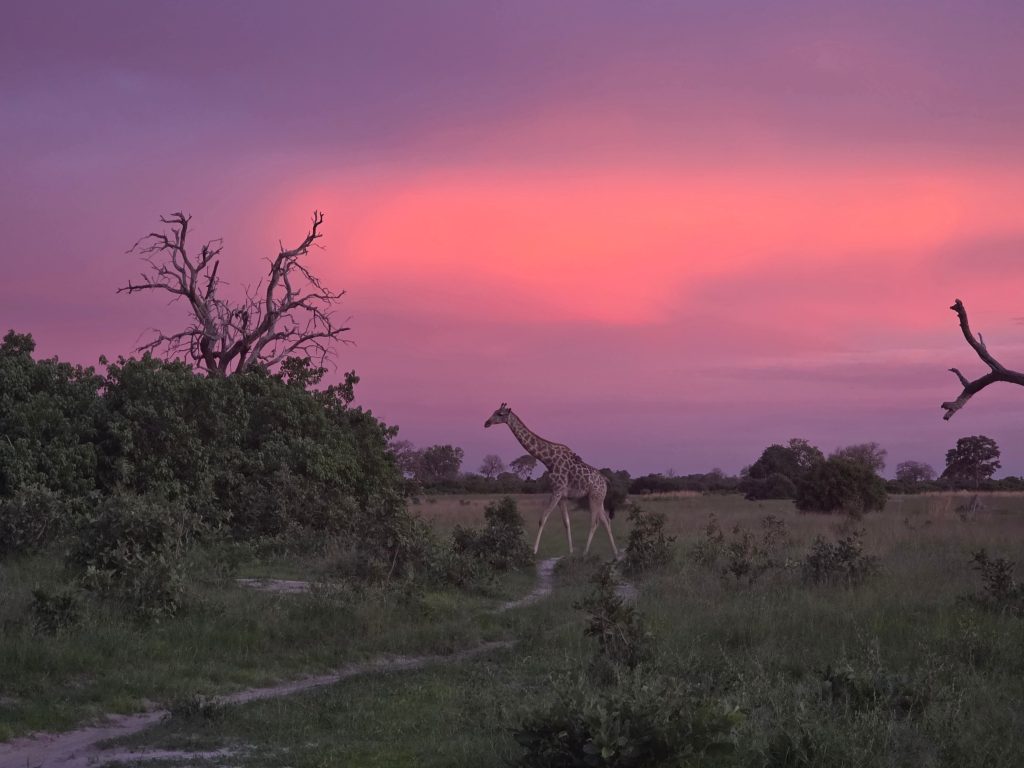
Two weeks is the length at which a Botswana trip stops needing compromises, allowing four regions at three nights each with room for Victoria Falls, or a full overland route from Johannesburg through the Kalahari to the Zambezi. It is also the only duration that lets you see both the desert and the delta at a reasonable pace. Botswana is a southern African safari country large enough that fourteen days still leaves regions unvisited.
What Two Weeks Lets You Do That Ten Cannot
Ten days delivers three regions at three nights each, which is a genuinely complete northern safari with one desert leg attached. Fourteen days changes three things.
It adds a fourth region, which usually means either the second desert area or a southern one such as the Tuli Block, neither of which fits comfortably into ten.
It absorbs the travel days properly. A two-week trip can afford a night in Maun or Kasane at either end without feeling like a waste, which removes the risk that a delayed international connection costs you a camp night.
And it allows a slower rhythm. Travellers who have done both consistently report that the difference is not more animals, it is the middle days at each camp where you stop counting species and start watching behaviour.
Fourteen days is also where a genuine overland route becomes possible, which is a different trip entirely from a fly-in one.
The gain from two weeks is not a longer list of animals. It is the second and third day in each camp, when you stop ticking things off and start watching what they actually do.
The Classic Fourteen-Day Fly-in Route
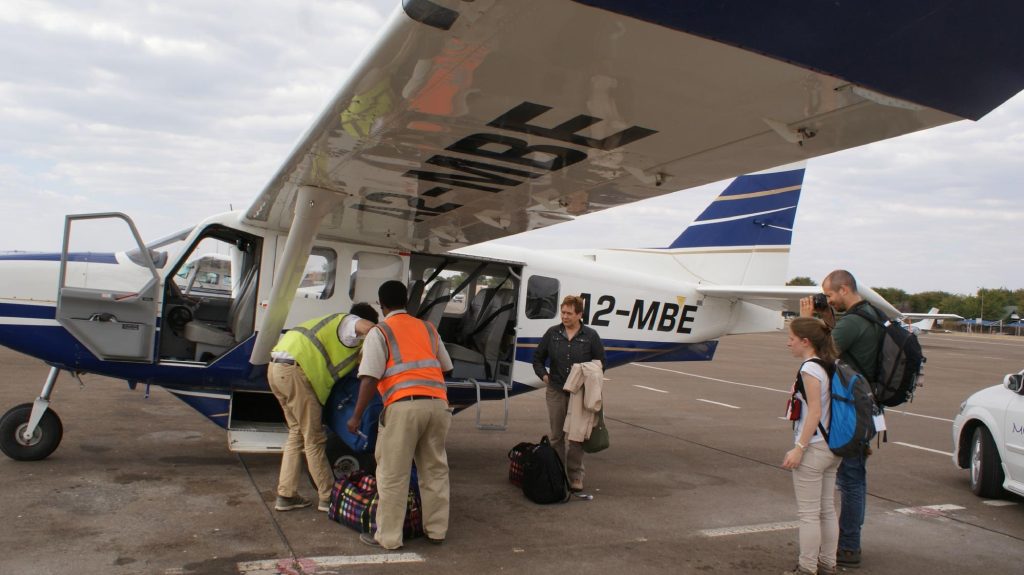
Four regions at three nights each, with two nights absorbed by arrival and departure positioning, using three internal flights.
A well-balanced version runs into Maun, three nights in a private Okavango concession, three nights in Linyanti or Savuti, three nights on the Chobe riverfront, and three nights in the Kalahari or Makgadikgadi, departing from Maun or Kasane depending on the sequence.
Order the legs so the desert falls where the season suits it. In the dry months put the desert late, when the pans are firm enough for quad biking. In the green months put it early, when the grazing is fresh and the zebra are down.
Fly into one airport and out of the other where the routing allows, since Airlink permits multi-leg bookings and backtracking wastes a day.
Adding Victoria Falls at the Kasane end costs nothing in flights, being around 80 kilometres by road or twenty minutes by light aircraft.
The Overland Fourteen-Day Route Across Botswana
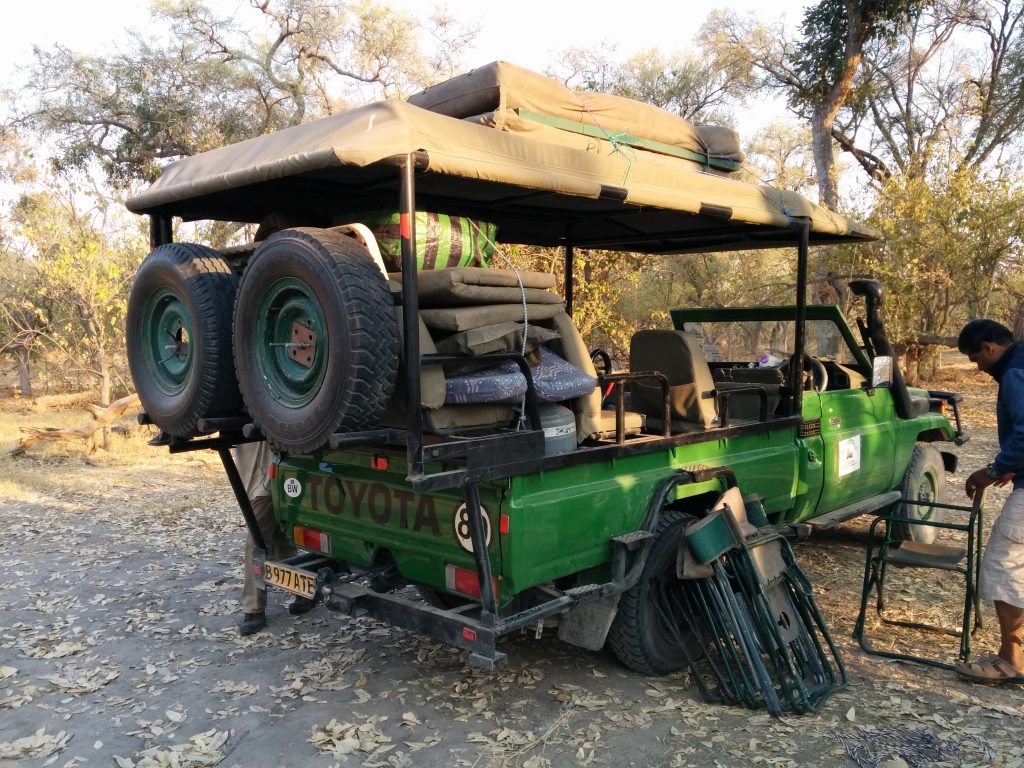
The alternative shape, and for many travellers the more memorable one.
A common overland route starts in Johannesburg, crosses at Martin’s Drift, and works north through Khama Rhino Sanctuary near Serowe, across the Kalahari to Maun, into the Okavango Delta by mokoro, through Moremi and Khwai, on to Savuti and Chobe, finishing at Victoria Falls.
What this gives you that flying does not is the country in between. You watch the vegetation change from thornveld to mopane to floodplain over days rather than crossing it at three thousand feet.
The rhino reserve near Serowe is worth its place. It is a community-based conservation project protecting white and black rhino alongside more than thirty other species and over two hundred bird species, and it is one of the few places in Botswana where rhino viewing is reliable.
Most overland itineraries run two and three night stays rather than single nights, which is what stops a two-week drive becoming exhausting.
Mobile camping operators run this shape with a crew moving camp ahead of you, which is the comfortable version.
Adding a Fourth Region to a Botswana Itinerary
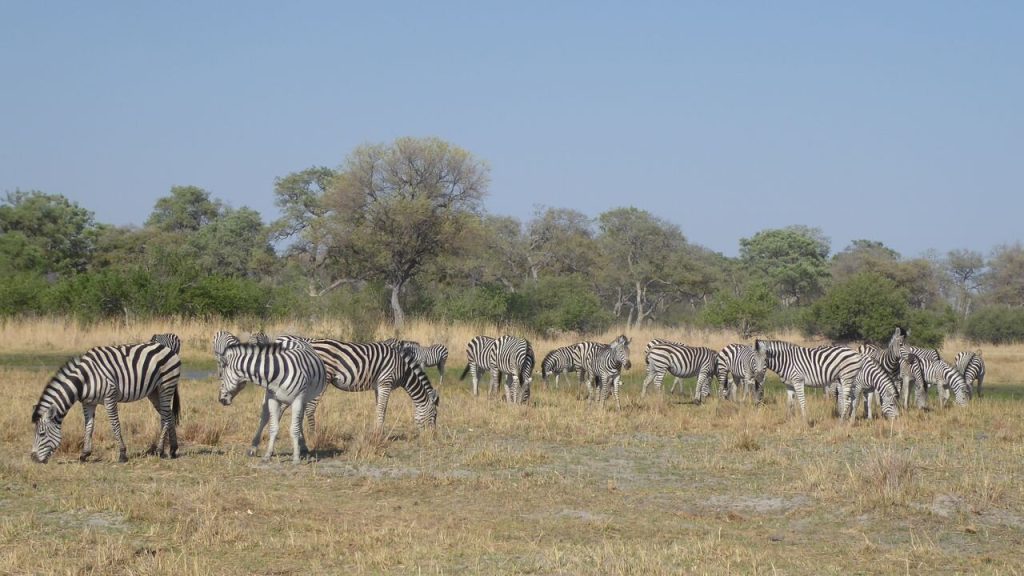
With fourteen days the question becomes which fourth area earns its place, and there are three good answers.
The Makgadikgadi and Nxai Pan alongside the Central Kalahari, treating the desert as two legs rather than one. The pans give quad biking, meerkats, San tracking and sleep-outs; the Kalahari gives black-maned lions across open country. They are genuinely different places, whatever the shared label suggests.
The Tuli Block in the southeast, a sandstone country of rocky outcrops that looks nothing like anywhere else in Botswana, holding elephant, leopard and strong birding. It is malaria free, which matters for families. Flights are infrequent and expensive, so it suits an overland trip better than a fly-in one. Twelve nights is the other common length, sold as the 12 day ultimate Botswana safari.
Victoria Falls and Hwange across the Zimbabwe border, turning the trip into a regional circuit rather than a Botswana one. Kasane makes this straightforward.
The Tsodilo Hills in the northwest are the option nobody takes and the one with the most rock art in southern Africa, though reaching them adds serious driving.
Four-region fly-in. Delta, Linyanti or Savuti, Chobe and the desert, three nights each with three internal flights. Maximum comfort and the least time in transit. Highest cost.
Overland circuit. Johannesburg or Maun through the Kalahari, Delta, Moremi, Khwai, Savuti, Chobe to Victoria Falls. Sees the country between the parks, far lower cost, longer days.
Regional circuit. Botswana paired with Victoria Falls, Hwange, Namibia’s Caprivi or Zambia. Uses Kasane as the hinge. Suits travellers who want more than one country in a single trip.
Pacing a Two-Week Botswana Safari
The commonest mistake on a fourteen-day trip is treating the extra week as licence to add camps.
Five or six camps at two nights each looks efficient on paper and delivers a fortnight of packing, airstrip waiting and half-days. Four camps at three nights, or three camps at four, produces a considerably better trip.
Build in at least one town night. Flight schedules frequently force one in Maun or Kasane anyway, and having it planned rather than imposed means you can use it for a decent meal, a resupply and a proper night’s sleep.
Consider a rest day in the middle. Fourteen consecutive days of half past five wake-ups is more tiring than people expect, particularly in the heat of September and October.
If you are travelling with children, the two-week length is where a private vehicle stops feeling like an extravagance, since it lets you cut a drive short without inconveniencing anybody.
Combining Botswana With Victoria Falls and Neighbours
Fourteen days is the length at which crossing a border becomes sensible rather than rushed.
Victoria Falls is the obvious addition, roughly 80 kilometres from Kasane by road including the Kazungula crossing, or around twenty minutes by scheduled light aircraft. Two or three nights covers the Falls themselves plus the activities.
Hwange in Zimbabwe sits within reach of the same corner and offers a different park character at lower cost than Botswana camps.
Namibia’s Zambezi Region, formerly the Caprivi, connects at Ngoma Bridge and works well on an overland route toward Etosha.
Bear in mind that each border means separate entry rules, and that a Botswana single-entry visa cannot be used to re-enter after a Falls day trip. Unabridged birth certificates for minors are checked at every crossing.
On a fourteen-day trip, book the peak-season camps twelve to eighteen months ahead and build the rest around whatever dates they offer. Bed numbers are capped by policy, so the constraint is availability rather than budget for the best properties.
Best Time for a Fourteen-Day Botswana Trip
Two weeks spans enough regions that the seasonal trade becomes unavoidable, since the desert and the delta peak six months apart.
July through September gives peak Okavango flood, the strongest Chobe and Linyanti elephant concentrations and the sharpest predator viewing. The desert legs in these months deliver atmosphere, quad biking on firm crust and San tracking rather than dense game.
December through March inverts it. The Kalahari and pans reach their annual best with fresh grazing, calving antelope and more than 20,000 zebra moving down to Nxai Pan, while the northern parks scatter and grass grows tall.
April, May and November are the genuine compromise, with both halves of the country workable, rates 10 to 20 percent below peak and much better availability.
A fourteen-day trip has enough room to absorb one weaker leg, which shorter trips do not, so this matters less here than on a ten-day itinerary.
Frequently Asked Questions About a 14-Day Botswana Itinerary
How much does a 14-day Botswana safari cost?
Mid-range lodges at roughly 600 to 1,100 US dollars per person per night put thirteen nights around 7,800 to 14,300 before international flights. Luxury private concession camps from 1,500 upward can push a two-week trip well beyond 40,000 for two people. Overland and mobile camping runs 350 to 550 per person per day, so a fortnight sits around 4,900 to 7,700. Add three or four charter legs at 250 to 500 per person each, park entry at 120 Pula per person per day, and a 30 dollar arrival levy.
Is 14 days too long for Botswana?
Not at all, and the country is large enough that two weeks still leaves regions unvisited. Fourteen days allows four regions at three nights each, absorbs travel days properly so a delayed connection does not cost a camp night, and gives you the middle days at each camp where you stop counting species and start watching behaviour. It is also the shortest duration that supports a full overland route rather than a fly-in one.
How many camps should I stay at in two weeks?
Four at three nights each, or three at four nights, plus a town night or two absorbed by flight schedules. Five or six camps at two nights each looks efficient and delivers a fortnight of packing and airstrip waiting instead of wildlife. Consider a rest day in the middle as well, since fourteen consecutive dawn starts is more tiring than most people expect, particularly in the heat of September and October.
What is the best fourth region to add to a Botswana itinerary?
Splitting the desert into two legs works well, pairing the Central Kalahari for black-maned lions across open country with the Makgadikgadi and Nxai Pan for quad biking, meerkats, San tracking and sleep-outs. The Tuli Block in the southeast is the other strong option, a sandstone country unlike anywhere else in Botswana holding elephant and leopard, and it is malaria free. Victoria Falls and Hwange turn the trip into a regional circuit.
Can I do a 14-day Botswana trip overland?
Yes, and for many travellers it is the more memorable version. A common route starts in Johannesburg, crosses at Martin’s Drift, works north through Khama Rhino Sanctuary near Serowe and across the Kalahari to Maun, then into the Delta by mokoro, through Moremi, Khwai and Savuti to Chobe, finishing at Victoria Falls. Mobile camping operators run this shape with a crew moving camp, and most itineraries use two and three night stays rather than single nights.
Should I add Victoria Falls to a two-week Botswana safari?
Fourteen days is the length at which it stops being rushed. Kasane sits around 80 kilometres from the Falls, with road transfers taking a couple of hours including the Kazungula crossing, or a scheduled light aircraft covering it in roughly twenty minutes. Two or three nights covers the Falls and the activities. Note that each border has separate entry rules, and a Botswana single-entry visa cannot be used to re-enter after a day trip across.
Booking Your Botswana Trip
The safari companies and tour operators listed on this website put trips like this together for a living and know which camps, guides and routes actually deliver. We are an independent guide to Botswana; we do not book or sell tours ourselves.
When you are ready, arrange your safari, tour or holiday with one of the recognised operators listed here. Tell them your dates and what matters most, and a real person, not a form, will handle the itinerary, park bookings and logistics for you.