Airport Transfers
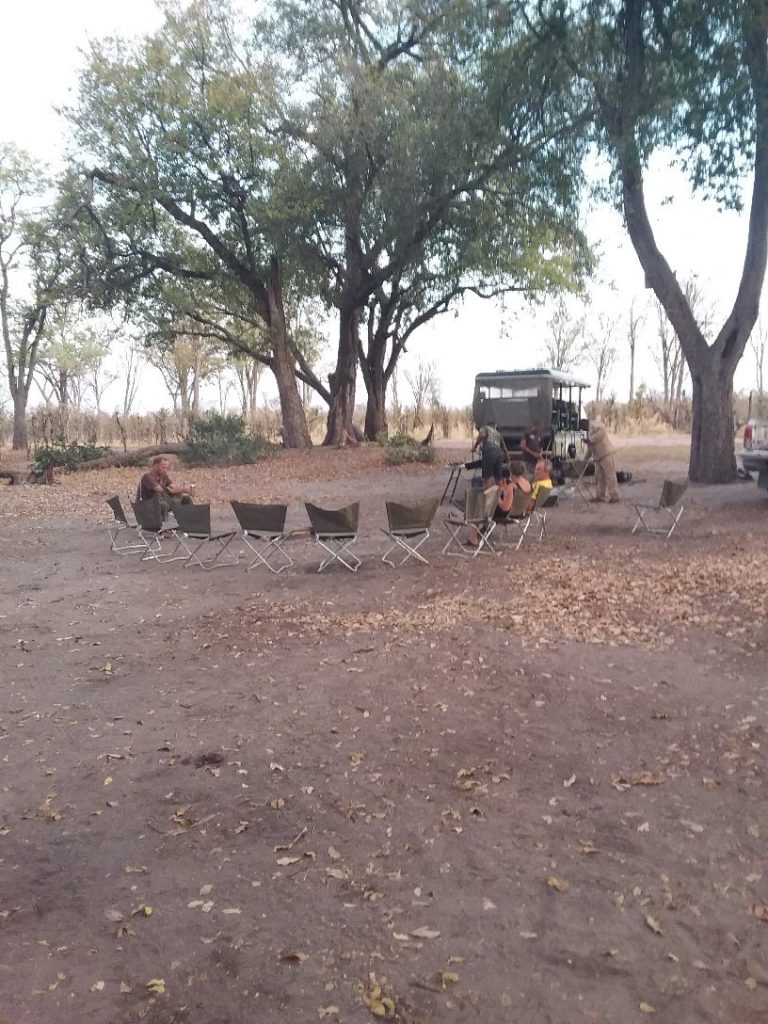
Most Botswana safari transfers happen by light aircraft rather than road, with charter flights from Maun and Kasane carrying guests to camp airstrips on hops of 15 to 45 minutes. Road transfers work for Chobe from Kasane and around Maun, while inter-camp travel in the Delta is by air almost without exception. Botswana is a southern African safari country where camps in the Okavango, Linyanti and the Kalahari are reachable no other way, which is why transfers form a substantial part of any itinerary.
How Light Aircraft Transfers Work in Botswana
The system is efficient, well-practised and unlike anything most visitors have experienced, so it helps to know the shape of it before you arrive.
You land at Maun or Kasane on a scheduled flight, and a representative meets you in the terminal and walks you across to the charter side. There you wait, sometimes briefly and sometimes an hour, until your aircraft is loaded and called. Bags go into a cargo pod beneath the fuselage.
Aircraft are typically Cessna Grand Caravans, Cessna 206s, Airvans or occasionally a Pilatus PC-12, carrying somewhere between five and twelve passengers. Unless you have booked a private charter, you fly on a seat-on-plane basis, meaning you share with guests heading to other camps.
That sharing explains the routing. Your flight may make two or three stops before reaching your strip, dropping others along the way, so a 20-minute hop can become an hour in the air. It is not inefficiency, it is how a low-volume country moves people economically, and the aerial views over the Delta make it one of the better parts of the trip.
Ask for a window seat and stay awake. The flight over the Delta at low altitude is a genuine highlight, with elephant, buffalo herds and the channel systems laid out below you. Plenty of returning visitors rate it above some of their game drives.
Flight Times Between Botswana Safari Camps
Most inter-camp hops are short. A simple transfer between neighbouring camps can take as little as five minutes in the air, and around 20 minutes is typical. Crossing the Delta from east to west, or north to south, runs closer to 30 minutes.
Longer legs exist. Maun to Kasane by air takes around an hour to an hour and a half depending on routing and stops. Maun to a Central Kalahari strip is a longer flight again, since the reserve is a long way south.
By road, the same distances look very different. Maun to Kasane is roughly 614 kilometres and takes close to seven hours of driving, which is why almost nobody does it as a transfer.
Kasane to Victoria Falls by light aircraft takes around twenty minutes against a couple of hours by road including the border crossing.
Luggage Rules for Charter Transfers

Charter luggage limits are enforced rather than suggested, and they are the single most common cause of trouble on a first morning.
The standard allowance is around 20kg per person including hand luggage and camera gear, with some operators enforcing 15kg or expressing it as 15kg checked plus 5kg hand luggage. Bags must be soft-sided duffels with no rigid frame, no wheels and no retractable handle, since they have to be worked into the cargo pod. Maximum dimensions are commonly cited around 70 by 35 by 30 centimetres.
Everything counts. A camera body, two lenses and binoculars can be 5kg before any clothing.
Where you exceed the limit, luggage can be stored at Maun or Kasane airport until you return, or you can pre-book an additional seat on the aircraft, which carries a much larger allowance at extra cost. Both need arranging when you book. If the aircraft is full on the day, overweight bags travel on the next available flight at additional charge, which means arriving at camp without them.
Road Transfers From Kasane and Maun
Not everything moves by air, and road transfers have their place.
Kasane is the clearest case. Sedudu Gate into Chobe is minutes from the airport, and most riverfront lodges are within a 45-minute drive. A Chobe trip needs no charter flight at all, which is part of why it is the cheapest safari area in the country to reach.
Around Maun, road transfers serve the town’s hotels and lodges, the Boteti area and camps on the eastern fringes of the Delta accessible by 4×4. Anything deeper is by air.
Mobile camping safaris travel entirely by road by design, moving overland between regions in a 4×4 while a crew sets up camp ahead of you. This is the trip where you see the country between the parks rather than flying over it.
Cross-border road transfers between Kasane and Victoria Falls or Livingstone run daily with several operators, taking a couple of hours including the Kazungula crossing, which can queue badly in peak season.
Light aircraft charter. The default for Okavango, Linyanti and Kalahari camps. Fifteen to 45 minutes typically. Roughly 20kg soft bag limit. Shared seat-on-plane unless privately booked.
Road transfer. Works for Chobe from Kasane, around Maun, the Boteti, and cross-border to Victoria Falls. No luggage restriction beyond vehicle space.
Helicopter. Available across the Delta for camp transfers and scenic flights, including doors-off configurations for photographers. Considerably more expensive than fixed wing.
Charter Operators Flying in Botswana
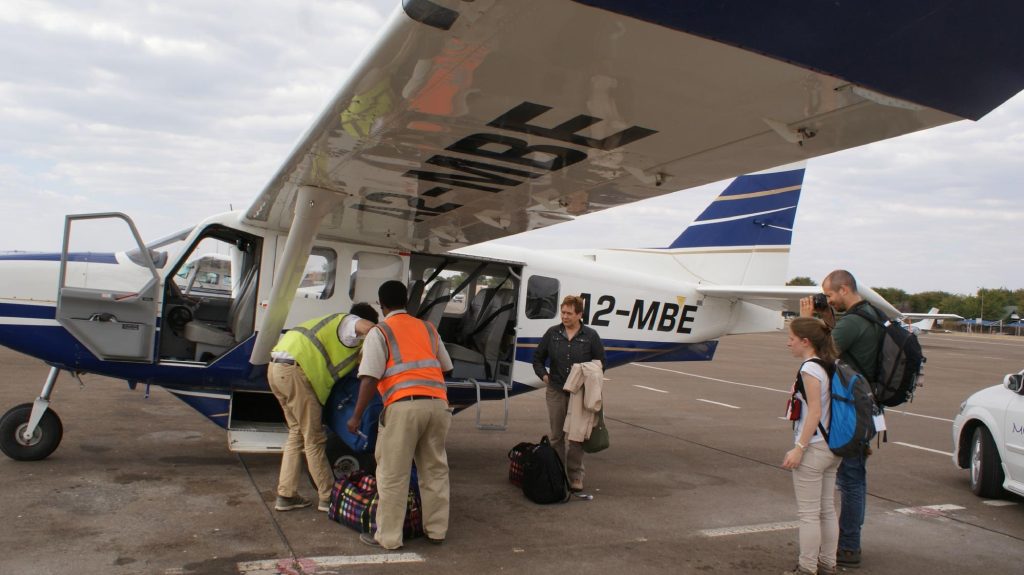
Several established companies run the charter network, and your operator or camp will book the seats rather than you dealing with them directly.
Mack Air has operated from Maun since the mid-nineties, flying throughout Botswana and to neighbouring countries including Johannesburg, Victoria Falls and Windhoek, with a fleet built around Cessna Grand Caravans. It is independent of any camp group, which some travellers prefer.
Wilderness Air, formerly Sefofane, is based in Maun and operates across Botswana, Namibia, South Africa, Zambia and Zimbabwe with a substantial fleet.
Safari Air, Delta Air, Moremi Air and Major Blue Air all operate camp transfers, scenic flights and medical evacuation work from Maun and the north.
All of them handle medevac, which matters more than it sounds. The evacuation network that makes remote camps viable runs on these same aircraft and the same pilots.
Timing, Delays and What Can Go Wrong
Charter schedules are tighter than they look and depend on things outside anybody’s control.
Weather delays flights, particularly in the green season when afternoon thunderstorms build. International connection delays cascade, since a missed Johannesburg flight means a missed charter. Bush strips close after dark because they are unlit, so there is a hard cutoff each afternoon.
The practical consequence is that arriving into Maun much past mid-afternoon means overnighting in town rather than reaching camp, losing a night that is rarely refundable.
Reputable operators reconfirm every transfer and have staff in Maun to manage disruption. Camps hold flexibility for weather. What nobody can fix is a tight international connection that fails, which is the argument for building a buffer night at the start of a trip rather than at the end.
Pilots brief you on routing before departure, so you will know how many stops are between you and your camp. They are also worth listening to on the way, since most of them fly the same country every day and will point out what is below.
Frequently Asked Questions About Botswana Airport Transfers
How do I get from Maun Airport to my safari camp?
By light aircraft, almost always. A representative meets you in the terminal and walks you to the charter side, where you board a Cessna Caravan or similar for a flight of typically 15 to 45 minutes to your camp’s airstrip. A camp vehicle meets the aircraft. Most flights are shared seat-on-plane, so you may make one or two stops dropping other guests before reaching your strip. Only camps on the eastern fringes of the Delta are reachable by road.
How much do charter transfers cost in Botswana?
Internal charter legs commonly run around 250 to 500 US dollars per person per leg when charged separately, though many all-inclusive safari packages bundle them into the total. Scenic helicopter flights are a separate and substantially higher cost, typically 250 to 500 dollars per person. Ask your operator to confirm in writing whether charter legs are included, since this is one of the largest single items that can sit outside a quoted rate.
What is the luggage limit on Botswana charter flights?
Around 20kg per person including hand luggage and camera equipment, with some operators enforcing 15kg or splitting it as 15kg checked plus 5kg hand luggage. Bags must be soft-sided duffels without wheels or rigid frames, commonly capped around 70 by 35 by 30 centimetres to fit the cargo pod. Excess can be stored at Maun or Kasane airport, or an additional seat pre-booked for a larger allowance. Confirm the exact figure with your operator, since it varies by charter company.
How long does it take to fly between camps in Botswana?
Short hops between neighbouring camps can take as little as five minutes, and around 20 minutes is typical. Crossing the Delta east to west or north to south runs closer to 30 minutes. Maun to Kasane by air takes roughly an hour to an hour and a half depending on stops, against about seven hours and 614 kilometres by road. Kasane to Victoria Falls is around twenty minutes by air compared with a couple of hours by road including the border.
Are Botswana charter flights safe?
The established operators have long records and the network is heavily used, with the same companies and pilots handling medical evacuations that make remote camps viable in the first place. Aircraft are typically Cessna Grand Caravans and similar types well suited to short unpaved strips. Flights do not operate after dark because bush airstrips are unlit, and weather causes delays rather than risky departures. Nervous flyers might consider Chobe from Kasane, which needs no charter at all.
What happens if my international flight is delayed?
You will likely miss the afternoon charter and overnight in Maun or Kasane, losing a camp night that is rarely refundable. Charter schedules run to a fixed afternoon cutoff because bush strips close at dark. Reputable operators reconfirm transfers and have staff on the ground to manage disruption, but they cannot hold an aircraft past sunset. The reliable protection is building a buffer night at the start of the trip, particularly if your routing involves a tight Johannesburg connection.
Booking Your Botswana Trip
The safari companies and tour operators listed on this website put trips like this together for a living and know which camps, guides and routes actually deliver. We are an independent guide to Botswana; we do not book or sell tours ourselves.
When you are ready, arrange your safari, tour or holiday with one of the recognised operators listed here. Tell them your dates and what matters most, and a real person, not a form, will handle the itinerary, park bookings and logistics for you.