Scenic and Helicopter Flights
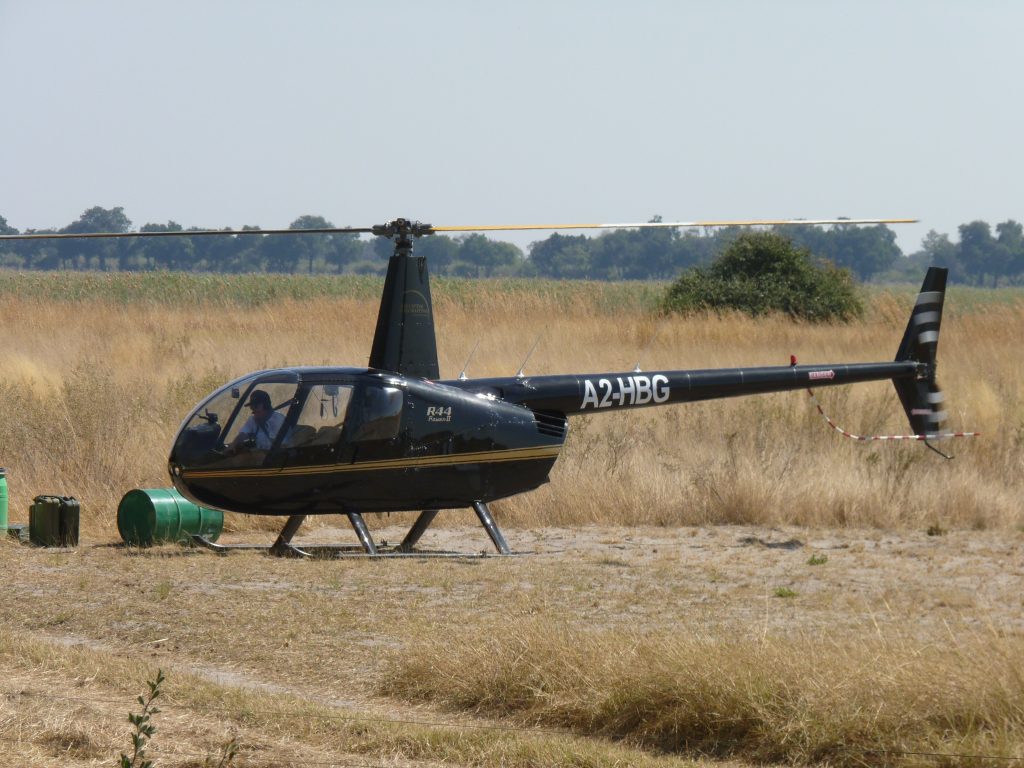
Scenic flights over the Okavango Delta reveal a system that makes no sense from the ground, showing the channels, palm islands, hippo highways and animal trails laid out below. Fixed-wing flights run from Maun in a Cessna with a guaranteed window seat, while helicopters fly doors-off for unrestricted photography and can reach areas no other vehicle can. Both are among the more memorable things a visitor does in Botswana.
Why Fly Over the Okavango
The Delta is difficult to comprehend at ground level, and that is the whole argument for going up.
From a mokoro you see papyrus at eye level. From a game vehicle you see floodplain and treeline. Neither gives you any sense of a wetland that swells to between 15,000 and 22,000 square kilometres, or of how the water actually moves through it.
From the air the structure appears. A labyrinth of crystal-clear channels, palm islands scattered across floodplain, lagoons, and the tracks animals have worn between them. Hippo highways, the paths hippos cut through papyrus night after night, are visible only from above.
Wildlife reads differently too. Elephant crossing open ground, buffalo herds spread across a floodplain and lechwe running through shallow water all make more sense seen from a few hundred feet.
Many people who have done both rate the flight above some of their game drives, which sounds like an exaggeration until you have done it.
The Okavango is the only place most visitors will see where a river ends in a desert rather than a sea. From the ground that is an abstraction. From the air it is obvious.
Fixed-Wing Scenic Flights
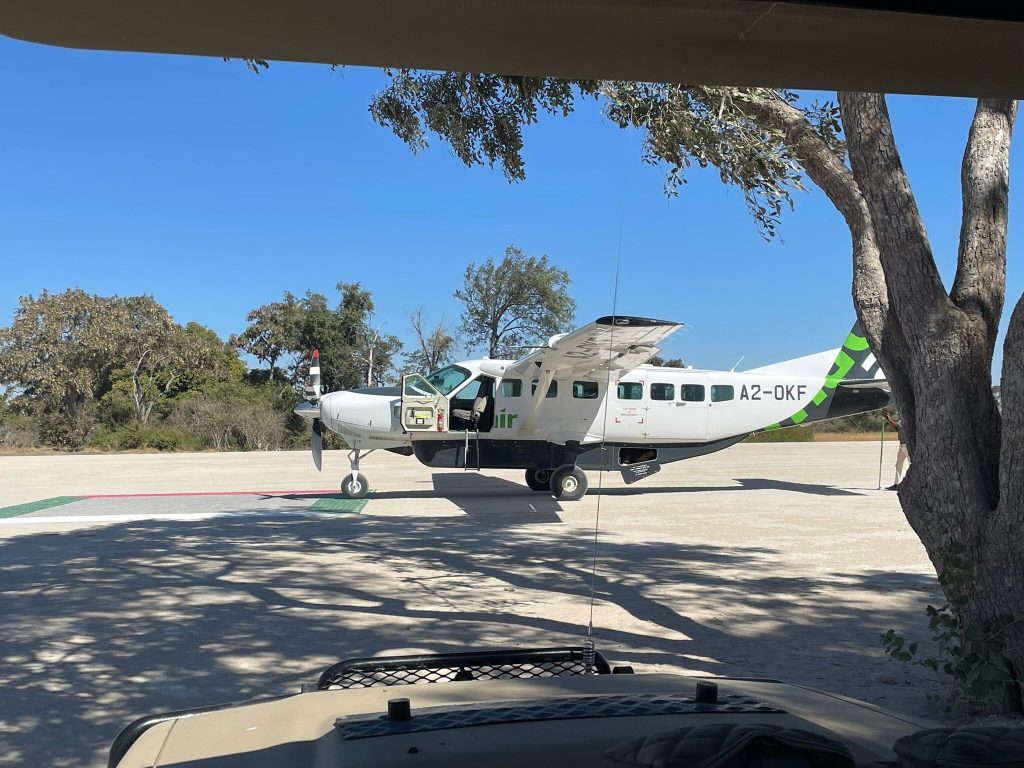
The straightforward option and the more affordable of the two.
Flights depart from Maun airport, typically lasting 45 minutes to an hour, with morning and late afternoon slots. Aircraft are usually Cessnas, including the Grand Caravan, which is configured so every passenger has a window seat.
The standard route heads north into the Delta, covering the southwestern portion of the system, out toward the permanent waterways and back over the seasonal floodplains west of the main Boro channel.
A short safety and information briefing precedes departure. Some operators fly five-seat aircraft chartered as a whole rather than per seat, which suits a family or small group.
Sightings are unpredictable, though elephant, giraffe, hippo and buffalo are commonly seen from the air. Predators are less common and do turn up.
Flights are weather permitting and pilots will cancel if conditions are unfavourable, which is the correct decision and worth accepting gracefully.
Doors-Off Helicopter Flights
The premium option, and for photographers the one worth the money.
Helicopters fly with the doors removed, giving a completely unrestricted view. On fixed-wing transfers doors must stay on because of baggage, so a scenic helicopter flight is the only way to shoot without glass or a window frame in the way.
Flights run 30, 45 or 60 minutes and operate both from Maun and from many camps deep in the Delta, which means you can lift off directly into the good country rather than flying out to it.
Guests wear headsets, so the pilot talks throughout, pointing out what you are looking at and explaining the system. Pilots also position the aircraft for a shot rather than simply flying a route, which is the practical difference from fixed wing.
Helicopters can land in remote spots that nothing else reaches, and some operators build that into a longer excursion combining a flight with a game drive or a picnic.
Champagne stops are offered by some operators as an add-on.
Choosing Between Fixed Wing and Helicopter
Both are worthwhile and they suit different people.
Fixed wing costs considerably less, seats more people, covers more ground per minute and gives a good broad overview of the Delta. Every seat is a window seat on the right aircraft. The limitation is the window itself, which affects photography.
Helicopter costs more, carries fewer people, flies lower and slower, and the doors-off configuration transforms photography. The pilot can hover, circle a subject and reposition for light.
For a general sense of the Delta, fixed wing does the job. For photography, the helicopter is not a marginal improvement but a different activity.
Travellers who have done both frequently describe the helicopter as another level, having previously done fixed-wing scenic flights elsewhere.
Budget matters, and a fixed-wing flight is within reach of most itineraries in a way a helicopter is not.
Fixed-wing scenic flight. From Maun, 45 to 60 minutes, Cessna with guaranteed window seats. Broad overview of the southwestern Delta. Considerably cheaper and suitable for most budgets.
Doors-off helicopter. From Maun or from camps, 30, 45 or 60 minutes, unrestricted views, headsets and pilot commentary. Can hover, reposition and land in remote spots. The photographer’s choice.
The transfer flight. Your charter between camps already flies low over the Delta and costs nothing extra. Take a window seat, stay awake and treat it as a scenic flight in its own right.
Photographing From the Air
Aerial photography rewards preparation, and a few things make a large difference.
Shutter speed is the main constraint. Vibration and forward motion both blur images, so a fast shutter matters more than in almost any other situation, and image stabilisation helps but does not substitute for it.
A shorter lens than you would expect works best. A wide to medium zoom covers the pattern of channels and islands, while a long telephoto is difficult to hold steady and narrows the view too far.
Early morning and late afternoon give the best light, with low sun raking across the water and long shadows revealing the shape of the ground. Midday flattens everything.
Secure everything. On a doors-off flight anything loose leaves the aircraft, which is dangerous and expensive both, so use straps and take nothing you cannot attach.
Many photographers choose the siesta slot instead, flying in the middle of the day so as not to miss game activity, and accepting harsher light in exchange.
Scenic Flights Beyond the Delta

The Okavango is the main event, and it is not the only option.
The Makgadikgadi pans from the air show the scale of the ancient lakebed in a way ground level cannot, with the salt running white to the horizon and islands like Kubu rising from it.
Chobe and the Linyanti can be flown, and in the dry season the elephant concentrations along the water are striking from above.
Victoria Falls flights operate from the Zimbabwe and Zambia sides rather than Botswana, though Kasane is around twenty minutes away by light aircraft and many visitors combine the two.
Drones, worth mentioning because people ask, are not an alternative. Botswana requires advance permits and prohibits flying over national parks, reserves, wildlife and tourism facilities, which covers almost every location a visitor would want. A scenic flight is the legal route to aerial footage.
Do not overlook the transfer flight you have already paid for. Charters between camps fly low over the Delta, the views are the same country the scenic flights cover, and asking for a window seat and staying awake costs nothing at all.
Booking and Practical Details
A few things worth knowing before you book.
Flights depart from Maun airport for the fixed-wing scenic option, and from camps or Maun for helicopters. A passport is required for airport security even on a domestic scenic flight.
Weight matters. Operators ask passengers of 90 kilograms and over to notify them in advance so seating and balance can be arranged, and helicopters are stricter than fixed wing.
Departure tax is included in some quoted rates and not others, so check.
Bring sunglasses, since glare off water at altitude is considerable, and a light jacket for the doors-off option, which is cold at speed even on a warm day.
Book in advance during peak season, particularly for helicopters, since the fleet is small.
Frequently Asked Questions About Scenic Flights in Botswana
How much does a scenic flight over the Okavango Delta cost?
Fixed-wing flights from Maun have been quoted from around 260 US dollars per person for 45 minutes to about 330 for an hour, with a short champagne stop offered as an add-on for roughly 45 dollars. Helicopter rates run higher and vary with duration and operator, with figures around 150 dollars for 30 minutes appearing at the lower end. Prices shift with season, company and whether the flight is shared or chartered whole, so confirm before booking.
Is a scenic flight over the Delta worth it?
For most visitors, yes. The Okavango is difficult to comprehend at ground level, where you see papyrus or floodplain but no sense of a wetland covering 15,000 to 22,000 square kilometres. From the air the channels, palm islands, lagoons and hippo highways appear as a system. Many travellers rate the flight above some of their game drives, and it is the only way to see how a river ends in a desert rather than a sea.
What is the difference between a fixed-wing and helicopter scenic flight?
Fixed wing costs considerably less, seats more people and covers more ground, with the right aircraft giving every passenger a window seat, though you are shooting through glass. Helicopters fly doors-off for unrestricted views, go lower and slower, and the pilot can hover and reposition for a shot rather than flying a fixed route. For a general overview fixed wing does the job; for photography the helicopter is a different activity rather than an upgrade.
When is the best time of day for a scenic flight?
Early morning or late afternoon give the best light, with low sun raking across the water and long shadows revealing the shape of the ground, which is why photographers choose those slots. Many other guests deliberately fly during the middle of the day so as not to miss morning and afternoon game activity, accepting harsher light in exchange. Flights operate throughout the day, weather permitting, and pilots cancel in unfavourable conditions.
What should I bring on a doors-off helicopter flight?
Sunglasses, since glare off water at altitude is considerable, and a light jacket, as doors-off is cold at speed even on a warm day. Secure everything, because anything loose will leave the aircraft, which is dangerous and expensive both, so use camera straps and take nothing you cannot attach. A shorter lens works better than a long telephoto, and a passport is required for airport security even on domestic flights.
Can I fly a drone instead of taking a scenic flight?
No, not usefully. Botswana requires an import permit obtained in advance plus registration with the civil aviation authority, including police fingerprint clearance and security vetting that can take up to 30 days, and flying over national parks, game reserves, wildlife and tourism facilities is prohibited, which covers almost every location on a safari itinerary. Drones are regularly confiscated from arriving passengers. A scenic flight is the legal route to aerial footage.
Booking Your Botswana Trip
The safari companies and tour operators listed on this website put trips like this together for a living and know which camps, guides and routes actually deliver. We are an independent guide to Botswana; we do not book or sell tours ourselves.
When you are ready, arrange your safari, tour or holiday with one of the recognised operators listed here. Tell them your dates and what matters most, and a real person, not a form, will handle the itinerary, park bookings and logistics for you.