Self-Drive Botswana Safari Guide
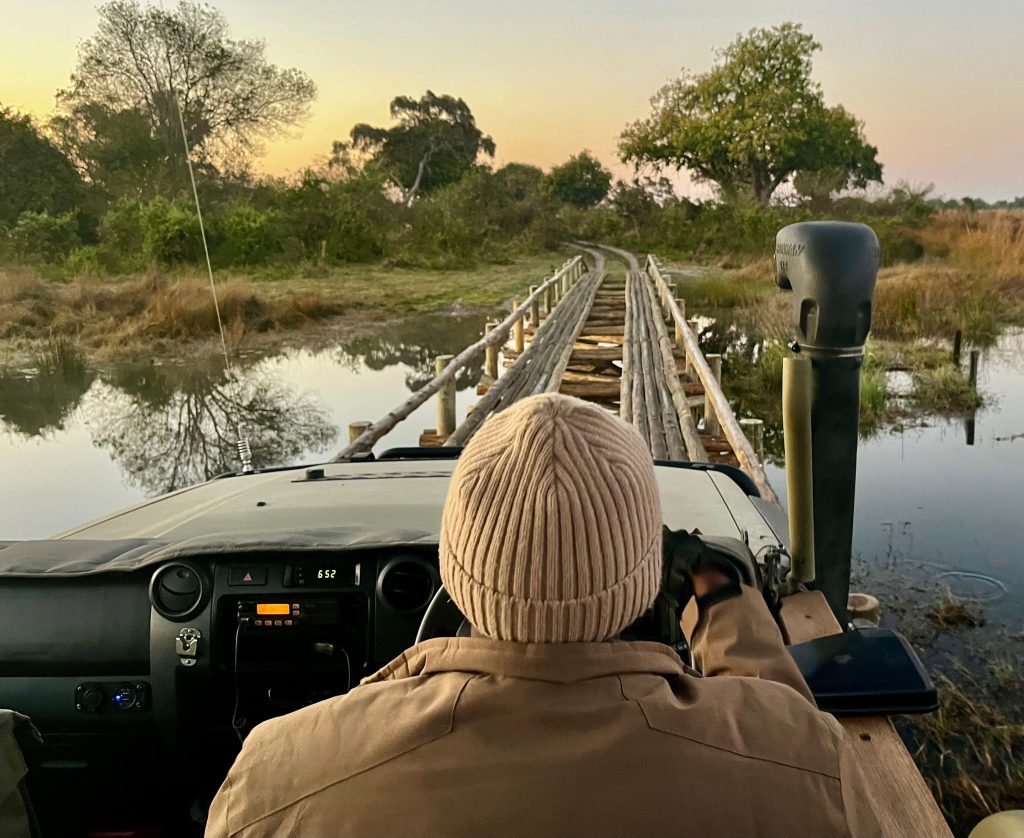
Self-driving is the cheapest way to see Botswana and the most demanding, requiring a properly equipped 4×4, genuine deep sand experience, campsites booked months ahead and complete self-sufficiency. It reaches Moremi, Chobe, Khwai, the Central Kalahari, Nxai Pan and the Makgadikgadi, and it cannot reach the inner Delta or the private concessions at all. The administration catches more people out than the driving does.
Is Self-Drive Right for You
Worth answering honestly before committing, because this is not a soft option.
What you gain is independence, cost and the particular satisfaction of finding your own animals. You go where you want, stop as long as you like and camp deep inside national parks.
What you give up is the guide, and it shows. A licensed guide finds things you will drive past, reads behaviour you will misinterpret and knows which track was productive yesterday. Self-drivers see less. Many consider the trade worth it.
What it demands is real. Tracks are deep sand throughout, sections become impassable after rain, fuel is not sold inside any park, and recovery help can be many hours away.
If you have never driven in deep sand, Botswana is a difficult place to learn. Guided self-drive convoys exist for exactly this reason and are worth considering for a first trip.
The driving is not what defeats most self-drive trips. Campsite bookings, park permits and the sequence they have to be arranged in are what catch people out, and entry has been refused at gates over paperwork.
The Administration
This is the part to get right first, because it is the most common failure point.
Botswana’s public campsites are no longer run by a single body. Most are operated by private concessionaires, each with its own booking system, and park entry fees are settled separately with the Department of Wildlife and National Parks.
That means booking a campsite and paying park fees are two distinct transactions with two different parties, in that order.
Campsites in the popular parks book out months ahead for the dry season, and Third Bridge and Xakanaxa in Moremi go first. Double bookings have been reported, so carry printed confirmations for everything.
Entry has been refused at gates for paperwork errors, which after a day’s driving is a genuinely serious problem given there is nowhere else to go.
Park entry runs at 120 Pula per person per day for non-residents, dropping to 70 Pula through a licensed Botswana operator, with camping charged separately.
Our campsites page covers the individual sites and booking channels in detail.
The Vehicle
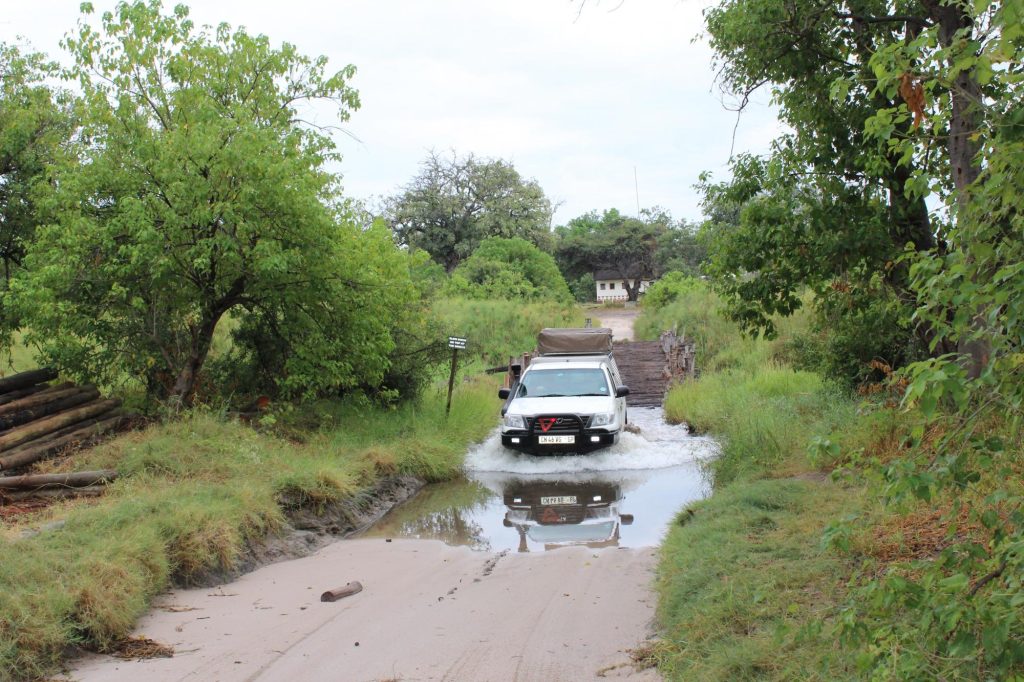
Get this wrong and nothing else matters.
You need a proper 4×4 with high clearance, low range and recovery equipment. A soft-roader will not do, and taking an unsuitable vehicle into the parks voids most rental agreements.
Standard fully equipped hire vehicles come with rooftop tents, cooking gear, a fridge, water tanks, recovery kit and spare wheels, which is the sensible option for visitors flying in.
Long-range fuel capacity or jerry cans are necessary, since fuel is not sold inside any national park and there is none on the bush routes between Maun and Kasane.
Tell the rental company exactly where you are going. Some restrict certain parks or routes, and a breach voids cover.
Two vehicles travelling together is the safer arrangement in the remoter areas, particularly the Central Kalahari and Mabuasehube, where recovery help may be a full day away.
Our 4×4 hire page covers operators, insurance and what to check on collection.
Where You Can and Cannot Go
The map for a self-driver is different from the map for a fly-in guest.
Open to self-drive: Moremi through South Gate and North Gate, Chobe including the riverfront, Savuti and Linyanti campsites, the Khwai community area, the Central Kalahari, Khutse, Nxai Pan, the Makgadikgadi and the Kgalagadi including Mabuasehube.
Closed to self-drive: the inner Okavango Delta, where parts are surrounded by water with no road, and the private concessions in Linyanti, Selinda, Kwando and the Delta, which restrict access to guests of their own camps arriving by air.
Khwai is the important exception and the best news for self-drivers. It sits outside the national park boundary, permits night drives and off-road driving, has community campsites open to public booking, and delivers Moremi-standard wildlife.
A common compromise is to self-drive the accessible parks and add two or three fly-in nights in the Delta. That works particularly well from Maun, where you can leave the vehicle in secure storage, fly in for a short Delta stay and return to continue driving, which gives you both halves of the country without paying fly-in rates for the whole trip.
Classic northern circuit. Maun into Moremi via South Gate, out through North Gate to Khwai, on to Savuti and Chobe, finishing at Kasane. Roughly a week, deep sand throughout.
Desert circuit. Maun or Gaborone to the Central Kalahari, Khutse, Nxai Pan and the Makgadikgadi. Longer distances, thinner traffic, standalone campsites with no water at many.
Guided self-drive convoy. You drive your own 4×4 behind a professional guide, typically twelve to sixteen days. The freedom of self-driving without the risk of tackling remote terrain alone.
Driving Conditions
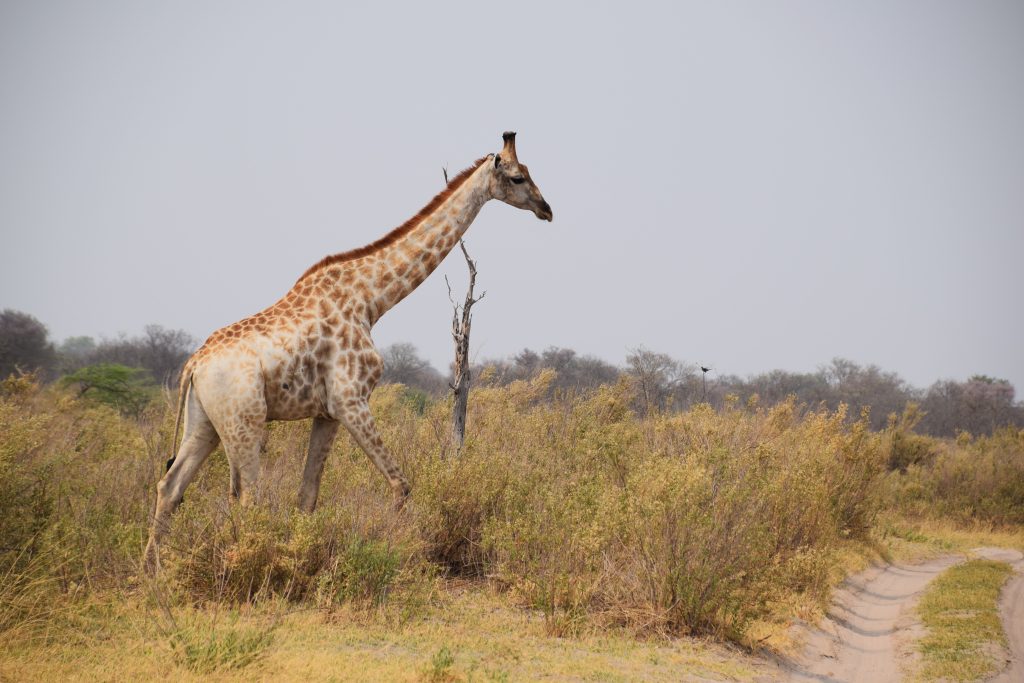
Expect the roads to be slower and harder than any map suggests.
Deep sand is the constant. Park tracks behave like driving through dunes in the dry season, and the run in to Savuti’s Ghoha Gate includes over 40 kilometres of loose sand. Dropping tyre pressures and using low range is standard practice.
Allow 20 to 25 kilometres per hour on game-viewing tracks and 30 to 40 on transfers. Distances that look short take hours.
After heavy rain many tracks become impassable, and water crossings including the bridges at Third Bridge need care and inspection on foot before committing.
Park rules bind you the same as anyone: 40 kilometres per hour, no off-road driving, gates closing at set hours and no night driving.
Veterinary control points on the main roads involve inspections for meat and dairy, so keep those accessible rather than buried under camping gear.
Our driving in Botswana page covers road conditions, fuel and the veterinary fences in detail.
Camping and Safety
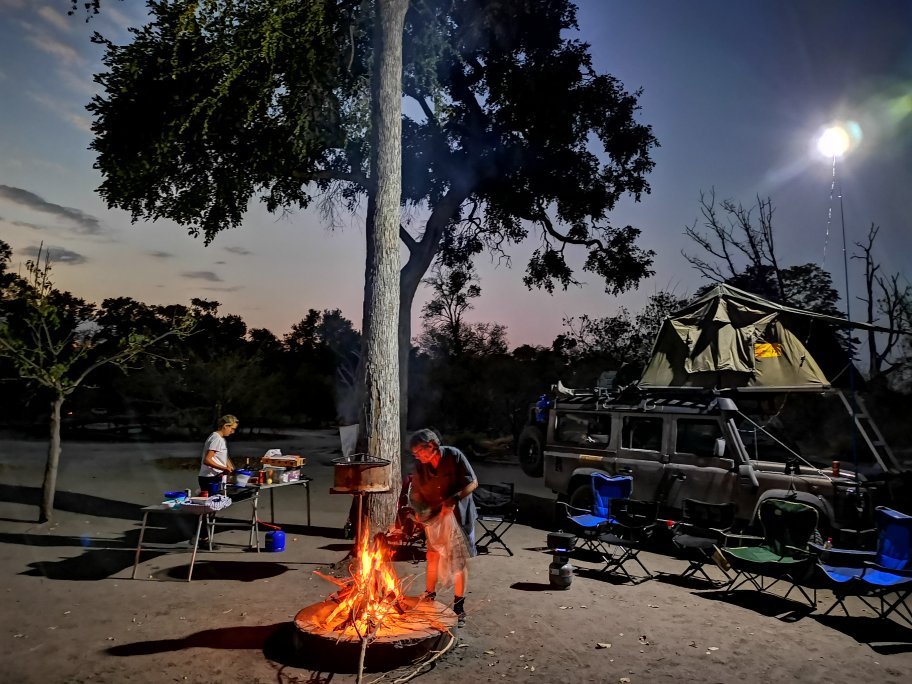
Campsites in Botswana range from decent to nothing at all.
Moremi’s Third Bridge and Xakanaxa are the best and the most sought after, with North Gate river sites also excellent. Chobe has one site in each of its three areas. Central Kalahari and Mabuasehube sites are standalone pitches with at most a drop toilet and a bucket shower frame, and you carry all your own water, since some have none.
Every campsite in Botswana is unfenced. Elephant, lion and hyena walk through them.
The rules matter: stay in the vehicle or tent after dark, never leave food out, never walk to the ablutions at night without a torch and a look around, and never get between an animal and water.
Stock up in Maun, Kasane or Francistown, because there are no shops inside the parks.
Carry more water than the calculation suggests, and a satellite phone in the Kalahari.
Navigation deserves its own thought. Mobile coverage disappears entirely inside the parks and across most of the Kalahari, so offline mapping loaded before departure is the minimum, and paper maps alongside it are sensible. Tracks shown on consumer mapping apps are frequently out of date, occasionally show routes that no longer exist, and in the desert reserves a wrong turn can add many hours to a day with no fuel margin to absorb it.
Book campsites first and build the route around what you get, rather than planning a route and hoping the sites are free. Dry season availability at Third Bridge and Xakanaxa decides most northern itineraries, and everything else can be arranged around them.
Frequently Asked Questions About Self-Drive Safaris in Botswana
Can you self-drive in Botswana’s national parks?
Yes, in Moremi, Chobe including Savuti and Linyanti campsites, the Central Kalahari, Khutse, Nxai Pan, the Makgadikgadi and the Kgalagadi including Mabuasehube, plus the Khwai community area. You cannot reach the inner Okavango Delta, where parts are surrounded by water with no road, or the private concessions in Linyanti, Selinda, Kwando and the Delta, which restrict access to guests of their own camps arriving by air.
How much does a self-drive Botswana safari cost?
Far less than any guided option, since you pay only vehicle hire, fuel, park entry at 120 Pula per person per day for non-residents, and campsite fees. Fully equipped 4×4 hire with rooftop tent, fridge and camping gear is the main cost. Sharing a vehicle between two or three people brings the daily figure down substantially. Against that, guided mobile camping runs roughly 350 to 550 US dollars per person per day.
What do you need for a self-drive safari in Botswana?
A proper 4×4 with high clearance, low range and recovery equipment, since a soft-roader will not do and taking an unsuitable vehicle voids most rental agreements. Fully equipped hire vehicles include rooftop tents, cooking gear, a fridge, water tanks and spare wheels. Long-range fuel or jerry cans are necessary since no park sells fuel. Campsites must be booked months ahead and park fees settled separately with the Department.
How hard is the driving in Botswana?
Demanding. Park tracks are deep sand throughout and behave like driving through dunes in the dry season, with over 40 kilometres of loose sand on the run in to Savuti’s Ghoha Gate. Dropping tyre pressures and using low range is standard. Allow 20 to 25 kilometres per hour on game-viewing tracks and 30 to 40 on transfers. After heavy rain many tracks become impassable and water crossings need inspection on foot.
Do you need to book campsites in advance?
Months ahead for the dry season, and this is the most common failure point of self-drive trips. Most public campsites are run by private concessionaires each with their own booking system, with park entry fees settled separately with the Department afterwards, in that order. Third Bridge and Xakanaxa in Moremi go first. Double bookings have been reported, so carry printed confirmations, since entry has been refused at gates for paperwork errors.
Is self-driving in Botswana safe?
With competence and preparation, yes. The risks are mechanical and environmental rather than criminal: deep sand, water crossings, no fuel inside parks and recovery help potentially many hours away. Every campsite is unfenced and elephant, lion and hyena walk through them, so stay in the vehicle or tent after dark and never leave food out. Travelling in two vehicles is safer in remote areas, and a satellite phone is sensible in the Kalahari.
Booking Your Botswana Trip
The safari companies and tour operators listed on this website put trips like this together for a living and know which camps, guides and routes actually deliver. We are an independent guide to Botswana; we do not book or sell tours ourselves.
When you are ready, arrange your safari, tour or holiday with one of the recognised operators listed here. Tell them your dates and what matters most, and a real person, not a form, will handle the itinerary, park bookings and logistics for you.