Gcwihaba Caves
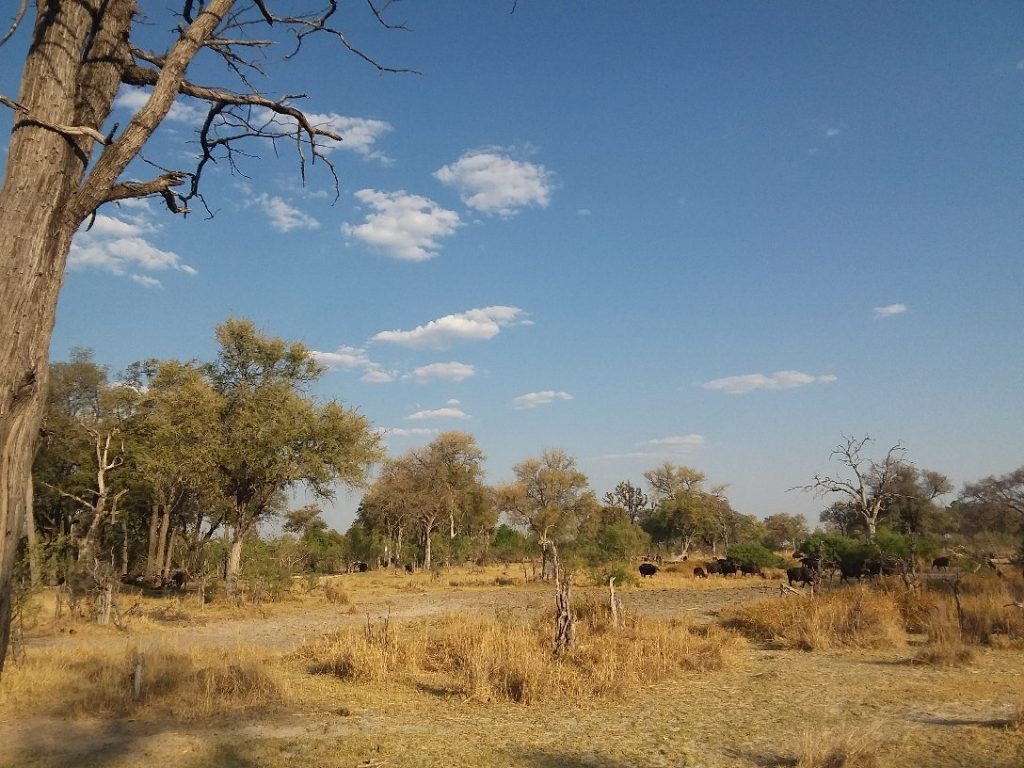
Gcwihaba is a labyrinth of dolomite caverns beneath a hill in northwestern Botswana, filled with stalactites and stalagmites up to several metres long and home to thousands of bats. The name means hyena’s hole in !Kung, and the main chamber is known as Drotsky’s Cavern after the Ghanzi farmer whom San guides first led there. It is a declared national monument, undeveloped for tourism, and among the remotest places a visitor can reach in Botswana.
What Gcwihaba Is
The cave system sits inside a dolomite hill on a sand ridge among undulating dunes, roughly 280 kilometres west of Maun in Ngamiland.
It formed during the Pleistocene when this part of the Kalahari was far wetter than it is now, with water seeping through and dissolving the dolomite over an enormous span of time. The system has been part of this country for something approaching three million years.
There are two main caves. Gcwihaba 1 is the larger and older, with three openings, and holds the formations most visitors come to see. Gcwihaba 2 is so small that it can only be entered by crawling.
Some caverns rise to around ten metres high. Others are tight enough that passing through means squeezing or going on your belly.
Half the cave system lies in these hills, with the other half found around 19 kilometres southwest in the Koanaka Hills.
Gcwihaba is not developed for tourism. The interior is completely dark with no lighting and no route markings, which is the whole character of the place and the reason it needs proper preparation.
The Formations Inside
What draws people underground is the calcite, formed over an immense period by water that no longer falls here in the quantities that made it.
Stalagmites, stalactites and flowstone occur throughout. Some stalactites reach around six metres, meeting stalagmites rising to meet them and forming columns that look as though they hold up the roof.
Other sources describe formations up to ten metres long. Figures vary, which is unsurprising in a system that has never been comprehensively surveyed for tourism.
The dolomite itself is what made the caves possible, since dripping water dissolves it in a way that harder rock resists.
A mineral new to science was described from Gcwihaba and named gwihabaite after the caves, which gives some indication of how little studied this system remains.
The Bats of Gcwihaba
The bats are the thing every visitor remembers and they should be expected rather than feared.
Entering by the more commonly used northern entrance, the first thing you meet is thousands of bats hanging from the cave walls.
At least three species are common. Commerson’s leaf-nosed bat is the largest insectivorous bat in southern Africa, with a wingspan reaching around 60 centimetres. Dent’s horseshoe bat is tiny by comparison. The Egyptian slit-faced bat is distinguished by long ears.
All are harmless. What they will do, if you make noise or move in carelessly, is leave in a mass exodus through the darkness around you, which is a genuinely startling experience in a confined space by torchlight.
The greater long-fingered bat also roosts here, alongside birds. Porcupines, snakes and millipedes use the system, and bat guano has accumulated in deposits over a very long period.
History, Archaeology and the Cave’s Names
The naming history of Gcwihaba says something about how sites in this country came to be recorded.
The original name in !Kung is Gcwihaba, meaning hyena’s hole, and San communities had known and used the caves for a very long time. Evidence found inside indicates that the San and their predecessors used the caverns as shelter and living space over thousands of years.
A group of San led the Ghanzi farmer Martinus Drotsky to the caves in the nineteen thirties, making him the first European to see them, and he named the main chamber after himself. For many years the whole system was called Drotsky’s Caves.
The archaeology runs deeper still. Fossil bones of giant zebra and wildebeest that lived in this region have been recovered, and researchers have described the wider cave country here as holding potential to add to what is known about human evolution.
Gcwihaba 1 contains paintings of animals and rock formations.
A local legend holds that the wealthy trader Hendrik Matthys van Zyl hid part of his fortune in the caves in the nineteenth century. It has never been found.
Gcwihaba 1. The larger and older cave with three openings, holding the main formations, the bat colonies and the chamber known as Drotsky’s Cavern. Where visitors go.
Gcwihaba 2. So small it can only be entered by crawling, and not part of a normal visit.
Aha Hills. Around 50 kilometres northwest and visible from Gcwihaba, straddling the Botswana and Namibia border across roughly 245 square kilometres. Rough, jagged and split by weathering into faults and fractures.
Visiting Gcwihaba Caves
This is a serious undertaking rather than a stop on a route, and preparation matters more here than at most Botswana sites.
Access is by 4×4 only, roughly 280 kilometres west of Maun on sand tracks through remote country. There is nothing along the way.
Facilities were developed at the site in recent years, including a gatehouse, ablutions, boreholes, a campsite and an airstrip, which is a considerable improvement on what existed before. Wild camping options are also used nearby, though finding the sites can be difficult.
Permission matters. Some accounts describe the cave as managed by the Gana community over a very long period and note that access requires permission from the relevant traditional authority. Check the current position before travelling rather than assuming open access.
Gcwihaba is a declared national monument and has been put forward as a candidate for UNESCO World Heritage listing.
Going Underground Safely
The caves are not difficult in technical caving terms, and they carry risks that have nothing to do with technical difficulty.
The interior is completely dark. There is no lighting and there are no route markings of any kind, so navigation is entirely your own problem in a system with multiple chambers and connecting passages.
Carry more than one light source per person, with spare batteries. A single failed torch underground in an unmarked cave is a serious situation.
Wear proper footwear and clothing you do not mind ruining, since some passages require crawling.
Go with a guide who knows the system if one can be arranged, and never enter alone. Tell somebody outside where you are going and when you expect to be out.
Take everything you need for the surface as well, including water, food, fuel and firewood, because there is nothing to buy anywhere nearby.
Move slowly and quietly once inside. Beyond the courtesy of not disturbing thousands of roosting bats, a sudden mass departure in a dark confined passage is genuinely disorienting and is the most likely way to lose your footing.
Combining Gcwihaba With Other Destinations
Gcwihaba sits in the far northwest, well away from the safari circuit, which shapes how it fits into a trip.
The Aha Hills lie around 50 kilometres northwest and are visible from the caves, straddling the border with Namibia, and the two are usually visited together.
Tsodilo Hills, with its rock art, sits further north toward the Okavango Panhandle, and both are commonly included on the same overland route through northwestern Botswana.
Travellers heading between Maun and Namibia’s Caprivi frequently take in this corner, since the detour is smaller from that direction than from anywhere else.
For a first Botswana trip focused on wildlife, Gcwihaba does not fit. For self-drive travellers with time, an interest in geology or archaeology, and the equipment to be genuinely self-sufficient, it is one of the more unusual places the country holds.
Frequently Asked Questions About Gcwihaba Caves
Where are the Gcwihaba Caves?
In a dolomite hill on a sand ridge among dunes in Ngamiland, northwestern Botswana, roughly 280 kilometres west of Maun. Access is by 4×4 only across remote sand tracks with nothing along the way. Half the cave system lies in these hills, with the other half around 19 kilometres southwest in the Koanaka Hills. The Aha Hills sit about 50 kilometres northwest and are visible from the site.
Why is it called Drotsky’s Cave?
The main chamber is named after Martinus Drotsky, a Ghanzi farmer whom a group of San led to the caves in the nineteen thirties, making him the first European to see them. He named the chamber after himself and the whole system was known as Drotsky’s Caves for many years. The original !Kung name is Gcwihaba, meaning hyena’s hole, and San communities had used the caverns as shelter for thousands of years before that.
Are the bats at Gcwihaba dangerous?
No, all the species present are harmless. At least three are common: Commerson’s leaf-nosed bat, the largest insectivorous bat in southern Africa with a wingspan reaching around 60 centimetres, the tiny Dent’s horseshoe bat, and the Egyptian slit-faced bat with its long ears. What they will do if disturbed by noise is leave en masse through the dark around you, which is startling in a confined passage but not harmful.
Is Gcwihaba Cave developed for tourists?
Not inside. The interior is completely dark with no lighting and no route markings at all, so navigation is entirely your own responsibility in a system with multiple chambers and connecting passages. Facilities were developed at the surface in recent years including a gatehouse, ablutions, boreholes, a campsite and an airstrip. Carry multiple light sources with spare batteries, never enter alone, and go with a guide who knows the system if possible.
Do you need permission to visit Gcwihaba?
Possibly, and it is worth checking before travelling. Gcwihaba is a declared national monument under Department of Wildlife and National Parks control, and has been proposed for UNESCO World Heritage listing. Some accounts describe the cave as managed by the Gana community over a very long period, with access requiring permission from the relevant traditional authority. Confirm the current position rather than assuming open access, given how far you would be driving.
What is inside the Gcwihaba Caves?
Stalagmites, stalactites and flowstone formed over an immense period by water dissolving the dolomite, with some stalactites reaching around six metres and meeting stalagmites to form columns. Some caverns rise to around ten metres high while others require crawling. Thousands of bats roost throughout, alongside porcupines, snakes and millipedes. Fossil bones of giant zebra and wildebeest have been recovered, and Gcwihaba 1 contains paintings of animals and rock formations.
Booking Your Botswana Trip
The safari companies and tour operators listed on this website put trips like this together for a living and know which camps, guides and routes actually deliver. We are an independent guide to Botswana; we do not book or sell tours ourselves.
When you are ready, arrange your safari, tour or holiday with one of the recognised operators listed here. Tell them your dates and what matters most, and a real person, not a form, will handle the itinerary, park bookings and logistics for you.