Moremi Game Reserve
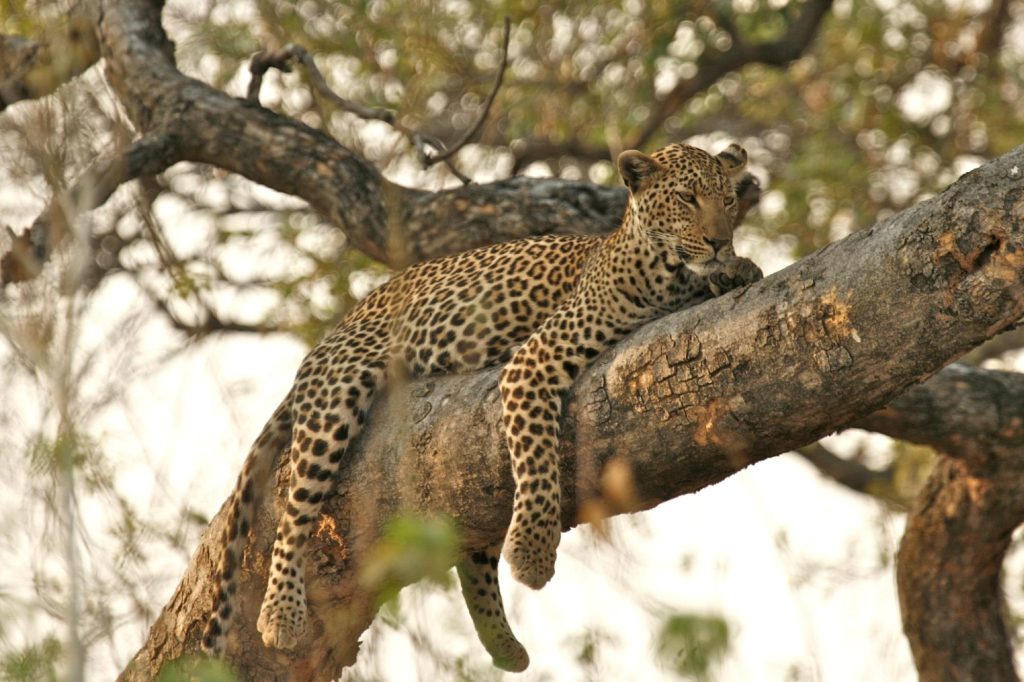
Moremi Game Reserve protects just under 5,000 square kilometres of the central and eastern Okavango Delta, and it was the first protected area in Africa created by a local community on their own land rather than by a colonial administration. Only about 30 percent of it is mainland, with the rest lying within the Delta itself. Moremi is a game reserve rather than a national park, a distinction that carried real consequences for the people living there.
How Moremi Was Created and Why It Matters
The founding story is unusual enough that it belongs at the top rather than buried in a history section.
By the mid twentieth century the BaTawana people of Ngamiland were watching wildlife decline sharply on their ancestral land, driven by uncontrolled hunting and the spread of cattle farming. Rather than wait for a government to act, they acted themselves.
The reserve was proclaimed by the BaTawana in 1963, approved at a kgotla, the traditional community assembly. It is named after Chief Moremi III, and the initiative was led by his widow, Elizabeth Pulane Moremi, who was ruling at the time. It was initially run by the Fauna Conservation Society of Ngamiland before the Department of Wildlife and National Parks took it over some years later.
It was designated a game reserve rather than a national park deliberately. That classification allowed the BaSarwa, the San people who had traditionally lived there, to remain rather than being removed, which is what national park status would have required.
Land rights in and around the reserve remain a live legal question, with San and Bayei claimants pursuing cases through Botswana’s courts in recent years.
Moremi was the first wildlife reserve in Africa established by an African community on their own land. That fact sits behind almost everything distinctive about how the Delta is managed today.
The Geography of Moremi Game Reserve

Moremi covers the eastern and central Okavango, and its shape reflects how it was assembled rather than any natural boundary.
The reserve originally protected the Mopane Tongue, a triangular tract of dry mopane woodland pushing into the Delta. The mopane grows to a good size here, in poorly drained but nutrient-rich clay sand, unlike the stunted versions around Maun.
Chief’s Island was added in the nineteen seventies. It had been the royal hunting grounds of Kgosi Moremi and is one of the largest islands in the Delta, called an island because it is surrounded by floodplain rather than open water. A further extension in the northwest, between the Jao and Nqoga rivers, brought the reserve to its current size.
Habitat runs from mopane and acacia woodland through floodplain to permanent lagoon, sometimes within a single game drive, which is what produces the diversity Moremi is known for.
Two gates serve the reserve: South Gate near Maun and North Gate near Khwai, with the headquarters at North Gate.
Xakanaxa and the Best Areas of Moremi
Not all of Moremi is equal, and a few areas carry the reserve’s reputation.
Xakanaxa Lagoon, at the tip of the Mopane Tongue, is the area most consistently rated the best in the reserve. Mopane forest meets a patchwork of deep waterways and shallow flooded ground, producing exceptional density. Leopard and cheetah are seen regularly and the antelope numbers are notable. Bog fern with fronds up to a metre long grows around the lagoon.
Third Bridge, further along the Tongue, is the other area with a strong reputation and the best-known public campsite in Botswana.
Gcodikwe Lagoon sits about an hour and a half beyond Xakanaxa and is reachable only by boat, driving being impossible. Its islands of water fig trees form one of the region’s most important heronries, nesting huge numbers of herons, ibis, egrets and storks.
Chief’s Island holds the highest concentrations of large mammals and is where the well-known camps sit, accessible by air rather than road.
North Gate at Khwai gives access to the river frontage along the reserve’s northern boundary.
Wildlife in Moremi Game Reserve
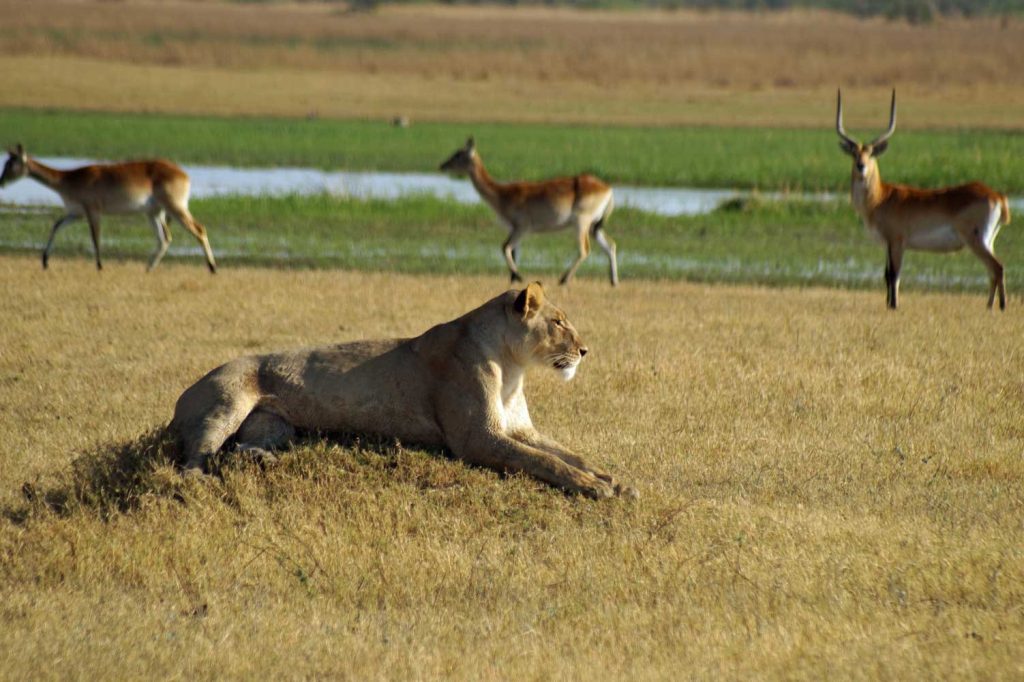
Moremi is described by people who have travelled widely as among the richest ecosystems in Africa, and the species list supports it.
All the naturally occurring large carnivores and herbivores of the region are present. Lion prides are strong, leopard are seen along the treelines, and cheetah hold in the more open country. Moremi is an important habitat for African wild dog, one of the more secure populations remaining anywhere on the continent. Pairing the reserve with a water camp is common enough that it is sold ready-made as a 5 day Okavango and Moremi safari.
Elephant, buffalo, hippo, crocodile, giraffe, zebra and blue wildebeest are all resident, alongside red lechwe on the floodplains and sitatunga in the reed beds. Both black and white rhino have been reintroduced, which makes the reserve a Big Five destination again.
Bird species run past 500, from waterbirds on the lagoons to forest dwellers in the woodland, with over a thousand plant species recorded.
The reserve forms a core part of the Okavango Delta UNESCO World Heritage Site.
Xakanaxa. Tip of the Mopane Tongue where forest meets waterway. The highest-rated game viewing in the reserve, strong for leopard, cheetah and antelope, with exceptional birdlife. Boat station for motorboat trips.
Third Bridge and the Tongue. Mopane woodland and floodplain, the classic self-drive route, and the best-known public campsite in Botswana. Wild feel with regular wildlife movement through camp.
Chief’s Island. Former royal hunting grounds, the largest island in the Delta, highest large mammal concentrations. Reached by light aircraft rather than road, and where the well-known camps sit.
Activities and Access in Moremi
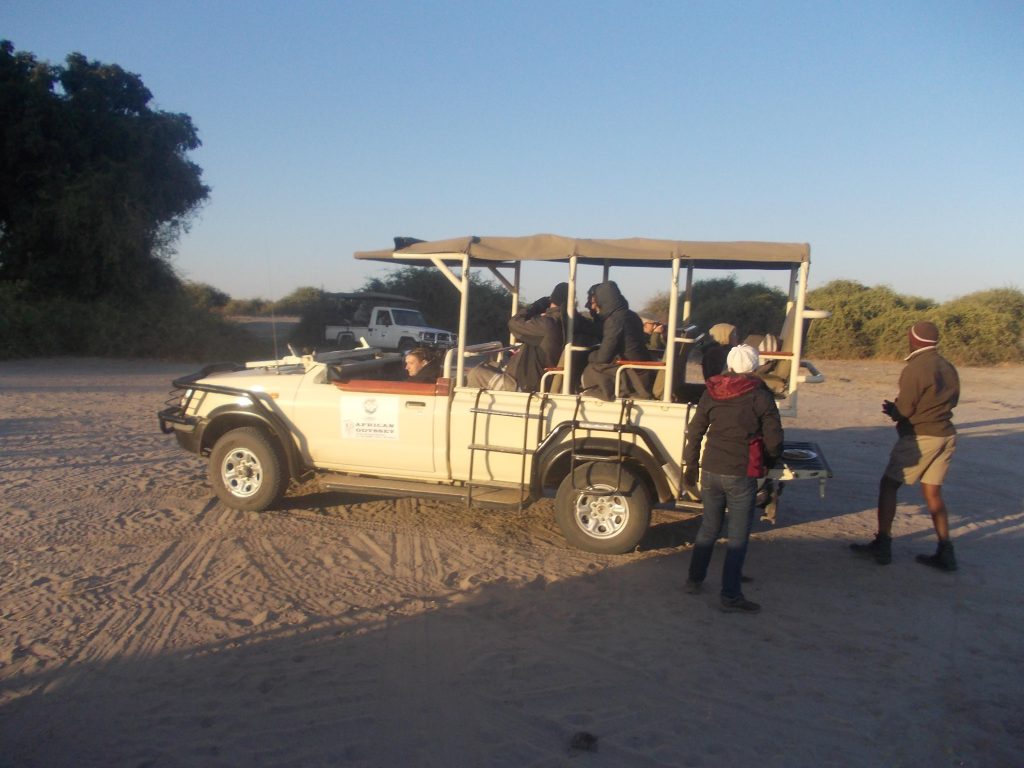
What you can do in Moremi follows from its status as a reserve rather than a concession, and that catches people out.
Game drives are the core activity. Off-road driving is prohibited, gates close at set hours, night drives are not permitted and guided walking is broadly restricted. The game viewing is strong enough that many visitors accept this without complaint.
Water activities do run. Motorboat trips launch from Xakanaxa Boat Station, and a sunset cruise from there is one of the better things to do in the reserve. Mboma Island Boat Station runs both motorboat and mokoro trips. Mokoro excursions are also offered by the operator running the Third Bridge campsite.
Booking ahead matters for all of these. Boat stations have run short of fuel and will then only take pre-booked clients.
Access is by light aircraft to camp airstrips, or by 4×4 through South Gate or North Gate for self-drivers.
Self-Driving and Camping in Moremi
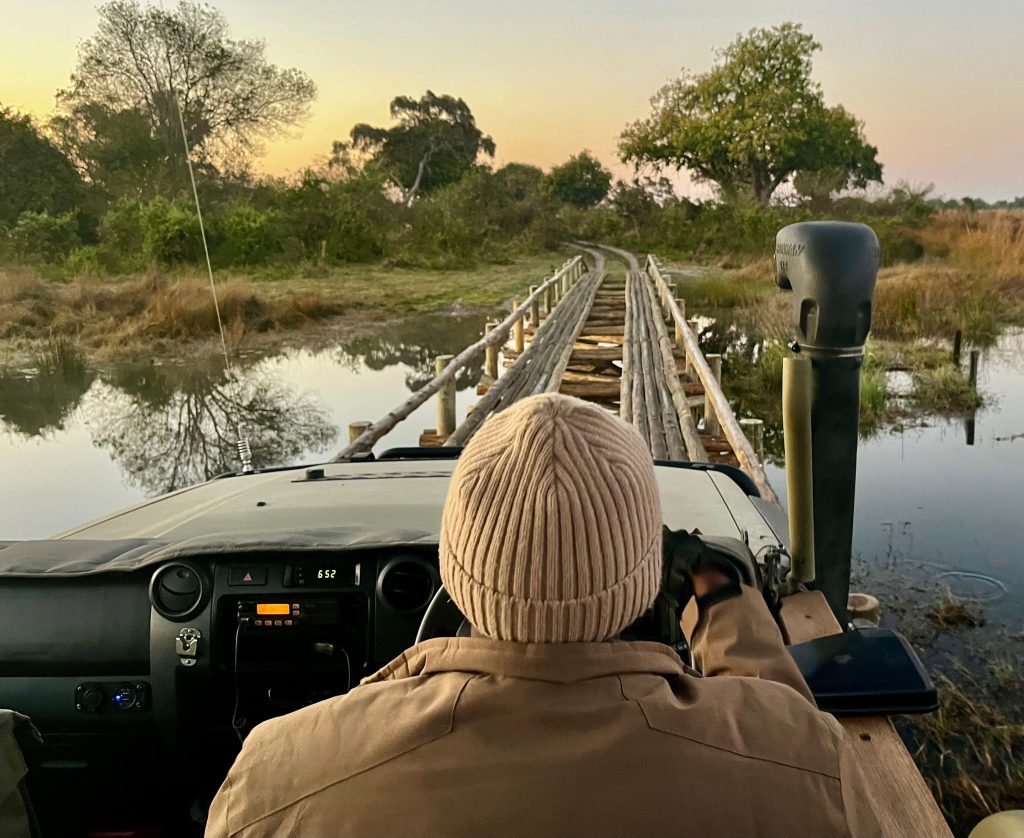
Moremi is one of the classic Botswana self-drive destinations and it demands genuine competence.
Tracks are deep sand throughout, with water crossings including the bridges that give Third Bridge its name. High clearance is not optional. After heavy rain sections become impassable, and the reserve is remote enough that recovery help is hours away.
The public campsites are Third Bridge and Xakanaxa on the Tongue, plus South Gate and North Gate at the entrances. Third Bridge and Xakanaxa are consistently rated the best, feeling the wildest and attracting the most wildlife through camp. North Gate sites along the river’s edge are excellent. South Gate is the least wild.
All are booked through the private operators now running most of Botswana’s public campsites, with park fees settled separately with the Department afterwards. Sites book out far ahead in dry season.
Camps are unfenced. Elephant and hyena move through, and the usual rules apply without exception.
The Khwai community area immediately north of the reserve permits night drives, which Moremi itself does not. Self-drivers and mobile safaris frequently pair a few nights inside the reserve with a few at Khwai for exactly that reason.
Best Time to Visit Moremi Game Reserve
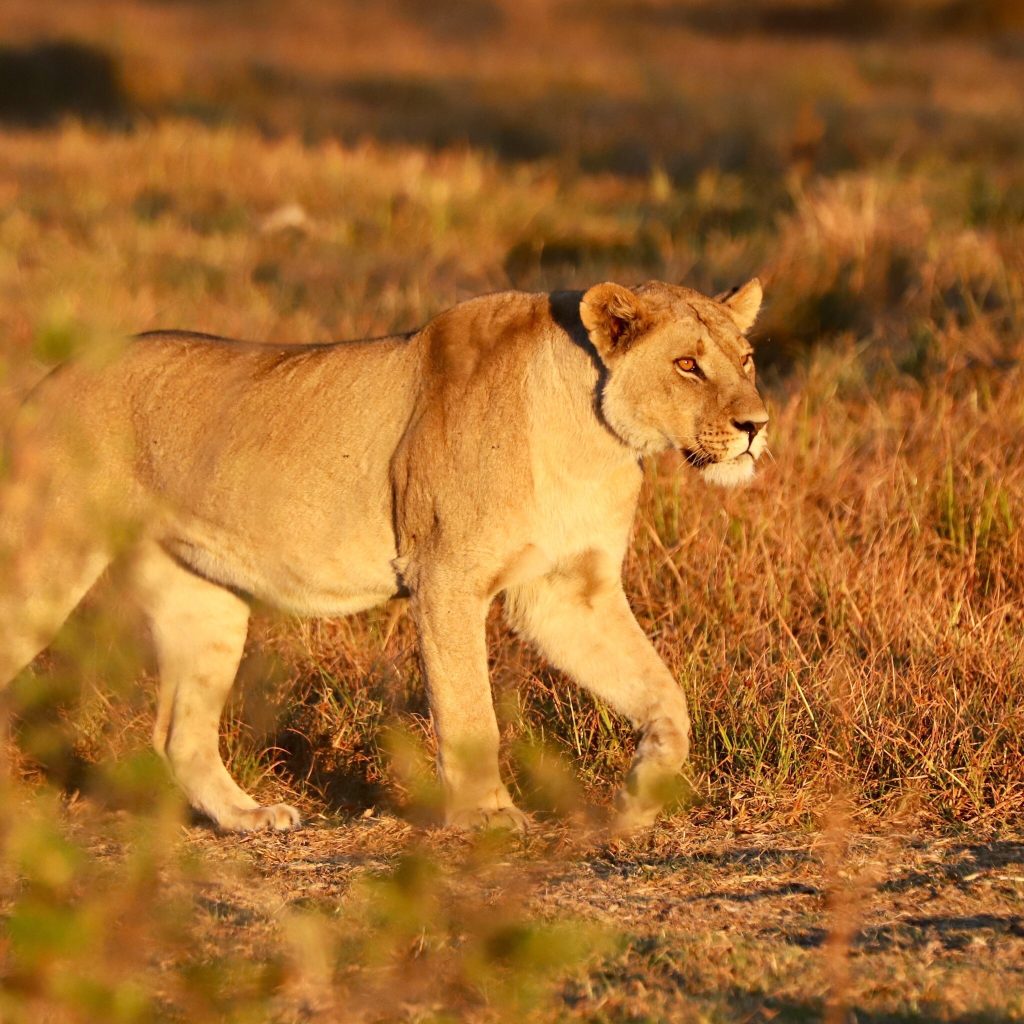
Moremi is at its best in the dry season, with game viewing peaking from July through October as seasonal pans dry and wildlife concentrates on permanent water.
September and October are the sharpest months for predators, since surface water elsewhere has gone and the bush has thinned to the point where a leopard is visible at distance. October is also punishingly hot, day and night, until the rains break in late November or early December.
May through August brings cold nights and pleasantly warm days under clear skies, with morning drives around 6°C to 7°C in June and July.
The green season greens the reserve and disperses the game, with birding at its strongest and rates falling considerably. Water levels also matter, since the Okavango flood peaks around July after travelling four months from Angolan rainfall.
Frequently Asked Questions About Moremi Game Reserve
How big is Moremi Game Reserve?
Just under 5,000 square kilometres, with figures commonly cited between 3,900 and 5,000 depending on which boundary extensions are counted. It covers the central and eastern Okavango Delta, and only around 30 percent of it is mainland, with the bulk lying within the Delta itself. The reserve grew from an original core protecting the Mopane Tongue, with Chief’s Island added later and a northwestern extension after that.
Why is Moremi a game reserve and not a national park?
The designation was deliberate. Game reserve status allowed the BaSarwa, the San people who had traditionally lived on the land, to remain there, which national park classification would not have permitted. The reserve was proclaimed by the BaTawana community in 1963 at a kgotla, making it the first protected area in Africa established by a local African community on their own land rather than by a colonial administration.
What is the best area of Moremi Game Reserve?
Xakanaxa Lagoon at the tip of the Mopane Tongue is the area most consistently rated highest, where mopane forest meets deep waterways and shallow flooded ground, producing exceptional density and regular leopard and cheetah sightings. Third Bridge along the same Tongue is the other strong area and holds the best-known public campsite in Botswana. Chief’s Island carries the highest large mammal concentrations and is reached by air.
Can you do night drives in Moremi?
No. As a game reserve under Department management, Moremi prohibits night drives along with off-road driving, and guided walking is broadly restricted. Gates close at set hours. The Khwai community area immediately north of the reserve permits night drives because it sits outside the boundary, which is why many itineraries pair a few nights inside Moremi with a few at Khwai.
Can you self-drive in Moremi Game Reserve?
Yes, and it is one of Botswana’s classic self-drive routes, though it needs a properly equipped high-clearance 4×4 and real deep sand experience. Tracks are deep sand throughout with water crossings including the bridges at Third Bridge. Sections become impassable after heavy rain and recovery help is hours away. Campsites at Third Bridge, Xakanaxa, North Gate and South Gate must be booked well ahead through private operators.
What wildlife can you see in Moremi?
All the naturally occurring large carnivores and herbivores of the region. Lion prides are strong, leopard are seen along the treelines and cheetah hold in open country, while Moremi is an important habitat for African wild dog with one of the more secure populations remaining in Africa. Elephant, buffalo, hippo, crocodile, giraffe, zebra, red lechwe and sitatunga are all present, and both black and white rhino have been reintroduced. Bird species run past 500.
Booking Your Botswana Trip
The safari companies and tour operators listed on this website put trips like this together for a living and know which camps, guides and routes actually deliver. We are an independent guide to Botswana; we do not book or sell tours ourselves.
When you are ready, arrange your safari, tour or holiday with one of the recognised operators listed here. Tell them your dates and what matters most, and a real person, not a form, will handle the itinerary, park bookings and logistics for you.