Mammals of Botswana

Botswana holds around 160 mammal species across habitats running from permanent wetland to semi-arid desert, and the country’s distinction is that the same species behave differently in each. Lions here go months without drinking in the Kalahari and hunt buffalo in Delta floodwater. This page sets out what lives where and which season suits each group, with individual species covered in more depth elsewhere on the site.
Why Botswana’s Mammals Are Unusual
The variation matters more than the species count and it comes down to habitat range.
Botswana contains permanent papyrus swamp, seasonal floodplain, riverine forest, mopane woodland, open grassland, salt pan and Kalahari sandveld, all within a few hundred kilometres.
Populations have adapted separately to each. Kalahari lions carry dark manes, range across huge territories in small prides and can go months without drinking. Delta lions have heavier forequarters from swimming and hunt buffalo in daylight.
Elephant, lechwe, gemsbok and springbok show the same pattern, each specialised to one end of the range. Lechwe run faster through water than on land, which is precisely backwards from every other antelope, while gemsbok survive without drinking at all by taking moisture from plants and tolerating body temperatures that would kill most mammals.
Two further factors matter. Botswana protects roughly 38 percent of its territory, and much of it is unfenced, which allows genuine ecosystem function and movement across international borders.
That produces both the largest elephant population in Africa and the longest terrestrial mammal migration on the continent. The migration is a good illustration of why the fencing question matters: veterinary cordon fences cut the routes for decades and the movement stopped entirely, then resumed once fences were removed, across generations of animals that had never made the trip.
The interesting thing about Botswana’s mammals is not how many species there are but how differently the same species behave a few hundred kilometres apart.
The Large Predators
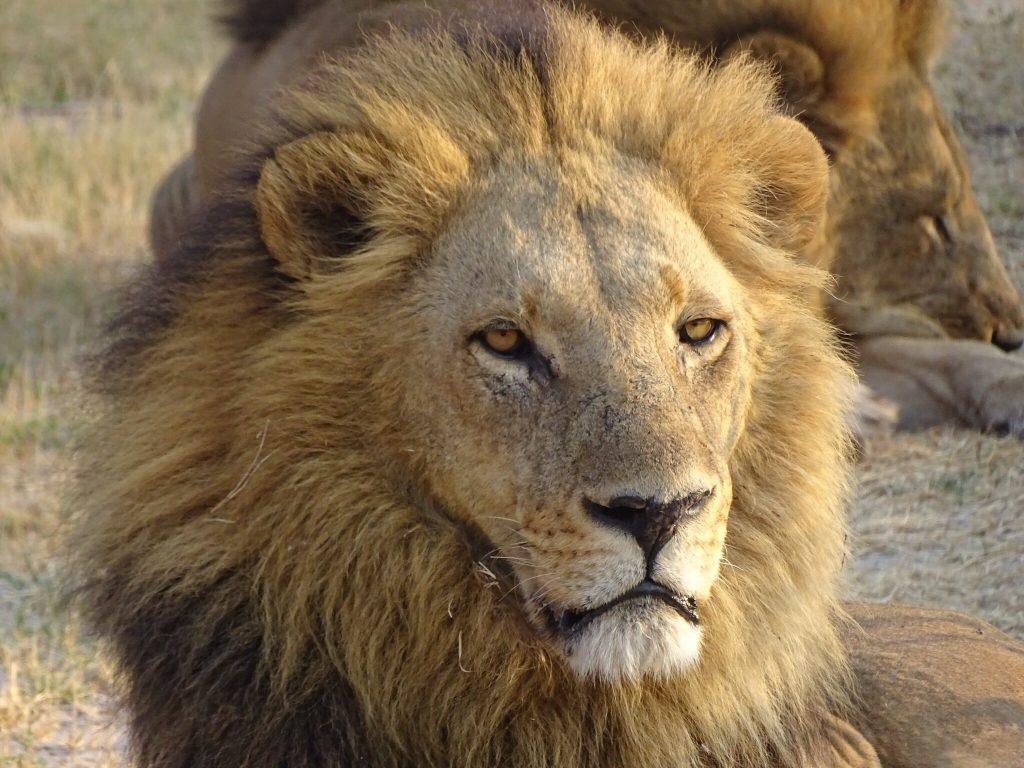
Botswana’s predator viewing is among the strongest in Africa and each species has a different centre of gravity.
Lion is widespread, with the northern parks and concessions delivering large prides and the Kalahari holding black-maned desert lions on an inverted calendar. Savuti’s prides once specialised in hunting elephant.
Leopard reaches high densities in riverine forest, particularly Khwai, eastern Moremi and the Linyanti, and viewing depends heavily on whether off-road driving and night drives are permitted where you stay.
Cheetah is best in the Kalahari and on the pans, and more than 70 percent of Botswana’s cheetahs live outside protected areas because they are outcompeted inside them.
African wild dog makes Botswana one of its last strongholds, with roughly 130 packs, and denning season between May and September makes sightings plannable.
Spotted and brown hyena occupy the north and the Kalahari respectively, with spotted hyenas killing most of their own food rather than scavenging.
The Large Herbivores

The animals that draw most visitors and where each is best seen.
Elephant numbers around 130,000, the largest population in Africa, concentrating on the Chobe riverfront and the Linyanti waterways between July and October.
Buffalo gathers in mega-herds exceeding 2,000 in the Mababe Depression and a thousand or more along the Chobe floodplains in the dry months.
Hippo is abundant in the Delta and along the Chobe, and its nightly grazing routes cut the channels that keep Delta water moving.
Giraffe is widespread, and Botswana unusually holds both subspecies of southern giraffe, with Angolan giraffe in the Kalahari and South African giraffe in the north.
Zebra is the national animal and makes the longest terrestrial migration in Africa, between the Chobe and the Makgadikgadi.
Rhino is the exception. Both species have been driven to local extinction twice and reintroduced twice, and sightings are now uncommon outside Khama Rhino Sanctuary near Serowe.
North, May to October. Elephant, buffalo, lion, leopard and wild dog concentrated on permanent water as inland pans dry. Chobe, Linyanti, Moremi, Khwai and the Delta concessions.
Desert, December to April. Black-maned lion, cheetah, gemsbok, springbok, brown hyena and meerkats, with rain greening the fossil valleys and drawing back dispersed game.
Year round. Hippo and crocodile on permanent water, giraffe and kudu across the woodlands, and the nocturnal species on any concession or community area permitting night drives.
Antelope
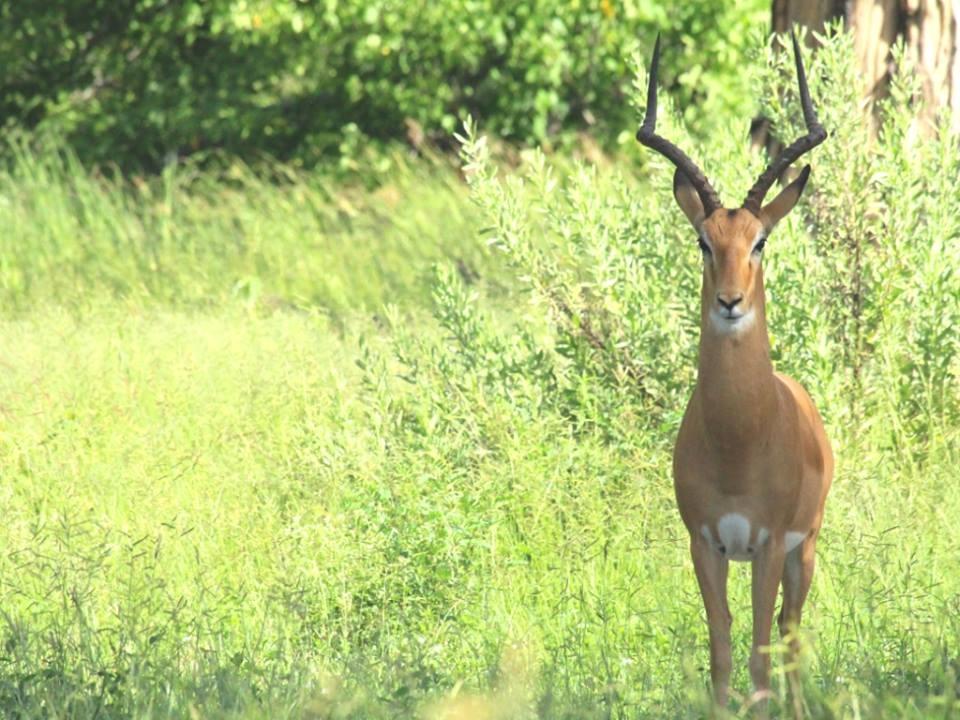
The group that shows Botswana’s range better than any other, because species have specialised at both extremes.
Water specialists include red lechwe, built for running through shallow water with splayed hooves and water-repellent legs, and sitatunga, genuinely aquatic and living in permanent papyrus swamp.
Desert specialists include gemsbok, surviving without drinking by extracting moisture from plants, and springbok, southern Africa’s only gazelle.
Woodland species include sable, roan, greater kudu and bushbuck.
Open country holds tsessebe, the ones standing on termite mounds, and blue wildebeest, which move with the zebra because zebra crop the long grass that exposes what wildebeest need.
Puku occurs along the Chobe riverfront in one of very few regional populations.
Steenbok, duiker, eland, red hartebeest, waterbuck and reedbuck fill out the list, with eland the largest antelope in the world and surprisingly shy for its size.
Impala are abundant everywhere and routinely overlooked, which is a mistake, since they hold the whole predator system up. Learning to distinguish impala from puku and lechwe along the Chobe is one of the more satisfying small skills of a Botswana trip, and the black M marking on an impala’s rump is the giveaway that neither of the others carries.
The Small and Nocturnal
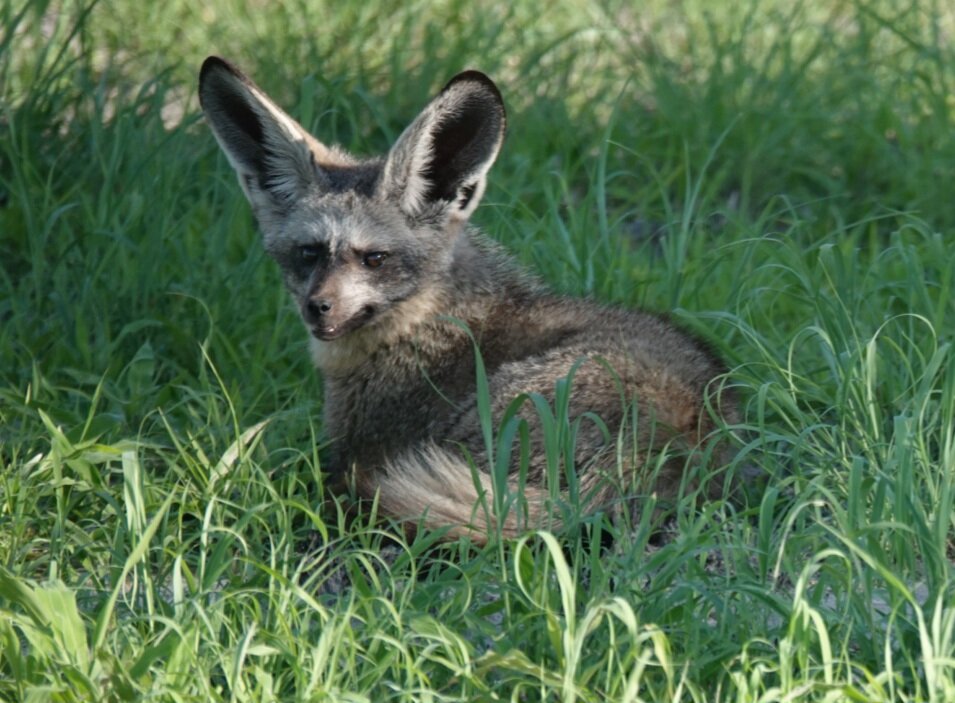
The species experienced safari travellers actually pursue, and the ones most visitors never see.
Aardvark is the great prize, a solitary termite-eater whose burrows are later used by warthog, porcupine and denning wild dogs, which makes it an ecosystem engineer as much as a rare sighting.
Pangolin is rarer still and among the most trafficked animals on earth, with Khwai holding an unusual reputation for them.
Meerkats in the Makgadikgadi are semi-habituated at several camps and will climb a seated visitor for the elevation.
Honey badger, serval, caracal, African wildcat, aardwolf, bat-eared fox, porcupine, springhare, civet and genet all occur and are largely nocturnal.
Seeing any of them means a night drive, which national parks prohibit and concessions and community areas permit. The technique is eyeshine: a spotter sweeps a lamp across the bush and an experienced guide identifies species from the colour of the reflection, its height and whether one eye or two are showing, since predators’ eyes face forward and herbivores’ sit on the sides of the head.
The species that separate an experienced Botswana traveller’s list from a first-timer’s are almost all nocturnal, and they are gated by a single booking decision. A week in Moremi and Chobe will show you no aardvark, no pangolin and no serval, whatever the camps cost.
Where the Groups Overlap
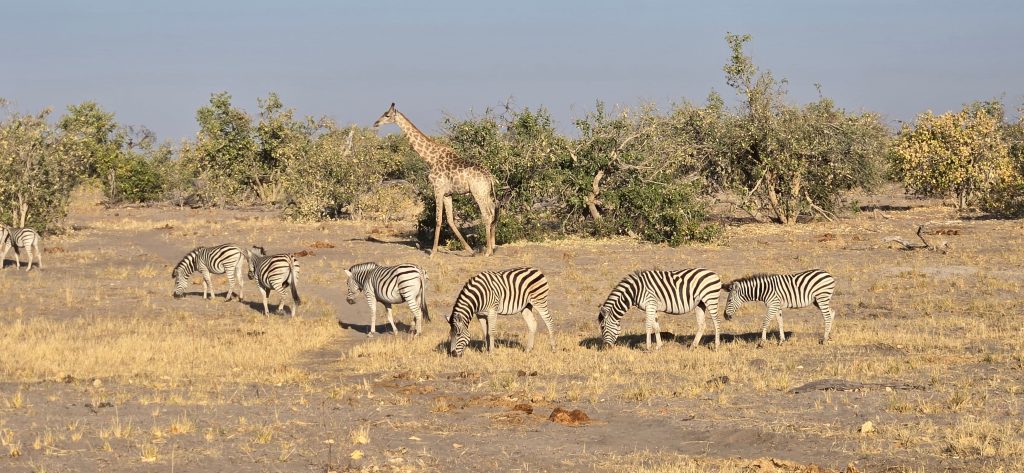
A practical way to think about routing.
The Chobe riverfront gives elephant, buffalo, hippo, crocodile and lion with no charter flight required, and boat safaris that put you level with the water species.
Moremi, Khwai and the Delta concessions give the strongest predator viewing alongside lechwe, sitatunga and the water-adapted species, with Khwai adding the nocturnal cast.
Linyanti, Selinda and Kwando deliver enormous elephant concentrations and the best wild dog odds with very few vehicles.
The Kalahari and the pans hold cheetah, brown hyena, meerkats, gemsbok, springbok and the desert-adapted lions, on the opposite calendar to everywhere else.
A trip covering the north and the desert sees roughly twice the range of one covering either alone, which is the argument for ten days rather than seven. It also means accepting that one leg will be at its seasonal best and the other merely good, since the two halves of the country peak six months apart and no itinerary resolves that.
Frequently Asked Questions About Mammals in Botswana
How many mammal species are in Botswana?
Around 160, across habitats running from permanent papyrus swamp and seasonal floodplain through riverine forest and mopane woodland to open grassland, salt pan and Kalahari sandveld. What makes Botswana unusual is less the count than the variation, since populations have adapted separately to each habitat and the same species behaves quite differently a few hundred kilometres apart.
What is the best place to see mammals in Botswana?
It depends on the group and the season. The Chobe riverfront gives elephant, buffalo, hippo, crocodile and lion with no charter flight needed. Moremi, Khwai and the Delta concessions give the strongest predator viewing plus water-adapted antelope. Linyanti, Selinda and Kwando deliver huge elephant concentrations and the best wild dog odds. The Kalahari and pans hold cheetah, brown hyena, meerkats and desert lions on the opposite calendar.
When is the best time to see mammals?
In the north, May to October, as inland pans dry and game concentrates on permanent water, with September and October sharpest. In the Kalahari and on the pans the calendar inverts, with December to April the peak as rain greens the fossil valleys and draws back dispersed game. A trip covering both regions sees roughly twice the range of one covering either alone.
What mammals is Botswana best for?
Elephant above all, with around 130,000 animals forming the largest population in Africa and the densest concentration on the continent along the Chobe riverfront. African wild dog, with Botswana one of its last strongholds at roughly 130 packs. Cheetah, with the country holding a quarter to a third of every wild cheetah left. And water-adapted antelope including red lechwe and sitatunga, which exist almost nowhere else in the same abundance.
Can you see rhino in Botswana?
Not reliably on a standard northern safari. Both species were driven to local extinction twice and reintroduced twice, and severe poaching pressure has made sightings in the Delta uncommon, with animals relocated to more defensible areas. Khama Rhino Sanctuary near Serowe on the eastern corridor is the dependable option, a community trust holding both species with a military-patrolled perimeter and unusually consistent sightings.
How do I see the smaller nocturnal mammals?
By booking a night drive, which means staying on a private concession or in a community area such as Khwai, since national parks require vehicles off the roads by dark. That single decision determines whether you see aardvark, pangolin, serval, honey badger, civet, genet, porcupine and springhare, or none of them. A week in Moremi and Chobe will show you none, whatever the camps cost.
Booking Your Botswana Trip
The safari companies and tour operators listed on this website put trips like this together for a living and know which camps, guides and routes actually deliver. We are an independent guide to Botswana; we do not book or sell tours ourselves.
When you are ready, arrange your safari, tour or holiday with one of the recognised operators listed here. Tell them your dates and what matters most, and a real person, not a form, will handle the itinerary, park bookings and logistics for you.