Reptiles and Amphibians of Botswana
Botswana holds somewhere between 130 and 155 reptile species, including around 72 snakes, most of which are not venomous, alongside roughly 40 amphibians. The Okavango Delta accounts for a disproportionate share of both, with over 70 reptile species and 33 amphibians recorded there. Most visitors see very little of this, which is a shame, because the frogs on a mokoro trip are among the better things in the Delta.
What Botswana Holds
The numbers vary between sources and the range is worth stating rather than picking one.
Reptile totals are given as over 130 species by some accounts and 155 by others, which reflects different survey areas and taxonomic decisions rather than disagreement about what lives here.
Around 72 snake species are recorded, and it is worth emphasising that most of them are not venomous.
Other reptile groups include skinks, sand lizards, geckos, chameleons, agamas, monitor lizards, terrapins and tortoises.
Amphibians number around 40 species nationally, which is a surprisingly high tally for a country this dry, and 33 of those have been documented in the Okavango Delta alone.
The Delta and the Linyanti are recognised amphibian hotspots, because permanent streams, swamps and seasonal floodplains create a range of niches that the surrounding Kalahari does not.
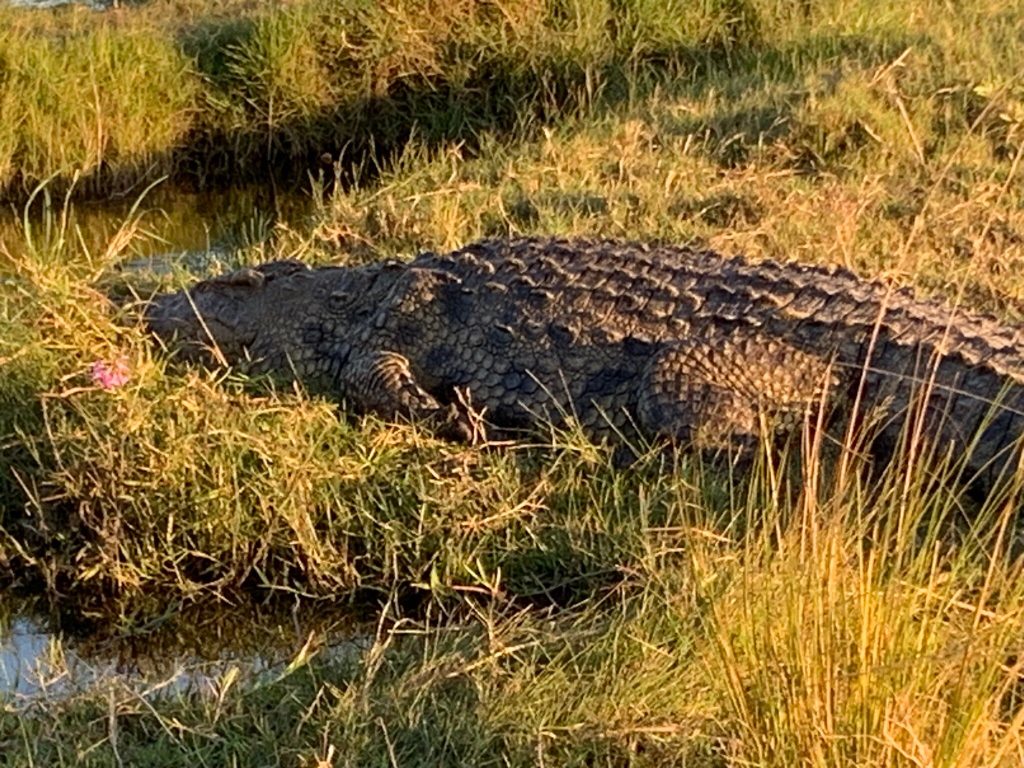
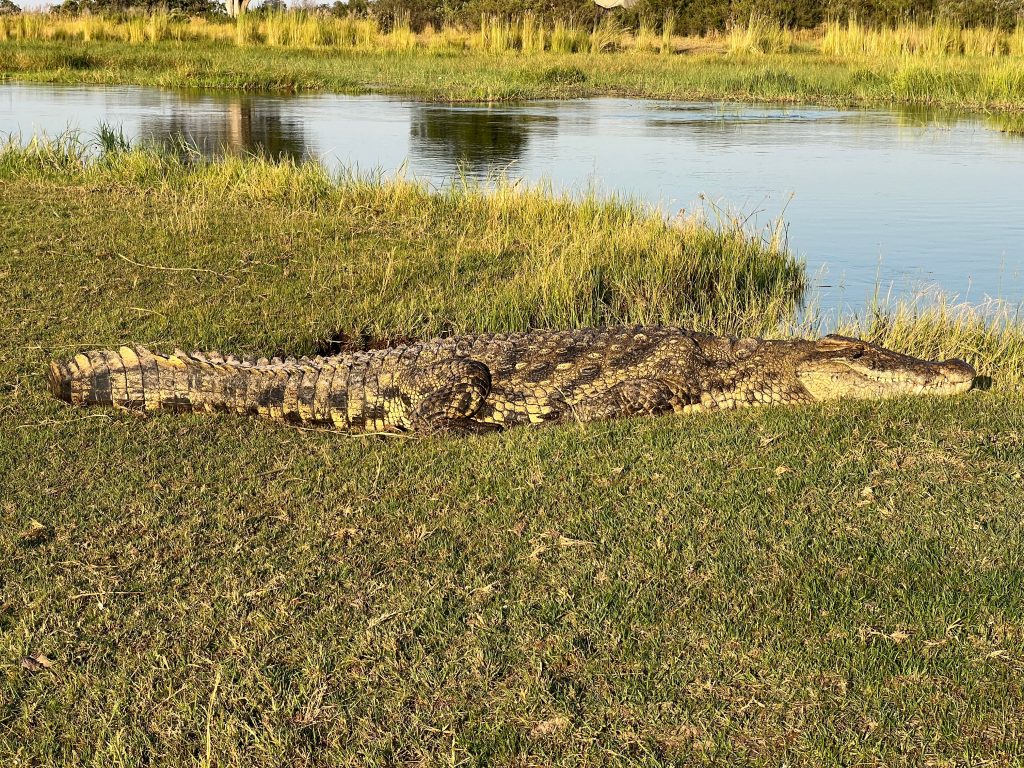
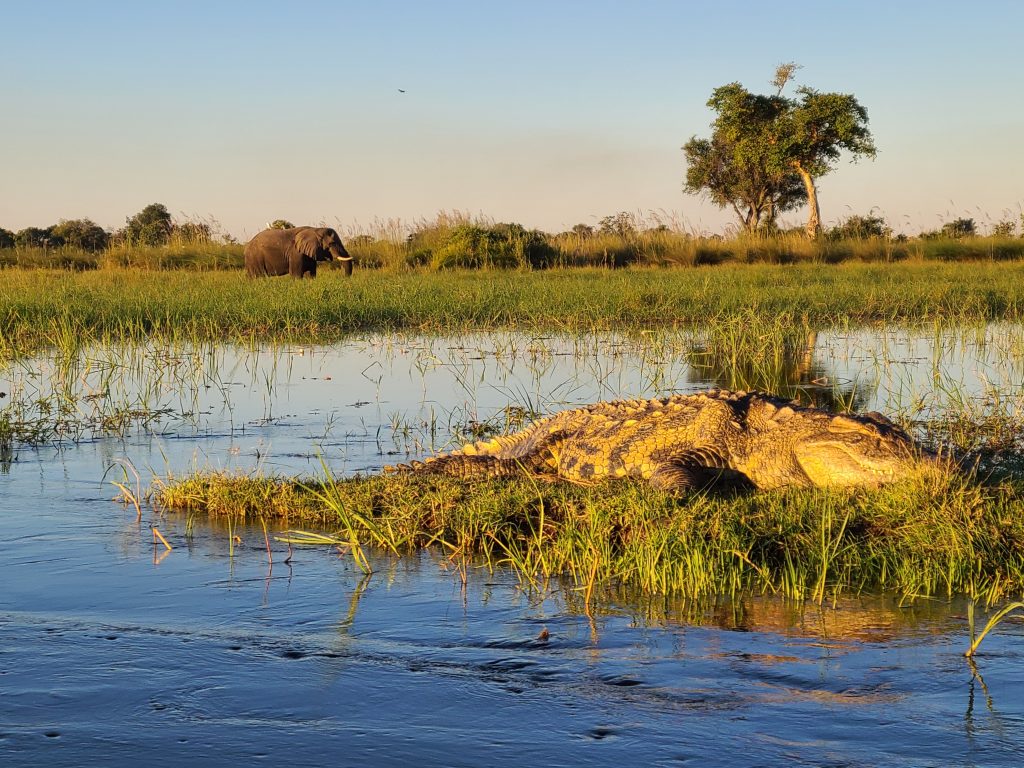
The Nile crocodile sits at the top of this group and has its own page on this site, since it functions as an apex predator and a keystone species in the Delta rather than simply another reptile on a list. Its population has declined substantially and almost all breeding now happens in the Panhandle, which makes it the one species here with a genuine conservation story attached.
Around 40 amphibian species live in a country that is 70 percent semi-arid sandveld, and 33 of them are in the Okavango. The Delta is doing almost all the work.
Snakes
Worth covering properly, since it is the group visitors ask about most and understand least.
Most of Botswana’s roughly 72 snake species are harmless. The venomous ones that matter are the puff adder, the Mozambique spitting cobra, the snouted cobra, the black mamba and the boomslang.
The puff adder is responsible for more snakebites in Africa than any other species, not because it is aggressive but because it relies on camouflage and does not move when approached. It gives an impression of sluggishness and has the fastest strike of any African snake.
The black mamba has the fearsome reputation and accounts for far fewer bites than the puff adder and the Mozambique spitting cobra between them.
The African rock python is the continent’s largest snake, reaching five metres, non-venomous and killing by constriction. It is fairly common and difficult to see.
The boomslang is arboreal and highly venomous, feeding largely on chameleons and birds’ eggs in the trees.
Sightings are rare. Snakes avoid people and strike only when surprised or cornered.
Lizards, Monitors and Tortoises
The group you are most likely to actually see.
Water monitors, also called leguaans, reach over two metres and are common along permanent water, feeding on fish, crabs, mussels, small animals and birds. Watching one move is genuinely striking, with an almost serpentine grace.
Rock monitors occur further from water in rocky outcrops and crevices, growing to around 1.5 metres.
Flap-necked chameleons are the ones guides pick out on night drives, since a single side-facing eye reflects silver in a spotlight from a surprising distance.
Geckos and skinks are everywhere, particularly around camp buildings and in the deep cracks of acacia bark, which is a paradise for them.
Leopard tortoise is the large tortoise of the bushveld, and the Okavango hinged terrapin occurs in the Delta.
The barking gecko and the giant plated lizard are both worth listening and looking for. The barking gecko in particular is one of the defining sounds of a Kalahari evening, a sharp repeated click carried across open ground at dusk, and guests frequently spend a whole trip hearing it without ever learning what it is.
Frogs and the Sound of the Delta
Amphibians are the group that most rewards paying attention, and the reason is acoustic.
The Okavango at night is loud with frogs, and that chorus is a defining part of the experience that nobody books for.
Painted reed frogs and Angolan reed frogs cling to reeds within touching distance of a mokoro, and both make excellent photographic subjects from the low vantage a dugout provides.
Long reed frogs occur in the same habitat.
African bullfrogs are enormous and appear after rain, and the guttural toad is common throughout.
In the Central Kalahari, frogs emerge after the summer rains to breed in temporary pools, then disappear underground for months. That ability to wait out the dry season buried is how amphibians survive in a place with no permanent water at all.
Okavango Delta. Over 70 reptile species and 33 amphibians. Nile crocodile, water monitor, Okavango hinged terrapin, Barotse water snake, and reed frogs visible from a mokoro at arm’s length.
Makgadikgadi and the pans. Rock and water monitors, flap-necked chameleon, leopard tortoise, black mamba, snouted cobra, boomslang in the trees and geckos in acacia bark.
Central Kalahari. Frogs emerging after summer rains to breed in temporary pools before burrowing underground for months, alongside desert-adapted lizards and snakes.
How to Actually See Them
These species are missed by almost everyone, and a small change of habit fixes that.
Mokoro trips are the best opportunity. Sitting at water level, moving silently, you pass reed frogs at arm’s length and see terrapins and water snakes that a motorboat would push away.
Night drives reveal chameleons, geckos and snakes that daylight hides, and the eyeshine technique that works on mammals works on reptiles too.
Walking safaris put you at the right pace and the right height. A guide will point out tracks, skinks and tortoises that a vehicle passes at speed.
Ask your guide. Most know this group well and rarely get asked, and a guide who realises you are interested will start finding things.
Camp buildings and lodge decks are productive, particularly for geckos, and the frog chorus needs nothing more than sitting still after dark.
Safety and Sense
The practical position is reassuring and worth setting out plainly.
Snake sightings on safari are rare. Snakes shy away from people and attack only if surprised or cornered, and most guides go long stretches without seeing one.
Sensible precautions cover it: watch where you put your feet and hands, use a torch walking at night, do not reach into holes or under logs, and shake out boots in the morning.
If you do see a snake, stand still and let it move away rather than trying to get past it or photograph it closely.
Camps carry first aid provision and have evacuation procedures, and remote areas maintain radio or phone contact.
Scorpions occur in the Kalahari, and while unpleasant they are not deadly.
The greater risk on any Botswana trip is the sun and dehydration, not the reptiles.
It is worth adding that these animals suffer from the reputation more than people suffer from the animals. Reptiles and amphibians are an integral link in the food chains supporting mammals, fish and birds, and most are harmless and useful. Botswana has its own deep-rooted misconceptions about them, which conservation writers have been trying to shift for decades, and a visitor who takes an interest is pushing in a helpful direction.
Take a mokoro trip with the aim of looking down rather than out. Reed frogs, terrapins, water snakes and dragonflies sit within a metre of the hull, and a poler who knows you are interested will stop for them rather than poling past toward the elephants.
Frequently Asked Questions About Reptiles and Amphibians in Botswana
How many reptile species are in Botswana?
Between roughly 130 and 155 depending on the source, which reflects different survey areas and taxonomic decisions rather than genuine disagreement. That includes around 72 snake species, most of which are not venomous, alongside skinks, sand lizards, geckos, chameleons, agamas, monitor lizards, terrapins and tortoises. The Okavango Delta alone holds over 70 reptile species, including Nile crocodile, water monitor and the Okavango hinged terrapin.
Are there dangerous snakes in Botswana?
Yes, though sightings are rare and most of the roughly 72 species are harmless. The venomous ones that matter are the puff adder, Mozambique spitting cobra, snouted cobra, black mamba and boomslang. The puff adder causes more snakebites in Africa than any other species, not through aggression but because it relies on camouflage and does not move when approached, and it has the fastest strike of any African snake.
How many frogs live in Botswana?
Around 40 amphibian species nationally, which is a surprisingly high tally when roughly 70 percent of the country is semi-arid sandveld. The Okavango Delta accounts for 33 of them, and the Delta and Linyanti are recognised amphibian hotspots because permanent streams, swamps and seasonal floodplains create niches the surrounding Kalahari cannot. Frogs also emerge in the Central Kalahari after summer rains to breed in temporary pools.
What is the best way to see reptiles and amphibians?
Mokoro trips, because sitting at water level and moving silently puts you within arm’s length of reed frogs and lets you see terrapins and water snakes a motorboat would push away. Night drives reveal chameleons, geckos and snakes that daylight hides. Walking safaris work at the right pace and height. Most guides know this group well and rarely get asked, so saying you are interested changes what gets pointed out.
Should I worry about snakes on a Botswana safari?
Not much. Snake sightings are rare, since snakes shy away from people and strike only when surprised or cornered, and many guides go long stretches without seeing one. Watch where you put feet and hands, use a torch at night, avoid reaching into holes or under logs, and shake out boots in the morning. If you see one, stand still and let it move away. The sun and dehydration are the greater risk.
What are water monitors?
Large lizards, also called leguaans, reaching over two metres and common along permanent water in the Delta and along the rivers. They feed on fish, crabs, mussels, small animals and birds, and move with an almost serpentine grace that surprises people who expect lizards to scuttle. Rock monitors are the drier country equivalent, growing to around 1.5 metres and living in rocky outcrops and crevices well away from water.
Booking Your Botswana Trip
The safari companies and tour operators listed on this website put trips like this together for a living and know which camps, guides and routes actually deliver. We are an independent guide to Botswana; we do not book or sell tours ourselves.
When you are ready, arrange your safari, tour or holiday with one of the recognised operators listed here. Tell them your dates and what matters most, and a real person, not a form, will handle the itinerary, park bookings and logistics for you.