Solo Travel in Botswana

Solo travel in Botswana is straightforward on safety and expensive on arithmetic, because the single supplement can add 25 to 75 percent to a nightly rate in the most costly safari country in Africa. The ways around it are real: camps that waive or reduce the supplement, set-date group departures, mobile camping safaris and green season travel. Camps run communal dining as standard, which makes solo travel unusually sociable here.
The Single Supplement Problem
This is the central issue and it is worth grasping properly before you shop.
Safari camps price accommodation on the basis of two guests sharing a tent. When one person occupies it alone, the operator loses the second fare and charges a supplement to compensate.
That supplement typically runs between 25 and 75 percent of the per person rate, with figures of around 300 US dollars per night reported at some Delta camps and 200 to 600 quoted across whole trips depending on length and standard.
In a country that is already the most expensive safari destination in Africa, adding 50 percent frequently pushes a trip out of reach entirely.
The same arithmetic applies to vehicles. A solo traveller on a private safari carries the full daily vehicle and guide cost alone, at around 350 US dollars per day, where two people sharing pay roughly half that each. The biggest saving available anywhere in safari pricing is going from one person to two.
Some operators actively look after solo travellers and others quietly avoid them, preferring two guests in a tent. Which camp you are dealing with becomes obvious the moment you ask about the supplement.
How to Avoid or Reduce It
Four approaches work and they can be combined.
Camps that waive it. A handful of operators do not charge a single supplement at all, which opens some genuinely luxurious camps to solo travellers at the shared rate. Others charge a reduced supplement of around 25 to 30 percent, which is far more manageable than 50.
Green season. Several camps that charge a supplement in peak season drop it entirely in the low season, and green season rates are already 30 to 45 percent below peak. The two savings compound.
Set-date group departures. Joining a scheduled trip spreads the vehicle and guide cost across a group, and many operators price these per person without a supplement.
Mobile camping safaris. Shared group camping trips start around 350 US dollars per person per day against 450 for a private safari, and the social structure suits solo travellers.
Ask directly and early. Supplement policy varies enormously between operators and is rarely displayed prominently.
Botswana Is Sociable for Solo Travellers
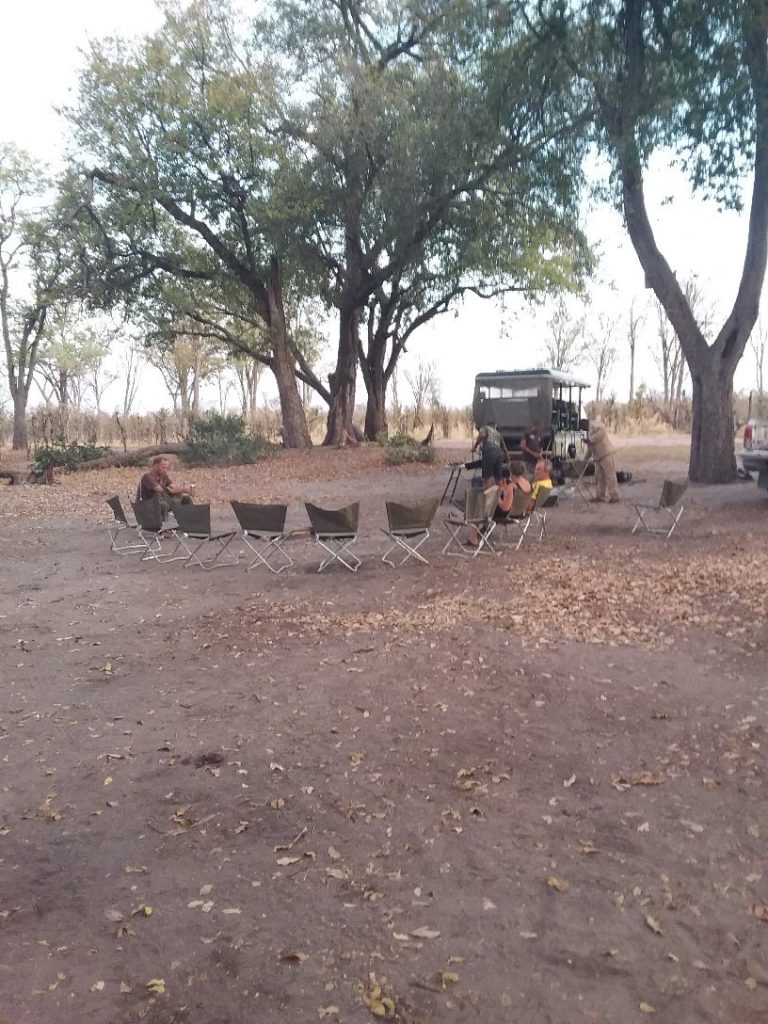
This is the part people worry about unnecessarily.
Most safari camps run communal dinners as a matter of course, with guests eating together at one long table alongside the guides. For a solo traveller that is an automatic introduction rather than an awkward one.
Small camps are better than large ones for this. A property with six guests produces conversation in a way a forty-room lodge does not.
Shared game drives put you in a vehicle with the same three or four people for several days, which builds acquaintance quickly.
Group camping trips and mobile safaris are the most sociable of all, with shared vehicles, communal meals and campfires, and many solo travellers finish them with friends.
The people you meet on a Botswana safari are self-selecting: they have travelled a long way and paid a lot to look at animals, which turns out to be a reasonable basis for conversation.
Safety for Solo Travellers
Botswana is among Africa’s safest safari destinations and the practical position is reassuring.
On a guided safari you are never genuinely alone. Professional licensed guides accompany every activity, camps have staff present around the clock, and the entire structure is supervised.
The risks in camp are wildlife rather than people. Camps are unfenced, elephant and hippo walk through them, and the staff escort between tent and dining area after dark exists for that reason. Use it every time.
In towns, ordinary precautions apply. Petty crime rather than violence is the concern in Gaborone, Maun and Kasane, so keep valuables out of sight, use licensed taxis with blue plates and have a hotel call one after dark.
Solo hiking on Kgale Hill is the one specific thing to avoid, since incidents there are documented and hiking in a group is the standard advice.
Self-driving alone in remote areas is a different proposition entirely and needs real experience, a satellite phone and ideally a convoy.
Women travelling alone report Botswana as comfortable, and the guided safari structure is a large part of why. You are met at the airport, transferred, flown, guided and escorted throughout, with very little unstructured time in unfamiliar public space. The towns need the same sense any city anywhere does, and the bush portion of a trip is among the more supervised environments a solo traveller is likely to find anywhere.
Camps that waive the supplement. A handful charge nothing extra for single occupancy, opening luxurious properties at the shared rate. Others charge a reduced 25 to 30 percent rather than 50 or more.
Set-date group departures. Scheduled trips spread vehicle and guide costs across a group and are frequently priced per person without a supplement. Instant company built in.
Mobile camping. Shared group trips from around 350 US dollars per person per day, with communal meals and campfires. The most sociable option and among the cheapest.
Guided Self-Drive for Solo Travellers
A newer option worth knowing about, sitting between independence and safety.
Guided self-drive trips have you driving your own 4×4 in convoy behind a professional guide, which gives the freedom of self-driving without the risk of tackling remote sand and water crossings alone.
Some of the terrain covered is genuinely challenging, and prior off-road experience, while not always required, is strongly recommended.
These trips typically run twelve to sixteen days and suit adventurous solo travellers who would find a lodge circuit too passive.
Single supplements may still apply to accommodation, though camping-based versions reduce that considerably.
The convoy format also solves the isolation problem, since you are travelling with a group even while driving your own vehicle.
Choosing Camps as a Solo Traveller

A few criteria matter more when travelling alone.
Ask about communal dining. Camps that serve guests at separate tables are pleasant for couples and lonely for solo travellers.
Prefer small camps. Six or eight guests produces conversation; thirty produces cliques.
Check the supplement policy for your specific dates rather than in general, since many camps vary it by season.
Consider camps with a sociable reputation, which operators know and will tell you about if asked.
Look at whether activities are shared or private by default. Shared drives are cheaper and more sociable, which for a solo traveller is usually the right combination.
Length of stay matters too. Three nights in one camp beats one night in three when travelling alone, because by the second dinner you know the other guests and the guides know what you are interested in. A trip that moves every night gives you the awkward first evening repeatedly and never gets past it, which is a specific penalty solo travellers pay that couples largely do not.
Ask a prospective operator directly what their single supplement is before discussing anything else. Some companies look after solo travellers properly and others avoid them, and the answer to that one question tells you which you are dealing with.
Frequently Asked Questions About Solo Travel in Botswana
What is the single supplement in Botswana?
An additional charge levied when one person occupies a tent priced for two, typically running between 25 and 75 percent of the per person rate. Figures around 300 US dollars per night have been reported at some Delta camps, and 200 to 600 across whole trips depending on length and standard. In the most expensive safari country in Africa, adding 50 percent frequently pushes a trip out of reach entirely.
How can I avoid the single supplement?
Four ways, which combine. Some operators do not charge one at all, opening luxurious camps at the shared rate, while others charge a reduced 25 to 30 percent. Several camps waive it entirely in green season, when rates are already 30 to 45 percent below peak. Set-date group departures spread vehicle and guide costs and are often priced per person without a supplement. Mobile camping trips start around 350 US dollars per person per day.
Is Botswana safe for solo travellers?
It ranks among Africa’s safest safari destinations, particularly on guided trips, where professional licensed guides accompany every activity and camps have staff present around the clock. The risks in camp are wildlife rather than people, since camps are unfenced and elephant and hippo walk through them, which is why staff escort guests between tent and dining area after dark. In towns, ordinary precautions against petty crime apply.
Is it lonely travelling alone on a Botswana safari?
Rarely, because most camps run communal dinners as standard with guests eating together alongside the guides, which makes introductions automatic. Small camps work better than large ones, since six guests produce conversation where forty do not. Shared game drives put you with the same few people for several days. Group camping trips and mobile safaris are the most sociable of all, with shared vehicles, communal meals and campfires.
What does a solo Botswana safari cost?
Shared group safaris start around 350 US dollars per person per day and private safaris around 450, covering park fees, accommodation, full board, drinks, transport, guiding and activities. A solo traveller on a private trip carries the full daily vehicle and guide cost alone at roughly 350 per day, where two sharing pay about half each. Camp rates then vary from 600 to well over 1,500 per night before any supplement.
Should solo travellers join a group safari?
Frequently yes, on both cost and company. Group departures spread the fixed vehicle and guide cost across everyone, and many are priced without a supplement, which removes the largest single penalty of travelling alone. They also supply instant company. The trade is flexibility, since the itinerary and pace are fixed, so travellers who want to linger at a sighting may prefer a private arrangement and accept the cost.
Booking Your Botswana Trip
The safari companies and tour operators listed on this website put trips like this together for a living and know which camps, guides and routes actually deliver. We are an independent guide to Botswana; we do not book or sell tours ourselves.
When you are ready, arrange your safari, tour or holiday with one of the recognised operators listed here. Tell them your dates and what matters most, and a real person, not a form, will handle the itinerary, park bookings and logistics for you.