10-Day Botswana Itinerary
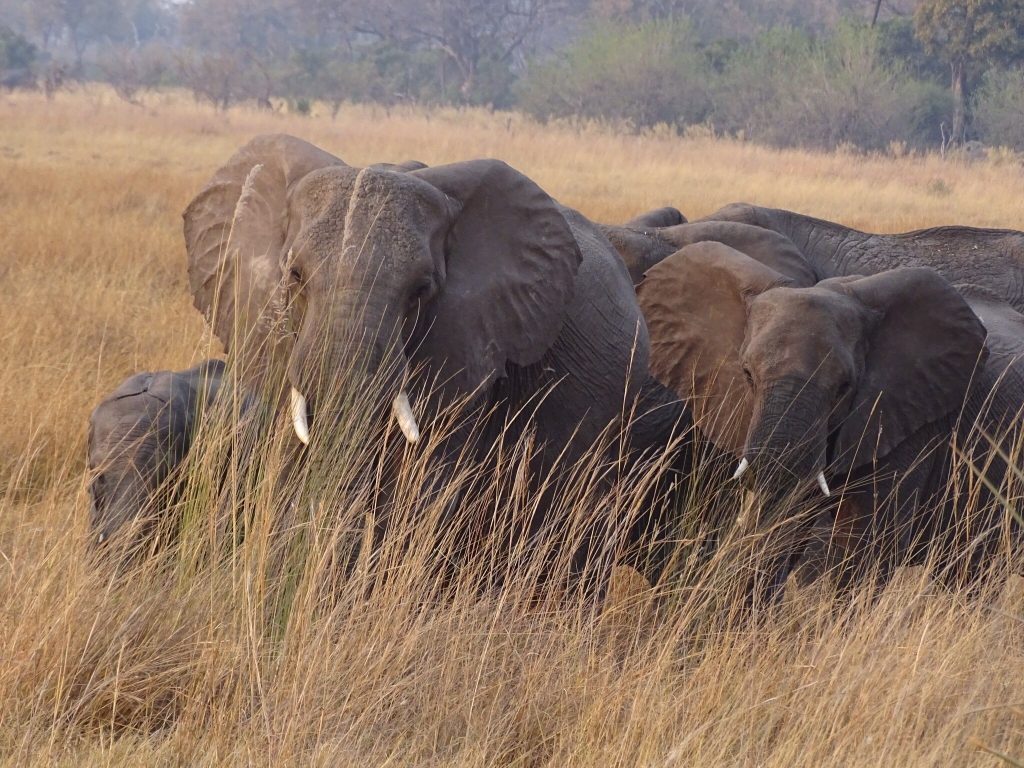
Ten days is the length at which a Botswana safari stops being a wildlife trip and becomes a tour of the country, because it is the first duration that comfortably includes the desert alongside the water. The standard route runs three regions at three nights each: the Okavango Delta, a northern predator area such as Linyanti or Savuti, and either Chobe or the Kalahari. Botswana is a southern African safari country whose desert and delta peak at opposite ends of the year.
What Ten Days Adds Over Seven
The honest answer is contrast rather than more of the same.
Seven days gives you two regions at three nights each, which is enough to see northern Botswana properly. Everything in that itinerary is green, wet and wooded, and by day six the habitats start to resemble each other.
Ten days means nine nights, which supports three legs of three nights with two internal flights. The third leg is where the trip changes character, because it can be the desert.
Adding the Central Kalahari or the Makgadikgadi pans means black-maned lions across open country, meerkats, San tracking walks, quad biking on the salt crust and sleep-outs under skies dark enough to justify the term stargazing. None of that exists in the Delta.
That is the argument for ten days over seven. Not more animals, a different country.
Ten days is the first Botswana trip that can hold both the water and the desert. The two halves of the country look nothing alike, and seeing only one is seeing half of it.
The Classic Ten-Day Route
Three legs, three nights each, two internal flights, with the ninth night usually absorbed by an arrival or departure position.
A common shape runs into Kasane for the Chobe riverfront, flies to a private concession in the Okavango Delta, then flies again to the Kalahari or the pans, departing from Maun. Another runs Maun first, into the Delta, then north to Linyanti or Savuti, finishing at Chobe and flying out of Kasane.
Fly into one airport and out of the other wherever the routing allows, since backtracking wastes a day and Airlink permits multi-leg bookings on a single ticket.
The sequencing principle is to end somewhere with easy access to your international departure. Ending at a remote Kalahari strip means an extra flight on your last morning, which is fine if the schedules line up and costly if they do not.
The Okavango Delta Leg

Three nights in the Delta is the heart of the trip and the leg most worth spending on.
Choose a private concession rather than a camp inside Moremi. Concessions permit off-road driving, night drives and guided walking, all prohibited inside the national parks, and cap vehicle numbers at a sighting by agreement. On a ten-day trip that difference compounds across nine activities.
Confirm whether the camp sits on permanent inner Delta water or seasonal water at the eastern edge. Permanent water camps run mokoro and boat activities year round. Seasonal camps switch to drives when the channels drop.
Three nights allows the full rotation: mokoro morning, game drive, guided island walk, night drive. Predator viewing here is the strongest in the country, with lion, leopard and one of Africa’s healthier wild dog populations.
The flight in is itself a highlight, with the channels, islands and herds laid out below at low altitude.
Linyanti, Savuti or Chobe as the Northern Leg
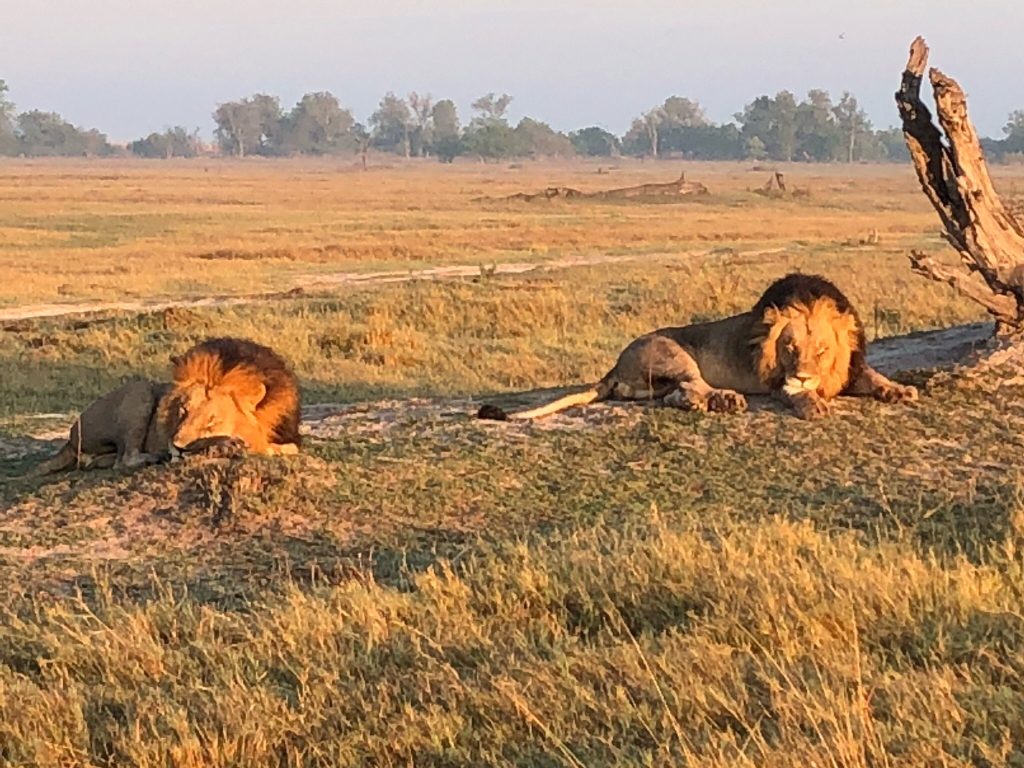
The second northern leg is where a ten-day trip separates itself from a seven-day one, and there are three ways to play it.
Linyanti and Selinda sit on private concessions north of the Delta and draw enormous dry-season elephant concentrations along their waterways. Vehicle numbers are limited by concession agreement, so sightings are frequently yours alone. Experienced safari travellers often rate this country above the Delta names. If you have longer, our 14-day Botswana itinerary adds the pans or the desert without rushing anything.
Savuti has a long reputation for lion, including prides that hunt elephant, which is behaviour recorded in very few places. The channel fills and empties on its own unpredictable schedule.
Chobe riverfront is the accessible option, reachable by road from Kasane with no charter, carrying the highest elephant density in Africa and offering boat safaris that no inland camp can match.
Chobe is the cheapest of the three and the busiest. Linyanti and Selinda cost more and deliver solitude.
The Kalahari and Makgadikgadi Desert Leg

This is the leg that justifies the extra three days, and it needs its own thinking on timing.
The Central Kalahari Game Reserve runs to roughly 52,800 square kilometres of semi-arid sandveld, among the largest protected areas on earth. Black-maned Kalahari lions are the draw, alongside gemsbok, springbok, cheetah and brown hyena, with Deception Valley greening after rain and pulling in game that has been scattered for months.
The Makgadikgadi pans offer activities that exist nowhere else in Botswana. Quad biking across the crust when it is firm and dry. Walks with San trackers reading the ground for you. Semi-habituated meerkat colonies that will use a seated visitor as a lookout. Sleep-outs on the open salt. Baines’ Baobabs and Kubu Island within reach. Operators package this length as the 10 day Botswana grand safari.
The catch is the calendar. The desert peaks from December through April, exactly when the northern parks are weakest, which makes the three-region trip a compromise in either season.
Dry season, May to October. Weight the trip north. Delta, Linyanti or Savuti, and Chobe. Add the pans for atmosphere and quad biking rather than for game, since the desert is thin then.
Green season, November to April. Weight the trip south. Central Kalahari and Makgadikgadi at their annual best, with the zebra migration on the pans, plus a Delta or Chobe leg where the river holds up.
Shoulder, April, May or November. The genuine compromise. Both halves of the country are workable, rates sit 10 to 20 percent below peak, and availability is far better.
Ten Days on a Mobile Camping Safari
The overland version covers more ground than any fly-in route and costs a fraction of it.
A ten-day mobile typically runs Maun into Moremi, through Khwai, on to Savuti and Linyanti, finishing at Chobe near Kasane. Some operators run a desert version instead, covering the Central Kalahari, Makgadikgadi and Nxai Pan from Maun.
The advantage over a week is that ten days lets a mobile safari reach both halves of the country rather than one, driving between them and watching the vegetation change as you go, which no charter flight shows you.
Mobile operators hold exclusive campsites inside the national parks that are not open to the general public, so you overnight deep inside Moremi or Savuti where day visitors must leave at gate closing.
One guide stays with you for ten days, which is long enough that the relationship changes what you see.
Ten days is where the zebra migration becomes plannable. More than 20,000 animals move from the Chobe River to Nxai Pan from around December, and a green season ten-day trip can catch both the migration and the Delta in one routing.
Timing a Ten-Day Botswana Trip
Because a ten-day itinerary spans regions that peak in opposite seasons, timing becomes a genuine trade rather than a simple choice.
July through September gives you peak Okavango flood, the strongest Chobe and Linyanti elephant concentrations, and the sharpest predator viewing of the year. The desert leg in these months is atmospheric rather than game-rich, and quad biking on the pans needs exactly this dry crust.
December through March inverts everything. The Kalahari and pans are at their annual best with fresh grazing, calving antelope and the zebra migration, while the northern parks scatter and grass grows tall.
April, May and November are the honest compromise, with both halves workable, rates below peak and much better camp availability.
Whichever you choose, book the peak-season legs twelve to eighteen months ahead. Bed numbers are capped by policy and the good camps genuinely run out.
Frequently Asked Questions About a 10-Day Botswana Itinerary
How much does a 10-day Botswana safari cost?
Mid-range lodges at roughly 600 to 1,100 US dollars per person per night put nine nights around 5,400 to 9,900 before international flights. Luxury private concession camps start near 1,500 per night and climb beyond 4,000, so a top-end ten-day trip can exceed 40,000 for two. Mobile camping runs 350 to 550 per person per day. Add two or three charter legs at 250 to 500 per person each, park entry at 120 Pula per person per day, and a 30 dollar arrival levy.
What should I add to a Botswana itinerary with ten days?
The desert. Seven days covers northern Botswana properly, and everything in that trip is water and woodland. Ten days lets you add the Central Kalahari or the Makgadikgadi pans, which deliver black-maned lions, meerkats, San tracking walks, quad biking on the salt crust and sleep-outs under exceptionally dark skies. None of that exists in the Delta, and the contrast is what makes a ten-day trip feel like a tour of a country rather than a longer safari.
How many camps should I stay at in ten days?
Three, at three nights each, with the ninth night usually absorbed by arrival or departure positioning. Three nights per camp gives two complete days plus two partial ones, which is where a guide starts finding what you actually came for. Four camps at two nights each is possible but adds a third internal flight and roughly half a day of transfers, and you end up knowing less about more places.
When is the best time for a 10-day Botswana safari?
It depends which half of the country you want at its best, since they peak in opposite seasons. July to September gives peak Okavango flood, the biggest Chobe and Linyanti elephant concentrations and the sharpest predator viewing, with the desert leg atmospheric rather than game-rich. December to March inverts it, putting the Kalahari, the pans and the zebra migration at their annual best. April, May and November are the genuine compromise with lower rates and better availability.
Can I combine the Okavango Delta and the Kalahari in ten days?
Yes, and it is the main reason to book ten days rather than seven. The flight from a Delta airstrip to the Central Kalahari or Nxai Pan is longer than the short inter-camp hops but entirely routine. The complication is seasonal rather than logistical: the two regions peak at opposite ends of the year, so one leg will be at its best and the other merely good. Shoulder months of April, May and November split the difference.
Is a mobile camping safari worth it for ten days?
It suits ten days better than any other length. A week of mobile travel is good, and ten days lets the route reach both the northern parks and the desert overland, watching the country change between them in a way no charter flight shows you. Mobile operators also hold exclusive campsites inside the national parks that are closed to the general public. One guide for ten days changes what you see, and costs run well below lodge rates.
Booking Your Botswana Trip
The safari companies and tour operators listed on this website put trips like this together for a living and know which camps, guides and routes actually deliver. We are an independent guide to Botswana; we do not book or sell tours ourselves.
When you are ready, arrange your safari, tour or holiday with one of the recognised operators listed here. Tell them your dates and what matters most, and a real person, not a form, will handle the itinerary, park bookings and logistics for you.