Kalahari Itinerary

A Kalahari itinerary covers three separate protected areas that visitors often treat as one: the Central Kalahari Game Reserve, Makgadikgadi Pans National Park and Nxai Pan National Park. Six to eight nights allows all three, and unlike the rest of Botswana the desert peaks between December and April rather than in the dry season. Botswana is a southern African country roughly 70 percent covered by Kalahari sandveld, and the reserve at its centre is among the largest protected areas on earth.
The Three Areas of a Kalahari Itinerary
They sit within a few hours of each other and deliver quite different days, so knowing which is which shapes the whole trip.
The Central Kalahari Game Reserve runs to roughly 52,800 square kilometres of sandveld, thorn scrub and fossil river valleys. Deception Valley and Passarge Valley are the productive areas, along with Piper Pan further south. Black-maned Kalahari lions are the draw, alongside gemsbok, springbok, eland, cheetah and brown hyena.
Makgadikgadi Pans National Park holds the bed of a vanished super-lake, white and flat enough to be picked out from orbit. This is where quad biking, meerkat viewing, San tracking walks and sleep-outs on the open salt happen.
Nxai Pan National Park is the smallest and most accessible, with a single dry-season waterhole that makes game viewing straightforward in winter, and Baines’ Baobabs standing on a salt pan island nearby.
Khutse Game Reserve borders the Central Kalahari to the south and is the closest desert reserve to Gaborone.
The Kalahari runs on an inverted calendar. December through April is peak here, exactly when the Okavango and Chobe are at their weakest, which is why a desert leg rescues a green season trip.
A Six to Eight Night Kalahari Route
The standard shape runs out of Maun, though Gaborone works for the southern reserves.
Three nights in the Central Kalahari, based around Deception Valley or Passarge, with morning and afternoon game drives across open grassland and fossil valley. Two nights at Nxai Pan, taking in the waterhole and a full day out to Baines’ Baobabs. Two or three nights on the Makgadikgadi, which is where the activities that exist nowhere else in Botswana happen.
Road transfers between them run around four hours each, which is a real part of the day, though the driving across empty country is part of the experience rather than dead time.
Fly-in versions exist, with light aircraft connecting Maun to airstrips at Tau Pan in the Central Kalahari and to the pans camps, which removes the drives at considerable cost.
A shorter version pairs three nights in the Central Kalahari with two on the pans, dropping Nxai Pan, and works well as a five-night desert leg attached to a northern trip.
The Central Kalahari Leg
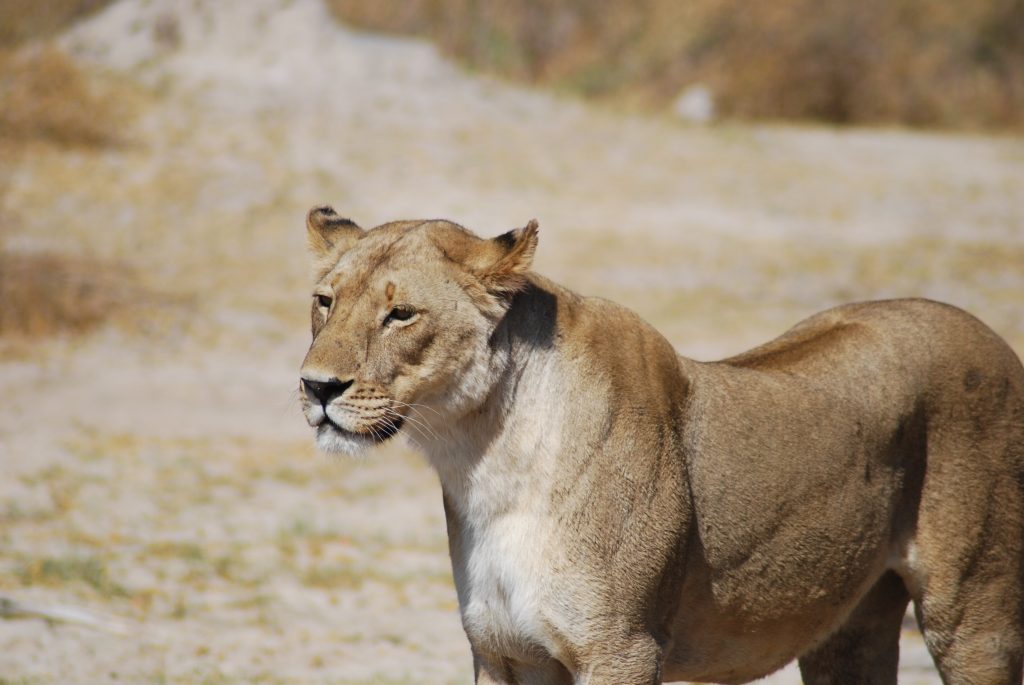
This is the leg that asks most of a visitor and rewards patience rather than expectation.
Wildlife is thinner on the ground than in the Delta and correspondingly harder won. What you get instead is scale: a fossil valley running to the horizon with a single gemsbok standing in it, and the sense of genuine remoteness that the northern parks have largely lost.
Deception Valley is the best known area and greens up after rain, pulling in game that has been scattered for months. Passarge Valley to the northwest is smaller, quieter and holds good concentrations when the rains have fallen. Piper Pan further south is remote enough that few vehicles reach it.
Beyond the black-maned lions, the desert species most people never see are genuinely findable here: bat-eared fox, aardwolf, aardvark and brown hyena.
Some camps on the reserve’s edge offer walks with San guides, which is a different way of reading the same country.
The Makgadikgadi and Nxai Pan Legs

These two are the reason a Kalahari itinerary is more than a desert game drive.
On the Makgadikgadi, quad biking runs across the crust when it is firm and dry, which means the dry months from roughly May to October. Semi-habituated meerkat colonies allow close observation, and with no high ground on the open pan they will occasionally climb onto a seated visitor for a better view. San trackers lead walks that read the ground for you. Camps run sleep-outs on the open salt under skies dark enough that stargazing is a listed activity rather than an afterthought. The desert pairs naturally with the water, which is exactly what the 7 day Delta and Kalahari safari is built around.
Flamingos arrive on the flooded pans in wetter years, with the area holding one of only two breeding populations of greater flamingo in southern Africa.
Nxai Pan is the easiest of the three to visit. Its single dry-season waterhole concentrates game in winter, while the green summer brings buffalo and elephant herds. Baines’ Baobabs, a stand of huge trees marooned on a salt pan island, is a full-day outing and one of the more photographed sights in Botswana.
Central Kalahari. Three nights. Deception and Passarge Valleys, black-maned lions, gemsbok, cheetah, brown hyena and the small desert species. Vast, remote and patient rather than dense.
Makgadikgadi Pans. Two or three nights. Quad biking on dry crust, meerkats, San tracking walks, sleep-outs and stargazing. Zebra migration and flamingos in the green months.
Nxai Pan. Two nights. Single waterhole for easy dry-season viewing, buffalo and elephant in summer, Baines’ Baobabs as a full-day outing. The most accessible of the three.
The Zebra Migration on a Kalahari Itinerary
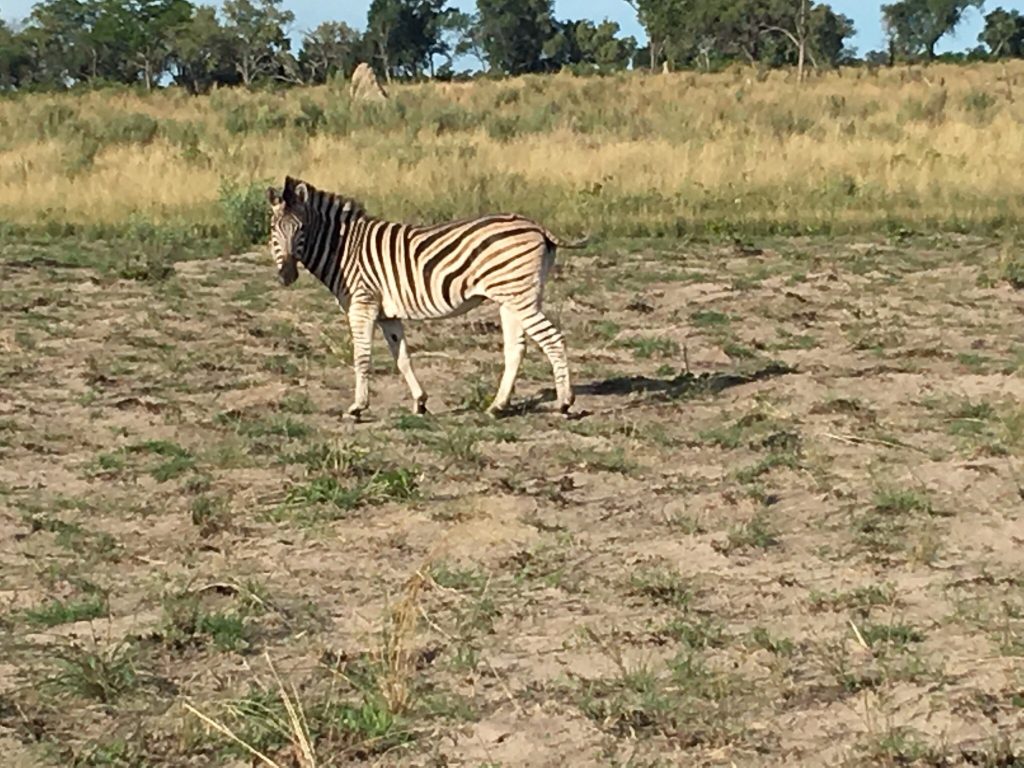
Botswana holds the longest terrestrial mammal migration in Africa and it happens on this route, which is reason enough to weight a Kalahari trip toward the green season.
More than 20,000 zebra move south from the Chobe River to Nxai Pan once the first rains fall, arriving around December and dispersing across the pan through January and February before turning north again from March, with some covering over 800 kilometres. A second movement of roughly 15,000 animals runs a 500 kilometre loop between the Okavango and the Makgadikgadi.
December through March is the window, with foals on the ground and the predators that follow the herds working the open country.
Outside those months the zebra hold along the Boteti River, which is worth a stop in its own right for the elephant coming down to drink.
Self-Driving a Kalahari Itinerary
The Kalahari is where Botswana self-drive becomes serious rather than adventurous.
Campsites in the Central Kalahari and Khutse are standalone pitches, often with nothing beyond a drop toilet and a bucket shower frame, and you carry all your own water. Some have none at all. Distances between sites are long and the tracks are deep sand and heavily corrugated.
Bookings run through private operators rather than a single system, with park fees settled separately with the Department afterwards. Double bookings have been reported, so carry printed confirmations.
Fuel is not sold inside any of the reserves. Recovery help can be many hours away, and this is the part of Botswana where a satellite phone stops being an indulgence.
Anyone attempting this should have real deep sand experience and ideally travel in convoy.
Quad biking on the salt pans needs a firm dry crust, so it runs in the dry months. The wildlife peaks in the wet ones. If both matter to you, April or November are the honest compromise, or split the trip and accept that one activity will not be available.
Combining the Kalahari With Northern Botswana
Most Kalahari legs sit inside a larger trip rather than standing alone, and the pairing works because of the seasonal inversion.
In the green season from December to April, weight the trip south. The Kalahari and pans are at their annual best while the Delta and Chobe scatter, so three or four nights in the desert plus a Chobe riverfront leg, where the permanent river holds game, makes a strong green season week.
In the dry season, the desert leg becomes an atmospheric contrast rather than a wildlife one. Quad biking, meerkats and sleep-outs still run, and the emptiness after a week of Delta channels is genuinely striking.
Ten days allows Delta, Chobe and desert at three nights each. Fourteen allows the desert as two legs, treating the Central Kalahari and the pans separately, which they deserve.
Frequently Asked Questions About a Kalahari Itinerary
How many days do you need for the Kalahari?
Six to eight nights covers all three areas properly: three in the Central Kalahari, two at Nxai Pan and two or three on the Makgadikgadi. A shorter five-night version pairs three nights in the Central Kalahari with two on the pans, dropping Nxai Pan, and works well as a desert leg attached to a northern trip. Road transfers between the areas run around four hours each, which is a genuine part of the day.
When is the best time to visit the Kalahari?
December through April, which inverts the rest of Botswana. Rain greens the fossil valleys, Deception Valley pulls in game that has been scattered for months, predator sightings peak and the zebra migration reaches Nxai Pan. The dry months from May to October deliver thin game but firm salt crust for quad biking, plus meerkats, San walks and sleep-outs year round. April and November are the compromise if you want both.
How much does a Kalahari safari cost?
Desert camps run broadly in line with the rest of Botswana, with mid-range properties around 600 to 1,100 US dollars per person per night all-inclusive and the well-known pans camps higher. Mobile camping safaris covering the Central Kalahari, Makgadikgadi and Nxai Pan run roughly 350 to 550 per person per day and are the affordable way in. Park entry is 120 Pula per person per day for non-residents, with Central Kalahari and Khutse camping around 168 Pula per person.
Can I see the zebra migration in the Kalahari?
Yes, and it is the longest terrestrial mammal migration in Africa. More than 20,000 zebra move south from the Chobe River to Nxai Pan when the first rains fall, arriving around December and staying through January and February before turning north from March, some covering over 800 kilometres. A second movement of roughly 15,000 animals loops 500 kilometres between the Okavango and Makgadikgadi. December to March is the window.
Is the Central Kalahari worth visiting?
For a second or third Botswana trip, or for anyone who values remoteness over density, yes. Wildlife is thinner than in the Delta and harder won, and what you get instead is scale, genuine emptiness and species you will not see elsewhere, including black-maned Kalahari lions, brown hyena, bat-eared fox and aardwolf. For a first safari where you want reliable Big Five sightings in a short time, the northern parks load the odds better.
Can I self-drive the Kalahari?
Only with real deep sand experience, and ideally in convoy. Campsites in the Central Kalahari and Khutse are standalone pitches often with nothing beyond a drop toilet and bucket shower frame, and you carry all your own water since some have none. Distances are long, tracks are deep sand and heavily corrugated, fuel is not sold inside any reserve and recovery help can be many hours away. A satellite phone is a sensible precaution here rather than an indulgence.
Booking Your Botswana Trip
The safari companies and tour operators listed on this website put trips like this together for a living and know which camps, guides and routes actually deliver. We are an independent guide to Botswana; we do not book or sell tours ourselves.
When you are ready, arrange your safari, tour or holiday with one of the recognised operators listed here. Tell them your dates and what matters most, and a real person, not a form, will handle the itinerary, park bookings and logistics for you.