Giraffe in Botswana

Botswana is unusual in holding both subspecies of southern giraffe, with Angolan giraffe in the Central Kalahari and the western farms and South African giraffe across the north and east. The Okavango Delta supports one of the most important giraffe populations on the continent, and figures suggest the majority of the world’s Angolan giraffe live there. They are common on drier ground throughout the north, and easy to see year round.
Two Subspecies in One Country
This is the genuinely interesting thing about Botswana’s giraffe and it is barely known outside the research literature.
Botswana holds southern giraffe, which splits into two subspecies. The Angolan giraffe occurs in the Central Kalahari Game Reserve and on private farms in the west. The South African giraffe occupies the northern and eastern regions, including Chobe, Moremi and the Okavango Delta.
That geographic division within a single country is unusual, and researchers attribute it to what they call Botswana’s cryptic rift valley, most likely the result of a long arid period during a Pleistocene glacial phase that isolated giraffe populations and reduced gene flow between them.
A natural mixing zone between the two would be unique, and the Giraffe Conservation Foundation continues to work with the Department of Wildlife and National Parks and local partners on the question.
For a visitor the practical upshot is simple. The giraffe you see in the Delta and the giraffe you see in the Central Kalahari are not quite the same animal.
The giraffe in the Okavango and the giraffe in the Central Kalahari belong to different subspecies, separated during a dry period tens of thousands of years ago. Very few countries hold both.
Telling Them Apart
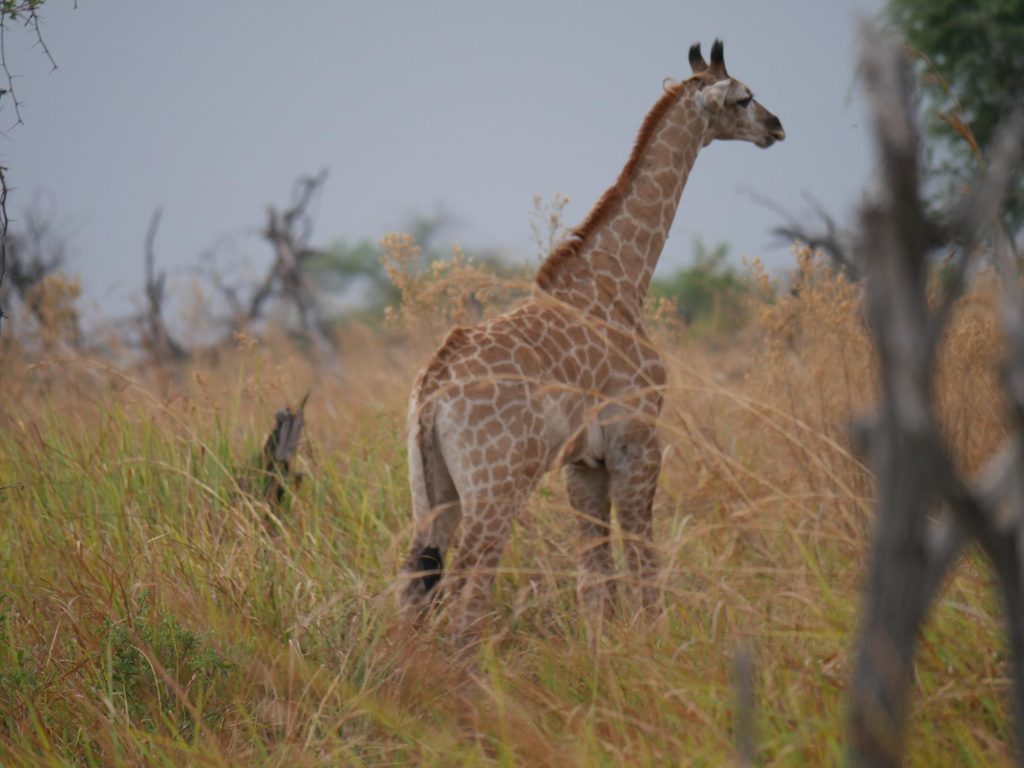
The differences are subtle and worth knowing if you are travelling between the north and the desert.
Southern giraffe carry large, irregular and unevenly notched patches in various shades of brown, surrounded by a light tan background, with the lower legs speckled with uneven spots.
South African giraffe tend toward brighter colouring with star or diamond markings that extend down the legs without covering the whole body.
Angolan giraffe carry more irregular and sometimes faded patches that cover the entire body, and can appear strikingly pale, particularly in the more arid parts of the range.
Hybridisation complicates the picture, since translocations within and between countries have moved animals around and created mixed populations.
Nobody should expect to identify subspecies confidently in the field, and a guide who says the Kalahari animals look paler is telling you something real.
How Many Giraffe Are There
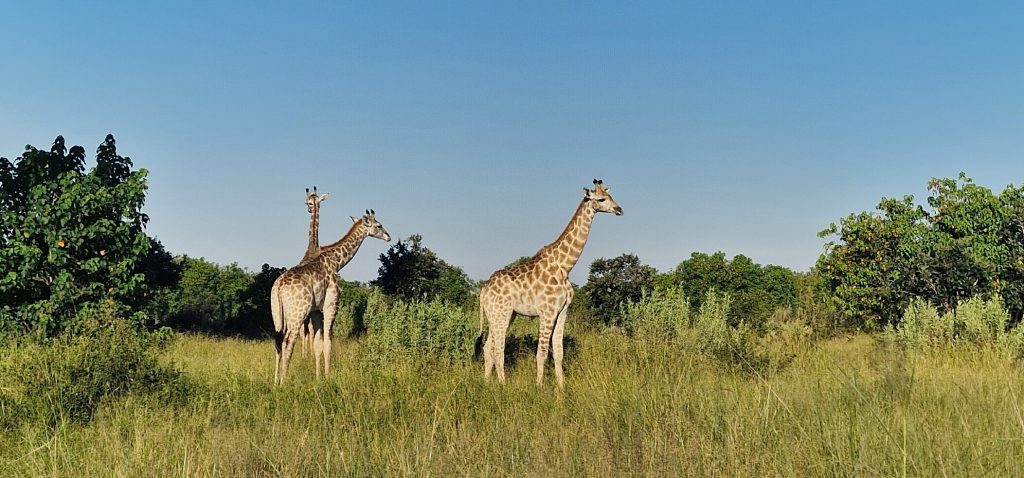
The figures vary considerably and it is worth knowing why.
Botswana’s national population is commonly cited at around 7,000, though estimates for individual regions complicate that. One figure puts over 7,600 Angolan giraffe in the Okavango Delta alone, while another gives the Delta a stable population of around 4,000.
The Okavango is described as holding almost 15 percent of all giraffe in Africa, which suggests the higher figures are closer to the mark.
Continentally, southern giraffe number somewhere around 50,000 to nearly 69,000 across their range, accounting for a substantial share of Africa’s total.
The direction of travel is encouraging. Angolan giraffe have gone from around 5,000 individuals three and a half decades ago to over 15,000, which led to their reclassification as Least Concern. South African giraffe have increased substantially over the same period.
That sits against a bleak wider picture, with giraffe numbers across Africa falling from roughly 150,000 several decades ago to under 70,000 today.
Where to See Giraffe
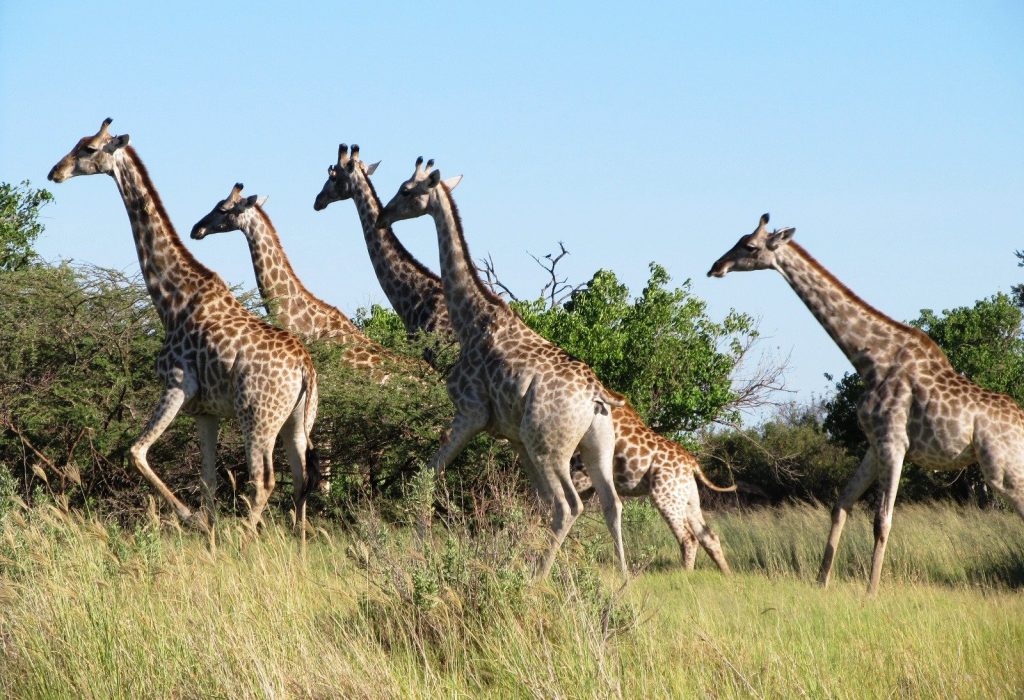
Giraffe are widespread across northern and central Botswana and are among the easier large mammals to find.
The Okavango Delta holds them on the drier ground and the fringes rather than in the water, and they are commonly seen from a game vehicle rather than a mokoro.
Chobe National Park supports good numbers, particularly in the woodland behind the riverfront where the browse is.
Moremi Game Reserve has them throughout, and the Khwai area is reliable.
The Central Kalahari holds Angolan giraffe on the fossil valleys and open country, where they are visible at considerable distance.
The Tuli Block in the east and the Makgadikgadi both hold populations, and Khutse has them too.
Being tall and slow-moving in open country, giraffe are one of the few species a self-drive visitor will find without a guide.
North and east. South African giraffe in Chobe, Moremi, Khwai and the Okavango Delta, on drier ground and woodland fringes rather than in the water. Reliable year round.
Central Kalahari and west. Angolan giraffe on fossil valleys and open desert country, visible at long distance and paler in colouring than their northern counterparts.
Elsewhere. The Tuli Block in the east, the Makgadikgadi and Khutse all hold giraffe, and Mokolodi near Gaborone has them within reach of the capital.
Giraffe Behaviour
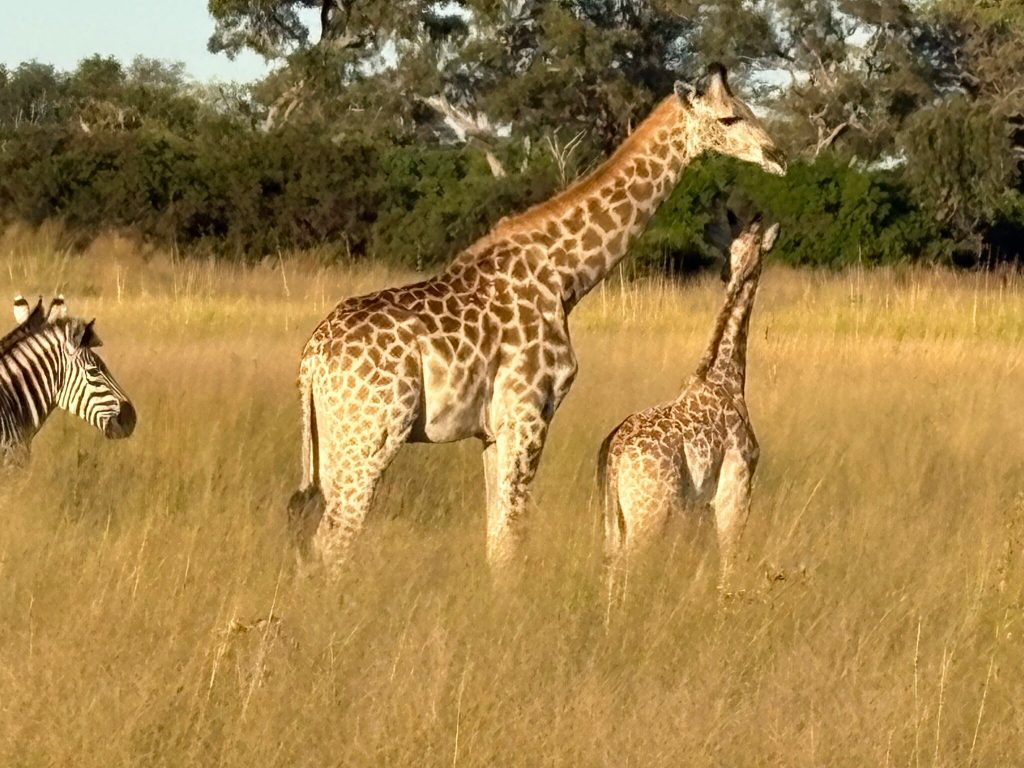
A few things about how giraffe live make a sighting considerably more interesting.
They have the loosest social structure of any large mammal, with groups constantly changing in size and composition as individuals come and go. There is no herd in the sense that buffalo or zebra form one.
Even so, bulls compete seriously for dominance, and necking, where two males swing their heads at each other, decides who breeds. It looks slow and is genuinely violent.
Drinking is the vulnerable moment. A giraffe must splay its forelegs to reach water, which leaves it awkwardly placed if a predator arrives, and lions take advantage. Watch for the caution before a giraffe commits to drinking.
Calves are born after a long gestation and drop around two metres to the ground, standing within an hour. Predation on calves is heavy.
Giraffe browse the canopy that no other herbivore can reach, which puts them in a niche of their own and means they compete with almost nothing.
That height makes them useful to everything else on the plain. A giraffe sees further than any other animal out there, and other grazers watch them constantly, so a herd of impala or zebra will react to a giraffe’s posture before they have registered anything themselves. Guides use the same trick: a giraffe standing still and staring hard in one direction is worth investigating.
Photographing Giraffe
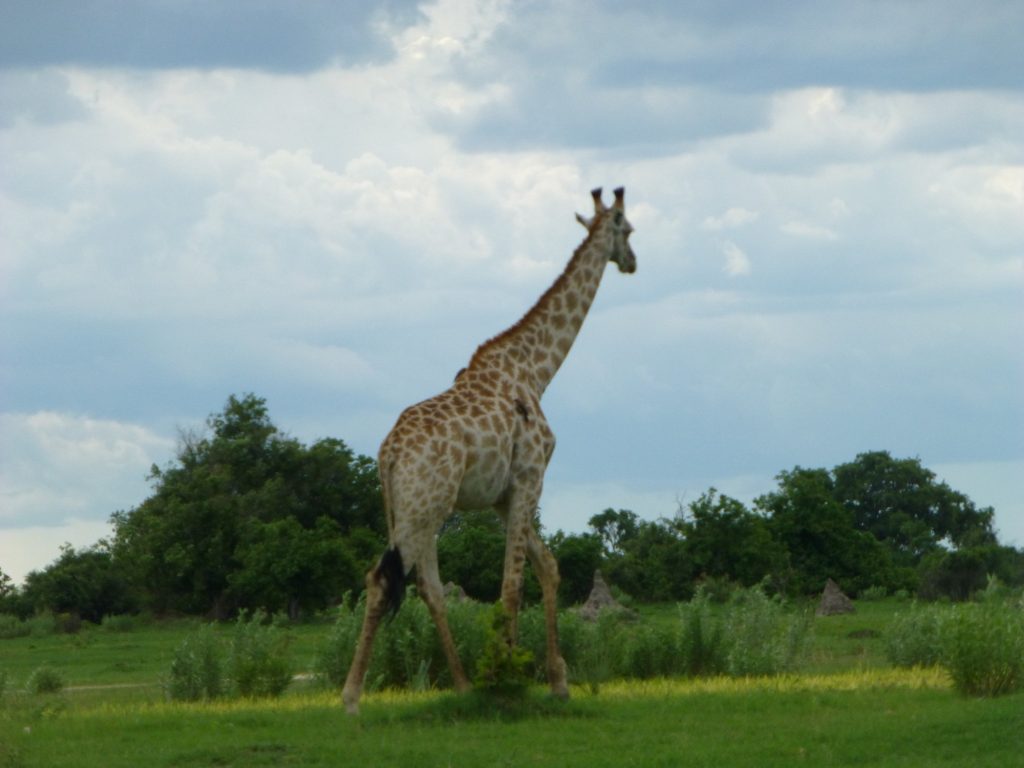
They present specific problems that catch people out.
The shape is the issue. A giraffe standing upright does not fit a horizontal frame well, and a vertical composition usually works better than the reflexive horizontal orientation.
Their height also means harsh top light hits them first, and midday sun on a pale animal against a bright sky produces flat, contrasty images. Early and late light is worth waiting for.
The most rewarding moments are behavioural: a giraffe splaying its legs to drink, two bulls necking, or a group silhouetted at sunset against an open horizon.
In the Kalahari, the open ground and pale animals against a low sun produce something quite different from the same species among Delta treelines.
A shorter lens than you expect often works, since giraffe let vehicles get close and a long telephoto crops off the legs or the head.
One more thing worth watching for is the oxpecker traffic. Giraffe carry these birds constantly, working the neck, ears and legs for ticks, and a close portrait that includes one adds far more than a clean shot of the head alone. They also react to a bird’s alarm before they react to anything they have seen themselves, which is a reminder that a giraffe standing rigid and staring in one direction is usually worth following with your own eyes.
Look for giraffe on the drier ground and woodland fringes rather than in the wet heart of the Delta. They browse acacia and other canopy trees, so a camp offering game drives across mixed woodland will show you far more of them than one focused on water activities.
Frequently Asked Questions About Giraffe in Botswana
What kind of giraffe live in Botswana?
Southern giraffe, and unusually both of its subspecies. Angolan giraffe occur in the Central Kalahari Game Reserve and on private farms in the west, while South African giraffe occupy the northern and eastern regions including Chobe, Moremi and the Okavango Delta. Researchers attribute the division to a long arid period during a Pleistocene glacial phase that isolated populations and reduced gene flow, and a natural mixing zone between the two would be unique.
How many giraffe are in Botswana?
Figures vary. The national population is commonly cited at around 7,000, though one estimate puts over 7,600 Angolan giraffe in the Okavango Delta alone and another gives the Delta around 4,000. The Delta is described as holding almost 15 percent of all giraffe in Africa. Southern giraffe number somewhere between roughly 50,000 and 69,000 continentally, against a total African giraffe population that has fallen to under 70,000.
Where is the best place to see giraffe in Botswana?
They are widespread and easy to find across northern and central Botswana. The Okavango Delta holds them on drier ground and fringes rather than in the water, Chobe supports good numbers in the woodland behind the riverfront, and Moremi and Khwai are reliable. The Central Kalahari holds the paler Angolan giraffe on open fossil valleys where they are visible at long distance. The Tuli Block and Makgadikgadi both have populations.
Are giraffe numbers declining?
Across Africa, yes, with the total falling from roughly 150,000 several decades ago to under 70,000. Southern giraffe are the exception. Angolan giraffe have risen from around 5,000 individuals three and a half decades ago to over 15,000, prompting reclassification as Least Concern, and South African giraffe have increased substantially over the same period. Botswana’s population is described as stable, which makes it one of the better places for the species.
Do giraffe live in the Okavango Delta water?
No, they stay on the drier ground, islands and fringes. Giraffe browse the tree canopy rather than aquatic vegetation, so they are seen from game vehicles across mixed woodland rather than from a mokoro or a boat. A camp offering land-based game drives will show you far more giraffe than one focused on water activities, which is worth knowing when choosing where to stay in the Delta.
Why do giraffe splay their legs to drink?
Because their neck is not long enough to reach the ground from a standing position, so the forelegs must be spread wide to lower the head. It is the animal’s most vulnerable moment, since getting upright again takes time, and lions take advantage of it. Watch for the long hesitation before a giraffe commits to drinking, scanning repeatedly before finally lowering its head, which is one of the better behavioural sightings available.
Booking Your Botswana Trip
The safari companies and tour operators listed on this website put trips like this together for a living and know which camps, guides and routes actually deliver. We are an independent guide to Botswana; we do not book or sell tours ourselves.
When you are ready, arrange your safari, tour or holiday with one of the recognised operators listed here. Tell them your dates and what matters most, and a real person, not a form, will handle the itinerary, park bookings and logistics for you.