Nocturnal Animals of Botswana
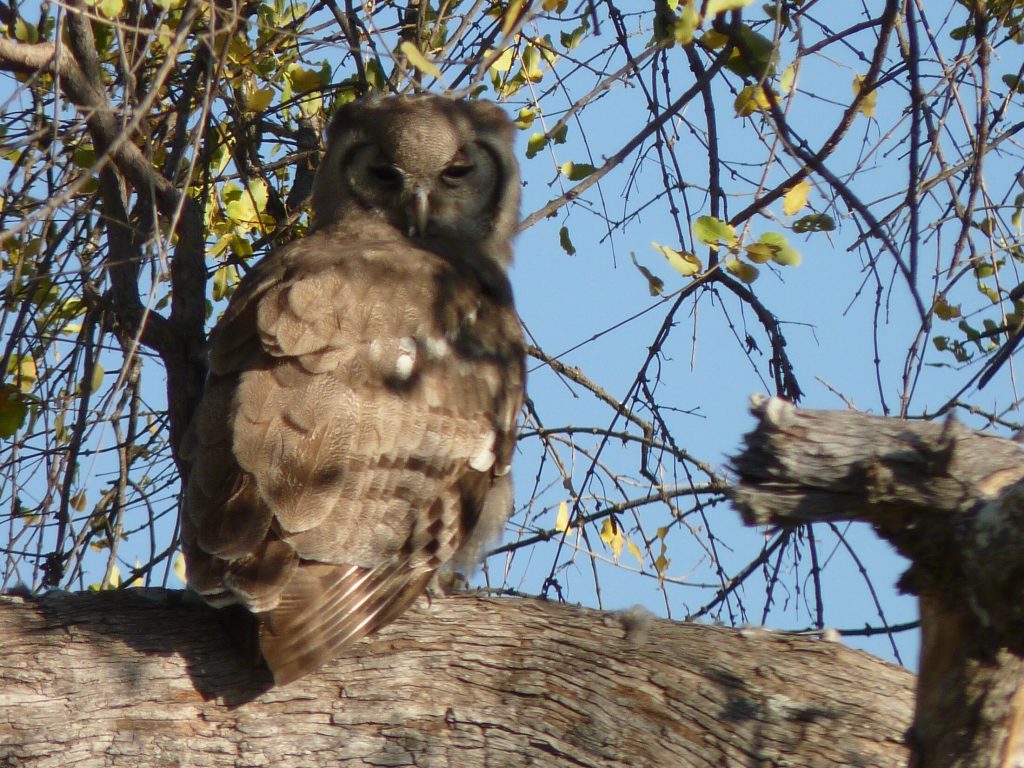
An entire cast of Botswana’s wildlife only appears after dark, including aardvark, pangolin, porcupine, civet, genet, serval, honey badger, springhare, bushbaby and aardwolf. Seeing them requires a night drive, which national parks prohibit and private concessions and community areas permit. Khwai has built a particular reputation for pangolin, which is among the rarest mammal sightings available anywhere in Africa.
Why You Need a Night Drive
This is the practical constraint and it decides everything else about seeing nocturnal wildlife here.
National parks and game reserves, meaning Chobe, Moremi, the Central Kalahari, Nxai Pan and Makgadikgadi, require vehicles to be back at camp or out of the park by dark. No night activities are permitted at all.
Private concessions and community areas operate under different agreements and run night drives with a spotlight, and that covers the Okavango concessions, Linyanti, Selinda, Kwando and Khwai.
A visitor who spends a week in Moremi and Chobe will not see any of the species on this page, no matter how good the camps and guides are.
The Khwai community area is the most accessible route to a night drive in Botswana, being open to self-drive travellers and mobile safaris as well.
Forest reserves near Kasane also permit night drives within half an hour of Chobe riverfront lodges.
A week in Moremi and Chobe will show you almost nothing on this page. The boundary between a national park and a concession is what decides whether you meet an aardvark or never know it was there.
The Great Prizes
Two species sit above everything else and experienced safari travellers pursue them for years.
Pangolin is the rarest mammal sighting available in Africa and among the most trafficked animals on earth. It is a scaly, slow-moving insectivore that rolls into an armoured ball when threatened. Khwai has an unusual reputation here, with pangolin sighted more regularly than almost anywhere else and specific guides having built reputations for tracking them.
Aardvark is the other. A solitary termite-eater with a pig-like snout and enormous claws, it is genuinely difficult, and many guides go years between good sightings. It is also ecologically important beyond its own existence, since the burrows it digs are used afterwards by warthog, porcupine, wild dogs for denning and a long list of other species.
Both are nocturnal, both are shy, and neither can be planned for.
Aardwolf, a small insectivorous hyena feeding almost entirely on termites, sits just below them in difficulty.
Brown hyena and black-footed cat complete the list of genuinely hard nocturnal species.
What You Will Commonly See

A good night drive produces a solid list even without the prizes.
Genet and civet are the most regular sightings. Genets are slender and spotted with long ringed tails, often seen in trees. Civets are larger and heavier-built with a distinctive banded face.
Porcupine is Africa’s largest rodent, shuffling along with quills raised when disturbed, and reliably seen on many concessions.
Springhare bound across open ground in numbers, looking improbably like small kangaroos, and their eyeshine is one of the first things a spotlight picks up.
Bushbaby, more properly lesser galago, move through the canopy with the distinctive cry that gives them their name.
Honey badger is a genuine treat and considerably tougher than its size suggests. Serval, a tall slender cat with enormous ears, hunts rodents in long grass and is more often seen at night. African wildcat and caracal both occur.
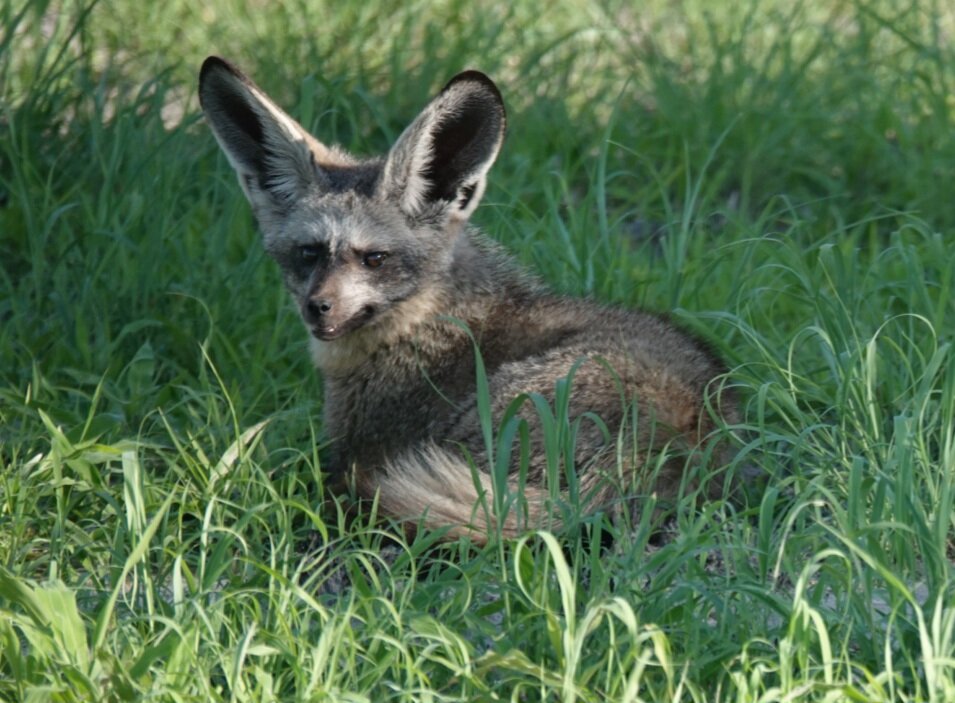
Scrub hare, bat-eared fox and Cape fox round out the usual cast.
Smaller things count too. Chameleons are among the more surprising finds, since their single side-facing eye glows silver when a beam passes over it, making them visible in a bush at a distance that would be impossible by day. Scorpions fluoresce under ultraviolet light and some guides carry a UV torch for exactly that, which turns a patch of apparently empty sand into something considerably more interesting.
Predators After Dark
The big cats are largely nocturnal and a night drive shows them working rather than sleeping.
Leopard is the clearest case. It is often most active after dark, and where a daytime sighting usually means a cat resting in shade, a night drive can produce one hunting.
Lion hunt at night, and hearing a pride calling in the dark from a vehicle is a different experience from watching them sleep at noon.
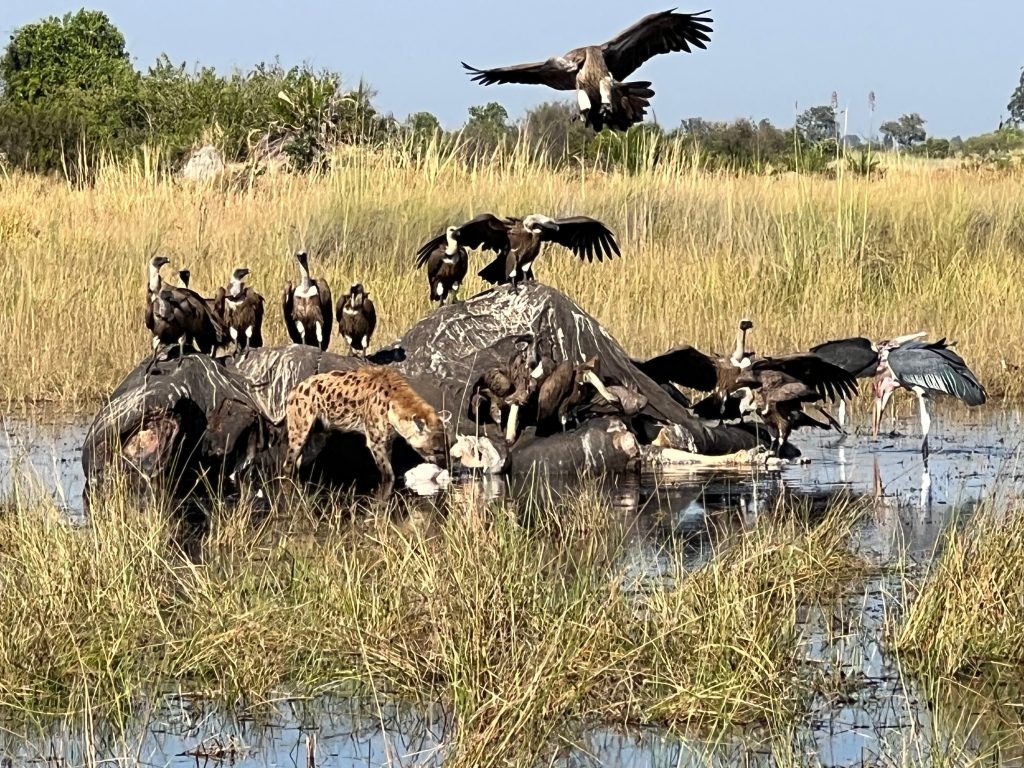
Spotted hyena are most active after dark, working over enormous distances, and Khwai is reliable for them on evening drives.
Predator activity intensifies after dark, and the tension in the bush is palpable in a way it is not at midday.
Owls and nightjars appear too, a whole nocturnal birdlife that daytime never reveals.
Commonly seen. Genet, civet, porcupine, springhare, bushbaby, scrub hare, owls and nightjars, plus hippo out of the water grazing and elephant feeding after dark.
Good sightings. Serval, honey badger, African wildcat, caracal, aardwolf, bat-eared fox, brown hyena, and leopard or lion active rather than resting.
Rare and memorable. Aardvark, which many guides go years between seeing well, and pangolin, which is the sighting people talk about for the rest of their lives.
Where to Go for Nocturnal Species
Concession choice determines the odds considerably.
Khwai is the standout, with a genuine reputation for pangolin and specific guides known for tracking them, alongside aardvark, aardwolf, civet and genet. It is also the affordable option, open to self-drive visitors and mobile safaris.
Moremi paired with Khwai is the combination many operators recommend, giving daytime reserve game viewing plus the nocturnal ecosystem that no national park can offer.
Linyanti, Selinda and Kwando run night drives with capped vehicle numbers, and the guide and tracker system at some Kwando camps helps considerably after dark.
The Central Kalahari and Kgalagadi hold the desert nocturnal species, including brown hyena, aardwolf, bat-eared fox, black-footed cat and porcupine, though the parks themselves prohibit night driving so camps on the fringes are the answer.
The Makgadikgadi runs night drives from camps on the concessions, where the desert crust cools and nocturnals emerge.
Spotlights and Ethics
How the light is used matters and it is worth asking about before booking.
A bright white spotlight in the eyes of an animal adapted for near-total darkness temporarily impairs its vision, and an animal fleeing that way risks injury or separation from young.
Red filters cause far less disturbance, because most mammals see poorly at that end of the spectrum, and filtered or infrared lamps are increasingly standard among established Botswana operators.
Good practice beyond the filter means keeping the beam off the eyes directly, moving the light rather than holding it, and limiting how long any sighting is illuminated.
Do not use flash photography. It disturbs the animal considerably more than a filtered lamp and produces poor images anyway.
Whether to follow a hunting predator is a judgement call, since a spotlight advantages one party over another, and a responsible guide will sometimes switch off and withdraw.
Timing within the night matters as well. The first hour after dark is usually the most productive, when animals that have waited out the heat begin moving and before the temperature drops far enough to slow everything down. Most camps run the night drive as an extension of the afternoon outing for that reason, continuing straight on after sundowners rather than returning to camp and going out again later.
Dress for cold you have not experienced yet. A June evening that felt pleasant at four in the afternoon can be near freezing by eight, with wind chill on an open vehicle on top, and a night drive is three hours of sitting still in it.
Frequently Asked Questions About Nocturnal Animals in Botswana
What nocturnal animals can you see in Botswana?
Genet, civet, porcupine, springhare, bushbaby and scrub hare are commonly seen, alongside owls and nightjars. Better sightings include serval, honey badger, African wildcat, caracal, aardwolf, bat-eared fox and brown hyena. The great prizes are aardvark, which many guides go years between seeing well, and pangolin, among the rarest mammal sightings available anywhere in Africa. Leopard, lion and spotted hyena are all far more active after dark.
Where is the best place to see pangolin in Botswana?
The Khwai community area has built an unusual reputation for pangolin, sighted there more regularly than almost anywhere else, with specific guides having built reputations for tracking them. Khwai sits outside the national park boundary so night drives are permitted, and it is open to self-drive visitors and mobile safaris alongside lodge guests, which makes it the most accessible route to a chance at one.
Can you do night drives in Botswana’s national parks?
No. Chobe, Moremi, the Central Kalahari, Nxai Pan and Makgadikgadi all require vehicles to be back at camp or out of the park by dark, with no night activities permitted. Night drives run only on private concessions such as those in the Okavango, Linyanti, Selinda and Kwando, and in community areas including Khwai. Forest reserves near Kasane also permit them, within half an hour of Chobe riverfront lodges.
Why is the aardvark important beyond being rare?
Because of what it leaves behind. Aardvarks dig extensive burrows that are later used by a long list of other species, including warthog, porcupine and wild dogs, which den in abandoned aardvark holes to raise pups. That makes the aardvark an ecosystem engineer whose presence supports species well beyond itself, which is a good deal more interesting than its scarcity value on a sightings list.
Are spotlights harmful to nocturnal animals?
Bright white light can be, since species adapted for near-total darkness suffer temporary impairment and a fleeing animal risks injury or separation from young. Red filters cause far less disturbance because most mammals see poorly at that end of the spectrum, and filtered or infrared lamps are increasingly standard among established Botswana operators. Ask what an operator uses before booking, and never use flash photography on a night drive.
What should I wear on a night drive?
Considerably more than the afternoon suggests. Temperatures drop fast once the sun goes, and a June evening that felt pleasant at four can be near freezing by eight, with wind chill on an open vehicle on top. Bring a fleece, a windproof layer, gloves and a warm hat, and take the blanket and hot water bottle the camp offers. A torch for walking back to your tent afterwards is worth having too.
Booking Your Botswana Trip
The safari companies and tour operators listed on this website put trips like this together for a living and know which camps, guides and routes actually deliver. We are an independent guide to Botswana; we do not book or sell tours ourselves.
When you are ready, arrange your safari, tour or holiday with one of the recognised operators listed here. Tell them your dates and what matters most, and a real person, not a form, will handle the itinerary, park bookings and logistics for you.