Birds of Botswana
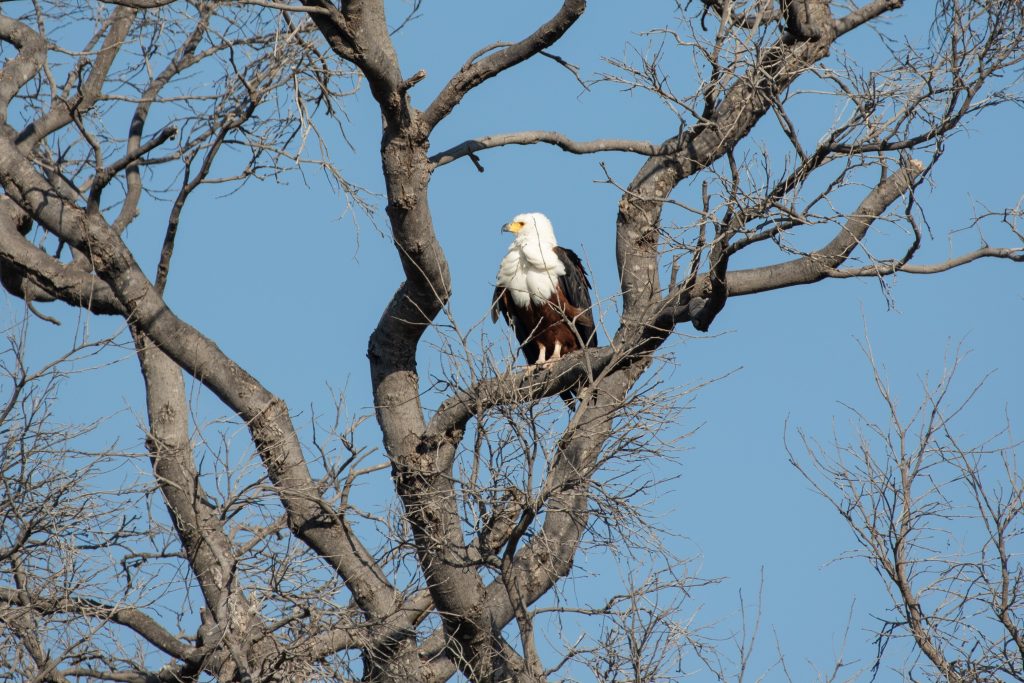
Botswana has recorded over 600 bird species across habitats running from permanent wetland to semi-arid desert, and BirdLife Botswana recognises thirteen Important Bird Areas across the country. There are no endemics, and there are specials that birders travel a long way for, principally Pel’s fishing owl, slaty egret and wattled crane. The wet months from November to April bring the migrants and the breeding plumage.
What Makes Botswana Good for Birding
The appeal here is habitat range rather than endemism, and it is worth being clear about that.
Botswana holds no endemic bird species of its own. What it has instead is an unusual spread of habitats within one country: permanent papyrus swamp, seasonal floodplain, riverine forest, mopane woodland, open grassland, salt pan and Kalahari sandveld.
That range produces a species list of over 600, with individual concessions in the Delta recording 330 to 345 species within their own boundaries.
The Okavango Delta alone holds over 400 recorded species and is the most productive birding destination in the country.
Botswana also offers superlatives. The world’s largest bird, the ostrich, the heaviest flying bird, the kori bustard, and the most numerous bird on earth, the red-billed quelea, all occur here.
Almost 85 percent of the world’s slaty egret population is thought to occur in the Okavango Delta, and the Delta holds Africa’s largest population of wattled crane. Neither is an endemic, and both are in practice Botswana birds.
The Specials
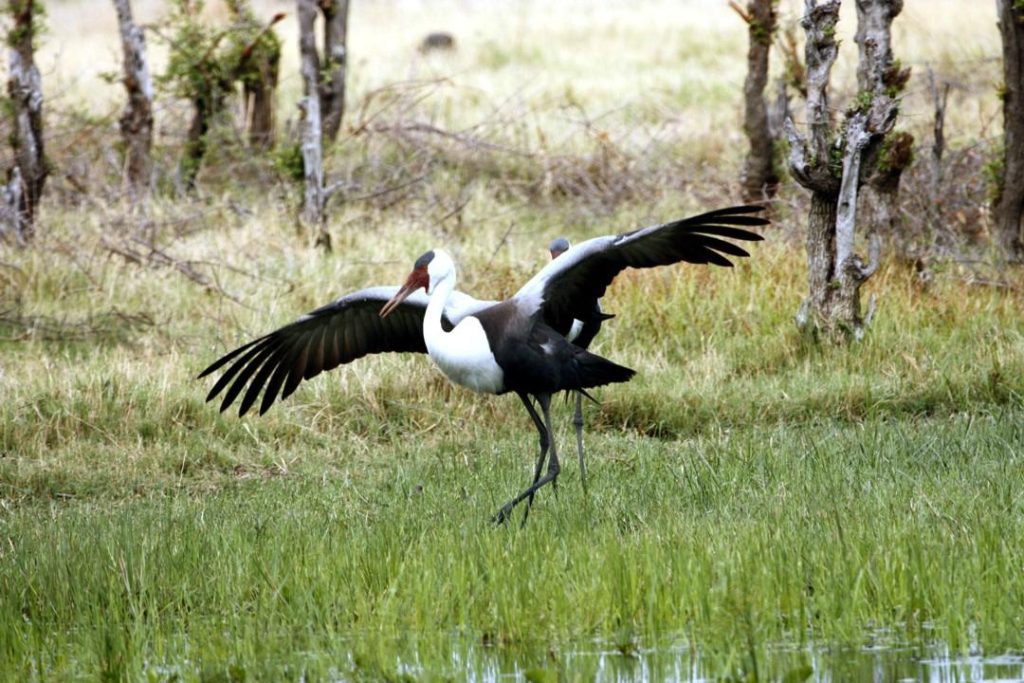
Three birds account for most of the dedicated birding traffic to Botswana.
Pel’s fishing owl is the one on every list, described by some as the holy grail of African birds. It is large, ginger with black spots and enormous black eyes, and it lacks the facial disc most owls carry, which is thought to be because it hunts fish below the surface rather than locating prey by sound. It grabs fish with its talons from just under the water. Secretive and perching high in trees by day, it is most reliably found in the Panhandle and the permanent Delta.
Slaty egret is small, dark and near-endemic, with almost 85 percent of the population thought to occur in the Delta.
Wattled crane is endangered, and the Okavango is considered its greatest stronghold in Africa, holding the continent’s largest population.
Beyond those, Hartlaub’s babbler, swamp boubou and brown firefinch are the specials birders chase.
African skimmer deserves a mention alongside them. It feeds by flying low with its elongated lower mandible cutting the water surface, snapping shut on contact with a fish, which is a genuinely odd technique to watch. The Chobe and the Panhandle both hold them, and they nest on exposed sandbanks, which makes them vulnerable to changing water levels.
Where to Bird in Botswana
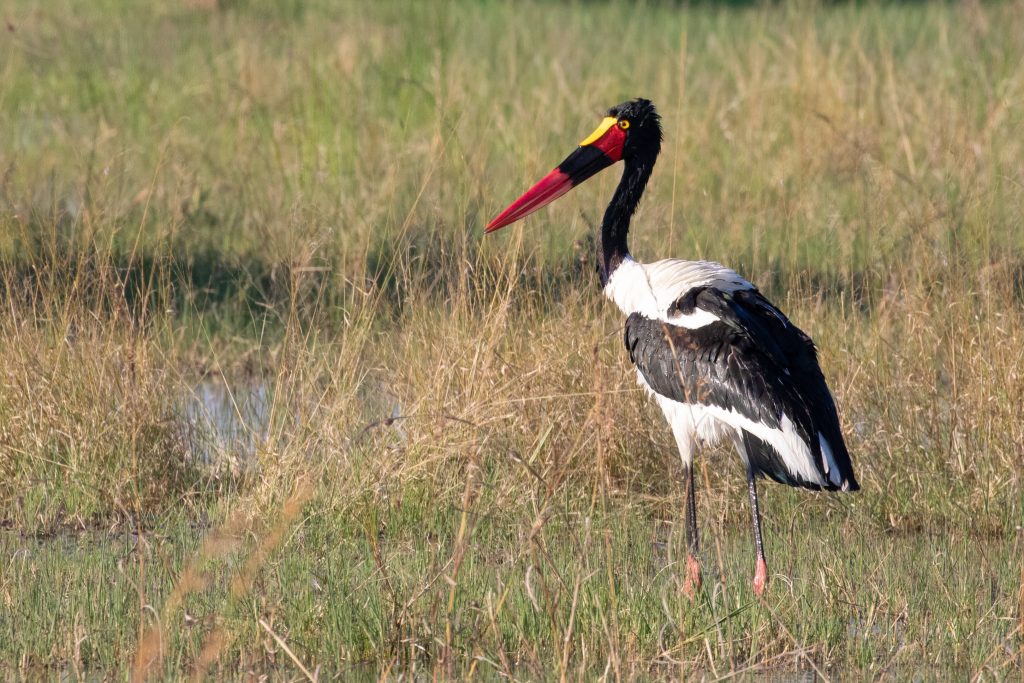
Thirteen Important Bird Areas are recognised, and a few stand out for a visitor.
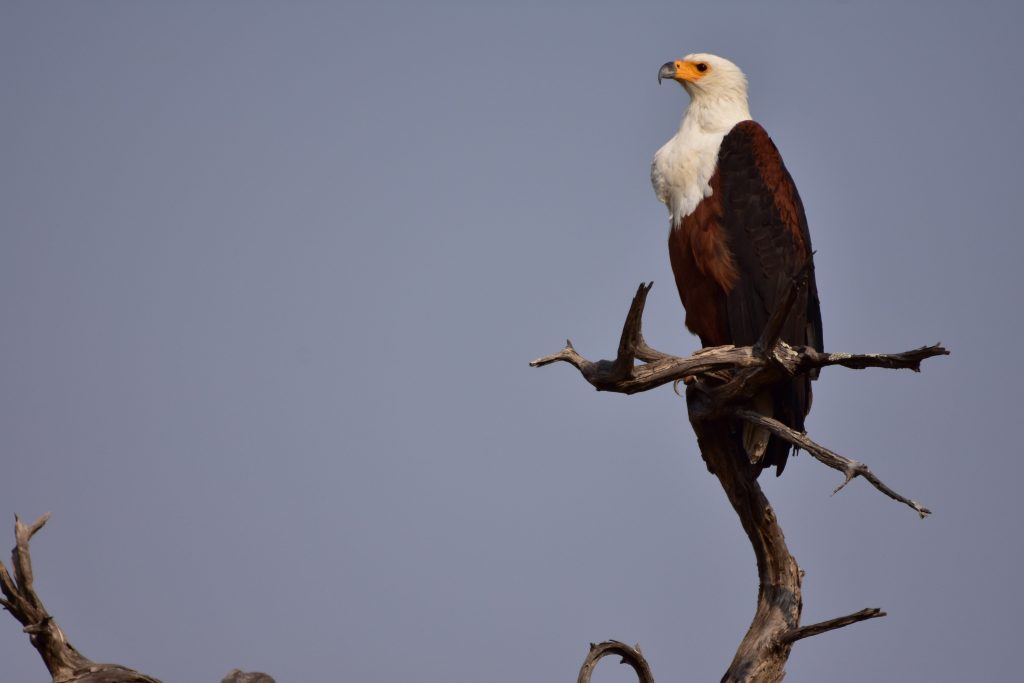
The Okavango Panhandle is the birding centre, with permanent deep water producing fish eagle, Pel’s fishing owl, African skimmer, slaty egret, wattled crane, white-backed night heron, lesser jacana and western banded snake eagle. Nearly two thirds of Botswana’s species can be found in this region.
The inner Delta and its concessions deliver papyrus swamp specials including brown firefinch, coppery-tailed coucal, greater swamp warbler and chirping cisticola, alongside saddle-billed stork, African darter, goliath and rufous-bellied herons and African pygmy goose.
Chobe and the Linyanti combine waterbirds and dry mopane species together, with the Savuti Channel carries a high concentration of eagles and raptors.
Sowa Pan when flooded attracts globally important numbers of lesser and greater flamingo.
The Kalahari holds a completely different set, with plum-coloured and Cape glossy starlings, arrow-marked babbler, Bradfield’s hornbill, bateleur eagle, ant-eating chat, pale chanting goshawk, northern black korhaan and double-banded courser.
When to Go Birding
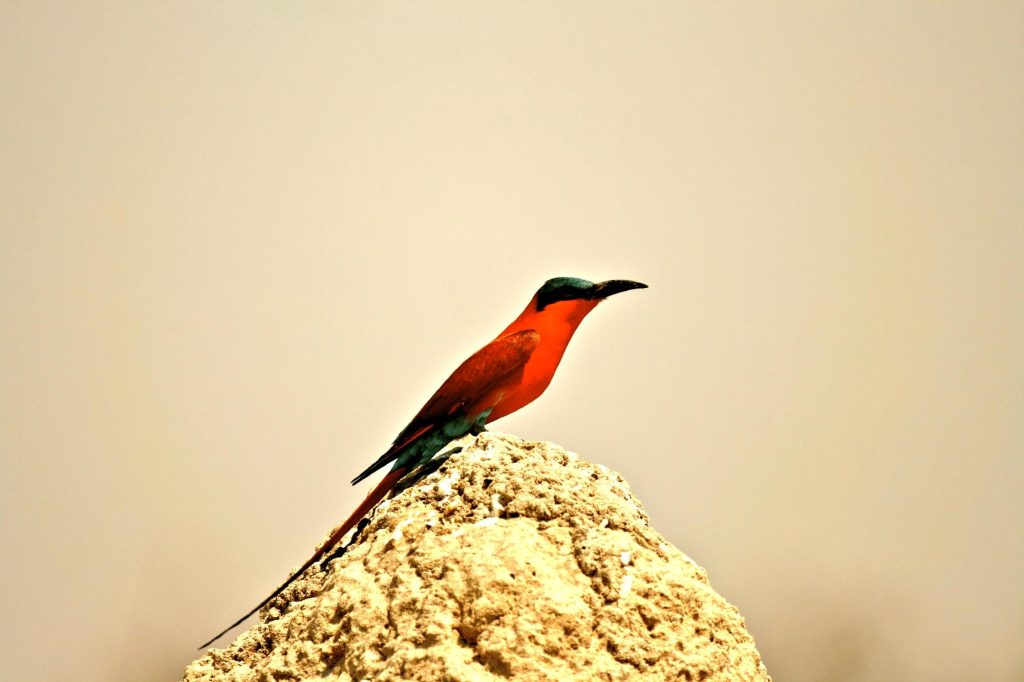
The birding calendar runs opposite to the general wildlife calendar, which catches people out.
November to April, the wet months, are the peak. Intra-African and Palaearctic migrants are all present, resident species are in breeding plumage, and food is abundant. Those are also the hottest months, with the trade-off being obvious.
October is the other strong period, just before the rains, with internationally important species gathering in numbers.
There is a specific event worth timing for. As the Okavango floodwaters advance, wattled cranes, storks, herons and egrets appear suddenly in numbers, congregating to feed on the insects and small creatures driven ahead of the water as it seeps across dry ground. That is one of the better spectacles in the Delta and it moves with the flood.
The dry season still delivers, with waterbirds concentrated on shrinking water and carmine bee-eater colonies nesting in riverbanks around September.
Birding is good year round, and serious birders come in summer.
One further seasonal note. Raptor viewing improves in the dry months as prey concentrates and thermals build over open ground, and the Savuti Channel in particular carries a high concentration of eagles through that period. So a trip weighted toward raptors and one weighted toward waterbirds and migrants point at opposite ends of the calendar, which is worth resolving before booking rather than after.
Okavango Panhandle. The birding centre, with permanent deep water and nearly two thirds of Botswana’s species. Pel’s fishing owl, African skimmer, wattled crane, lesser jacana and white-backed night heron.
Inner Delta concessions. Papyrus swamp specials and waterbirds, best seen from a mokoro, which glides silently and lets you get close to kingfishers, herons and jacanas.
Kalahari and the pans. A completely different list of dry country species, plus lesser and greater flamingo in globally important numbers on Sowa Pan when it floods.
Birding From a Mokoro
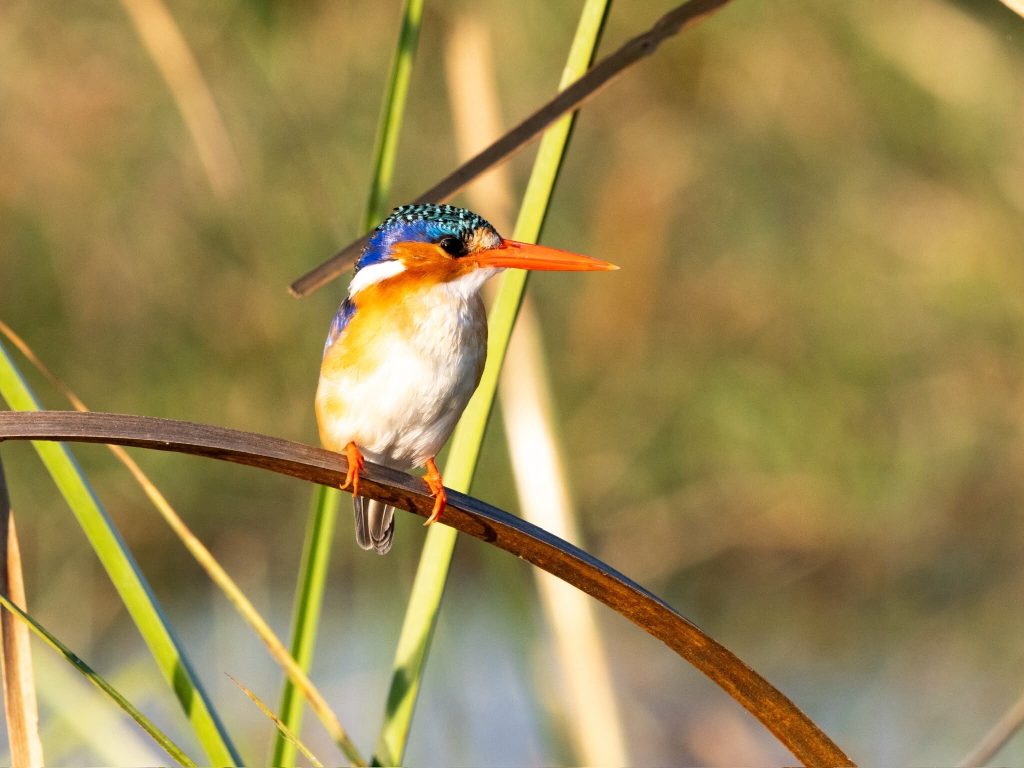
This is the detail that makes Botswana birding different from birding almost anywhere else.
A mokoro moves at walking pace with almost no sound, which means water birds do not flush. Kingfishers, herons and jacanas can be approached far more closely than any boat or vehicle allows.
The lesser jacana picking its way across water lilies at a few metres is the image most people take away.
Photographers benefit particularly, since a mokoro sits at water level and a still poler can hold position on a subject indefinitely.
Several camps run dedicated birding mokoro excursions and birding walks with guides who know the calls.
Ask for a birding guide by name. Botswana guides are professionally licensed and most are strong on birds, and a guide who knows you are interested will change what the whole drive covers.
Practical Birding Advice
A few things make a real difference on a Botswana birding trip.
Bring your own binoculars. Camps may supply them and often do not guarantee it, and sharing across a vehicle means missing things. Eight or ten by forty-two is the standard choice.
A field guide covering southern Africa rather than the whole continent will be far more useful, and several good apps now include calls.
Camps with a mix of water and land access produce longer lists than either alone, which argues for a permanent water camp offering drives alongside boats.
A checklist of over 600 species has been compiled by BirdLife Botswana and is worth having before you travel.
Note that peak birding coincides with the green season, when rates fall considerably and camps are quieter, so a birding trip is often the cheaper trip.
Keep a list. Camps frequently have a species list at reception and guides enjoy adding to it, and a group that logs what it sees tends to see more, because the act of recording sharpens attention. It also gives the guide a reason to go looking for the two or three species you are still missing on the final morning.
Tell the camp before you arrive that birds matter to you. Guides default to predators because that is what most guests want, and a camp told in advance will assign a guide who is strong on birds and will structure drives around them.
Frequently Asked Questions About Birds in Botswana
How many bird species are there in Botswana?
Over 600 species have been recorded, with a checklist compiled by BirdLife Botswana. The Okavango Delta alone holds over 400 recorded species, and individual concessions within it record 330 to 345 species inside their own boundaries. Botswana has no endemic bird species, but it holds several near-endemics and specials, including slaty egret, of which almost 85 percent of the world population is thought to occur in the Delta.
What is the best time for birding in Botswana?
November to April, the wet months, when intra-African and Palaearctic migrants are all present, resident species are in breeding plumage and food is abundant. Those are also the hottest months. October just before the rains is the other strong period. Note this runs opposite to the general wildlife calendar, which means peak birding falls in the green season when rates are considerably lower and camps are quieter.
Where can you see Pel’s fishing owl?
Most reliably in the Okavango Panhandle and the permanent Delta, where several camps have known roosts. It is large and ginger with black spots and enormous black eyes, and lacks the facial disc most owls carry, thought to be because it hunts fish below the surface rather than locating prey by sound. It grabs fish with its talons from just under the water and perches high in trees by day, which makes it genuinely difficult to find.
What are Botswana’s Important Bird Areas?
Thirteen are recognised, including Chobe National Park, the Linyanti Swamps, the Okavango Delta, the Makgadikgadi Pans, the Central Kalahari and Khutse Game Reserves, Mannyelanong Game Reserve and the Kgalagadi Transfrontier Park. Globally threatened wattled crane and slaty egret populations in the north are of international importance, and Sowa Pan attracts globally important numbers of lesser and greater flamingo when flooded.
Is a mokoro good for birdwatching?
Exceptionally. A mokoro moves at walking pace with almost no sound, so water birds do not flush and kingfishers, herons and jacanas can be approached far more closely than from any boat or vehicle. It sits at water level, which suits photography, and a poler can hold position on a subject indefinitely. Several Delta camps run dedicated birding mokoro excursions alongside birding walks with guides who know the calls.
Do I need a specialist birding guide in Botswana?
Not necessarily, but telling the camp in advance makes a substantial difference. Botswana guides are professionally licensed and most are strong on birds, and a camp told beforehand will assign someone who knows the calls and will structure drives accordingly. Bring your own binoculars, since camps do not always guarantee them, and a field guide covering southern Africa rather than the whole continent will be far more useful.
Booking Your Botswana Trip
The safari companies and tour operators listed on this website put trips like this together for a living and know which camps, guides and routes actually deliver. We are an independent guide to Botswana; we do not book or sell tours ourselves.
When you are ready, arrange your safari, tour or holiday with one of the recognised operators listed here. Tell them your dates and what matters most, and a real person, not a form, will handle the itinerary, park bookings and logistics for you.