Linyanti
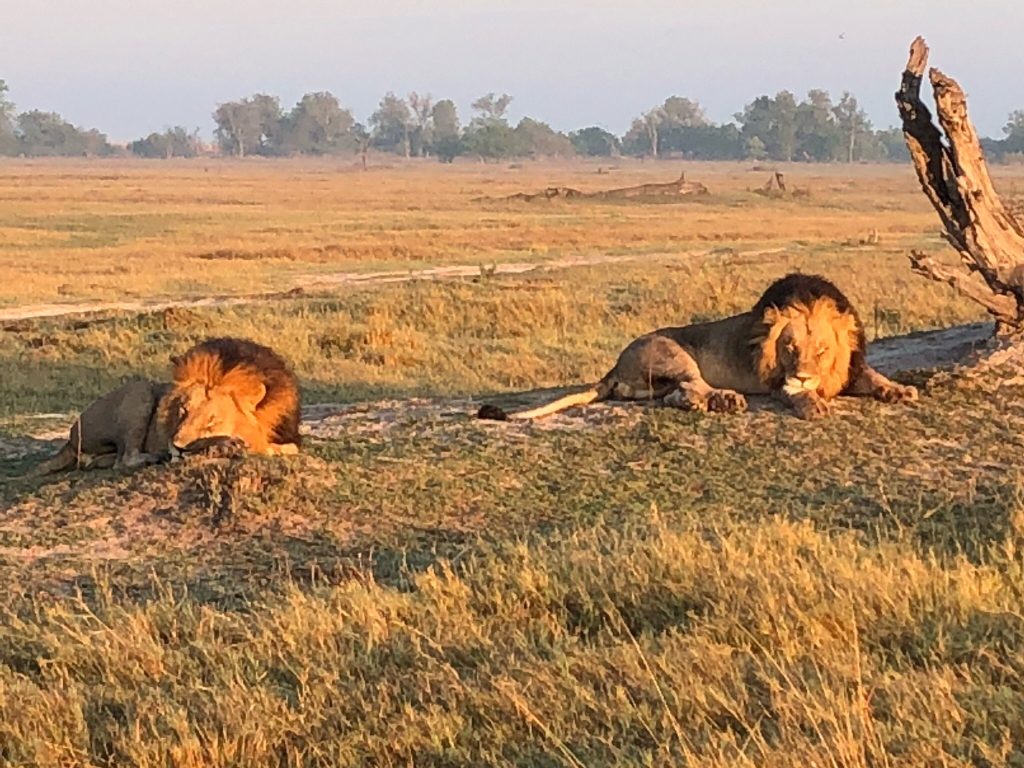
Linyanti is a band of private concession country along the southern bank of the Linyanti River in northern Botswana, bordering Chobe National Park to the east and Namibia across the water to the north. It holds one of Africa’s highest dry-season elephant concentrations and permits off-road driving, night drives and walking, none of which the neighbouring national park allows. The Linyanti Wildlife Reserve covers roughly 1,250 square kilometres, with the Selinda and Kwando concessions adjoining it.
Where Linyanti Sits and How the Area Divides
The Linyanti region occupies the gap between the Okavango Delta and Chobe, and it is split into three private concessions that share the same water system.
The Linyanti Wildlife Reserve, designated NG15, sits directly on the river and forms the western boundary of Chobe National Park. Two thirds of the Savuti Channel runs through it.
The Selinda Reserve, NG16, lies in the centre, straddling the Selinda Spillway which links the Okavango with the Linyanti floodplains, and covers around 1,350 square kilometres.
The Kwando Concession, NG14, lies to the north along the Kwando River.
Together these form one of the largest blocks of privately managed wildlife country in Botswana, fed by the permanent water of the Kwando and Linyanti systems alongside the Savuti Channel and the Selinda Spillway.
The Linyanti River itself is the international border, with Namibia’s Zambezi Region on the far bank.
The whole argument for Linyanti sits in one sentence: it offers Chobe’s elephants with off-road driving, night drives and walking, which the national park itself cannot legally permit.
The Linyanti Marshes and Habitats
The country changes considerably across a short distance, which is what produces the variety here.
Along the river the land is marshland, lagoon and meandering waterway. Fluctuating water levels create seasonal marshes that expand and contract with the annual flood, drawing waterbirds and water-adapted antelope including red lechwe.
Move back from the water and you find open grassland and riverine forest, then mopane woodland further inland. Ancient floodplains, palm-fringed islands and open savannah all occur within the concessions.
Mopane dominates the drier interior and is less productive for game viewing, which is why camps cluster along the river and the lagoons.
The result is that a Linyanti camp on the water offers a genuinely different day from one set back inland, and the better itineraries pair them.
Elephants of the Linyanti

This is what the region is known for and the reason many experienced travellers rate it above the Delta names.
Linyanti holds one of the highest elephant concentrations in Africa, and it peaks between June and October when surface water inland has disappeared and thousands converge on the river.
What you see is not simply numbers but behaviour: breeding herds drinking and bathing, dramatic river crossings, and aggregations running to several hundred animals at a time.
Some camps sit deliberately between established elephant corridors, which puts the movement directly in front of the property rather than requiring you to find it.
Elephants here are particularly fond of marula trees, and the ebony and marula forests along the river are a reliable place to look.
Outside the dry months elephant disperse widely as inland water becomes available, so the spectacle is genuinely seasonal.
Predators and Other Wildlife in Linyanti

The region has earned a strong reputation for predators, with several species reaching high densities.
Lion and spotted hyena are the principal predators, with several prides holding territory across the concessions. Leopard do well in the dense riverine forest along the waterfront and are most often seen on night drives, which the concessions permit.
African wild dog occur here in better numbers than in most of Africa, and the Linyanti and Kwando area together is among the more reliable regions on the continent for finding them.
Cheetah are present on the more open ground.
Beyond predators, buffalo herds are large, and red lechwe, impala, sable, roan, wildebeest, giraffe, kudu and zebra all occur. Hippo and crocodile hold in the lagoons and channels, and birdlife along the reed-lined waterways is exceptional.
Linyanti Reserve, NG15. On the river, forming Chobe’s western boundary, with two thirds of the Savuti Channel running through it. Highest elephant concentrations, several well-known camps, lagoon settings.
Selinda Reserve, NG16. Around 1,350 square kilometres straddling the Selinda Spillway linking the Okavango to the Linyanti. More floodplain than Linyanti, with canoeing and walking when water allows.
Kwando Concession, NG14. Furthest north along the Kwando River, around 2,300 square kilometres shared between only two camps. The remotest of the three and outstanding for wild dog.
Activities in the Linyanti Concessions
The range available here is what separates concession country from the national parks, and it is worth being specific about.
Game drives run by day and by night, with spotlights on the evening drives opening up leopard, serval, genet, civet, porcupine and hunting cats.
Off-road driving is permitted, so a guide can follow a leopard or a wild dog pack away from the track rather than watching them leave.
Guided walking safaris run with licensed armed guides, putting you on the ground rather than in a vehicle.
Seasonal boating and mokoro operate where water levels allow, and some camps offer catch-and-release fishing.
Several properties have built photographic hides, including underground and log-pile designs at water level, which produce a perspective a vehicle cannot.
Vehicle numbers at a sighting are capped by concession agreement, so a leopard is frequently yours alone.
Camps in the Linyanti Region

The concessions hold a small number of camps across a very large area, which is the point.
On the Linyanti Reserve, DumaTau sits on Osprey Lagoon between two elephant corridors, with Little DumaTau offering a smaller and more private version of the same. King’s Pool overlooks an oxbow lagoon on the river. Linyanti Tented Camp sits directly on the marsh. Savuti Camp is set above the Savuti Channel.
Linyanti Ebony is a small four-tent camp including a family tent, with child-specialist guides available. Linyanti Expeditions runs classic safari tents with star suites for sleeping under the sky, focusing on walking, birding and mokoro.
On Selinda, Zarafa overlooks the Zibadianja Lagoon, Selinda Camp sits in the heart of the concession, and Selinda Explorers offers walking and canoeing with strong guiding.
Access is by light aircraft to camp airstrips. Self-driving to these camps is not possible.
One further point about the geography worth knowing. The Chobe Enclave sits between the Linyanti concessions and the national park, an area of community land where villages and farming exist alongside the wildlife areas. Elephant moving between the Linyanti and Chobe pass through it, which makes the enclave a genuine conservation pressure point and one of the places where community involvement in tourism revenue matters most directly.
Pair a river camp with an inland one rather than staying in the same place for six nights. The waterfront gives you elephant and lagoon life, while the drier interior gives you different predator country, and the transfer between them is a short hop.
Best Time to Visit Linyanti
Wildlife here is markedly seasonal, more so than in the Delta, and getting the timing right matters.
June through October is the peak and the reason to come. Inland water disappears, game concentrates on the permanent river, and the elephant aggregations reach their most dramatic. Predator activity follows the concentration.
Game densities improve steadily as the dry season progresses, so September and October deliver the highest numbers alongside the greatest heat.
Some camps in the region operate seasonally, opening around May and closing in November, which tells you where the operators think the value sits.
The green season from November to April spreads the game widely as inland pans fill. Birding is at its best, the country is green, and rates fall considerably, though the elephant spectacle that defines Linyanti largely disperses.
Frequently Asked Questions About Linyanti
Where is Linyanti in Botswana?
In the far north, along the southern bank of the Linyanti River, which forms the border with Namibia’s Zambezi Region. It sits between the Okavango Delta to the southwest and Chobe National Park to the east, with the Linyanti Wildlife Reserve forming Chobe’s western boundary. The wider area divides into three private concessions: Linyanti at around 1,250 square kilometres, Selinda at roughly 1,350, and Kwando at about 2,300 to the north.
Why is Linyanti better than Chobe National Park?
It is not better so much as differently permitted. Linyanti camps sit on private concessions, which allow off-road driving, night drives and guided walking, all of which Chobe prohibits as a national park. Vehicle numbers at a sighting are capped by concession agreement, so wildlife is frequently yours alone. The trade is cost, since concession camps run well above riverfront lodges near Kasane, and access requires a light aircraft.
When is the best time to visit Linyanti?
June through October, and the seasonality here is more pronounced than in most of Botswana. As inland water disappears, thousands of elephant converge on the permanent river, producing breeding herds drinking, river crossings and aggregations of several hundred animals. Predators follow the concentration. Game densities improve as the dry season progresses, so September and October are strongest. Several camps in the region close through the green months.
Can you see wild dogs in Linyanti?
Yes, and the Linyanti and Kwando region together is among the more reliable places in Africa to find them. Wild dog occur here in better numbers than in most of the continent, and the concessions permit off-road driving, so guides can follow a pack on a hunt rather than losing them at the track edge. Sightings remain unpredictable, as they are everywhere, but the odds here are as good as they get.
Can you self-drive to Linyanti?
No. These are private concessions with restricted access, and self-driving to the camps is not possible. Guests arrive by light aircraft at camp airstrips, typically a short hop from Maun or Kasane. That restriction is part of what keeps vehicle numbers low and the sightings uncrowded. Self-drive travellers wanting similar country should look at Savuti inside Chobe National Park, or the Khwai community area.
What is the Selinda Spillway?
An ephemeral waterway linking the Okavango Delta with the game-rich floodplains of the Linyanti, running through the Selinda Reserve. Like the Savuti Channel it flows unpredictably, filling when Okavango floods are high enough to push water through. When it runs, Selinda camps offer canoeing along it alongside walking and game drives, and the floodplains draw elephant, wildebeest, zebra, giraffe and the predators that follow them.
Booking Your Botswana Trip
The safari companies and tour operators listed on this website put trips like this together for a living and know which camps, guides and routes actually deliver. We are an independent guide to Botswana; we do not book or sell tours ourselves.
When you are ready, arrange your safari, tour or holiday with one of the recognised operators listed here. Tell them your dates and what matters most, and a real person, not a form, will handle the itinerary, park bookings and logistics for you.