Driving in Botswana
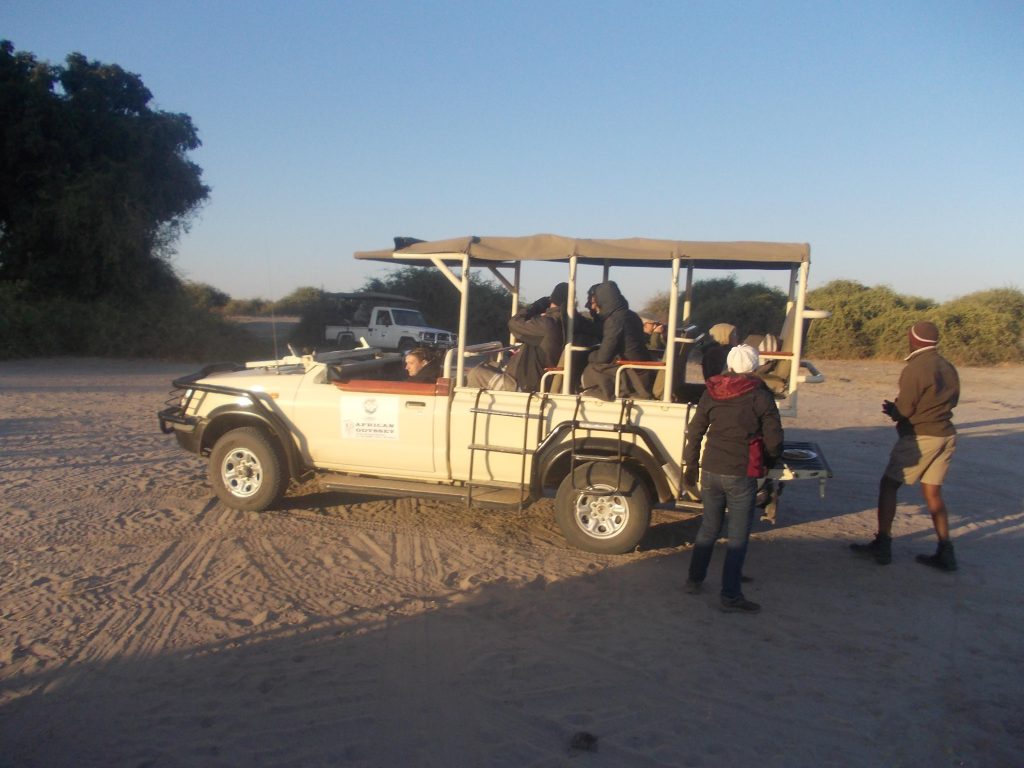
Driving in Botswana is on the left, with good tar between the main towns and deep sand tracks everywhere else, and the single most important rule is not to drive between towns after dark because livestock and elephants stand on the road. Fuel is not sold inside national parks and gaps between stations run long. Botswana is a southern African country of 581,000 square kilometres with a small population, which means empty roads, long distances and no roadside assistance where you will most want it.
Road Rules and Speed Limits in Botswana
Traffic drives on the left, a legacy of British administration, and right of way at roundabouts goes to the right. Seatbelts are compulsory for all occupants.
Speed limits are published inconsistently across sources, with urban limits given variously as 50 or 60 kilometres per hour, rural roads at 80, and open highway at either 100 or 120. Signage is the authority rather than any guide, and limits change without much warning on the same stretch of road. Inside national parks the limit is 40 kilometres per hour and it is strictly applied.
The blood alcohol limit is 0.08 percent, and driving after drinking in a country with free-roaming livestock on unlit roads is a poor idea regardless of the legal figure.
Traffic police operate speed enforcement widely and issue fines on the spot, payable directly or at a police station. Roadblocks are routine across the country and are an administrative formality rather than a threat. Stop, be polite, produce your licence and vehicle papers.
A valid driving licence is required and an international driving permit is worth carrying.
Road Conditions on a Botswana Self-Drive Safari
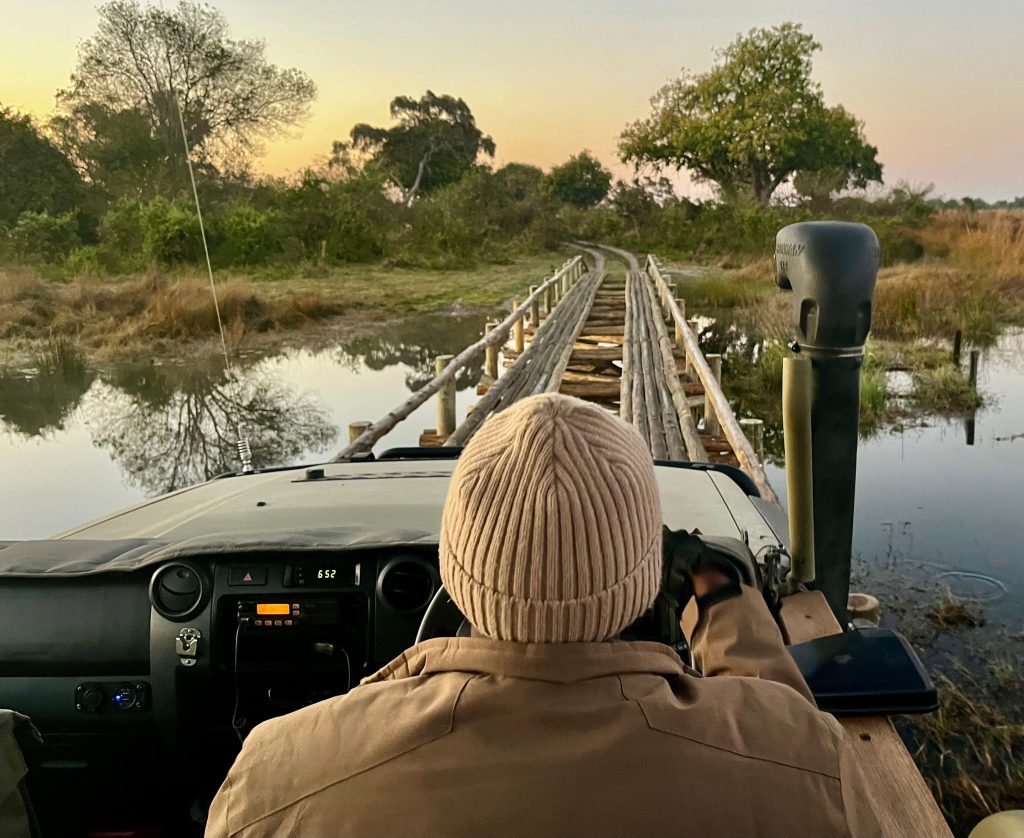
Conditions vary more sharply here than in most countries, and the change from one to the other is often abrupt.
Tar roads linking the main towns are broadly good and kept in fair repair, carrying the A1, A3, A14 and A33. Potholes appear without warning on certain stretches, and travellers regularly report bad sections near Nata and on the approaches from Martin’s Drift, some of them severe enough to damage a wheel.
Gravel roads need a reasonable speed and real attention, since rutted sections and potholes are common and heavy braking on loose gravel can send a vehicle sliding.
Sand is what most park tracks are made of. High range 4×4 handles most of it, with low range needed for short stretches in the heat of the day when sand is at its loosest. The technique is to deflate tyres to widen the footprint, which transforms how a vehicle moves through deep sand, then reinflate once back on hard surfaces.
Mud in the green season is the one to fear. Black cotton soil becomes impassable after rain and a bogged vehicle in it cannot be dug out easily. If previous vehicles have made a diversion around a bad section, follow it.
If the vehicle starts sinking into sand, do not accelerate. Stop, dig out the wheels, reverse, and pick a new line. Spinning the wheels digs you deeper and turns a ten-minute problem into an afternoon.
Why You Should Not Drive at Night in Botswana
Everyone who lives here says the same thing, and it is the most important advice on this page.
Livestock roams free along the main roads. Cattle, goats and donkeys stand on the tar after dark because it holds the day’s heat, and a dark cow on an unlit road at highway speed is invisible until it is too late. Elephants cross the highways in the north, and an adult elephant will destroy a vehicle and everyone in it.
Roads are unlit outside towns. Wildlife including kudu, warthog, ostrich and giraffe move at dawn and dusk in particular.
Plan every driving day to finish before sunset, which in winter means before about six in the evening. Build in more margin than the distance suggests, since border queues, punctures and veterinary checkpoints all eat time.
Fuel and Distances When Driving in Botswana
Fuel planning is the discipline that separates a comfortable self-drive from an anxious one.
Fuel is not sold inside national parks at all. There is no fuel on the bush routes between Maun and Kasane. Stations exist in the main towns and safari hubs, and the gaps between them run long enough that arriving on a quarter tank is a gamble rather than a plan.
The rule most experienced drivers follow is to fill up whenever you pass a station in the second half of a tank, regardless of how much you think you need. Carry jerry cans for extra range, commonly 20 litres, and a vehicle with dual tanks removes most of the worry.
Distances are substantial. Maun to Kasane is around 614 kilometres and takes close to seven hours of driving. Gaborone to Maun is a full day. These are not distances to attempt casually on the back of a long-haul flight.
Most fuel stations accept cards, though rural machines fail regularly, so carry Pula.
Tar roads. Main routes between Gaborone, Francistown, Maun and Kasane. Mostly good, with occasional severe potholes. Drivable in an ordinary car in daylight.
Gravel and secondary roads. Corrugated, rutted, dusty. Moderate speed, gentle braking, watch for livestock and wildlife crossing without warning.
Park tracks. Deep sand throughout Moremi, Chobe and the Kalahari. Requires 4×4, tyre deflation, recovery gear and experience. Impassable in places after rain.
Veterinary Checkpoints and Roadblocks
Two kinds of stop punctuate a Botswana drive, and neither is a problem once you know what they are.
Veterinary control fences divide the country into disease control zones, protecting the cattle industry from foot and mouth disease. At the control points, officers may inspect your vehicle for meat and dairy products, ask you to walk across a disinfectant mat and drive the vehicle through a wheel dip. Everybody does this. It takes a couple of minutes.
Police roadblocks appear on main routes and check licences, vehicle papers and sometimes sobriety. They are routine, usually courteous and not a shakedown. Keep your documents somewhere reachable rather than buried in a bag.
Have the vehicle registration, your licence, the rental agreement and any authority letter to hand as a single bundle. It makes both kinds of stop faster.
Driving Inside Botswana National Parks

Park driving follows its own rules, and breaking them carries real consequences including expulsion.
The speed limit is 40 kilometres per hour. Off-road driving is prohibited entirely in national parks and game reserves, so you stay on designated tracks whatever the sighting. Gates open and close at set hours and you must be out or at your campsite by closing time. Camping is permitted only at designated sites, booked in advance.
Park fees for non-residents run at 120 Pula per person per day, dropping to 70 Pula for clients of a licensed Botswana operator, with camping charged separately. Entry has been refused for incorrect paperwork, so have permits arranged before you arrive at the gate rather than assuming you can pay there.
On wildlife, keep your distance and never position the vehicle between an elephant and water, or between any animal and its young. Switch the engine off at a sighting rather than idling. If an elephant shows signs of agitation, meaning ears out, head shaking or a mock charge, reverse away calmly rather than revving forward.
Frequently Asked Questions About Driving in Botswana
Which side of the road do they drive on in Botswana?
The left, inherited from British administration, with right of way at roundabouts going to the right. Drivers coming from right-hand-traffic countries find intersections, roundabouts and overtaking the hardest adjustments, and most mistakes happen at turns. Seatbelts are compulsory for everyone in the vehicle. A valid driving licence is required and an international driving permit is worth carrying for roadblocks and rental collection.
What are the speed limits in Botswana?
Published figures vary between sources, with built-up areas given as either 50 or 60 kilometres per hour, rural roads at 80, and open highway at 100 or 120 depending on who you read. Follow the posted signage rather than any published figure, since limits change on the same stretch without much warning. Inside national parks the limit is a firm 40 kilometres per hour. Traffic police enforce actively and issue fines on the spot, payable directly or at a station.
Is it safe to drive at night in Botswana?
No, and this is the most consistent advice you will get from anyone who lives there. Cattle, goats and donkeys stand on the tar after dark because it retains the day’s heat, and they are invisible until you are on them. Elephants cross highways in the north and will destroy a vehicle. Roads outside towns are unlit. Plan every driving day to finish before sunset and build in far more margin than the distance suggests.
How do you drive in deep sand in Botswana?
Deflate your tyres to widen the contact patch, which transforms how the vehicle moves, then reinflate once back on hard surfaces. Use high range 4×4 where you can and low range for short heavy stretches, which conserves fuel. Set off early in the morning before the sand heats and loosens. If the vehicle begins to sink, stop rather than accelerating, dig out the wheels, reverse and take a new line. Carry a shovel, tow rope and two spare wheels.
Where can I get fuel in Botswana?
In the main towns and safari hubs only. There is no fuel inside national parks at all, and none on the bush routes between Maun and Kasane. Gaps between stations run long, so fill up whenever you pass one in the second half of a tank rather than waiting until you need to. Carry jerry cans for extra range, commonly 20 litres, and prefer a vehicle with dual tanks. Most stations take cards, though rural machines fail, so carry Pula.
What are the rules for driving in Botswana national parks?
A 40 kilometre per hour speed limit, no off-road driving whatever the sighting, entry and exit only within gate hours, and camping only at designated sites booked in advance. Non-residents pay 120 Pula per person per day for entry, or 70 Pula through a licensed Botswana operator, with camping charged separately. Fuel is not available inside. Arrange permits before arriving, since entry has been refused over paperwork errors after long drives to remote gates.
Booking Your Botswana Trip
The safari companies and tour operators listed on this website put trips like this together for a living and know which camps, guides and routes actually deliver. We are an independent guide to Botswana; we do not book or sell tours ourselves.
When you are ready, arrange your safari, tour or holiday with one of the recognised operators listed here. Tell them your dates and what matters most, and a real person, not a form, will handle the itinerary, park bookings and logistics for you.