Elephants in Botswana
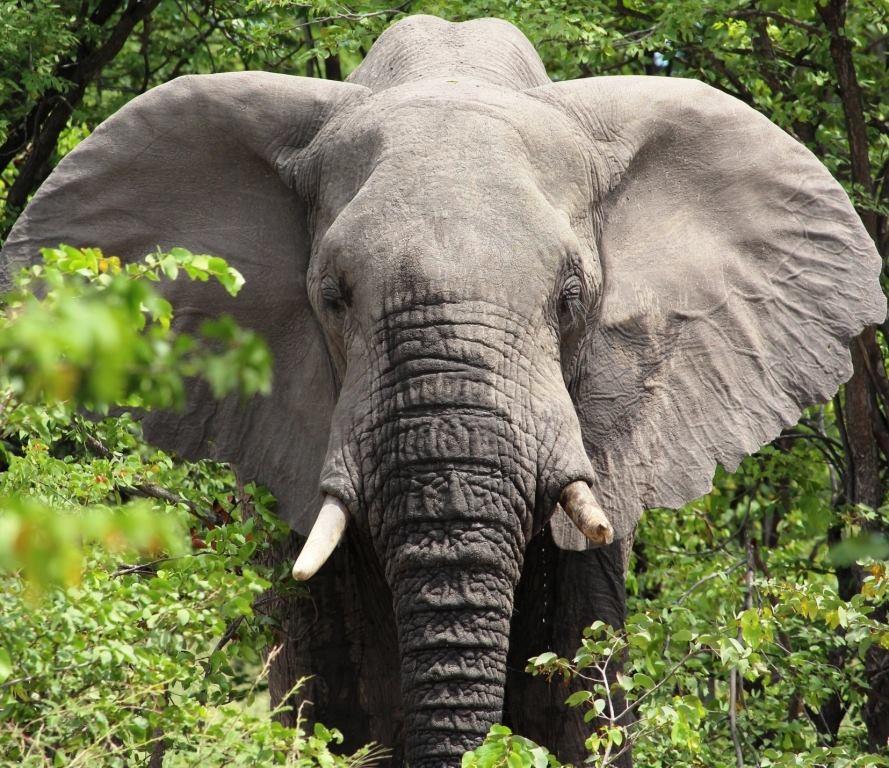
Botswana holds the largest elephant population in Africa, with estimates commonly around 130,000 animals, roughly a third of the continental total. They concentrate along the Chobe River and the Linyanti waterways during the dry months from May to October, when inland water disappears and the herds have nowhere else to drink. Boat safaris on the Chobe put you at eye level with drinking elephants, which is the single best elephant viewing in Africa.
How Many Elephants Are There
The honest answer involves a range rather than a number, and it is worth knowing why.
Figures commonly cited run around 130,000, which would be roughly a third of Africa’s total elephant population. Other sources give over 120,000, and some older material gives figures around 50,000, while one claim of 250,000 in Chobe alone should be treated with considerable scepticism.
The variation has a real cause. Botswana’s elephants are not fenced in, and herds move freely across the borders into Zimbabwe, Namibia, Zambia and Angola as part of the Kavango-Zambezi Transfrontier Conservation Area. Counting an animal that is in a different country in the wet season and back in the dry one is genuinely difficult.
What is not in dispute is that this is the largest population on the continent and one of very few that is stable or growing rather than declining.
Treat any single figure you read, including on this page, as an estimate within a wide band.
Botswana’s elephants are not confined by fences and move across four international borders. Any population figure is a snapshot of animals that were in the country when somebody counted.
Why the Population Is So Large

The history explains a great deal about where the elephants are today, and it is not the simple conservation story it first appears.
Botswana has protected its elephants tightly, with roughly 38 percent of the country set aside for wildlife, difficult access to the wildlife areas, and a military presence deployed against poaching.
What accelerated the concentration was war next door. Civil conflict in Angola and the liberation war in Namibia brought heavy poaching to the north bank of the Chobe, with armed forces killing elephants for ivory and for target practice.
The elephants responded by not crossing the river. The Chobe riverfront became a dry season refuge rather than a stop on a migration route, numbers built up over years, and the park’s reputation grew with them.
With the Caprivi now at peace and protected by Namibian authorities, elephants have started crossing again, which should ease pressure on Chobe’s vegetation over time.
Kalahari Elephants

The elephants here are worth a closer look, because they differ from those elsewhere on the continent.
Botswana’s are Kalahari elephants, known for large body size and for comparatively brittle ivory, which is one of the reasons they were historically less targeted than elephants elsewhere.
Herds are matriarchal, led by an older female who decides the route and teaches the rest where water is. Bulls are pushed out of the herd in their early teens and adult males frequently live alone or in loose bachelor groups.
Savuti in particular holds a large number of bulls living out their lives, which makes it a good place to watch older animals.
They are also unusually relaxed around vehicles, particularly in the Chobe area, where generations have grown up with safari traffic and pay it little attention. That tolerance is what allows the close viewing Botswana is known for.
Elephants grieve, and observers here regularly report herds attending to the bones of dead elephants, scenting and gently handling them before moving on.
Where to See Elephants

Four areas carry the bulk of the population and they offer different viewing.
Chobe riverfront is the densest and the most accessible, minutes from Kasane airport with no charter flight required. Several hundred elephants along one stretch of bank in a dry season afternoon is ordinary rather than exceptional.
Linyanti draws enormous concentrations along its waterways and is rated by many as equal to Chobe with a fraction of the vehicles, since the camps sit on private concessions with capped vehicle numbers.
The Okavango Delta is the place to watch elephants in water, swimming between islands and feeding in the channels, which is a different picture entirely from a riverbank.
Savuti holds bulls year round on artificially maintained waterholes.
Elephants also reach the Tuli Block in the east, the northern Makgadikgadi and Nxai Pan seasonally, and the western Okavango.
Chobe riverfront. The highest density in Africa, best from July to October. Boat safaris put you at eye level with drinking herds, and river crossings where animals swim are a regular sight.
Linyanti and Kwando. Enormous dry-season concentrations with very few vehicles, since concession agreements cap numbers at a sighting. Camps sit deliberately between established elephant corridors.
Okavango Delta. Elephants in water rather than at a riverbank, swimming between islands and feeding among the channels. Viewable from a mokoro or a motorboat rather than just a vehicle.
When to See Elephants

The seasonality here is stark and it drives everything.
The dry months from May to October are when the herds concentrate. As inland pans and seasonal water disappear, the animals have nowhere to drink but the permanent rivers, so they come to the Chobe and the Linyanti in numbers.
Concentrations build through the season. July through October is the peak, with September dry, hot and packed, and August often described as the sweet spot for combining high numbers with more bearable weather.
Afternoons are the time of day. As temperatures peak, elephants emerge from the bush and head to the water to drink, bathe and play, which is why the classic Chobe boat cruise runs in the afternoon.
The green season from November to April disperses the herds widely as inland pans fill, so numbers along the rivers drop considerably. Elephants are still present, just spread out.
Peak elephant season is also peak tourist season, so the riverfront near Kasane carries a lot of vehicles and boats in those months.
Elephants and People in Botswana
This deserves treatment rather than avoidance, because it is the central conservation debate in the country.
Botswana’s elephant numbers have grown to the point where the government has stated that populations are causing increasing conflict with people, including crop destruction and damage to property and livelihoods in rural areas.
Hunting policy has shifted more than once in recent years, with a ban introduced and later lifted, and the question remains genuinely contested both within Botswana and internationally.
The habitat argument is visible on the ground. Hardwood woodland along the Chobe riverfront has been substantially thinned by elephant feeding, which is either a natural process in a system that once had wider movement, or evidence of overpopulation, depending on who is arguing.
What is agreed is that reopening cross-border corridors, so elephants can spread across the Kavango-Zambezi region rather than concentrating in northern Botswana, is part of the answer.
Wildlife tourism accounts for a substantial share of Botswana’s economy, which gives the country a direct stake in the outcome.
Take a boat rather than only a vehicle if elephants are your priority. From the water you sit level with drinking herds instead of looking down at them, you can watch animals swim between islands, and you see behaviour at a riverbank that a track behind it never shows.
Watching Elephants Safely

Elephants cause more visitor injuries in southern Africa than most predators, and the rules exist for good reason.
In a vehicle, stay seated and inside the outline. Animals read a vehicle as a single object and do not distinguish the people in it until somebody stands up.
Never position the vehicle between an elephant and water, or between any animal and its young. A good guide will not, and it is worth knowing why if you find yourself wanting a closer angle.
If an elephant shows agitation, meaning ears spread wide, head shaking, a trumpet or a mock charge, the correct response is a calm reverse rather than revving forward or trying to photograph it.
Camps are unfenced and elephants walk through them. Staff escort guests between tents after dark, and that rule is not a formality, no matter how short the walk looks.
Self-drivers should give elephants substantially more room than they think necessary, particularly bulls in musth and cows with calves.
Frequently Asked Questions About Elephants in Botswana
How many elephants are in Botswana?
Estimates commonly run around 130,000, roughly a third of Africa’s total, though figures vary widely across sources with some giving over 120,000 and older material citing far lower numbers. The variation is genuine rather than careless: Botswana’s elephants are unfenced and move across borders into Zimbabwe, Namibia, Zambia and Angola within the Kavango-Zambezi Transfrontier Conservation Area, which makes counting difficult. What is not disputed is that this is the largest population on the continent.
Where is the best place to see elephants in Botswana?
The Chobe riverfront has the highest density in Africa and is the most accessible, sitting minutes from Kasane airport with no charter flight needed. Linyanti draws comparable concentrations with far fewer vehicles, since concession agreements cap numbers at a sighting. The Okavango Delta offers a different picture entirely, with elephants swimming between islands and feeding in the channels. Savuti holds bulls year round on maintained waterholes.
When is the best time to see elephants in Botswana?
July through October, with concentrations building through the dry season as inland water disappears and the herds have nowhere to drink but the permanent rivers. September is dry, hot and packed with animals, while August is often described as the sweet spot for combining high numbers with more bearable weather. Afternoons are the time of day, as elephants come down to drink and bathe when temperatures peak.
Why are there so many elephants in Botswana?
Tight protection, roughly 38 percent of the country set aside for wildlife, difficult access to the wildlife areas and a military response to poaching. History accelerated it: civil war in Angola and the liberation war in Namibia brought heavy poaching to the north bank of the Chobe, and elephants responded by not crossing the river. The Chobe riverfront became a dry season refuge rather than a migration stop, and numbers built up over years.
Are Botswana’s elephants different from other African elephants?
They are Kalahari elephants, known for large body size and comparatively brittle ivory, which historically made them less targeted than elephants elsewhere. Herds are matriarchal, led by an older female who decides the route and teaches the rest where water is, while bulls are pushed out in their early teens and often live alone. Botswana’s elephants are also unusually relaxed around vehicles, particularly around Chobe, which allows the close viewing the country is known for.
Is Botswana’s elephant population a problem?
It is genuinely contested. The government has stated that numbers are causing increasing conflict with people, including crop destruction and damage to rural livelihoods, and hunting policy has shifted more than once with a ban introduced and later lifted. Hardwood woodland along the Chobe riverfront has been substantially thinned by elephant feeding. There is broad agreement that reopening cross-border corridors so elephants can spread across the wider region is part of the answer.
Booking Your Botswana Trip
The safari companies and tour operators listed on this website put trips like this together for a living and know which camps, guides and routes actually deliver. We are an independent guide to Botswana; we do not book or sell tours ourselves.
When you are ready, arrange your safari, tour or holiday with one of the recognised operators listed here. Tell them your dates and what matters most, and a real person, not a form, will handle the itinerary, park bookings and logistics for you.