Family Safari Lodges

Family safari lodges in Botswana usually set a minimum age of six, with many activities restricted to twelve and above, and most camps require families with children aged six to twelve to book a private vehicle. Family suites of two bedrooms exist but are limited in number and sell out early. Botswana is a southern African safari country whose unfenced camps and water-based activities make age policies stricter here than in many destinations, though the small camp sizes suit families well once you are in.
Age Limits at Botswana Safari Lodges
Start here, because this single question rules out more camps than budget does and it is where family bookings most often come unstuck.
Six is the most common minimum age. Many camps will not take children under ten, and a substantial number set twelve. Certain activities carry their own limits regardless of the camp minimum, with walking safaris, mokoro trips and boat outings frequently restricted to twelve and above.
A handful of properties accept all ages, and these tend to be the more solid, hotel-style lodges rather than the classic tented camps, with several on the Chobe riverfront.
The reasoning is safety rather than snobbery. Camps are unfenced, elephants and hippos move through them at night, and many sit beside deep water. A secondary consideration is the effect on other guests, since a camp of eight rooms has nowhere for anyone to go.
Check the age policy before falling for a camp, not after.
Ask about activity ages separately from camp ages. A lodge that accepts a nine-year-old may still not let them into a mokoro or onto a walking safari, which can leave one parent behind at camp on the activity everyone travelled for.
Private Vehicles and Why Families Usually Need One
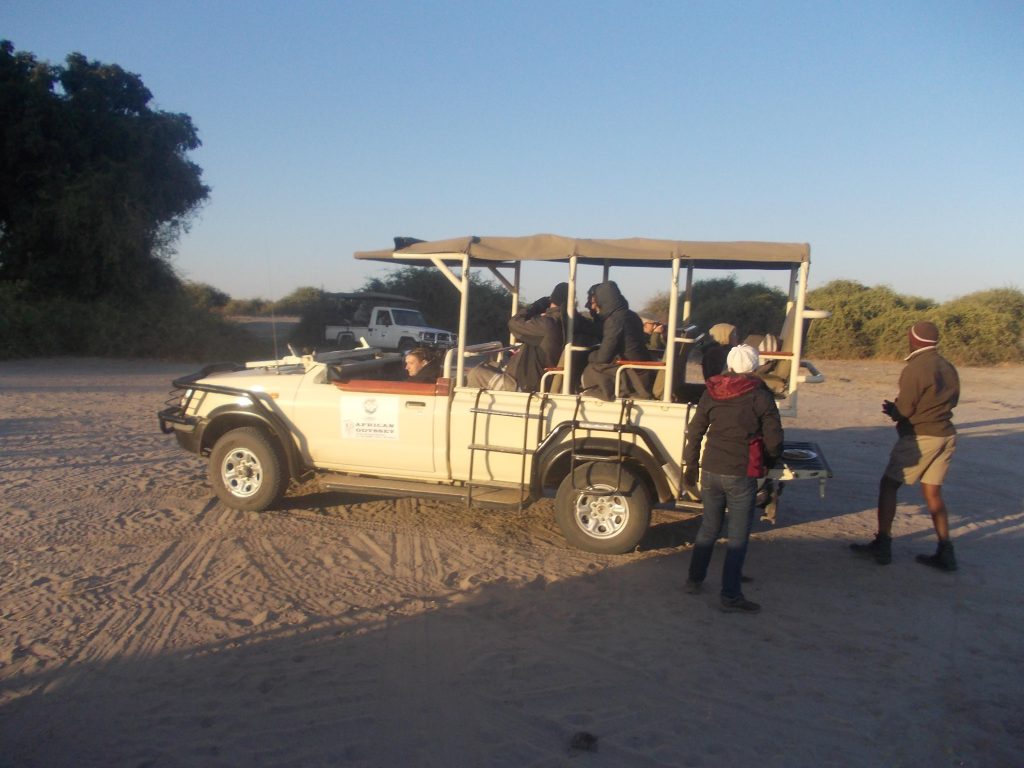
This is the cost most families do not see coming, and it is close to universal.
Most Botswana camps require families with children aged six to twelve to book a game vehicle on a private-use basis. Some extend the requirement to any family with a child under six where children are accepted at all.
It is an added expense on top of the room rate. It is also, honestly, better. A private vehicle means you set the pace, turn back when a small child has had enough, spend forty minutes at a warthog burrow if that is what holds their attention, and never have to weigh your family’s needs against four other guests who want to press on to the lions.
A few camps waive the requirement for children under twelve, and Expert Africa and others note specific properties where children of six and over join drives at the manager’s discretion without a private vehicle. Those camps are worth seeking out if the supplement is the binding constraint.
Budget for it from the start rather than discovering it at the quote stage.
Family Suites and Room Configurations

Sleeping arrangements are the second practical obstacle, and Botswana is tighter on this than most destinations.
Family suites are typically two bedrooms connected by an indoor living area, accommodating four people, sometimes with roll-down walls between the sleeping spaces. Sizes at the upper end run around a thousand square feet or more. Some camps offer adjoining chalets linked by a short corridor, which works similarly.
The catch is quantity. A camp of eight rooms might hold one or two family units, and they book out a long way ahead in dry season.
Where no family suite exists, some camps will accommodate one child in a parent’s room. Very few will put two children in with parents. That means a couple with two children who cannot find a family suite must split up, one adult and one child per room, which is not what most people picture.
A handful of properties offer two-suite family villas with their own staff and vehicle, close to a private camp, which for a larger family group can work out sensibly per head.
Children’s Programmes at Botswana Safari Camps
Several camps run structured programmes for young guests, and they are the difference between children enduring a safari and loving it.
The better ones assign a dedicated staff member to mentor and entertain, with activities including animal tracking, nature walks, bush craft, fire building, making bows and arrows, and collecting and identifying seeds and leaves. One well-known programme covers ages six to seventeen at no extra charge.
Camps with fenced grounds can offer guided walks within the property itself, which lets younger children do something on foot that they could not do in an unfenced camp.
Practical touches matter too and are worth asking about: children’s menus, flexible meal times separate from the communal dinner, and child-minding so parents can take an evening drive.
Not every camp with a family suite has a programme. The two are separate questions.
Under six. Very limited. Look at hotel-style riverfront lodges at Chobe and the few all-ages tented camps. Private vehicle almost always required. Fenced properties are worth prioritising.
Six to twelve. Most camps become available. Private vehicle usually mandatory. Some activities including walking, mokoro and boats may still be restricted. Family suites and children’s programmes worth seeking out.
Twelve and over. Few restrictions left. All activities open, no private vehicle requirement, full choice of camps. Widely considered the ideal age for a first Botswana safari.
Fenced Lodges and Safety With Children
Most Botswana camps are unfenced by design, which is part of what makes them special and part of what makes them demanding with children.
In an unfenced camp, a child cannot walk from the room to the dining area alone, ever. Staff escort guests after dark, elephants move through, and hippos graze the lawns at night. That is manageable with an older child who understands why, and exhausting with a six-year-old who does not.
A small number of properties are fully fenced, and for families with younger children this changes the experience considerably, since children can have some freedom of movement around camp without an adult a step behind at all times.
Fenced lodges also allow walking activities within the grounds for children too young for a proper bush walk.
Swimming pools are common and are worth checking are fenced or supervised, since a plunge pool on an open deck is a different proposition with a toddler.
Planning a Family Safari Around Malaria and Season
Two planning decisions matter more with children than they do for adults travelling alone.
Malaria risk sits in the northern parks, meaning the Okavango Delta, Chobe and Ngamiland, and it peaks with the rains from November through March. Many family specialists recommend the dry season from May to August precisely because mosquito numbers fall to their yearly low. Antimalarial prescribing for children involves weight thresholds and drug suitability that a travel clinic needs to work through.
The malaria-free alternative is real and underused. Southern Botswana, including the Kalahari and the Tuli Block, is considered malaria free and delivers genuine wildlife: black-maned lions, cheetah, gemsbok, meerkats and elephant. For families uneasy about prophylaxis this is a proper option rather than a consolation.
Winter also brings very cold mornings, around 6°C to 7°C on a dawn drive, so pack children properly for that rather than assuming Africa means warm.
Frequently Asked Questions About Family Safari Lodges in Botswana
What is the minimum age for a Botswana safari lodge?
Six is the most common minimum, though many camps set ten or twelve and a small number accept all ages. Individual activities carry separate limits, with walking safaris, mokoro trips and boat outings frequently restricted to twelve and over regardless of the camp’s own policy. The restrictions exist because camps are unfenced with elephants and hippos moving through, and many sit beside deep water. Always confirm both the camp age and the activity ages before booking.
Do I need a private vehicle for a family safari in Botswana?
Usually yes for children aged six to twelve, and often for any family with a child under six where young children are accepted. Most camps make this a condition rather than an option. It is a real additional cost on top of room rates, though it genuinely improves the experience, letting you set the pace, turn back early and linger where children are interested. A few camps admit children of six and over on shared drives at the manager’s discretion.
What age is best for a first Botswana safari?
Family safari specialists broadly agree on twelve and over as ideal. At that age all activities open up, no private vehicle is required, the full choice of camps becomes available and children get considerably more out of long game drives. Six to twelve works well at the right camps with the right programme and a private vehicle. Under six is possible but restricted to a handful of properties, mostly hotel-style riverfront lodges rather than classic tented camps.
Can children share a room with parents on a Botswana safari?
One child, sometimes. Two children with parents is rare. Most camps expect families to take a family suite of two bedrooms connected by a living area, and these units are limited, frequently one or two per camp, and sell out far ahead in dry season. Where no family suite is available, a couple with two children typically has to split across two rooms with one adult and one child in each, which surprises people at booking.
Are Botswana safari camps safe for children?
With the right camp and sensible rules, yes, and the country’s stability, high guiding standards and small camp sizes suit families well. The complication is that most camps are unfenced, so children can never walk between the room and dining area unaccompanied and staff escort everyone after dark. A small number of fully fenced properties exist and are worth prioritising with younger children, since they allow some freedom of movement around camp.
Should we worry about malaria on a family safari in Botswana?
It is worth planning around. Risk sits in the northern parks including the Okavango Delta and Chobe, and peaks during the rains from November to March, so many family specialists recommend the dry season from May to August when mosquito numbers are lowest. Antimalarial suitability for children involves weight thresholds that a travel clinic must assess. The other route is southern Botswana, where the Kalahari and the Tuli Block are considered malaria free and still offer real wildlife.
Booking Your Botswana Trip
The safari companies and tour operators listed on this website put trips like this together for a living and know which camps, guides and routes actually deliver. We are an independent guide to Botswana; we do not book or sell tours ourselves.
When you are ready, arrange your safari, tour or holiday with one of the recognised operators listed here. Tell them your dates and what matters most, and a real person, not a form, will handle the itinerary, park bookings and logistics for you.