Hippos in Botswana

Hippos are abundant in the Okavango Delta and along the Chobe River, and they shape the Delta itself by ploughing the channels that water and boats then follow. They are also the animal most likely to kill you, being unpredictable, territorial and considerably faster on land than they look. Boat safaris give the best viewing, and mokoro trips need a poler who knows exactly where the pods are.
The Animals That Built the Delta
This is the fact that changes how you see the Okavango and it is easy to miss.
Hippos leave the water at night to graze and return to the same place by day, using the same routes over and over. Through papyrus and dense reed that traffic cuts channels.
Those channels are what keep water moving through the Delta. Without them the papyrus would close over and the flow would silt up and divert, so hippo movement is part of what maintains the system’s structure.
From the air these show clearly as hippo highways, paths worn through the vegetation and visible from a scenic flight in a way they never are from the ground.
Mokoro routes frequently follow hippo channels, which is convenient and also the reason polers need to know exactly which channels are occupied.
Few large animals have so direct an effect on the shape of the country they live in.
The channels a mokoro follows through the papyrus were largely cut by hippos walking the same route night after night. The Delta’s structure is partly an animal creation rather than purely a hydrological one.
Where to See Hippos
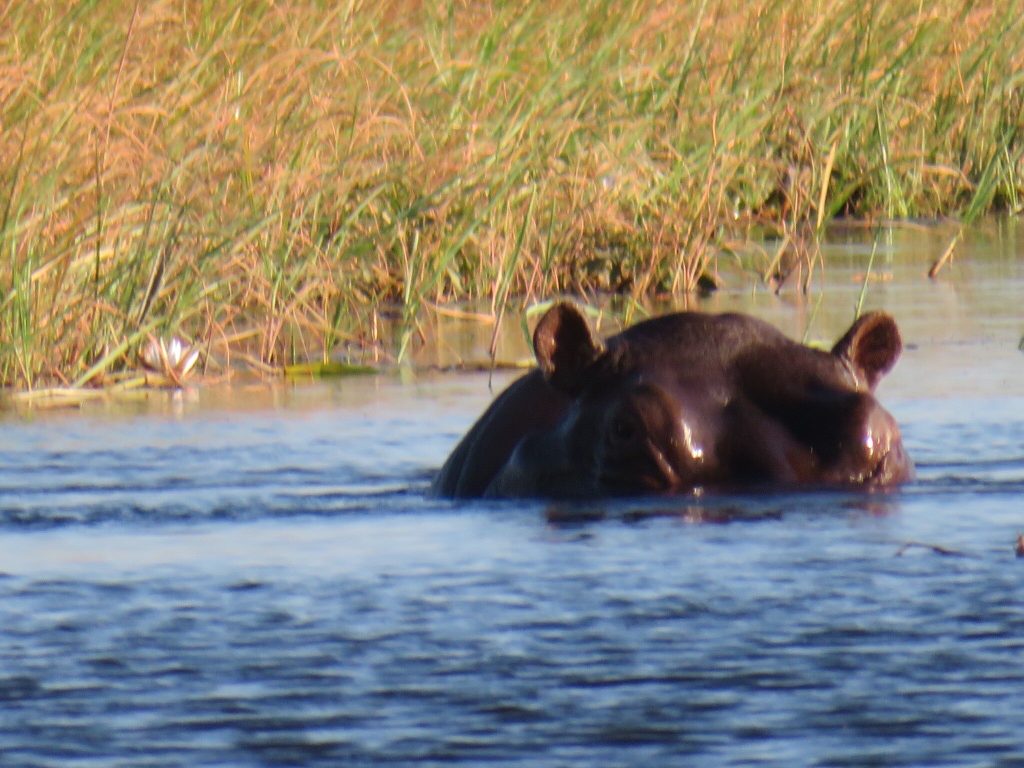
Permanent water with reasonable depth and grazing nearby is what hippos need, which narrows the options usefully.
The Okavango Delta holds them in the permanent lagoons and deep channels of the inner system. The annual flood increases the deep water they shelter in, and receding floods produce the fresh grass they graze, which suits them at both ends of the cycle.
The Chobe River supports large well-established pods visible from a boat, from a riverside lodge deck or from the bank, and it is the easiest hippo viewing in the country.
The Linyanti and Kwando systems hold them in lagoons and channels, with resident pods in front of several camps.
The Okavango Panhandle has deep permanent water and good numbers.
The Boteti holds hippo pools when the river runs, which is not every year.
Camps positioned opposite a resident pod are worth seeking out if hippos interest you. Several properties on the Chobe, the Linyanti and in the inner Delta look directly onto water that a pod holds year round, which means you can watch them from a deck through the middle of the day when game drives have stopped and everyone else is asleep. The social behaviour, the yawning displays and the constant low-level squabbling between males are all visible without going anywhere.
Hippo Behaviour

Knowing the daily rhythm explains almost everything about when and where you will see them.
Days are spent in water, which keeps their skin from drying and cracking and their bulk off their legs. At dusk they leave to graze, spending four to six hours on land.
Grazing range is restricted, extending around three kilometres from water with individuals going further, and some accounts giving up to ten kilometres on a night’s round.
They enter and leave the water at the same points, which is what creates the worn paths through the reeds.
Socially they live in pods presided over by a dominant male who fights others for territory. When floodwaters recede and pods are forced to share shrinking water, males fight constantly, and the dry season brings the most aggression.
Those enormous teeth are not for eating. Hippos are grazers, cropping grass with their lips, and the tusks are weapons for territorial fighting and display.
Calves are worth watching for. They are born in water and can suckle beneath the surface, and a young hippo will ride on its mother’s back in deeper water rather than swim alongside her. Mothers are ferociously protective, and a pod containing calves is the one a guide will give the widest berth.
Why Hippos Are Dangerous

This deserves proper treatment because hippos kill more people in Africa than any other large mammal and visitors consistently underestimate them.
Size is the starting point. Bulls reach five metres and can weigh anywhere from around 1,600 kilograms to well over 4,000, making them the third largest land mammal after elephant and white rhino.
They are fast. For all that bulk, a hippo runs at up to around 30 kilometres per hour over short distances, which is quicker than any person.
The specific danger is being between a hippo and water. A grazing hippo cut off from its retreat will charge through whatever stands in the way, and that situation accounts for most attacks. It happens most often at night, when visibility is poor and a hippo’s own eyesight makes it more likely to feel threatened.
On water, a hippo can overturn a boat or a mokoro without difficulty.
They also defend territory against predators, and guides regularly report hippos chasing lion and hyena off kills near water.
Chobe River. The easiest viewing in the country, with large established pods visible from boats, lodge decks and the bank. Year round, since the river is permanent.
Okavango Delta. Permanent lagoons and deep channels of the inner system. Visible from motorboat and mokoro, with hippo highways clearly visible from a scenic flight overhead.
Linyanti, Kwando and the Panhandle. Resident pods in lagoons and channels, with far fewer boats than the Chobe and several camps sitting directly opposite a pod.
Staying Safe Around Hippos
The rules are simple and they matter more than the rules for most species.
Never walk between a hippo and water, at any time, in any circumstance. This is the single most important thing on the page.
At night, do not walk around camp unescorted. Camps are unfenced, hippos come out to graze after dark and a lawn near water is exactly the kind of grazing they want. Staff escorts exist for this reason more than for any predator.
On a boat, keep distance and let the guide judge it. A pod that submerges and reappears closer is not being friendly, and a guide reading the water will reposition before that becomes a problem.
On a mokoro, the poler’s local knowledge is the safety system. Delta polers have grown up with hippos and know which channels are occupied, which is why the traditional operators are the right choice.
Do not get out of a vehicle or a boat near water without a guide saying it is safe.
Hippos and Conservation

The population in Botswana is healthy on the whole and the pressures are worth knowing about.
Their main threat is people, through hunting for meat and killing to protect crops, since a hippo out grazing at night can destroy a season’s planting.
Predation is minor by comparison. Lions occasionally take hippo on land and there was a pride in northern Botswana that did so regularly, while crocodiles very rarely take small ones.
Drought is the emerging concern. Prolonged dry periods and failing floods shrink waterholes to mud, and hippos become stuck and die of heatstroke because they cannot sweat to cool themselves. Conservation groups have run rescue operations in Botswana for animals trapped this way.
Human encroachment in the northern Delta and shifting rainfall patterns both add to that pressure.
The Okavango population is described as thriving, which puts Botswana among the better places for the species.
Listen for them at night. The deep grunting laugh of a hippo pod carries a long way across water and is among the defining sounds of an African night, and camps on the Chobe or in the Delta will give you it for free every evening.
Frequently Asked Questions About Hippos in Botswana
Where is the best place to see hippos in Botswana?
The Chobe River is the easiest, with large established pods visible from boats, riverside lodge decks and the bank throughout the year since the water is permanent. The Okavango Delta holds them in permanent lagoons and deep channels, viewable from motorboat and mokoro. The Linyanti, Kwando and the Okavango Panhandle all hold resident pods with considerably fewer boats around than the Chobe.
Are hippos dangerous?
Yes, and they kill more people in Africa than any other large mammal. Bulls reach five metres and can weigh well over 4,000 kilograms, and for all that bulk they run at up to around 30 kilometres per hour over short distances. The specific danger is being between a hippo and water, since a grazing animal cut off from its retreat will charge through whatever is in the way. On water they can overturn a boat or mokoro easily.
How do hippos shape the Okavango Delta?
By walking. Hippos leave the water at night to graze and return by the same routes, and that repeated traffic through papyrus and dense reed cuts channels. Those channels keep water moving through the Delta, since without them papyrus would close over and the flow would silt up and divert. From the air they show clearly as hippo highways, and mokoro routes frequently follow channels that hippos originally cut.
What do hippos eat?
Grass, cropped with the lips rather than the teeth. They leave the water at dusk and spend four to six hours grazing, with a range extending roughly three kilometres from water and individuals going further, some accounts giving up to ten kilometres on a night’s round. The enormous tusks are weapons for territorial fighting and display rather than feeding tools, which surprises most visitors.
Can you see hippos from a mokoro?
Yes, and the poler’s knowledge is what makes it safe. Delta polers have grown up with hippos and know which channels are occupied, so they route around pods rather than through them. That local expertise is the safety system on a mokoro trip and the reason traditional operators are the right choice. Never ask a poler to go closer than they judge sensible.
What threatens hippos in Botswana?
People, principally through hunting for meat and killing to protect crops, since a hippo grazing at night can destroy a season’s planting. Predation is minor by comparison, with lions occasionally taking hippo on land. Drought is the emerging concern, since prolonged dry periods shrink waterholes to mud and hippos become stuck and die of heatstroke, being unable to sweat. Conservation groups run rescue operations for trapped animals.
Booking Your Botswana Trip
The safari companies and tour operators listed on this website put trips like this together for a living and know which camps, guides and routes actually deliver. We are an independent guide to Botswana; we do not book or sell tours ourselves.
When you are ready, arrange your safari, tour or holiday with one of the recognised operators listed here. Tell them your dates and what matters most, and a real person, not a form, will handle the itinerary, park bookings and logistics for you.