Kwando
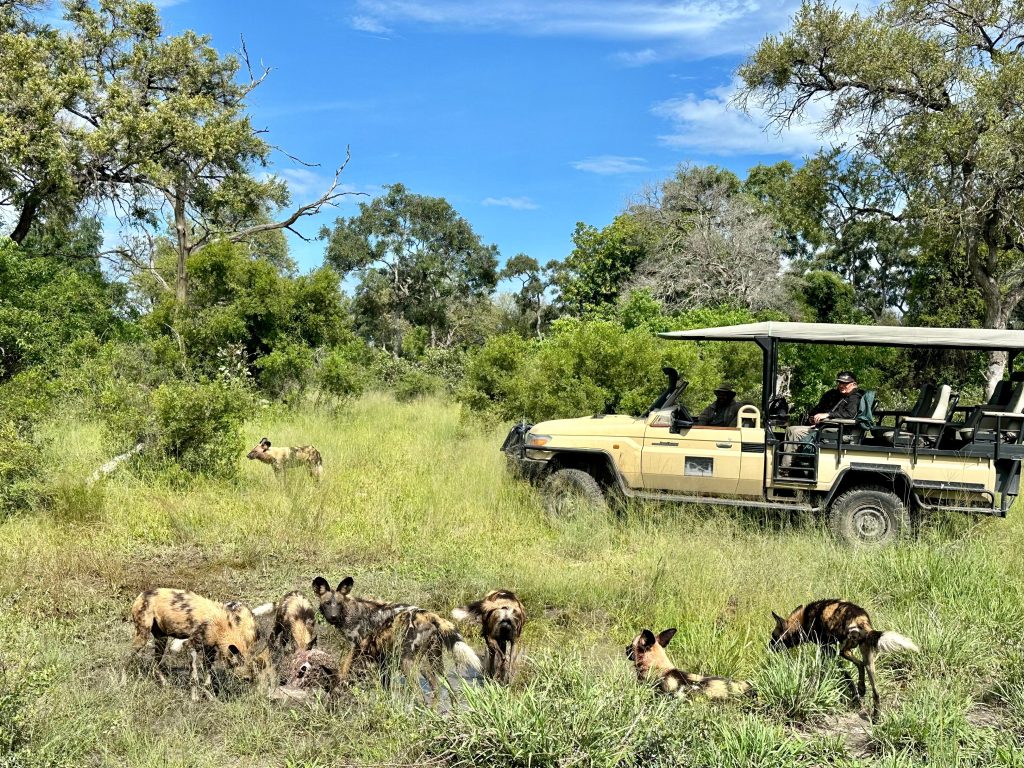
The Kwando Concession covers roughly 2,300 square kilometres of northern Botswana along the Kwando River, and it is shared between only two camps, which makes it one of the emptiest safari areas in the country. It has a long-standing reputation as among the best places in Africa to see African wild dog, with packs denning here consistently for decades. The Kwando River forms both the concession’s eastern boundary and Botswana’s northern border with Namibia.
Where Kwando Is and Why It Is So Empty
The concession, designated NG14, sits in the far north of Botswana above the Linyanti and Selinda reserves, forming part of the same linked water system.
At around 232,000 hectares, or roughly 2,300 square kilometres, it is one of the largest private wildlife concessions in Botswana. Only two lodges operate across that entire area.
The arithmetic is what makes Kwando distinctive. Two camps of eight or so tents each, spread across an area larger than many national parks, produces vehicle densities that are close to nil. Guests routinely describe sightings where theirs is the only vehicle present, which in most of Africa is a marketing claim rather than a daily reality.
The Kwando River forms the eastern boundary, with Namibian territory on the far bank, and it is permanent water in a region where that matters enormously.
Two camps sharing 2,300 square kilometres is the whole proposition. Vehicles are scarce here and animals are not, which is a ratio very few places in Africa can still offer.
The Habitats of the Kwando Concession
The concession divides sharply between its eastern and western halves, and that division shapes where the camps sit.
Along the river in the east runs a band of riparian forest, backed by floodplain and open grassland scattered with palms and tree islands. This is the productive country and where both camps are located.
The western portion is dominated by extensive mopane woodland, which is considerably less rewarding for game viewing and largely left alone.
Further south the country opens into wide floodplains and grassland, which is where the second camp sits, giving a genuinely different habitat from the riverfront.
The ebony and marula forests along the river are worth noting, since elephant are particularly drawn to marula and the camps sit beneath them.
Wild Dogs and the Kwando Reputation

This is the concession’s calling card and it rests on something more solid than luck.
Wild dogs have denned in the Kwando concession regularly for decades, with packs returning to the area year after year. Denning season falls around June and July, when a pack is tied to one location while the pups are small, and that is when sightings become most reliable.
Two factors compound the advantage. The concession permits off-road driving, so a guide can follow a hunting pack across country rather than losing them at the track edge, and wild dogs hunt at speed over distance. And Kwando operators run a guide and tracker system, with the tracker seated on the front of the vehicle reading spoor, which materially improves the odds of finding predators at all.
Nothing is guaranteed. Packs move, and one visitor account describes the resident pack having relocated across the border into Namibia. That is the nature of the species rather than a failing of the place.
Wild dog viewing across the wider Linyanti and Kwando region is more consistent than almost anywhere else on the continent.
Other Wildlife in Kwando
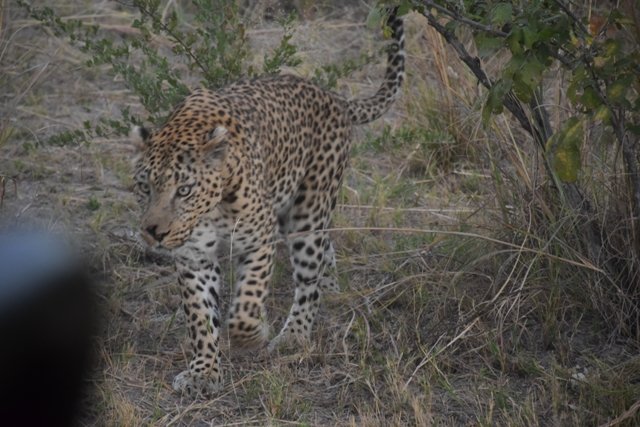
The concession is a big game area first and foremost, with numbers that swell sharply through the dry months.
Elephant arrive in enormous herds as inland water disappears, drinking at the river in front of the camps, with numbers peaking between July and September. Buffalo herds follow the same pattern and reach substantial size.
Lion, leopard and cheetah are all regularly seen on game drives, and spotted hyena work the same country. Hippo are permanently present in the river directly in front of the northern camp, announcing themselves through the night.
Plains game includes zebra, wildebeest, impala, giraffe and tsessebe, with sable antelope in the woodland fringes.
Water-adapted species are a feature: red lechwe and waterbuck on the floodplains, and the shy sitatunga in the reed beds, which is a genuinely difficult animal to see anywhere.
Birdlife along the river and floodplains is strong, and boating adds a different vantage on it.
Riverfront camp. On the Kwando River in the north, beneath ebony and marula forest, looking across to Namibia. Elephant drinking in front of camp, resident hippo, boating and fishing available.
Southern floodplain camp. Set deeper inland in open grassland roughly two to three hours by game drive from the river camp. Different habitat, strong predator country, wide open viewing.
Combining both. Four nights split between the two is the standard recommendation, since the habitats complement each other and the game viewing varies considerably between them.
Activities in the Kwando Concession

Being private concession land rather than national park, Kwando permits the full activity range.
Game drives run by day and night, with night drives producing leopard, serval, genet, civet, porcupine and spring hare that daytime driving never shows.
Off-road driving is permitted, which matters more here than almost anywhere given the emphasis on following predators.
The guide and tracker system is central to how Kwando operates, with a tracker reading spoor from the front of the vehicle. Guests consistently single this out as the thing that improves their sightings.
Boat cruises run on the Kwando River, which is unusual in Botswana outside the Delta and Chobe, and catch-and-release fishing is available seasonally.
Guided walking safaris operate with licensed armed guides.
Vehicles here take a genuine pounding from off-road work, and the open, uncovered design is deliberate, since a canopy would prevent driving through the bush at all.
Getting to Kwando
Access is deliberately limited and that is part of the point.
This is a private concession and a highly inaccessible area. Self-driving to the camps is not advisable and not usually permitted, so guests arrive by light aircraft to one of two airstrips serving the camps.
Flights come from Maun or Kasane and typically take twenty to forty-five minutes depending on routing and stops.
The concession combines naturally with the Okavango Delta, since the habitats are quite different and the flights are short, and with the Linyanti and Selinda concessions immediately south.
Because there are so few camps, availability rather than budget is usually the binding constraint, and booking well ahead for the dry season is necessary rather than cautious.
Ask for the same guide and tracker across your whole stay rather than rotating. Kwando’s system depends on the tracker knowing which predators are where, and by the second morning a good pair will be working to what you have already seen and what you are still hoping for.
Best Time to Visit Kwando
The dry season is what Kwando is built around and the seasonality is pronounced.
May through October is the window. As inland water dries up, elephant and buffalo flock to the permanent river in staggering numbers, with herd sizes peaking between July and September. Predators concentrate on that concentration.
June and July coincide with wild dog denning, which is when a pack is tied to one place and sightings become most reliable. For anyone travelling chiefly for dogs, that is the window.
Mornings in June and July are cold, and by October the heat is considerable.
The green season from November to April disperses the game as inland pans fill, with birding at its best and the country at its greenest. Rates fall, though the elephant and buffalo spectacle that defines Kwando largely disappears.
Frequently Asked Questions About Kwando
How big is the Kwando Concession?
Around 232,000 hectares, or roughly 2,300 square kilometres, making it one of the largest private wildlife concessions in Botswana. It is designated NG14 and sits in the far north along the Kwando River, which forms both its eastern boundary and Botswana’s border with Namibia. Only two lodges operate across the entire area, which is what produces its exceptionally low vehicle densities.
Is Kwando the best place to see wild dogs in Botswana?
It is among the best, and the reputation rests on more than luck. Wild dogs have denned in the concession regularly for decades, with denning season around June and July tying a pack to one location and making sightings most reliable. Off-road driving is permitted so guides can follow a hunting pack, and the guide and tracker system materially improves the odds. Packs move, sometimes across the border into Namibia, so nothing is guaranteed.
How do you get to the Kwando Concession?
By light aircraft only. This is private concession land and a highly inaccessible area, so self-driving to the camps is not advisable and rarely permitted. Guests fly from Maun or Kasane to one of two airstrips serving the camps, typically a hop of twenty to forty-five minutes depending on routing and stops. The concession combines well with the Okavango Delta and with the neighbouring Linyanti and Selinda concessions.
When is the best time to visit Kwando?
May through October, with the seasonality more pronounced than in much of Botswana. As inland water dries, elephant and buffalo converge on the permanent river in enormous numbers, peaking between July and September. June and July coincide with wild dog denning, when packs stay put and sightings are most reliable. The green season from November to April disperses the game widely, though birding improves and rates drop.
What is the guide and tracker system at Kwando?
Rather than a guide working alone, Kwando camps pair a guide with a tracker who sits on the front of the vehicle reading spoor. The tracker follows fresh tracks on the ground while the guide drives and interprets, which substantially improves the chances of finding predators rather than encountering them by chance. Guests consistently single this out as what makes the difference, particularly when following wild dogs or leopard.
Should I stay at both Kwando camps?
Yes, if you have four nights. The two camps sit in genuinely different habitats: one on the Kwando River beneath ebony and marula forest with elephant drinking in front of camp, and one deeper inland in open floodplain grassland roughly two to three hours away by game drive. Splitting your stay gives varied game viewing rather than repeating the same country, and the transfer is itself a long game drive.
Booking Your Botswana Trip
The safari companies and tour operators listed on this website put trips like this together for a living and know which camps, guides and routes actually deliver. We are an independent guide to Botswana; we do not book or sell tours ourselves.
When you are ready, arrange your safari, tour or holiday with one of the recognised operators listed here. Tell them your dates and what matters most, and a real person, not a form, will handle the itinerary, park bookings and logistics for you.