Makgadikgadi Pans National Park
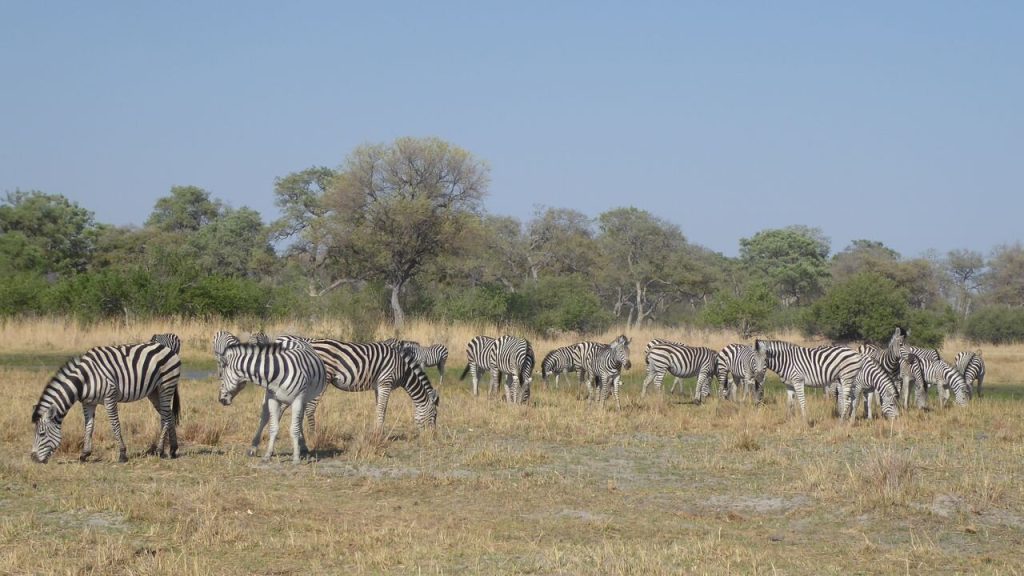
Makgadikgadi Pans National Park protects roughly 3,900 to 4,900 square kilometres on the western edge of an ancient lake bed, bounded by the Boteti River to the west and reaching Ntwetwe Pan in the east. The name notwithstanding, most of the park is grassland rather than salt flat, and it holds one end of Africa’s second largest terrestrial migration. The wider Makgadikgadi pan complex covers over 16,000 square kilometres and is among the largest salt pan systems on earth.
The Ancient Lake Beneath the Pans
The geology here explains everything else, and it is worth grasping before the wildlife.
This entire region once lay beneath Lake Makgadikgadi, an inland sea fed by the Okavango and other rivers flowing south from Angola. Estimates put it at up to 80,000 square kilometres and as much as 55 metres deep, making it the largest inland sea Africa has held, and larger than Switzerland.
Tectonic activity shifted the surface of southern Africa, blocking the rivers that fed it, and the lake gradually evaporated. What remained was a quilt of salt flats, clay pans and fossilised shorelines, with salt layers running metres deep in places.
The result is not one pan but many, interspersed with sandy desert. The largest are Sua, sometimes spelled Sowa, and Ntwetwe, with Kudiakam, Nxai and Kaucaca to the north. Rocky islands and peninsulas rise from the flats, the best known being Kubu Island on the edge of Sua.
Archaeological evidence including stone tools indicates human presence here across a very long span of time.
The park is named for the pans and consists mostly of grassland. Only a small part of it is actual salt flat, and the grass is what brings the migration.
The Geography of the National Park
The park itself covers the western portion of the ancient lakebed rather than the whole complex.
Its eastern boundary crosses Ntwetwe Pan. Its western boundary is the Boteti River, which drains the Okavango’s overflow and is the only permanent water for a very long way in any direction. Its northern edge is the Maun to Nata tar road, on the other side of which sits Nxai Pan National Park.
Four vegetation types occur: riverine woodland along the Boteti, scrubland, open grassland and the salt pans themselves, which support palm woodland along their edges.
The Boteti is a genuine variable rather than a fixed feature. In years of high Okavango flood it runs strongly. In dry years it can retreat into a few permanent pools or disappear into the sand entirely, and that determines where the game concentrates.
The park was declared a game reserve in the nineteen seventies and upgraded to national park status later, with figures for its area varying between roughly 3,900 and 4,900 square kilometres depending on the source.
The Zebra Migration and the Boteti River
This is the park’s central wildlife event and it is genuinely under-visited.
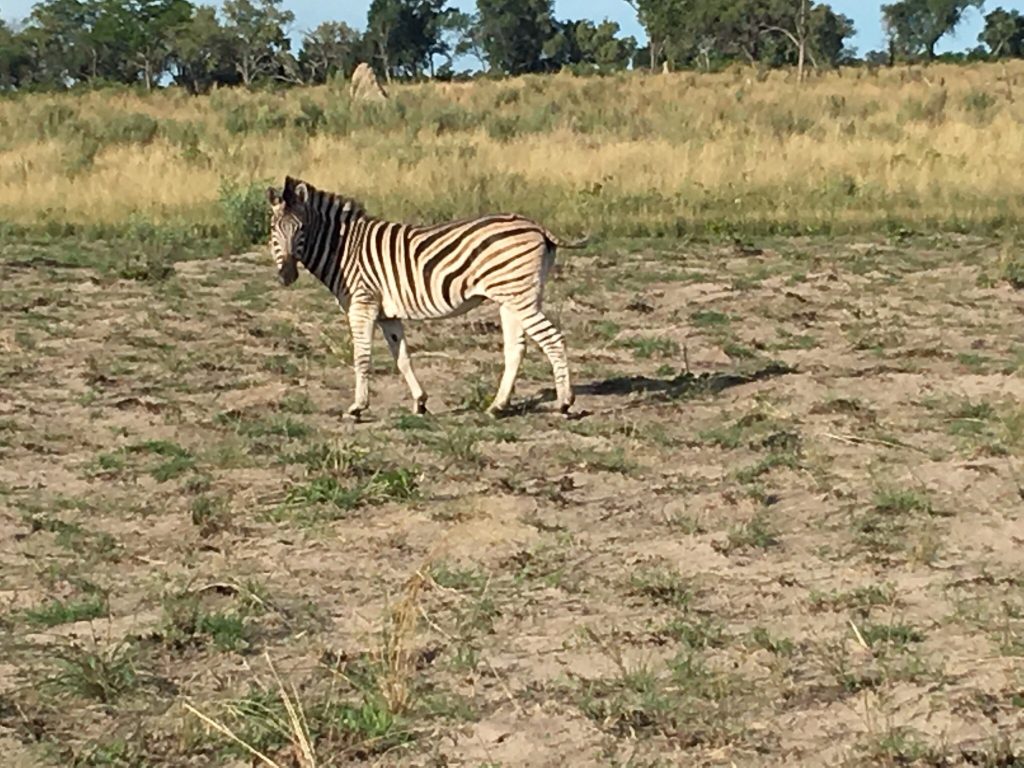
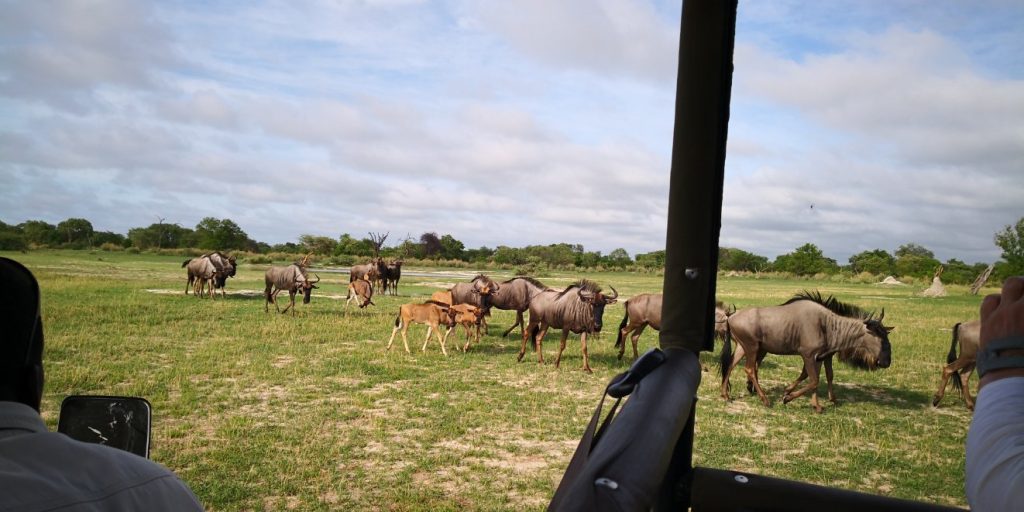
Every year the rains turn the eastern pans green, producing short mineral-rich grazing, and thousands of zebra and wildebeest move in to take it. Figures commonly cited run from around 25,000 up to 30,000 animals during peak movements. They arrive from the Boteti and the Chobe area and gather from December through March.
When the rains stop and the pans dry, the herds move west toward the permanent water of the Boteti, passing through woodland, salt flats and open savannah. By May and June many have completed that shift.
This is the second largest terrestrial migration in Africa after the Serengeti, and it remains almost unknown outside safari circles.
The Boteti section offers year-round game viewing where the pans do not, with elephant, zebra and predators concentrating on the river when everything east of it has dried.
Wildlife and Birdlife in Makgadikgadi
This is not a classic Big Five destination, and setting that expectation correctly makes the park much more enjoyable.
Beyond the migrating zebra and wildebeest, resident and seasonal species include gemsbok, eland, red hartebeest, kudu, springbok, steenbok, duiker, giraffe and elephant. Lion, cheetah and spotted hyena follow the herds, and brown hyena, which is difficult to see almost anywhere, occurs here. Meerkats are a feature of the wider pans area.
Antelope numbers peak with the migrations, so the park in a quiet month is far emptier than a species list suggests.
Birdlife is the other draw. When Sua and Ntwetwe flood after good rain, they fill with waterbirds, and flamingo numbers can run into the tens and occasionally hundreds of thousands. Sua Pan holds one of only two breeding populations of greater flamingo in southern Africa. Pelicans, ducks and geese arrive with them. The park is usually visited as one leg of a longer route such as the 9 day Okavango, Makgadikgadi and Chobe safari.
Seasonal rivers from the east, the Nata, Tutume, Semowane and Mosetse, feed those floods alongside the rain.
Activities on the Makgadikgadi Pans

The area offers experiences that exist nowhere else in Botswana, and most of them happen on the concessions and private land around the park rather than strictly inside it.
Quad biking across the salt crust runs when the surface is firm and dry, so the dry months from roughly May to October. Riding out onto a flat white expanse with no horizon feature in any direction is the experience people come back describing.
Meerkat viewing at semi-habituated colonies allows genuinely close observation, and with no elevated ground on the open pan the animals will occasionally use a seated visitor as a lookout post.
Walks with San trackers read the ground in a way that changes how you see it afterwards, identifying what passed, when and in which direction from marks you would never have noticed.
Sleep-outs on the open pan under skies dark enough that stargazing is a listed activity rather than an afterthought.
Game drives, birdwatching, horseback safaris and bush walks are also offered depending on the operator.
Green season, December to March. Zebra and wildebeest migration on the eastern pans, flamingos and waterbirds when Sua and Ntwetwe flood, calving antelope, dramatic skies. The park’s wildlife peak.
Dry season, May to October. Game concentrates along the Boteti River, the only permanent water for miles. Salt crust firm enough for quad biking. Meerkats, San walks and sleep-outs run year round.
Nearby beyond the park. Kubu Island on the edge of Sua Pan, the Nata bird reserve for flamingos, and Nxai Pan National Park immediately north across the tar road.
Visiting and Camping in Makgadikgadi Pans National Park
Access is from the Maun to Nata road or from the town of Gweta, and all roads inside the park are sandy, so a 4×4 is required.
Park entry for non-residents runs at 120 Pula per person per day, dropping to 70 Pula through a licensed Botswana operator, with camping charged separately.
Two public campsites operate inside. Njuca Hills sits around 26 kilometres south of the park entrance. Khumaga lies about 48 kilometres southwest on the Boteti, where water is available though not for drinking. Camping is also permitted on Kubu Island outside the park, with nothing beyond a long-drop toilet.
Camps in the wider area include several on the Ntwetwe concession that run the quad biking, meerkat and sleep-out activities, plus properties near the Boteti on the park’s western boundary.
One health note that catches people out: this region falls within a malaria area, so prophylaxis is worth discussing with a travel clinic although the country feels like desert.
Conservation Pressures on the Makgadikgadi
Two issues shape the park’s future and are worth knowing about.
Veterinary cordon fences, built to separate livestock from wildlife and limit disease transmission, historically cut across migration routes and caused mass die-offs during drought years when animals could not reach water. Fence realignment and removal have improved connectivity considerably, and taking down a major fence along the Boteti River made a substantial difference to wildlife movement.
Soda ash mining operations at Sua Pan, adjacent to the park, raise ongoing questions about water extraction, pollution and habitat disturbance.
Camps in the area fund conservation programmes aimed at keeping migration corridors open, so that the movement between the Boteti, the pans and Nxai Pan can continue. Staying at those properties contributes directly to that work.
Quad biking needs a dry firm crust and the wildlife needs rain, so the two peak in opposite seasons. April and November are the honest compromise. Otherwise decide which one you actually came for and accept that the other may not be available.
Best Time to Visit Makgadikgadi Pans National Park
The answer splits by what you want, more sharply here than in most parks.
December through March brings the migration, the flooded pans, the flamingos and the calving. This is the wildlife peak and the reason to come.
June, July, September and October are the recommended months for travelling the pans themselves, since the surface is dry and traversable, quad biking runs and the salt flats are at their most striking. Game viewing moves entirely to the Boteti.
Winter nights are cold, and October is punishingly hot.
Whichever you choose, the meerkats, San walks, sleep-outs and stargazing hold up year round, which means a Makgadikgadi leg is never a wasted one.
Frequently Asked Questions About Makgadikgadi Pans National Park
How big are the Makgadikgadi Pans?
The national park covers roughly 3,900 to 4,900 square kilometres depending on the source, while the wider pan complex it sits within spans over 16,000 square kilometres of the Kalahari Basin, making it among the largest salt pan systems in the world. The largest individual pan is around 4,900 square kilometres. The whole complex is what remains of Lake Makgadikgadi, an ancient inland sea estimated at up to 80,000 square kilometres and 55 metres deep.
When is the best time to visit Makgadikgadi Pans National Park?
December through March for wildlife, when rain greens the eastern pans and draws the zebra and wildebeest migration, with flamingos arriving if Sua and Ntwetwe flood. June, July, September and October for the pans themselves, when the surface is dry and traversable and quad biking runs, with game concentrating on the Boteti River. Meerkats, San tracking walks, sleep-outs and stargazing operate year round.
What is the zebra migration at Makgadikgadi?
Thousands of zebra and wildebeest, commonly cited between 25,000 and 30,000 animals, move onto the eastern pans when the rains produce short mineral-rich grazing, gathering from December through March. When the pans dry they move west toward the permanent water of the Boteti River, with many having completed the move by May and June. It is the second largest terrestrial migration in Africa after the Serengeti and remains little known outside safari circles.
Can you drive on the Makgadikgadi salt pans?
In the dry months, on designated routes and with real care. The crust is firm enough to traverse between roughly June and October, which is also when quad biking operates. After rain the surface becomes treacherous and vehicles break through into mud beneath, which is extremely difficult to recover from in a place with no help nearby. All roads inside the park are sandy and require a 4×4 regardless of season.
Where can you camp in Makgadikgadi Pans National Park?
Two public campsites operate inside the park. Njuca Hills sits around 26 kilometres south of the entrance, and Khumaga lies about 48 kilometres southwest on the Boteti River, where water is available though not for drinking. Camping is also permitted on Kubu Island on the edge of Sua Pan outside the park, with nothing beyond a long-drop toilet. Several private camps operate on the Ntwetwe concession and near the Boteti.
Is Makgadikgadi worth visiting on a Botswana safari?
For contrast rather than density. It is not a classic Big Five destination and a species list will disappoint anyone expecting Delta numbers. What it offers instead exists nowhere else in Botswana: quad biking across salt flats with no horizon, semi-habituated meerkats, tracking walks with San guides, sleep-outs on the open pan and some of the darkest skies you will find anywhere. Paired with the migration in the green months, it is a strong leg of a longer trip.
Booking Your Botswana Trip
The safari companies and tour operators listed on this website put trips like this together for a living and know which camps, guides and routes actually deliver. We are an independent guide to Botswana; we do not book or sell tours ourselves.
When you are ready, arrange your safari, tour or holiday with one of the recognised operators listed here. Tell them your dates and what matters most, and a real person, not a form, will handle the itinerary, park bookings and logistics for you.