Antelope Species of Botswana
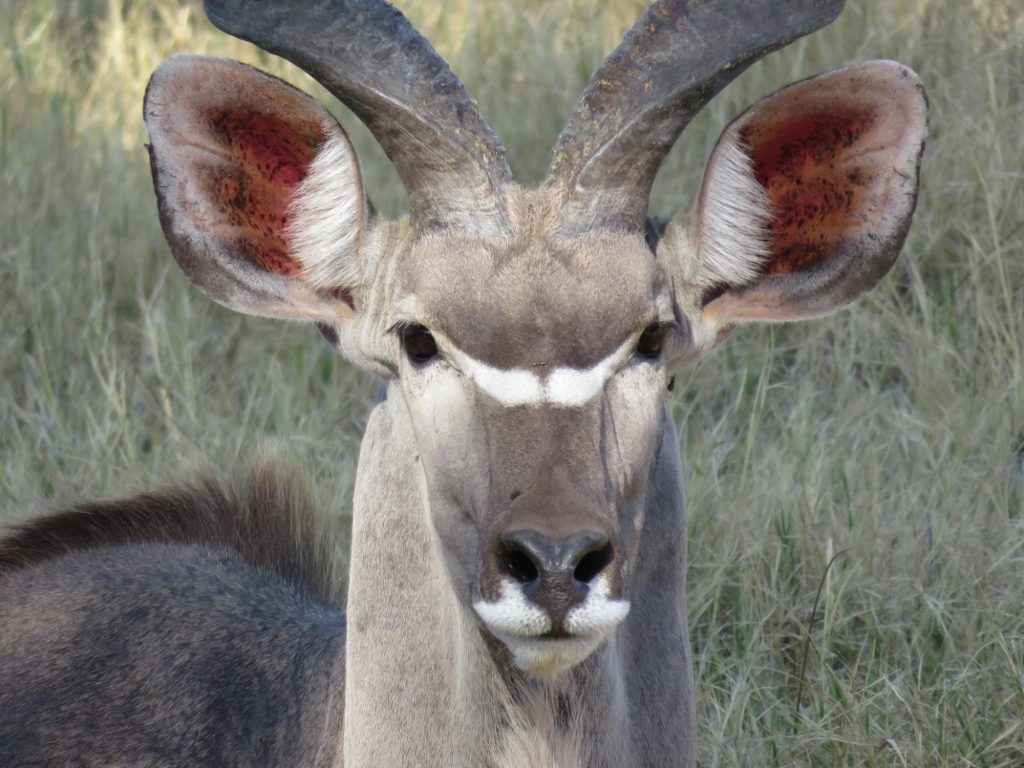
Botswana holds an unusually wide range of antelope because it contains both permanent wetland and semi-arid desert, and species have specialised at both extremes. Red lechwe and sitatunga are adapted to water in the Okavango, gemsbok and springbok to the Kalahari without any at all, and puku occur along the Chobe in one of very few populations in the region. Learning to tell them apart transforms an ordinary game drive.
The Water Specialists
These are the species that make the Okavango different from every other safari destination.
Red lechwe are the signature Delta antelope, reddish and stout, seen wading belly-deep to reach aquatic plants. They are built for it, with elongated splayed hooves and an oily water-repellent coating on the legs, and their hind legs are slightly longer than the front, which lets them run through shallow water faster than they move on dry ground. When startled they scatter in all directions to confuse predators. Herds run into the hundreds.
Sitatunga is the most elusive antelope in Botswana, a genuinely aquatic species living in permanent papyrus swamp. Splayed hooves let it walk on boggy ground that would not hold anything else, and it will submerge with only its nostrils showing when threatened. Seeing one is a real achievement.
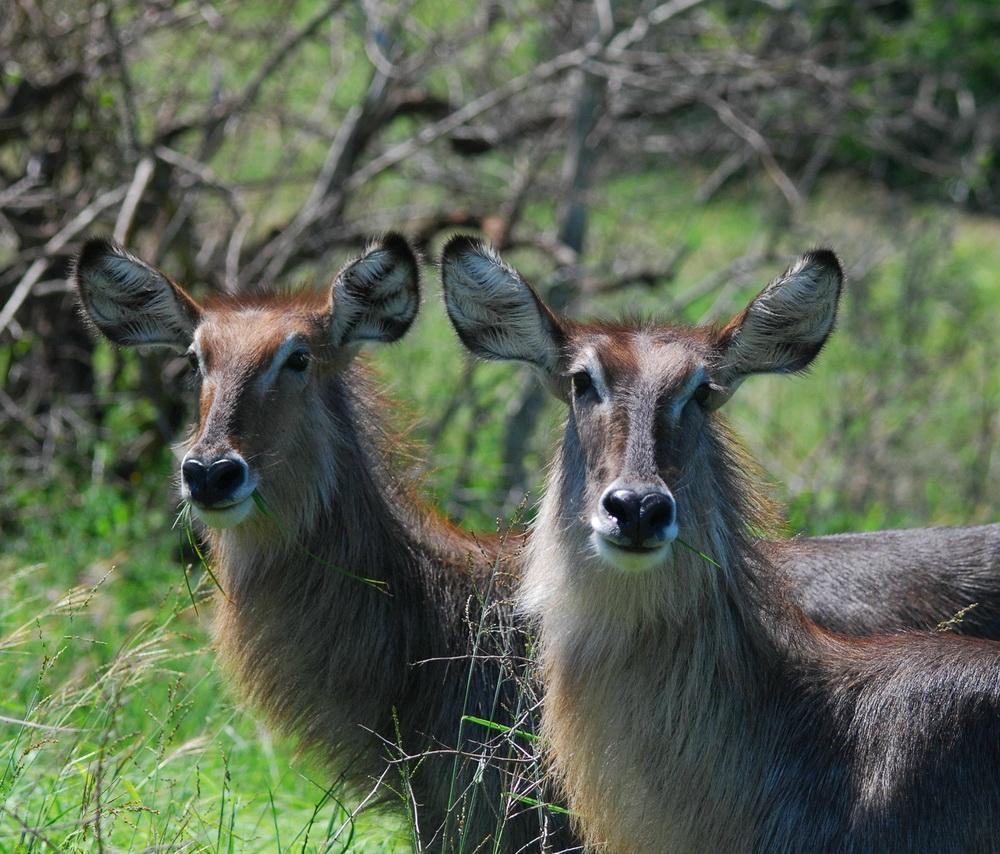
Waterbuck hold near water in herds of up to thirty, with territorial males that will fight seriously.
Puku occur along the Chobe riverfront near Kasane and almost nowhere else in the region, easily mistaken for impala or lechwe and slightly smaller than both.
Lechwe run faster through water than on land, which is precisely backwards from every other antelope and is why they thrive where few predators can follow them at all.
The Desert Specialists
At the other extreme, the Kalahari species survive where there is no surface water for months.
Gemsbok, also called oryx, are the emblematic Kalahari antelope, striking grey and black animals with long straight horns. They survive without drinking by extracting moisture from plants and tolerating body temperatures that would kill most mammals. Best seen in the Central Kalahari and the Kgalagadi.
Springbok are southern Africa’s only gazelle, known for pronking, a stiff-legged leap that can carry them two metres into the air. In Botswana they are largely confined to the Central Kalahari, the Kgalagadi and the pans, and lambing around December is when the desert is at its most active.
Red hartebeest occupy the same dry country, high-shouldered and awkward-looking with distinctive angled horns.
Eland is the largest antelope in the world, present across both the desert and the north, and surprisingly shy for its size.
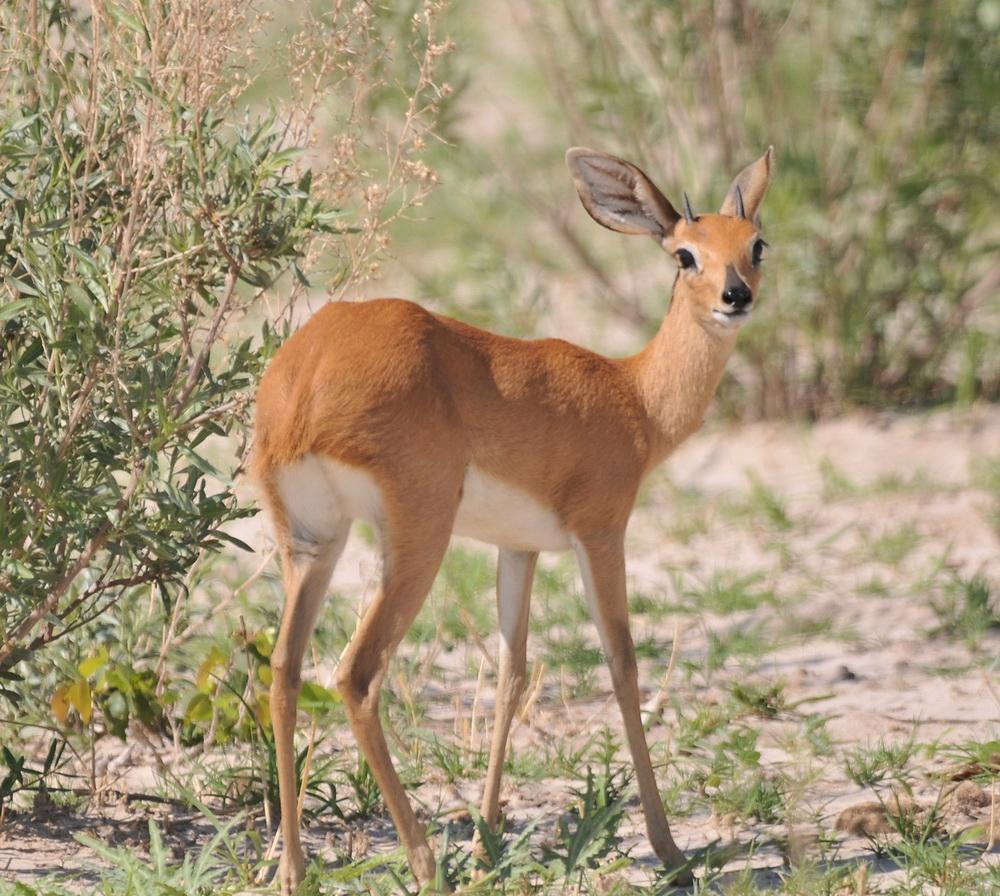
Steenbok occur throughout, including the Delta, and can survive without drinking at all.
The Woodland Antelope
The middle ground holds the species most people picture when they think of antelope.
Sable is widely considered Africa’s handsomest antelope, glossy black with a white belly, badger-like white face stripes and long backward-arching horns over a powerful neck. Found in the woodlands of Chobe, the Okavango, Kwando, Linyanti and Moremi.
Roan is the second largest African antelope after eland, similar to sable in build but reddish rather than black, with a distinctive dark face mask. Chobe and the Linyanti are the areas. Roan populations have declined across Africa through hunting, habitat loss and historic tsetse control campaigns.
Greater kudu are widespread, the males carrying enormous spiral horns and both sexes marked with white body stripes. They favour thicker bush and are easy to walk past.
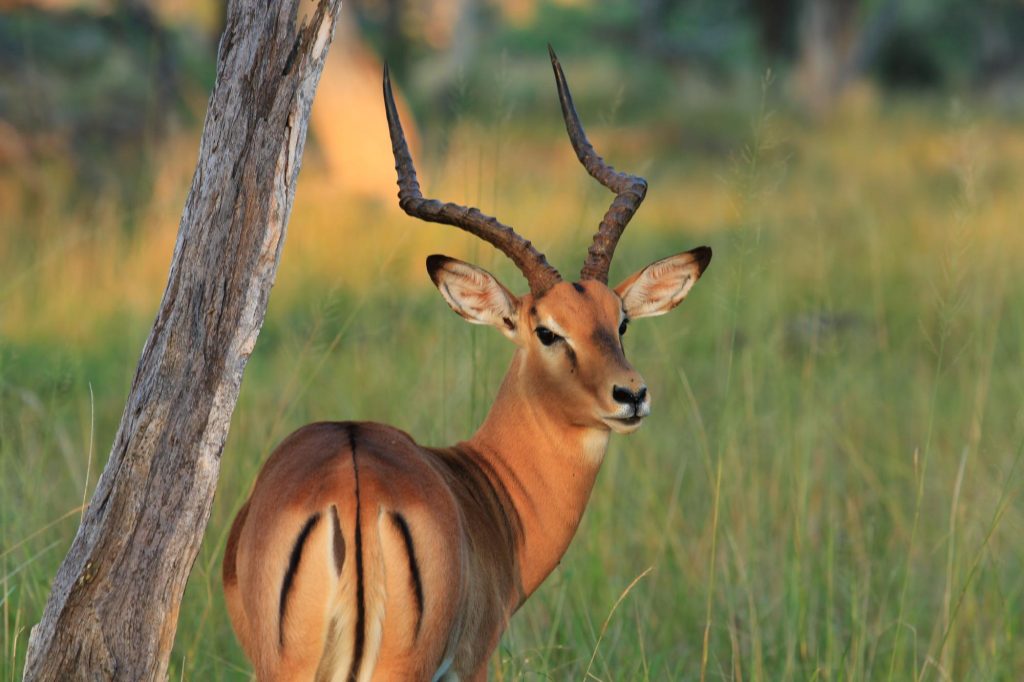
Impala are abundant almost everywhere and routinely overlooked, which is a mistake, since they are the main prey species holding the whole predator system up.
Bushbuck, including the Chobe bushbuck along the river, are smaller, solitary and found in dense vegetation.
The Open Country Antelope
Two species define the floodplains and grasslands.
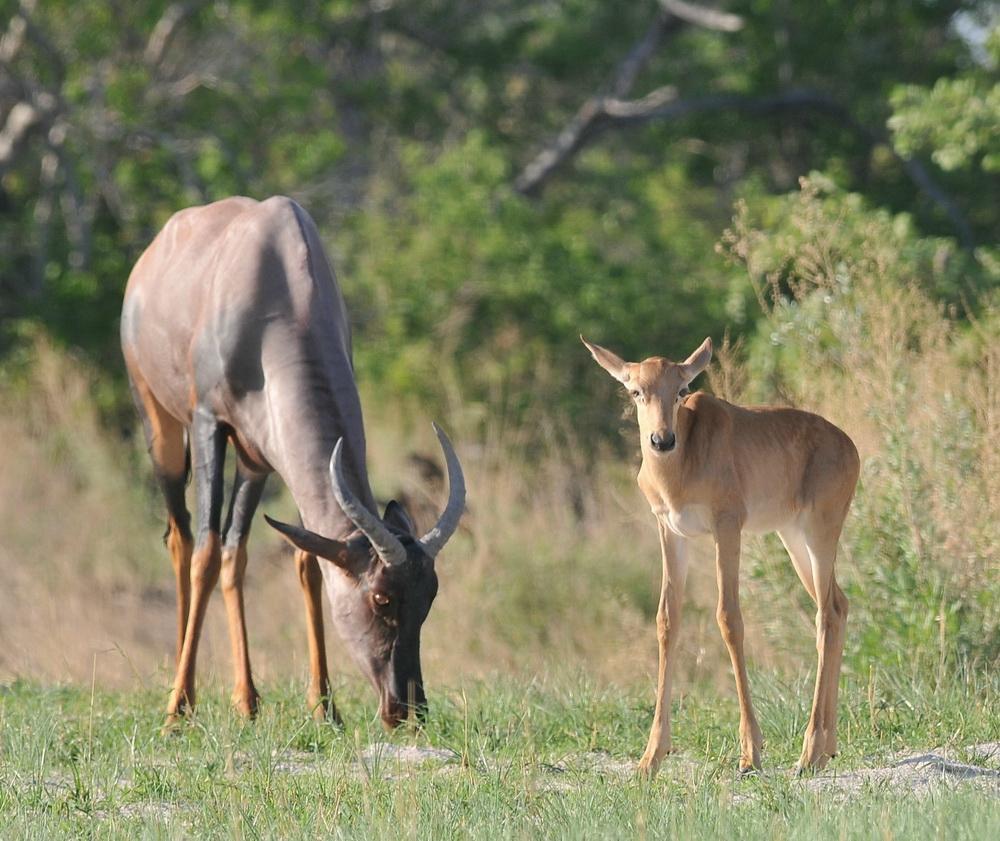
Tsessebe are the ones standing on termite mounds, using the height as a vantage point to watch for danger, which is among the classic images of the African plains. They are reputed to be the fastest antelope in the region, with a distinctive bouncing run. Herds are either breeding females with a male or bachelor groups of young males. Common on Okavango floodplains, in Savuti in winter and in Moremi otherwise.
Blue wildebeest occur across the open country and on the pans, moving with the zebra and depending on them, since zebra crop the long grass that exposes the shorter growth wildebeest need.
Duiker are the small shy antelope of the thicker bush, usually seen briefly as they vanish.
Reedbuck occupy the wetter margins in smaller numbers.
Numbers matter here as much as variety. A floodplain in the Delta in the dry season can hold lechwe in the hundreds alongside tsessebe, impala, zebra and wildebeest in one view, and that density of grazers in a single frame is something the northern parks do far better than the desert. It is also why a guide will stop on an apparently empty floodplain and wait, because everything on it is prey and something is usually watching it.
Between them these species make up the bulk of what a predator eats, which is why the predator viewing in Botswana is what it is.
Okavango Delta. Red lechwe on the floodplains, sitatunga in the papyrus, tsessebe on open ground, waterbuck near water, with sable and roan in the surrounding woodlands.
Chobe and Linyanti. Puku along the river frontage near Kasane in one of few regional populations, Chobe bushbuck, sable and roan in the woodland behind, plus kudu and impala throughout.
Central Kalahari and the pans. Gemsbok, springbok, red hartebeest and eland across open desert country, with springbok lambing around December drawing predators into the open.
Telling the Confusing Ones Apart
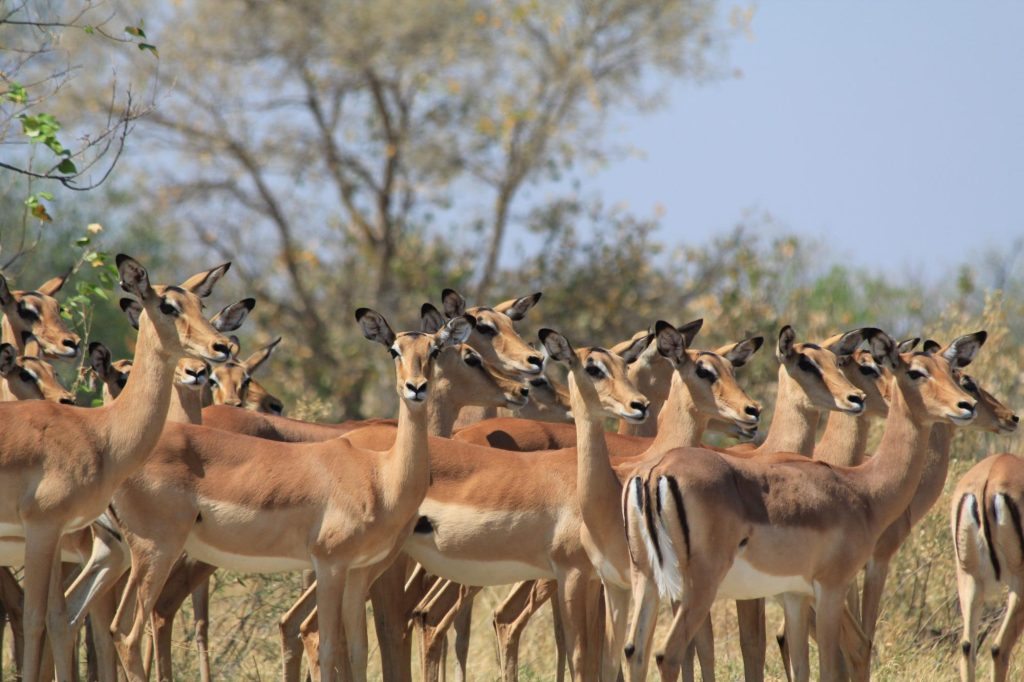
A few pairs catch out almost every visitor.
Impala, puku and lechwe are the classic confusion along the Chobe. Impala carry a distinctive black M marking on the rump, puku are slightly smaller with shaggier coats and no such marking, and lechwe are reddish with black leg markings and are almost always in or beside water. Puku give a repeated whistle when disturbed.
Sable and roan differ by colour more than shape. Sable males are glossy black, roan are reddish-brown, and roan carry the darker face mask.
Steenbok and duiker are both small and brown. Steenbok have large ears and stand upright in the open; duiker duck their heads and disappear into cover, which is where the name comes from.
Waterbuck are unmistakable once you have seen the white ring on the rump.
Ask your guide to talk you through the antelope rather than driving past them toward the cats. It changes what you notice for the rest of the trip.
Where and When to See Them
The pattern follows the same seasonal logic as everything else in Botswana.
The dry season from May to October concentrates most species near permanent water, which makes them easy to find in the north.
The green season from November to April is when the desert species come into their own, with springbok and gemsbok gathering on greened pans and fossil valleys, and lambing bringing young into the open.
Water specialists depend on flood levels rather than rain. Lechwe are visible year round on permanent Delta water, and sitatunga need a camp on genuine papyrus swamp with a guide who knows where to look.
Boat and mokoro trips are the way to see the aquatic species, since a vehicle cannot reach the habitat.
Puku require a Chobe riverfront trip, being restricted to that stretch.
Ask for the antelope. Guides default to predators because that is what most guests want, and the antelope are where the actual variety of Botswana shows itself. A guide who realises you are interested will start pointing out roan, tsessebe and steenbok that you would otherwise never have registered.
Frequently Asked Questions About Antelope in Botswana
What antelope are unique to the Okavango Delta?
Red lechwe and sitatunga are the water specialists that make the Delta different. Lechwe have elongated splayed hooves and a water-repellent coating on the legs, with hind legs slightly longer than the front, letting them run faster through shallow water than on dry ground. Sitatunga are genuinely aquatic, living in permanent papyrus swamp with hooves that spread to cross boggy ground, and will submerge with only their nostrils showing when threatened.
Where can you see sable and roan antelope in Botswana?
Both occur in the woodland areas of the Okavango, Linyanti and Chobe, with Moremi and the Kwando concessions also holding them. Sable are glossy black with white bellies and badger-like face stripes and long backward-arching horns. Roan are the second largest African antelope after eland, similar in build but reddish-brown with a darker face mask. Roan populations have declined across Africa and both remain prized sightings.
How do you tell impala from puku and lechwe?
Impala carry a distinctive black M marking on the rump that neither of the others has. Puku are slightly smaller with shaggier coats and give a repeated whistle when disturbed, found on the dry fringes of swampland and along the Chobe near Kasane. Red lechwe are reddish with black leg markings and are almost always in or beside water, wading belly-deep to reach aquatic plants. Size and habitat usually settle it.
Which antelope live in the Kalahari?
Gemsbok are the emblematic species, surviving without drinking by extracting moisture from plants and tolerating body temperatures that would kill most mammals. Springbok are southern Africa’s only gazelle, known for pronking and largely confined here to the Central Kalahari, Kgalagadi and the pans. Red hartebeest occupy the same country, and eland, the world’s largest antelope, ranges across both desert and north. Steenbok occur throughout and need no drinking water.
Why are tsessebe always standing on termite mounds?
For the vantage point. A termite mound gives enough elevation to watch for approaching predators across flat floodplain, and a tsessebe standing on one is among the classic images of the African plains. They are reputed to be the fastest antelope in the region, with a distinctive bouncing run, and form herds of either breeding females with a male or bachelor groups of young males. Look for them on Okavango floodplains, in Savuti in winter and in Moremi otherwise.
Where can you see puku in Botswana?
Along the Chobe River frontage near Kasane, and almost nowhere else in the country. Botswana holds one of very few puku populations in the region, which makes them a genuine speciality of a Chobe trip. They favour the dry fringes of swampland and rivers, live in small segregated herds with territorial males, and are recognised by a repeated whistle when disturbed. They are easily overlooked and mistaken for impala or lechwe.
Booking Your Botswana Trip
The safari companies and tour operators listed on this website put trips like this together for a living and know which camps, guides and routes actually deliver. We are an independent guide to Botswana; we do not book or sell tours ourselves.
When you are ready, arrange your safari, tour or holiday with one of the recognised operators listed here. Tell them your dates and what matters most, and a real person, not a form, will handle the itinerary, park bookings and logistics for you.