Botswana Travel Guide
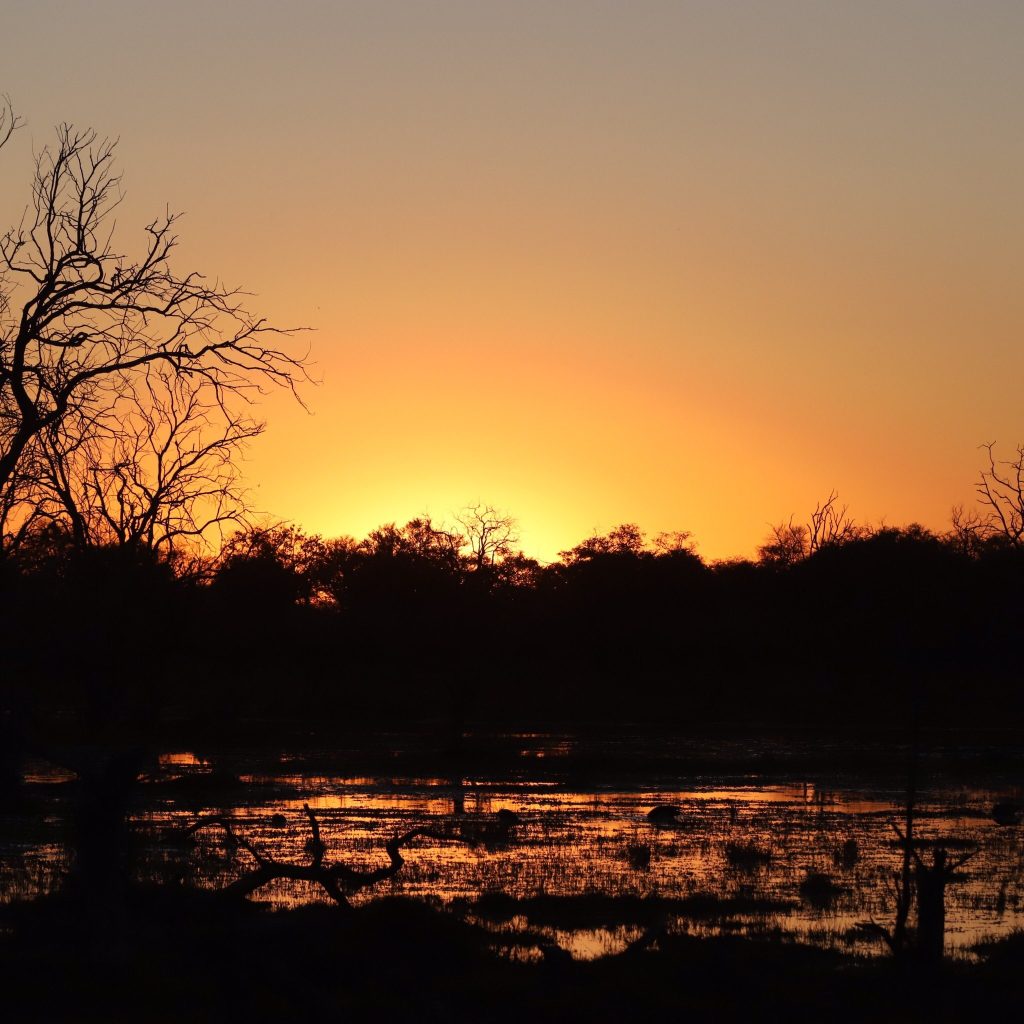
A Botswana safari is usually built around three regions: the Okavango Delta for water safaris by mokoro and boat, Chobe National Park for elephant viewing along the river, and the Kalahari for desert game drives and salt pan tours. Most visitors fly in through Maun or Kasane and move between camps by light aircraft. Botswana is a landlocked southern African country, roughly 70 percent Kalahari sandveld, running a low-volume tourism policy that deliberately keeps visitor numbers down.
Planning a Botswana Safari Trip Around Three Main Regions
The thing that trips people up first is scale. Botswana covers around 581,000 square kilometres and has set aside close to 38 percent of its territory for wildlife, which sounds generous until you look at a map and realise the two areas you most want to see sit hundreds of kilometres apart with very little tar road between them. This is why almost every Botswana safari is planned as a series of short flights rather than a driving route.
Think of the country in three parts. The north and northwest hold the water: the Okavango Delta, Moremi Game Reserve, the Linyanti and Selinda systems, and the Chobe riverfront. The middle holds the pans, meaning Makgadikgadi and Nxai Pan. The centre and south hold the Kalahari proper, with the Central Kalahari Game Reserve at its heart.
Most first trips take two of those three. A week gets you the Delta and Chobe comfortably. Ten days lets you add the pans or the Kalahari without rushing, and that third area is what stops the trip feeling like one long series of similar game drives, because the desert reads nothing like the water.
If you only have five or six days, resist the urge to split them three ways. Two camps at three nights each will show you far more than three camps at two nights, since a chunk of every travel day disappears into transfers and light aircraft schedules.
Okavango Delta Safaris and the Flood That Arrives in Winter

An Okavango Delta safari works on a rhythm that catches most people out. The Delta floods during the dry season, not the wet one. Rain falls in the Angolan highlands over the southern summer, then takes roughly four months to travel down the Okavango River and spread across the flat Kalahari sands, arriving as peak flood around July when local rainfall is zero.
The water never reaches the sea. It fans out across a tectonic trough into a wetland that swells to somewhere between 15,000 and 22,000 square kilometres, then evaporates and soaks away. UNESCO listed it as a World Heritage Site, its thousandth.
What that means for your trip is practical. Mokoro trips, the traditional dugout canoe excursions that people most associate with the Delta, depend on channel water levels, and those levels are highest from roughly June through August or September. Camps in the permanent water of the inner Delta run boat and mokoro safaris year round. Camps on drier ground at the eastern edge lean more heavily on game drives. If gliding through papyrus channels is the picture in your head, ask the operator directly whether the camp is water-based or land-based before you book anything.
Chobe National Park Safaris and the Elephant Herds
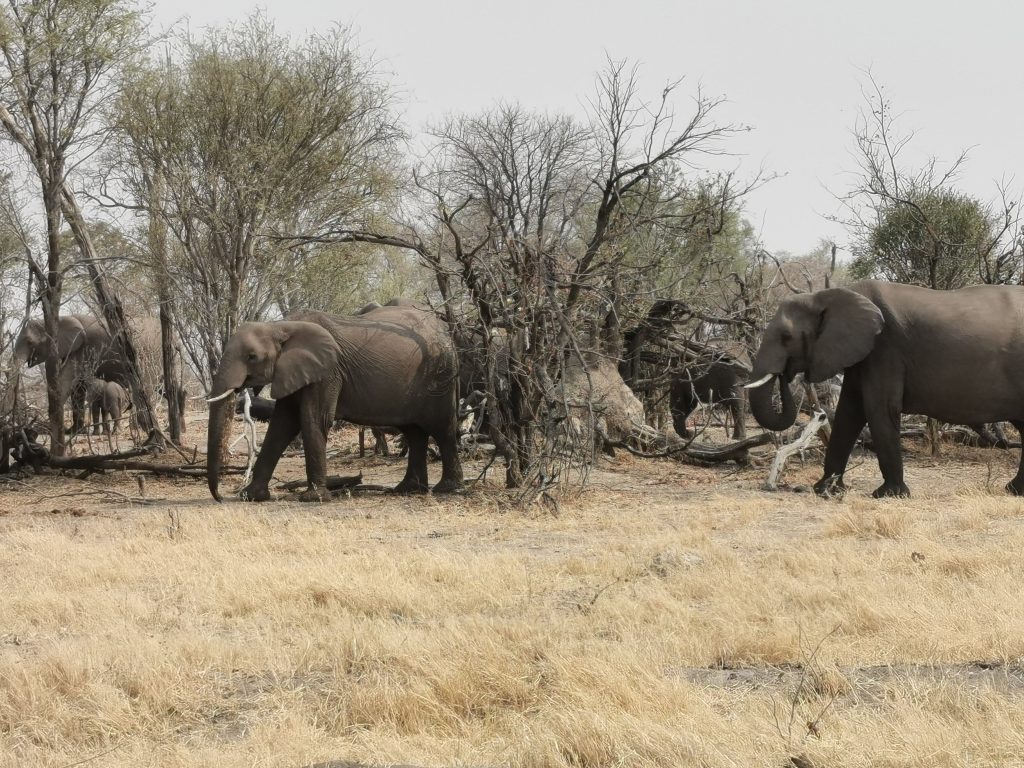
A Chobe safari is the easiest wildlife viewing in the country and the most reliable. The park runs to about 11,700 square kilometres and the riverfront section supports the densest elephant population in Africa, part of a national herd estimated at around 130,000 animals. In the dry months the herds come down to drink in numbers that are hard to describe without sounding like a brochure, so here is the plain version: several hundred elephants along one stretch of river in an afternoon is normal rather than lucky.
Boat safaris are what set Chobe apart. Watching from the water puts you at eye level with hippos, crocodiles and drinking elephants, and it is a genuinely different perspective from a vehicle. Lion, buffalo and large numbers of waterbirds are common along the same stretch. Sightings are never guaranteed, though Chobe comes closer to a sure thing than most places in southern Africa.
Kasane sits minutes from the Sedudu Gate, which makes this the one part of Botswana you can visit without much planning. Victoria Falls is about 80 kilometres away by road, and many people bolt the two together.
Moremi Game Reserve Safaris for Predators and Big Cats

Moremi occupies the eastern third of the Delta and it is where a lot of the serious predator viewing happens. Habitat runs from mopane woodland through floodplain to papyrus lagoon, which supports both large lion prides and healthy packs of African wild dog. Wild dogs are the draw for a lot of repeat visitors, since Botswana holds one of the more secure populations left on the continent.
September and October are the strongest months here. Waterholes across the wider country have dried up by then, animals have concentrated, and the thinned vegetation makes cats far easier to find. It is also the hottest stretch of the year, which is the trade you make.
Self-drive is possible in Moremi on 4×4 sandy tracks, and Third Bridge is a long-standing campsite for people travelling independently. Anyone attempting this should be comfortable driving in deep sand and recovering a stuck vehicle without help. A representative ten-night route is the 10 day Botswana grand safari.
Kalahari Desert Safaris and Makgadikgadi Salt Pan Tours

The Kalahari is not a sand-dune desert. It is semi-arid sandveld: thorn trees, hardy shrub, pale grass, and more wildlife than the word desert suggests. The Central Kalahari Game Reserve runs to roughly 52,800 square kilometres, making it one of the largest protected areas anywhere, and its black-maned lions are the species most people come for. Gemsbok, springbok, cheetah and brown hyena are all resident.
Makgadikgadi salt pan tours offer something different again. These are the bed of an ancient super-lake, white and flat enough to be visible from orbit, and the activities on offer here exist nowhere else in Botswana. Quad biking across the crust when it is firm. Walking with San trackers. Sitting with semi-habituated meerkat colonies, which are wild but unbothered by people and will occasionally climb onto a visitor to get a better view of the horizon. Sleep-outs on the open pan, under skies dark enough that the stargazing is a genuine reason to come.
Okavango Delta. Mokoro and boat safaris, walking safaris on the islands, wild dog and leopard. Reached by light aircraft from Maun. Water levels peak around July.
Chobe National Park. Boat safaris and riverfront game drives, elephant and buffalo in very large numbers. Reached by road from Kasane in minutes.
Moremi Game Reserve. Big cat and wild dog game drives across mixed floodplain and woodland. Accessible by air or by 4×4 for experienced self-drivers.
Central Kalahari and Makgadikgadi. Desert game drives, quad biking, meerkats, San cultural walks and the zebra migration in the green months.
Choosing Between Fly-in Safaris, Mobile Camping Tours and Self-Drive Trips
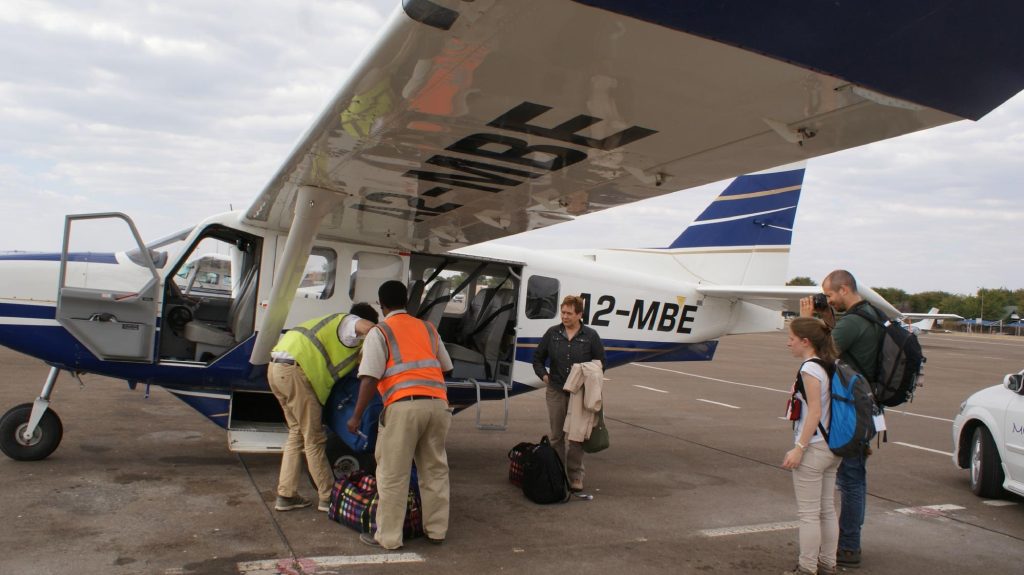
Three ways to travel, and the choice shapes everything else about the trip.
Fly-in safaris are the default. You land at Maun or Kasane, then light aircraft carry you between camps on short hops of fifteen to forty-five minutes. Almost all remote Delta and Kalahari camps are reachable no other way. Baggage limits are strict and usually mean a soft bag rather than a hard suitcase, so check the allowance early rather than at check-in.
Mobile camping safaris move you overland in a 4×4 while a crew sets up and breaks down camp ahead of you. The tents are good, the guiding is often excellent, and you cover ground between regions rather than flying over it. This is the middle option in both cost and comfort, and a lot of people who have done both prefer it.
Self-drive trips give you the most freedom and demand the most competence. Gaborone, Maun and Francistown are reachable in a normal car. Moremi, Chobe and the Central Kalahari are not, and they need a properly equipped 4×4, advance campsite bookings, and sand-driving experience. Fuel is not sold inside the parks. Speed limits inside are 40 kph, off-road driving is prohibited, and gates close at set hours.
The single most common planning mistake is booking a self-drive route through Moremi or the Central Kalahari without ever having driven in deep sand. Practise somewhere forgiving first.
Best Time for a Botswana Safari
May through October is the dry season and the peak safari window across the north. Vegetation thins, animals gather at permanent water, the Delta flood is high, and the skies stay clear. June, July and August bring cold mornings, and in the Kalahari night temperatures drop to freezing or below, so the layers you pack matter more than people expect on an African trip.
November through April is the green season. Rain comes as afternoon thunderstorms rather than continuous drizzle, the country turns green, antelope give birth and predators follow, and birdlife peaks with the migrants in. Camp rates fall considerably. Game viewing is harder because water is everywhere and animals disperse.
May to October, dry season. Peak game viewing in the Delta, Moremi and Chobe. High Okavango flood from June. Cold mornings in June and July, hot and dusty by October. Camps book out furthest ahead.
November to April, green season. Best for the Kalahari, the Makgadikgadi pans and the zebra migration. Strong birding. Newborn antelope. Lower rates and far fewer vehicles, with wildlife more spread out. This guide is published independently, and there is more about the site and how it is researched if you want the background.
Entry Requirements, Health and Money for a Botswana Trip
Citizens of more than a hundred countries, including the United States, United Kingdom, Canada, Australia and most of Europe, enter without a visa for tourism stays of up to 90 days within a twelve-month period. Everyone needs a passport valid for at least six months with two blank pages. Travellers from countries outside the exempt list apply in advance through Botswana’s e-visa platform or at an embassy, and processing commonly runs one to two weeks.
A yellow fever certificate is required only if you are arriving from or transiting a country where yellow fever is present. Malaria risk is real in the north, meaning the Okavango Delta, Chobe and Ngamiland, and it peaks during the rains from November through March. Risk drops sharply as you move south. Talk to a travel clinic about prophylaxis six to eight weeks before you fly.
The currency is the Pula, which translates as rain, a fair indication of what water means in a country this dry. US dollars are widely taken at camps, though notes must be clean and recent. Cards work in Maun, Kasane and Gaborone but thin out fast beyond them, so carry some cash. Tipping is customary rather than compulsory.
Getting to Botswana Through Maun, Kasane and Gaborone
There are no direct long-haul flights from outside Africa. Nearly everyone connects through Johannesburg, where Airlink and Air Botswana run daily services onward. Ethiopian Airlines connects Maun to Addis Ababa, which is currently the one long-haul link that skips South Africa.
Maun International is the gateway to the Okavango and by aircraft movements one of the busiest airports in the region, almost entirely because of the light aircraft ferrying people out to camps. Kasane International serves Chobe and sits close to the Zimbabwe and Zambia borders. Gaborone handles the capital and the southeast but is not a safari gateway in any practical sense.
One scheduling detail worth knowing. Most international arrivals into Maun land around midday, and the shared charters out to camps run on a fixed afternoon schedule. Arrive much past three in the afternoon and you will likely overnight in Maun rather than reaching camp, which quietly costs you a day.
Frequently Asked Questions About Travel in Botswana
How much does a Botswana safari cost per day?
Budget mobile camping safaris run around 350 to 550 US dollars per person per day. Mid-range lodges and classic camps sit roughly between 600 and 1,100 dollars. Luxury fly-in camps in private concessions start near 1,500 dollars and climb well past 4,000 at the top end. Botswana is more expensive than South Africa or Namibia, and the reason is policy rather than greed: the government caps visitor numbers to protect the ecosystems, so beds are scarce and prices reflect that. Green season rates can fall by up to 40 percent.
What are the national park entry fees in Botswana?
The Department of Wildlife and National Parks charges non-residents 120 Pula per person per day for most parks and reserves, dropping to 70 Pula per person per day for clients of a licensed Botswana tour operator. Camping at DWNP sites is 30 Pula per person per night, with wilderness campsites at 200 Pula. Children under eight enter free. Kgalagadi and Mabuasehube run on a separate fee schedule. There is also a Tourism Development Levy of 30 US dollars payable by international visitors on arrival at airports and land borders. Fees change, so confirm with DWNP or your operator before you travel.
Do I need a visa to visit Botswana?
Probably not. Over a hundred nationalities, including most of Europe, North America, Australia and much of southern Africa, get 90 days visa-free within any twelve-month window. Your passport must have six months of validity remaining and at least two blank pages. If your nationality is not on the exempt list, apply in advance through the official e-visa portal, since visas on arrival are not issued to most nationalities and being turned back at a land border is a miserable way to start a trip.
How many days do you need in Botswana?
Seven days covers two regions properly, usually the Okavango Delta paired with Chobe. Ten days lets you add the Kalahari or the Makgadikgadi pans and gives the trip real variety. Fourteen days is what people who have been before tend to book. Anything under five days is workable only if you stay in one area, and Chobe from Kasane is the easiest short trip because it needs no internal flights.
Is Botswana a good destination for a first African safari?
Yes, with one caveat about budget. The guiding standard is high, the parks are uncrowded by design, wildlife density in Chobe and Moremi is excellent, and the country is politically stable and straightforward to travel in. The caveat is that entry-level pricing sits above what you would pay for comparable quality in Tanzania or South Africa. If cost is the binding constraint, a mobile camping safari delivers most of the experience at a fraction of the lodge rate.
When is the cheapest time to visit Botswana?
January through March, in the middle of the green season. Camp rates drop sharply, the country is green, birding is at its best and you will share sightings with almost nobody. Game viewing is genuinely harder because standing water is everywhere and animals scatter, so this suits returning visitors and photographers more than someone hoping to tick off the Big Five in four days. It also happens to be the best window for the Kalahari and for the zebra migration.
Booking Your Botswana Trip
The safari companies and tour operators listed on this website put trips like this together for a living and know which camps, guides and routes actually deliver. We are an independent guide to Botswana; we do not book or sell tours ourselves.
When you are ready, arrange your safari, tour or holiday with one of the recognised operators listed here. Tell them your dates and what matters most, and a real person, not a form, will handle the itinerary, park bookings and logistics for you.